
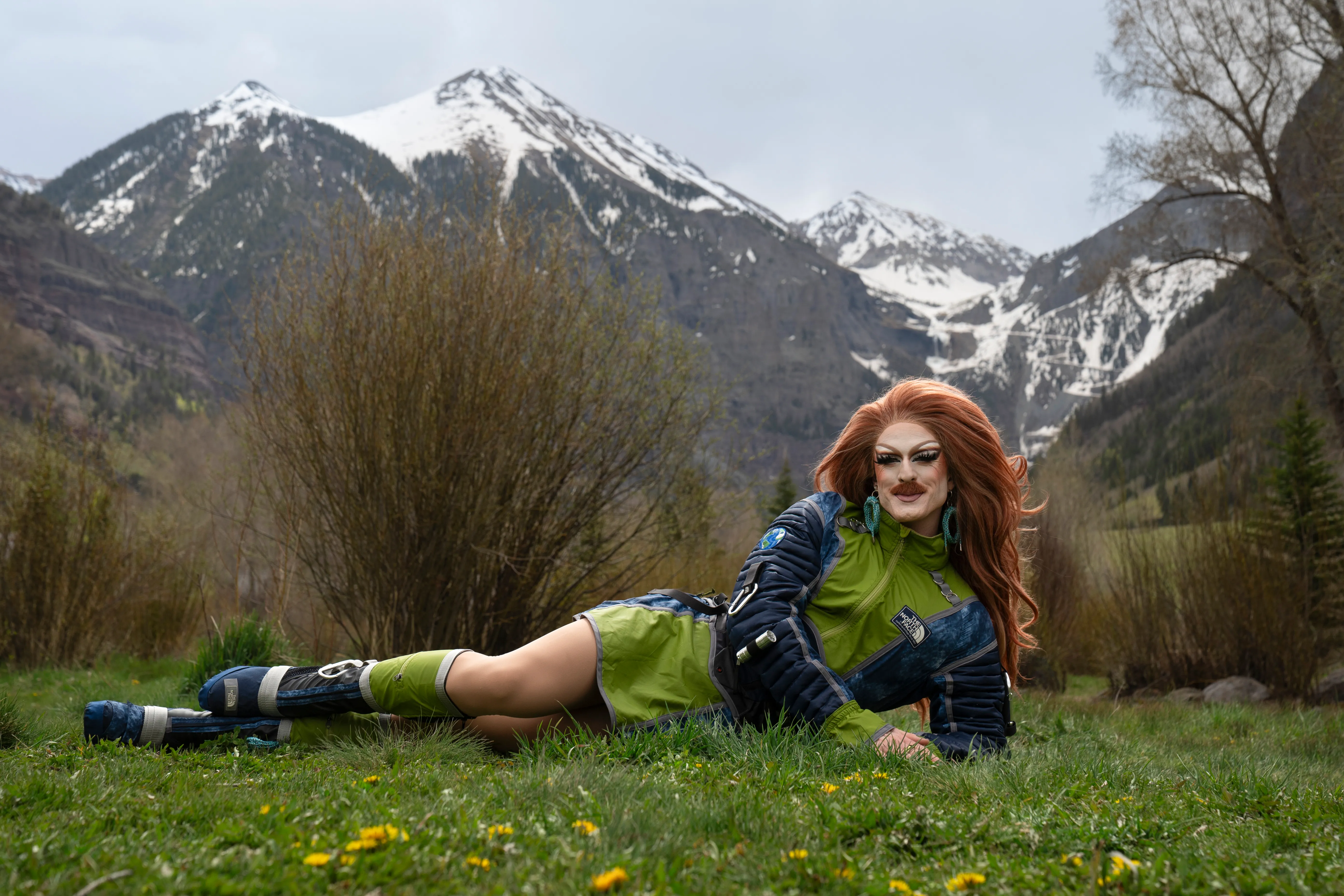
There is a familiar American story hiding inside a very modern fight: a famous brand says it has to police its name, and an activist says their work depends on being recognizable. On Jan. 21, 2026, Patagonia filed a trademark infringement lawsuit against environmental activist and drag performer Wyn Wiley, who performs as Pattie Gonia.
The case is pending in the U.S. District Court for the Central District of California, Western Division in Los Angeles, with a jury trial requested and a trial date currently set for June 2027. Patagonia is asking for $1 in damages, plus attorney’s fees and investigative costs, which signals something important. The money is not the point. The question is where trademark law draws the line when an expressive persona also operates in consumer markets.
I think of cases like this as a sorting problem. Trademark law sorts uses of words and symbols into categories like source identifier, parody, and commercial branding. The hard part is that modern advocacy can live in all three at once.
Join the Discussion
Patagonia’s position
Patagonia describes the lawsuit as a defensive move to preserve what its name stands for to customers, employees, and the causes it supports. In a public statement, the company said:
“The last thing we wanted was a legal fight with someone who shares our values, but we must protect our business and employees.”
Patagonia also framed the issue in mission-driven terms, arguing that the brand’s credibility supports its ability to keep doing environmental work:
“That name carries trust, purpose and decades of work connected to environmental activism, product, storytelling and community impact. Protecting the Patagonia trademark is part of protecting the ability of this company to continue doing that work in the future.”
The company’s unusual corporate structure is part of that story. Patagonia Inc. is owned by two entities: the Patagonia Purpose Trust (holding the voting stock, 2% of shares) and the Holdfast Collective (holding 98% of nonvoting shares). Founder Yvon Chouinard summed up the idea with the line: “Earth is now our only shareholder.”
Patagonia has stated it projects annual payouts of roughly $100 million to causes, depending on business performance. In its “Work In Progress 2025 Impact Report,” Patagonia reported $1.5 billion in revenue, about 4,000 employees, and 160 stores in 25 countries, with products also sold through nearly 6,000 wholesale partners across 45 countries. It also reported giving $15 million to environmental causes last year, described as 1% of sales.
In other words, Patagonia is telling the court: the trademark is not just marketing. It is the container that holds reputation, and reputation is what keeps the enterprise functioning.
Pattie Gonia’s position
Wyn Wiley’s Pattie Gonia persona is explicitly built around environmental messaging, often using humor and drag performance. Wiley has also maintained that the name is inspired by the Patagonia region in South America rather than the clothing company, even as many people hear it as a pun.
The conflict escalated in September 2025, when Wiley’s business entity filed to trademark “Pattie Gonia” for use connected to clothing, online marketing, and potential endorsements. From Patagonia’s perspective, that moved the persona from commentary into a brand operating in related markets.
Patagonia says it tried to avoid this outcome, stating it had been in dialogue for more than three years about ways Pattie Gonia could continue advocacy and commercial work without infringing. When Patagonia offered a settlement, key conditions included withdrawing trademark applications, stopping the use of Patagonia’s logos, and stopping the sale and promotion of apparel and other products as Pattie Gonia. Wiley rejected that, objecting primarily to the merchandise and partnership restriction. In an Instagram post, Wiley wrote:
“If I can’t do partnerships as Pattie Gonia, it breaks the whole ecosystem of advocacy and community engagement.”
Wiley also disputed the idea that Pattie Gonia merchandise uses Patagonia’s design elements, and framed the work as parody:
“Drag is built on parody, puns and jokes.”
That framing matters legally because parody is not simply “being funny.” In trademark disputes, parody can sometimes help, but it is not a free pass once a name is functioning as a brand on goods.
The core trademark issue
Most trademark cases come down to a deceptively plain question: would ordinary consumers mistakenly think the goods or services come from the trademark owner, or are sponsored by them?
Patagonia’s complaint argues that “Pattie Gonia” is “a nearly identical copy” of the PATAGONIA word mark and that the Pattie Gonia name is being used across commercial ventures that overlap with Patagonia’s registered uses. Patagonia also points to the risk that consumers might assume a collaboration or endorsement. The filing states that confusion has already occurred and argues that the Pattie Gonia brand “inevitably” implies endorsement, authorization, or collaboration.
That risk is not abstract in a world where influencer collaborations are common. Pattie Gonia has publicly listed brand partnerships with companies and institutions including The North Face, REI, Google, Hoka, American Express, the Smithsonian Museum, NASA, National Geographic, and Microsoft. Patagonia’s concern is that consumers may infer Patagonia’s involvement even when none exists.
The civic takeaway is straightforward: trademark law is less concerned with punishing bad intentions than with preventing marketplace confusion. A person can be sincere, mission-aligned, and still create legal exposure if their branding is close enough to another brand in the same commercial lane.
Why companies sue
People often ask a fair question: if a company is confident in its reputation, why not ignore a smaller player?
One reason is practical. Trademark owners who do not enforce their marks can weaken them over time. Patagonia says it has previously confronted alleged infringements involving names like FRATAGONIA, CATAGONIA, PETAGONIA, PATROGONIA, and GATAGONIA. From a legal strategy perspective, selective enforcement can be used against a trademark owner later, especially if it looks like they tolerated similar uses.
There is also a timing pressure. Intellectual property lawyers often warn about the doctrine of laches, an equitable principle that can limit remedies when a rights-holder waits too long to bring a claim. The basic idea is: if you sleep on your rights, a court may decide it is unfair to give you the full range of relief later.
So even when a lawsuit is unpopular, trademark enforcement can be framed as risk management, not revenge.
Where parody holds up
In everyday speech, “parody” can mean anything from a snarky joke to an elaborate satirical performance. In trademark law, parody is narrower and more context-dependent.
Courts are typically more tolerant of parody in expressive works, where the goal is commentary rather than selling competing goods. But parody becomes harder to defend when it is used as a brand on products in a marketplace that overlaps with the trademark owner.
That distinction was sharpened by the Supreme Court’s 2023 decision involving Jack Daniel’s and a dog-toy maker that sold a spoof product resembling a whiskey bottle. The Court held that when a party uses another’s trademark as a designation of source for its own goods, traditional trademark infringement analysis applies, even if the product contains a joke. The Court sided with Jack Daniel’s and sent the case back to the trial court for final resolution.
That does not mean parody always loses. It means parody is not a shortcut around the core test. If a parody mark functions like a brand identifier on goods, the case becomes about confusion, not comedy.
Free speech and trademarks
Readers often assume the First Amendment should end the discussion. After all, parody is speech, and political and social commentary sits close to the heart of what the First Amendment protects.
But trademark law is not written as a speech code. It is written as a consumer-protection and market-ordering system. That is why these disputes feel like they live at an uncomfortable intersection: one party is talking about expression, the other is talking about confusion and brand integrity, and both are using commerce as part of their model.
If you want a simple way to think about it:
- Commentary about a brand is usually safer.
- Using a brand-like name on goods that resembles someone else’s, especially in related product categories, is riskier.
Why ask for $1
Patagonia asking for $1 is a signal that the company wants a court order more than a payout. In trademark cases, the most valuable outcome is often injunctive relief, meaning a judge can order a party to stop certain uses of a mark.
The request for attorney’s fees and investigative expenses also matters. Even if damages are nominal, fee-shifting can make continuing the fight expensive and can push both sides toward settlement.
What to watch
This case is likely to turn on specific, concrete details rather than broad arguments about values:
- How “Pattie Gonia” is presented on goods (hangtags, labels, branding placement, online listings).
- Evidence of real consumer confusion (messages, comments, mistaken assumptions about collaboration).
- Proximity of product markets (outdoor apparel culture is Patagonia’s home turf).
- Any prior understandings about how the name would be used, and whether boundaries changed with trademark applications.
There is also a wider civic question underneath: when advocacy becomes a recognizable brand, should the law treat it more like speech, more like commerce, or as a hybrid that needs its own careful balance?

However the court resolves this dispute, it will send a message to activists, creators, and nonprofits alike: parody is powerful, but trademarks are built to be enforceable. The moment your message becomes merchandise, the rules change, and the First Amendment argument gets more complicated, not less.