
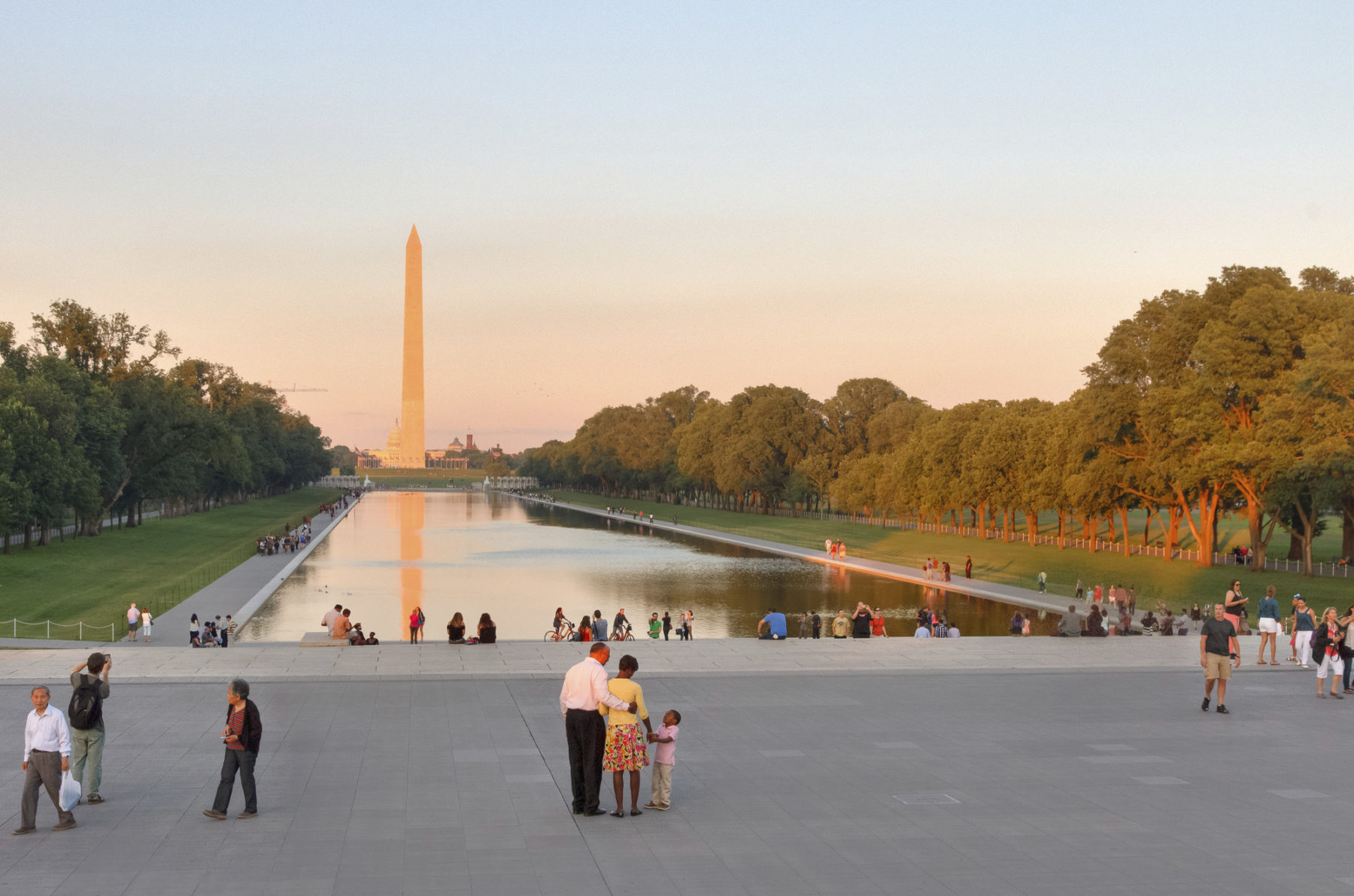
The National Mall looks like a park because it is one, but it is also federal parkland with federal jurisdiction. The lawns, walkways, monuments, and the Reflecting Pool sit on federal land managed largely by the National Park Service. That matters because when someone damages the grounds, the case is not just about bad behavior. It is about government property, federal criminal statutes, and a federal agency that can pursue reimbursement for cleanup from the people who caused it.
Recent claims and photos circulating about damage near the World War II Memorial and the Reflecting Pool are a good trigger for a bigger question: when does “the grass got torn up” become “vandalism,” and what does federal law actually do about it?
Join the Discussion
Who controls the National Mall
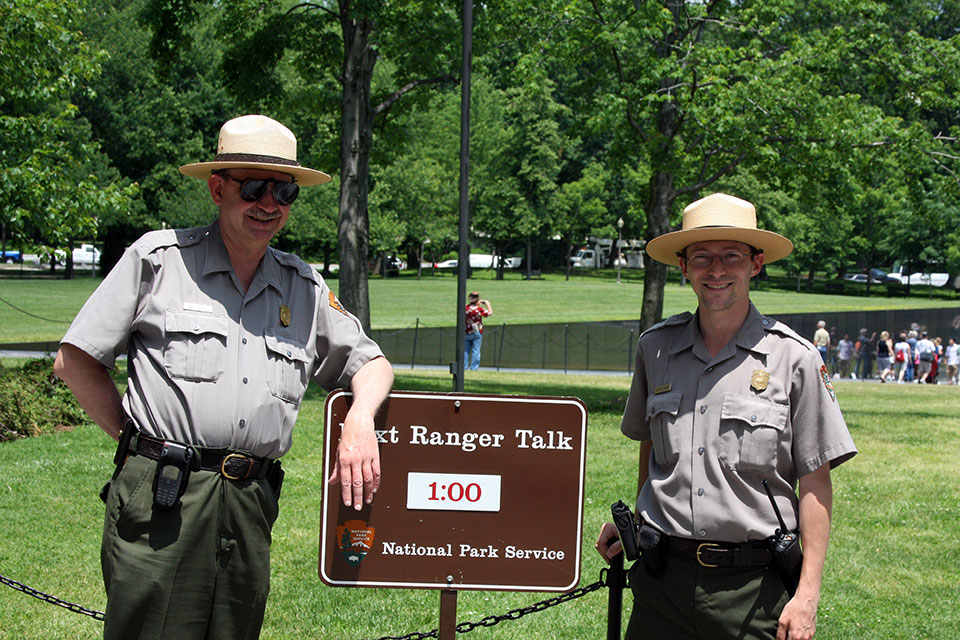
The short answer is the United States. Most of the core Mall and its marquee memorial landscapes are part of the National Park System or other federally controlled property. The National Park Service (NPS), a bureau of the Department of the Interior, manages day-to-day operations across most of the central Mall: permits, maintenance, closures, repairs, and protection of resources.
There are also nearby sites and adjacent parcels with different administrators or overlapping responsibilities, including the Smithsonian Institution and the Architect of the Capitol. In other words, “the Mall” can be a patchwork depending on the precise parcel. For an explainer like this, the practical point is that much of the space people think of as “the Mall” is federally managed, and federal rules commonly apply.
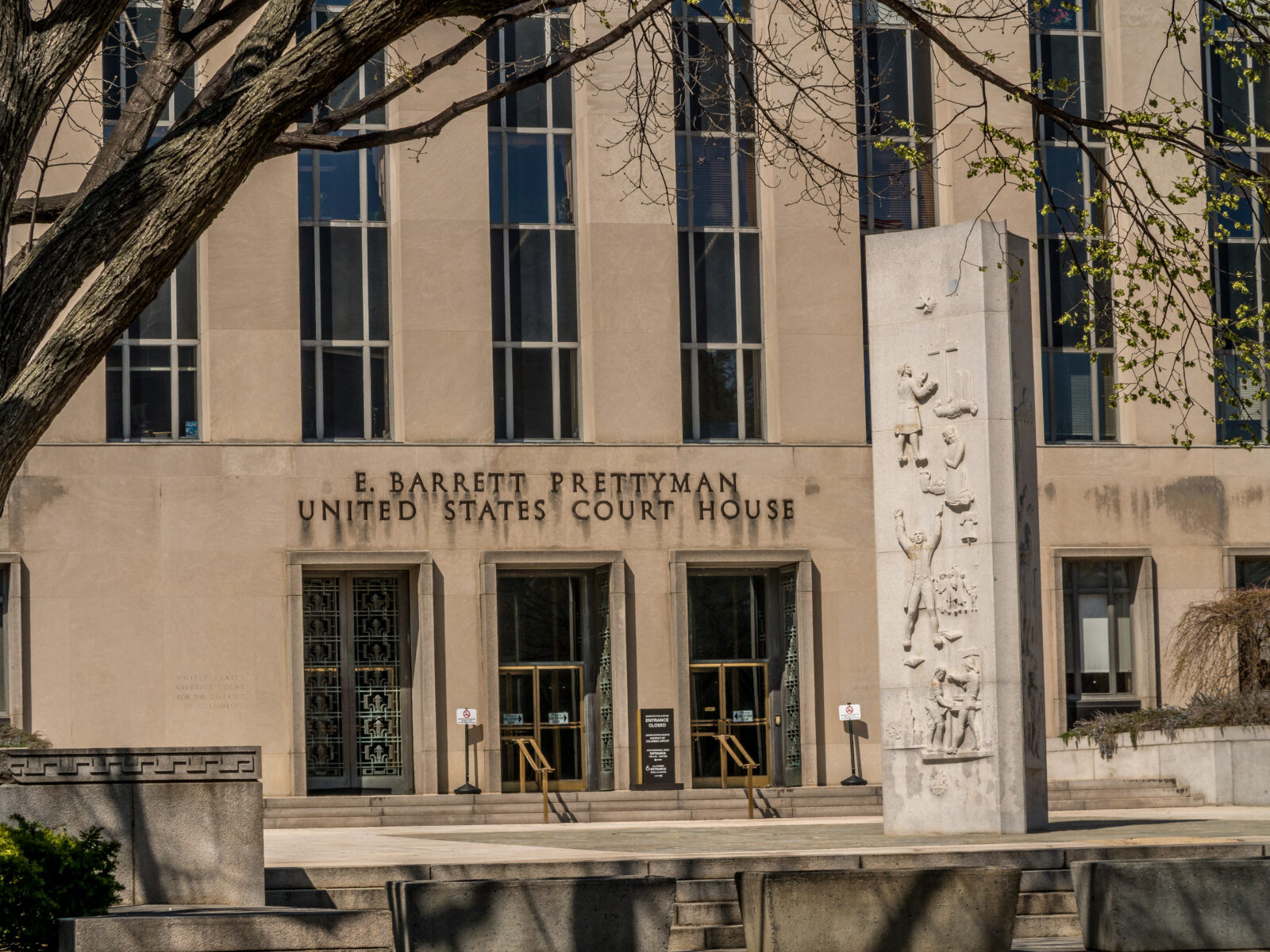
Because the land is federal, common “city vandalism” assumptions do not always fit. The rules come from a mix of federal statutes, federal park regulations, and local law enforcement partnerships. The U.S. Park Police often plays a central role because it is a federal law enforcement agency with jurisdiction in many of these areas, and prosecutions for federal offenses on or around the Mall often run through the U.S. Attorney’s Office for the District of Columbia, though charging can vary with the exact location and jurisdiction.

Protest versus vandalism
The First Amendment protects speech, assembly, and petition. It does not protect damaging property as the method of speech. You can criticize the government on the Mall. You can march. You can hold signs. You can chant. Those are classic protected activities.
But if the “message” includes defacing a statue, breaking a barrier, tearing up a restricted lawn, or damaging a water feature, the law generally treats that as conduct, not speech. Courts routinely uphold prosecutions for property damage even when the defendant claims political motive. Motivation can explain why something happened. It rarely transforms destruction into a protected constitutional right.
There is a second layer that matters on the Mall: even peaceful demonstrations can require permits for certain locations, structures, amplification, or crowd sizes. Permit violations are not the same thing as vandalism, but they can bring separate penalties and they can put people in areas where damage claims become more likely. In Washington, DC park areas, a key set of demonstration rules appears in 36 C.F.R. § 7.96 (National Capital Region). For practical planning, NPS National Capital Region permit guidance is the place to start before an event.
What laws can apply
There is no single “Reflecting Pool vandalism” statute. Prosecutors choose charges based on what was damaged, how it was damaged, and the dollar value of the harm. Here are the most common legal tools that show up in federal property cases.
1) Federal property damage: 18 U.S.C. § 1361
This is the workhorse statute for willfully damaging, injuring, or committing depredation against property of the United States. “Willfully” generally means the act was done intentionally and knowingly, not by accident.
- It is value-sensitive. The penalty turns heavily on the loss amount. As commonly applied, damage or attempted damage of more than $1,000 can be charged as a felony under the statute, while damage of $1,000 or less is typically treated as a misdemeanor. (As with any statute, the current U.S. Code text should be confirmed at publication time.)
- It is restitution-friendly. Even when the jail exposure is limited, courts can still order repayment for documented losses tied to repair and restoration.
2) Park regulations: 36 C.F.R.
NPS lands are governed by federal regulations that can be enforced criminally, often through citations. Two provisions that frequently appear in real-world charging decisions are:
- 36 C.F.R. § 2.1, which covers preservation of natural, cultural, and archeological resources and can reach damage to landscaping and similar resources.
- 36 C.F.R. § 2.31, which covers disorderly conduct in park areas and can be paired with other offenses depending on the facts.
As a general baseline, violations of many NPS regulations are treated as Class B misdemeanors under 18 U.S.C. § 1865, unless another statute or regulation provides otherwise.
3) Veterans’ memorial protections: 18 U.S.C. § 1369
When damaged property qualifies as a covered veterans’ memorial, prosecutors may consider the Veterans’ Memorial Preservation and Recognition Act (18 U.S.C. § 1369). It targets knowing vandalism of qualifying memorials. Whether it applies in any given incident is definition-driven and fact-specific, and it may apply to some memorials that qualify under the statute’s terms.
4) Related charges that often travel with vandalism cases
- Trespass or unlawful entry into restricted, posted, or closed areas (often under park regulations).
- Conspiracy when multiple people coordinate, especially if tools, supplies, or planning are involved.
- Local charges can also appear in some situations depending on the exact location and jurisdictional boundaries, even when the broader incident is on or near federal property.
The legal takeaway is simple: on federal land, vandalism is rarely charged in isolation. It tends to come as a bundle of federal property, park regulation, and access-related offenses.
How penalties are set
People often ask for “the penalty” as if there is one set number. In federal cases, sentencing is usually a staircase, not a single step.
- Charge selection matters. A regulatory citation can look like a misdemeanor. A federal property damage charge can become a felony if the value is high enough, including the more-than-$1,000 line under 18 U.S.C. § 1361 as commonly applied.
- Damage valuation matters. Replacing sod is not priced the same way as repairing stone, restoring bronze, or fixing specialized infrastructure like pumps and pipes.
- Prior record and supervision status matter. Federal sentencing accounts for criminal history.
- Restitution can matter as much as jail time. Restitution is often ordered in property cases and is mandatory in some cases under the Mandatory Victims Restitution Act, depending on the offense of conviction and how the case is charged.
There is also a practical reality: many areas of the Mall have security, patrols, and plenty of public recording by visitors. If there is surveillance footage, cellphone video, or identifiable social media posts, the identification piece can be easier than people assume. And once a defendant is identified, restitution can follow them longer than a headline does.
A quick charging example
Here is a simple way to picture how the same incident can be treated differently depending on intent and cost.
- Scenario A: Someone steps onto a posted, closed lawn during a demonstration and damages a small patch of turf. Park police might handle it with a citation under 36 C.F.R. (for entering a closed area and resource protection), especially if the restoration costs are modest and there is no sign of planning.
- Scenario B: A group deliberately enters a restricted lawn area, uses boards or vehicles, and tears up a wide section, damaging irrigation lines in the process. If documented losses exceed $1,000 and the facts support that it was intentional, prosecutors may add or pivot to 18 U.S.C. § 1361 and consider other charges like conspiracy or trespass.
The conduct might look like “just grass” in a photo. The charging decision often turns on intent, restrictions, and the true repair scope.
Who pays to fix it
Up front, the public does. The National Park Service and its partners repair federal sites using appropriated funds and maintenance budgets. In high-visibility locations, repairs can become urgent not just for aesthetics, but for safety and long-term preservation.
But federal law also recognizes a second step: shifting costs back to the responsible person. In criminal cases, courts can order restitution, which is a repayment obligation based on documented losses. Restitution is not a donation. It is a court order.
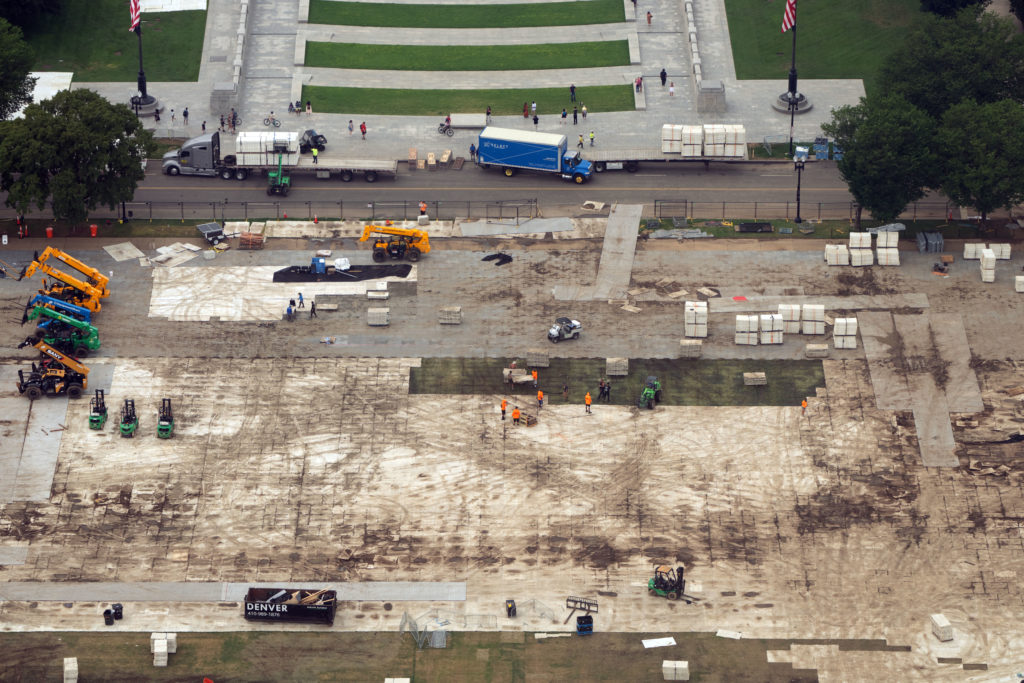
And the repair cost is not limited to what a casual observer sees. On the Mall, “damage to the grass” can implicate irrigation systems, soil stabilization, protective barriers, and labor costs for crews working in constrained, security-sensitive spaces. When water features are involved, repair can include pumps, filtration, inflow and outflow infrastructure, and specialized maintenance work.
What counts as vandalism
This is where the argument usually turns semantic. Many people reserve “vandalism” for spray paint and broken stone. The law is broader.
Under federal property damage concepts, “property” includes landscaping and improvements maintained by the United States. If a closed lawn is protected to preserve turf, manage erosion, or protect underlying infrastructure, tearing it up can be treated as damage to government property. Whether it becomes a serious criminal case depends on the facts: intent, restrictions in place, and the dollar value of restoration.
That is why two photos that look similar can lead to different outcomes. One could show normal wear from public use. Another could show willful entry into a restricted area, widespread destruction, and a repair plan that costs far more than fresh sod.
Property power and free speech
The Constitution gives the federal government power over federal property. That authority does not come from a single “National Mall clause,” but from the structure of federal power, including Congress’s ability to make rules for federal property and for the District of Columbia, and the executive branch’s role in enforcing those rules through agencies like the National Park Service.
The First Amendment still applies on the Mall. That is why permits, time-place-manner rules, and viewpoint neutrality matter so much. But the Constitution does not require the government to treat destruction as protected expression. It allows protest. It also allows protection of public property, especially symbolic sites built to honor national memory.
Quick answers
Is the Reflecting Pool federal property?
Yes. It is part of a federally managed landscape on the National Mall, generally under National Park Service administration, with federal law enforcement jurisdiction in the area.
Is vandalism on the Mall a federal crime?
It can be. Depending on the conduct, prosecutors can use federal property damage statutes like 18 U.S.C. § 1361, National Park Service regulations, and related offenses like trespass into restricted areas.
Can protesters be charged even if they say it was political?
Yes. Political motive does not generally immunize property damage. Speech is protected. Destruction is not.
Can the government make vandals pay for repairs?
Often, yes. Federal courts can order restitution in property damage cases, requiring repayment of documented losses tied to repair and restoration. In some cases, restitution is mandatory under federal restitution statutes depending on how the offense is charged.
The takeaway
The National Mall is a public forum in many areas, but it is also federal property. That is why the law draws such a hard line between expression and damage. Grass can be replaced. Stone can be cleaned. Pipes can be repaired. The harder thing to restore is the shared premise that our national spaces belong to all of us, including the people we disagree with, and including the people who will visit long after the news cycle moves on.