
Midterm elections are the national elections held halfway between presidential elections. They happen every four years, in even-numbered years that are not presidential election years, always on the first Tuesday after the first Monday in November. And they quietly decide a lot of what Americans assume presidents decide.
If the presidency is the loudest office in American politics, midterms are the structural one. They determine who writes federal law, who controls congressional investigations, who confirms judges, and how much room any president has to govern.
Join the Discussion
What are midterm elections?
A midterm election is the regularly scheduled general election that occurs in the middle of a president’s four-year term. The Constitution does not use the phrase “midterm,” but the schedule is baked into constitutional design:
- All 435 U.S. House seats are up for election every two years.
- About one-third of the U.S. Senate is up for election every two years because senators serve six-year terms, staggered into three classes.
- Many state and local offices are on the ballot too, depending on the state, including governors, state legislators, attorneys general, mayors, judges, and ballot measures.
So the “midterm” label is really shorthand for this: voters can change Congress without changing the president.
What offices are on the ballot in a midterm?
The U.S. House of Representatives
Every House member faces voters every two years. That is not a political accident. It is constitutional design. The House was built to be the “closest” branch to the public, frequently refreshed by elections.
Because the entire House is elected at once, midterms can flip control of the chamber quickly. A swing of a few dozen seats can determine:
- Whether the president’s party can pass legislation
- Whether budgets, tax bills, and major reforms move forward or stall
- Which party chairs committees and controls the House agenda
The U.S. Senate
Senators serve six-year terms, but elections are staggered so that roughly one-third of seats are contested in each election cycle. In a midterm year, that means around 33 or 34 Senate seats are on the ballot.
The Senate’s role makes midterm results especially consequential. The Senate:
- Confirms federal judges, including Supreme Court justices
- Confirms Cabinet officials and many executive branch leaders
- Approves treaties (by a two-thirds vote)
Governors and state offices (often)
Many states elect governors in midterm years, though the exact schedule varies. When governors are on the ballot, midterms can reshape:
- State policy on education, healthcare, policing, and elections
- Emergency powers and regulatory leadership
- Appointments to fill vacancies in some states
State legislatures, judges, and ballot measures
Midterms are also major elections for state legislatures and, in many states, judicial seats. Ballot measures can address issues like taxes, abortion policy, marijuana laws, voting rules, and redistricting reforms.
Why are they called “midterms” if so much is at stake?
Because they occur at the midpoint of a presidential term. But the name can be misleading. Midterms are not a lesser election. They are the republic’s built-in course correction.
In constitutional terms, midterms are one of the main ways Americans enforce a principle older than any party platform: separated powers. Voters can reward or restrain the president’s agenda by changing who controls Congress.
What the Constitution and federal law set
The federal Constitution sets the basic framework, and federal law fills in key details. But states still run most of the day-to-day mechanics.
What the Constitution sets
- House term length: two years (Article I, Section 2)
- Senate term length: six years, staggered (Article I, Section 3; modified by the 17th Amendment for direct election)
- Congress’s power over election rules: states set the “Times, Places and Manner,” but Congress may alter those regulations (Article I, Section 4)
What federal law sets
- Election Day timing: set by federal statute for federal offices (the early-November Tuesday rule)
What states largely control
- Voter registration systems
- District boundaries for House seats (within federal constitutional constraints)
- Polling place rules and election logistics
- Many rules around primaries and ballot access
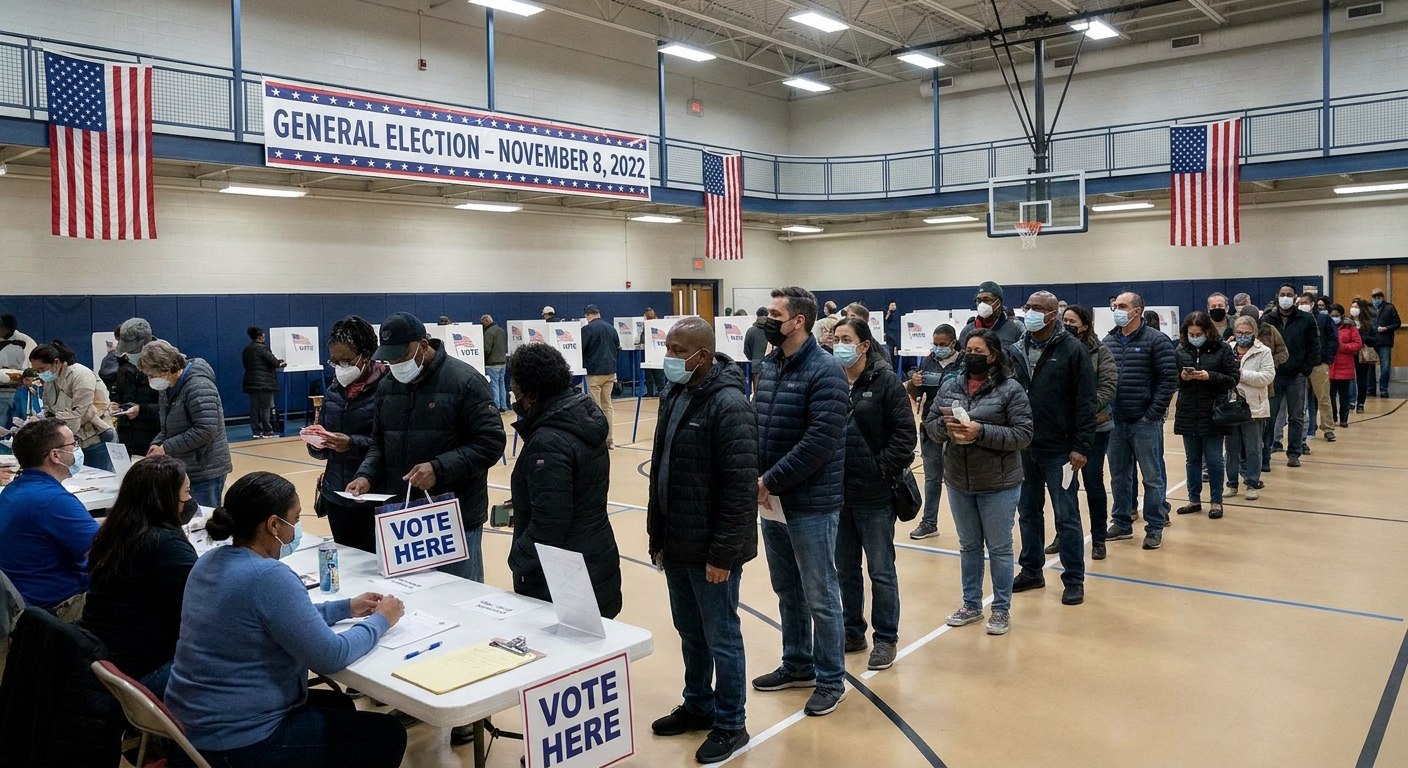
This is why “midterms” look different depending on where you live. Your ballot might include only federal races, or it might include a governor, state legislature, judicial seats, and major statewide referenda.
Why midterms often change power in Washington
Midterms have a reputation for being rough on the president’s party. That pattern is common, though not absolute. Several forces tend to collide in midterm years:
- Turnout differences: presidential elections usually attract more voters than midterms, and the composition of the electorate can shift.
- Referendum effect: midterms often become a judgment on the sitting president’s performance, even though the president is not on the ballot.
- Mobilization: the party out of power is often more energized to vote.
- Redistricting: district maps can shape House competitiveness for an entire decade.
When one party wins the presidency and Congress in the same cycle, the midterm two years later is frequently the moment voters decide whether to extend that governing mandate or split power.
What happens if a chamber flips?
A change in House or Senate control can change federal policy immediately, even with the same president.
If the House flips
- Committee leadership changes, which changes what bills get hearings and votes.
- The House’s investigative power can shift toward the administration or toward aggressive oversight.
- Budget negotiations can become more confrontational because spending bills must originate in the House.
If the Senate flips
- Judicial confirmations can accelerate or stall.
- Cabinet confirmations and executive appointments can be blocked or expedited.
- The majority leader controls what reaches the floor, shaping the entire legislative calendar.
If both flip
You often get legislative gridlock, but not governmental inactivity. Congress can still pass must-do bills, and it can still define the national conversation through hearings, investigations, and negotiation leverage.
Midterms and overlooked power
Midterms are where Americans often vote on power that feels less visible than the presidency but is just as consequential.
Redistricting and representation
State legislatures influence district maps in many states. Those maps can determine how competitive House seats are. So a state legislative race in a midterm year can shape congressional representation for years.
Election administration
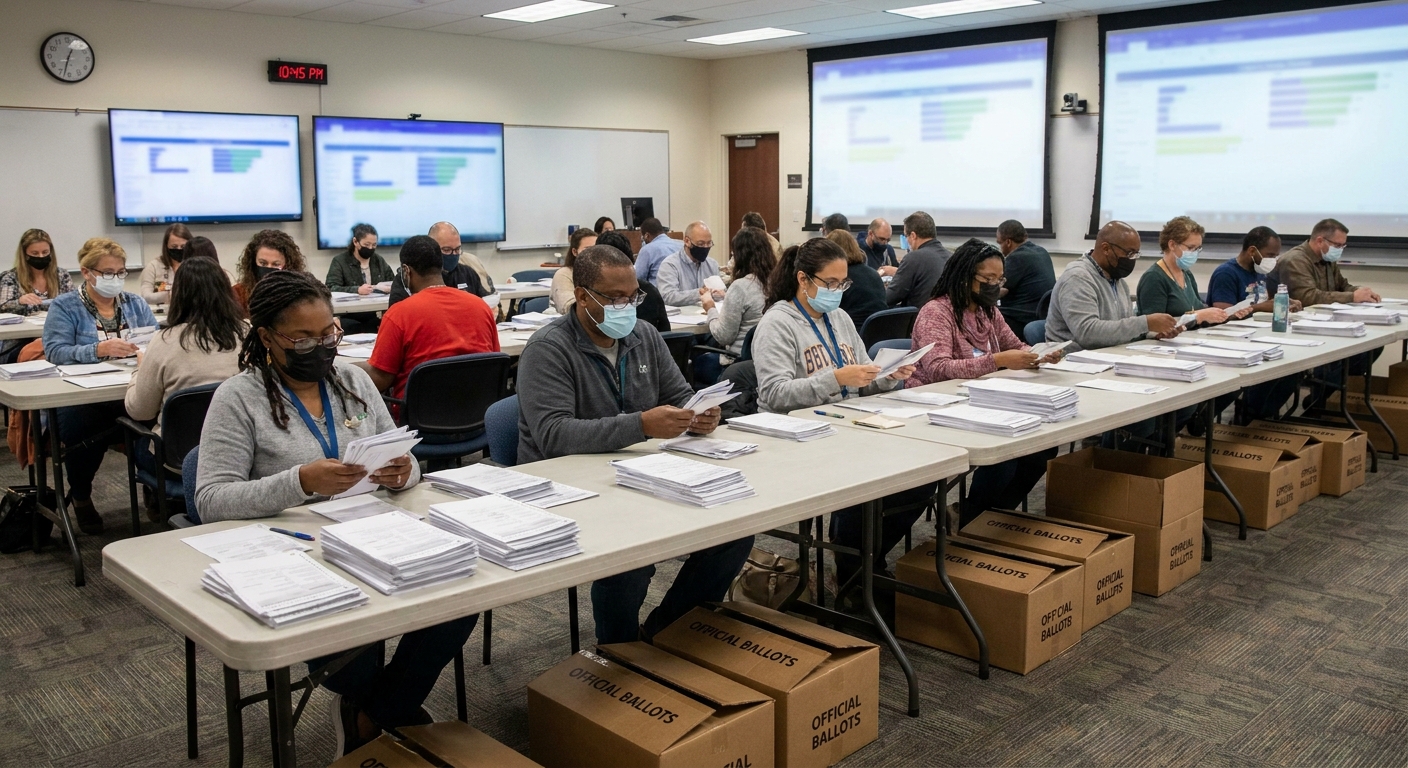
Secretaries of state, election boards, and local election officials often appear on midterm ballots or are influenced by midterm results. These offices can matter for how elections are run, how rules are interpreted, and how disputes are handled.
Courts
Many states elect judges. Even when judges are appointed, governors and legislatures influence selection systems. Court composition affects issues that routinely hit state constitutions: voting rules, abortion and privacy protections under state law, criminal justice policy, and more.
How often are midterms?
Midterms happen every four years, halfway through each presidential term.
At the same time, it is true that the United States holds a federal general election every two years because House elections happen every two years and Senate elections rotate on a six-year cycle.
- Presidential election years: 2024, 2028, 2032
- Midterm years: 2026, 2030, 2034
Do you vote in midterms the same way you vote for president?
Procedurally, usually yes. You register, you vote at a polling place or by mail depending on state rules, and you follow the same election calendar.
But the ballot is different. Instead of one high-profile race at the top, you often get a longer list of contests that require more homework:
- House and Senate candidates
- Governor and state executive offices
- State legislators
- Judicial races (in some states)
- Local offices
- Ballot measures
Common midterm questions
Are midterms only for Congress?
No. Midterms always include House elections and usually include some Senate elections, but they can also include state and local contests that matter deeply in daily life.
Can midterms remove a president?
Not directly. Presidents are not elected or removed by midterm elections. Impeachment is a separate constitutional process, and midterms only affect it indirectly by changing who controls the House and Senate.
Why do midterms feel more confusing?
Because they are decentralized. Presidential elections create a single national narrative. Midterms are thousands of elections happening at once under different state rules, with different local issues and different turnout patterns.
Why midterms matter
Presidents propose agendas. Congress writes laws. Courts interpret them. States administer elections and run most of the systems people interact with every day.
Midterms are where those layers collide.
If you want a single sentence summary, it is this: midterm elections decide who has leverage. Leverage over laws, budgets, oversight, confirmations, and the rules that shape the next election itself.
And that is exactly why the Constitution’s architecture does not treat them as optional.