
The John F. Kennedy Center for the Performing Arts is not just another cultural venue. Its name is fixed by federal statute, not by branding instincts or board votes.
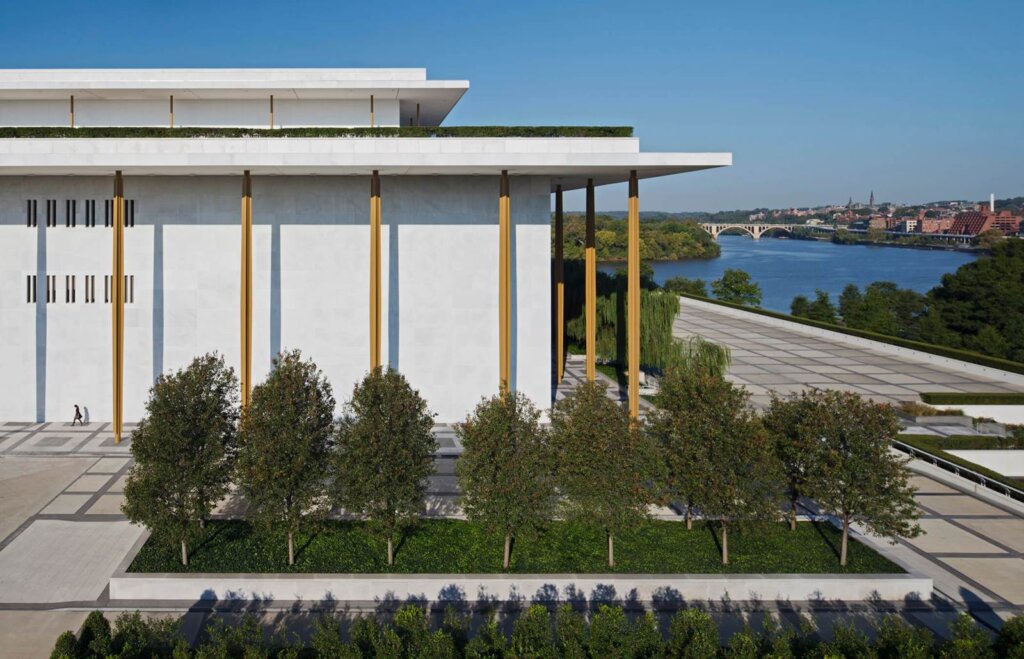
On Friday, U.S. District Judge Christopher Cooper ordered that President Donald Trump’s name be removed from the Kennedy Center, concluding the institution’s board exceeded its legal authority when it tried to rename the building.
Join the Discussion
The holding
Cooper’s reasoning is straightforward. When a statute gives a federally established institution its formal name, the board does not get to revise that name by resolution.
In his ruling, Cooper wrote: “The Kennedy Center’s organic statute makes crystal clear that the Center is to be named for President Kennedy, and it cannot bear any other formal name or public memorial based on the Board’s unilateral say-so.” He continued: “Congress gave the Kennedy Center its name, and only Congress can change it.”
This is, at bottom, a legal authority dispute with cultural heat around it. The question is not whether adding Trump’s name was wise or offensive or celebratory. The question is who has the power to do it.
What the order requires
The ruling does not just declare the attempted renaming unlawful. It directs corrective steps.
- The administration must take down all physical signage bearing Trump’s name.
- Official materials must eliminate references to a “Trump-Kennedy Center.”
How it started
Trump’s name was added to the venue last December following a unanimous decision by the Kennedy Center Board of Trustees, which voted to rename it the “Trump-Kennedy Center.”
In February 2025, Trump was elected chairman of the board after removing 18 trustees who had been appointed by former President Joe Biden.
The lawsuit that produced Friday’s decision was filed by Rep. Joyce Beatty of Ohio, a Democrat who serves as an ex officio member of the board. The White House did not immediately respond to a request for comment.
Why the statute matters
If you want a civics lesson in miniature, look at the judge’s emphasis on the Center’s “organic statute.” In Washington, “organic” does not mean natural. It means foundational, the law that brings an institution into existence, defines its powers, and sets its limits.
Read that way, the fight is not really about taste. It is about delegated authority. Boards and executive branch actors can only do what the law empowers them to do, even when they control the day-to-day operations.
Cooper’s decision treats the Kennedy Center’s name as a legal designation Congress set, not a discretionary label that can be swapped by internal vote when politics change.
Beatty reacts
Beatty praised the ruling and framed it as a rule-of-law victory. In a statement, she said: “Today’s ruling rightly affirms that this administration’s efforts to rename and close the Center have no basis in law.”
She added: “The Kennedy Center is an institution that belongs to the American people, not to Donald Trump. He has desecrated this sacred memorial for his own vanity. I am proud to have fought for the rule of law and to protect this sacred institution.”
What comes next
Friday’s decision is not the end of the legal story. Cooper noted that related litigation involving the Kennedy Center remains ongoing and that appeals are likely.
He previously denied a request for a preliminary injunction filed by a preservation group seeking to block a planned two-year closure of the Kennedy Center for a rehabilitation project. Both cases will continue to be litigated.
The bigger point
Americans tend to treat names on public buildings as symbolism. They are that. But in federal law, names can also be governance, because the power to name can be the power to define what an institution is and who controls it.
If the Kennedy Center’s formal name is going to change, Cooper’s ruling says it has to happen through Congress. Not because Congress is always right, but because Congress is the branch that makes the law in the first place.