
Every civics class eventually arrives at the same uncomfortable truth: the American system is built on paperwork. Rights get asserted on forms. Duties get assigned on forms. And, more often than we would like to admit, the public safety we assume is “screened” into existence is also built on forms.
That is why the arrest of Selah Dine Habib, a man federal officials say entered the country unlawfully and later worked at an Indiana county jail as an unarmed correctional officer, deserves more than a quick headline and a shrug. It is a stress test of how federal immigration processes, local hiring practices, and constitutional accountability fit together, or fail to.
Join the Discussion
What officials allege
Federal immigration authorities arrested Habib on May 21. The Department of Homeland Security said he is a native of Mauritania who crossed into the United States in March 2023 near Lukeville, Arizona. DHS said he was released into the United States around 2023 and later obtained employment at the Jay County Jail in Portland, Indiana.
DHS alleges Habib pursued asylum in 2023 using a claim based on homosexuality. DHS also alleges he married a woman in 2025, and officials said his pending asylum application is believed to be fraudulent.
DHS’s statement on the case was blunt: “He entered the country illegally in March 2023 near Lukeville, Arizona, and was RELEASED into the country by the Biden administration where he was reportedly hired as a corrections officer in Indiana. He will remain in ICE custody pending removal proceedings.”
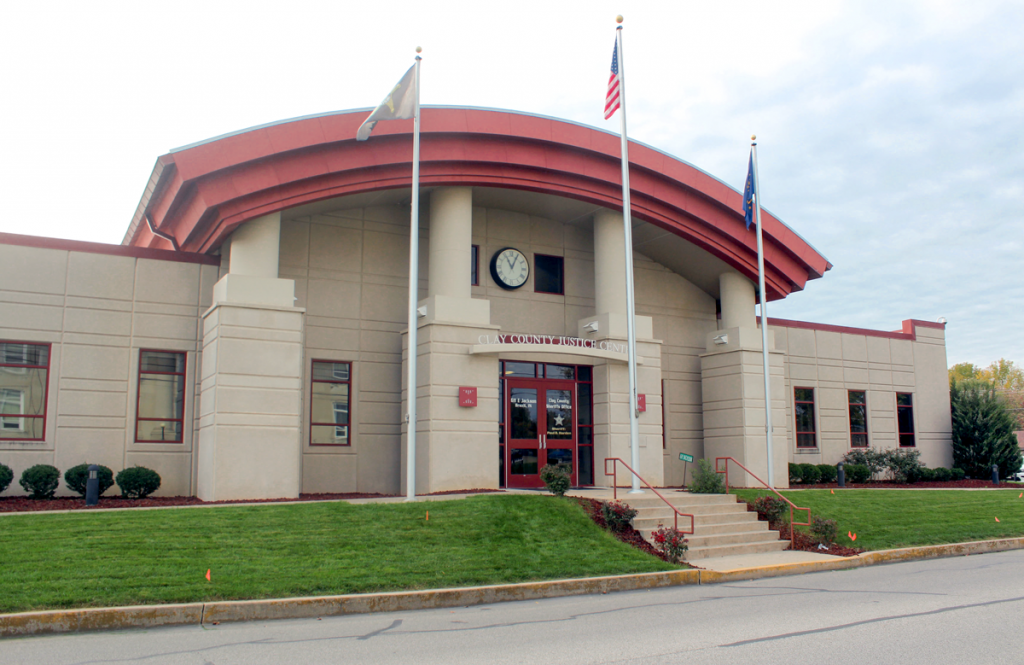
Habib is being held in U.S. Immigration and Customs Enforcement custody at the Clay County Jail detention facility in Brazil, Indiana. He is reportedly contesting a final deportation order.
The hiring concern
Here is the part that should trouble citizens regardless of their politics: Habib was not employed for a backroom job with no public trust attached. He worked inside a jail. Even if the role was unarmed, corrections work is still the exercise of state power against human beings.
There is another detail that cannot be treated as a footnote, because it changes how any reasonable reader evaluates “local hiring practices.” Officials said Habib married a woman in 2025, and the woman was the daughter of the county sheriff whose office later employed him at the county jail. In other words, the sheriff’s office later employed the sheriff’s step-son-in-law.
Jay County Sheriff Larry Ray Newton confirmed Habib’s employment as an unarmed correctional officer. The key civic question is not gossip about relationships. It is how the paperwork worked, and how much discretion lived in the human relationships around that paperwork.
County officials have said Habib submitted an I-9 with documentation and that an E-Verify check was completed during onboarding, returning “employment authorized.” The Jay County Auditor’s Office stated: “I am able to confirm that Mr. Habib submitted an I-9 with documentation, and an E-Verify Check was completed at the time of employment. The report came back as employment authorized.”
The Auditor’s Office added that any discrepancies flagged by E-Verify would have halted the onboarding process immediately. The office also said: “Departments are responsible for completing any reference checks, background checks, drug tests, etc. before submitting new employees to the office. The sheriff would be able to speak to the standard practices completed in his office.”
What E-Verify does not do
Americans hear “E-Verify cleared” and assume the government performed some deep inspection. But E-Verify is narrower than the public imagines. It is designed to confirm work authorization based on the data presented and the databases it can access. It is not designed to answer the broader civic question: Should this person be placed in a role where the public must trust his judgment and restraint?
This case exposes a gap that is legal, bureaucratic, and human all at once.
- Legal gap: A person can be “employment authorized” for purposes of hiring even while immigration status questions remain unresolved or contested.
- Bureaucratic gap: Local agencies can treat a federal clearance result as a substitute for local scrutiny, especially when staffing is tight.
- Human gap: Hiring decisions are made by people, and people bring loyalties, pressures, and blind spots. When an employee is also family, the public naturally wonders whether the same rigor applied, whether or not the forms came back clean.
Federalism up close
On paper, immigration enforcement is federal. Policing and jails are mostly state and local. That division is not just tradition. It is federalism in action, with the Tenth Amendment reserving broad police powers to the states while the national government controls borders and naturalization.
But reality is messier. Local agencies employ. Federal systems verify work authorization. Federal agents arrest. Local communities absorb the consequences. When something breaks, each layer of government has incentives to point elsewhere, and the public is left to demand answers.
That is the constitutional tension in this story. Not just “who is to blame,” but who is accountable when trust is delegated across multiple sovereigns and reduced to checkboxes.
The asylum allegation
Asylum is one of the most morally serious commitments the United States makes. It is not a favor. It is a form of protection grounded in the idea that some people, in some places, face persecution severe enough that the law must give them sanctuary.
If DHS is right that an asylum claim was fabricated, that matters for two reasons at once.
- For legitimate applicants: Fraud hardens public skepticism and makes it easier for officials to treat genuine fear like a routine administrative inconvenience.
- For the rule of law: Fraud turns a humanitarian process into a workaround. That is corrosive in a constitutional republic because it teaches people that systems are meant to be gamed.
At the same time, allegations are not convictions. Habib is contesting removal, and the government will have to prove its case through the proper channels.
Questions to ask
Most coverage of stories like this collapses into slogans: open borders versus crackdown. But the tougher question is more practical than ideological.
What level of verification should be required before someone is employed into a role that involves custody, coercion, and control over other human beings?
If the answer is “the same standard as any other job,” then we should be honest about what that means: jails will sometimes be staffed by people whose broader legal standing is unresolved, unclear, or later disputed.
If the answer is “a higher standard,” then lawmakers and county officials need to say what that standard is, who pays for it, and how it is enforced without turning hiring into a loophole-ridden political theater.
And if the employee is a relative of the elected official whose office runs the jail, citizens should insist on clarity about what safeguards exist to keep ordinary nepotism from becoming institutional risk.
What this shows
Habib’s case is not just about one man. It is about a system where federal immigration decisions can ripple into local institutions that wield force, and where “authorized” can mean “cleared for now” rather than “fully vetted.”
It is also about the predictable collision between procedure and proximity. Paperwork can certify eligibility to work. It cannot certify judgment, integrity, or independence. When a jail employee is also family, that distinction stops being abstract.
In a constitutional republic, legitimacy depends on more than enforcement. It depends on competence. The public is entitled to ask whether the layers of government that share responsibility for immigration and public safety are sharing information with the same urgency that they share the burden of political blame.