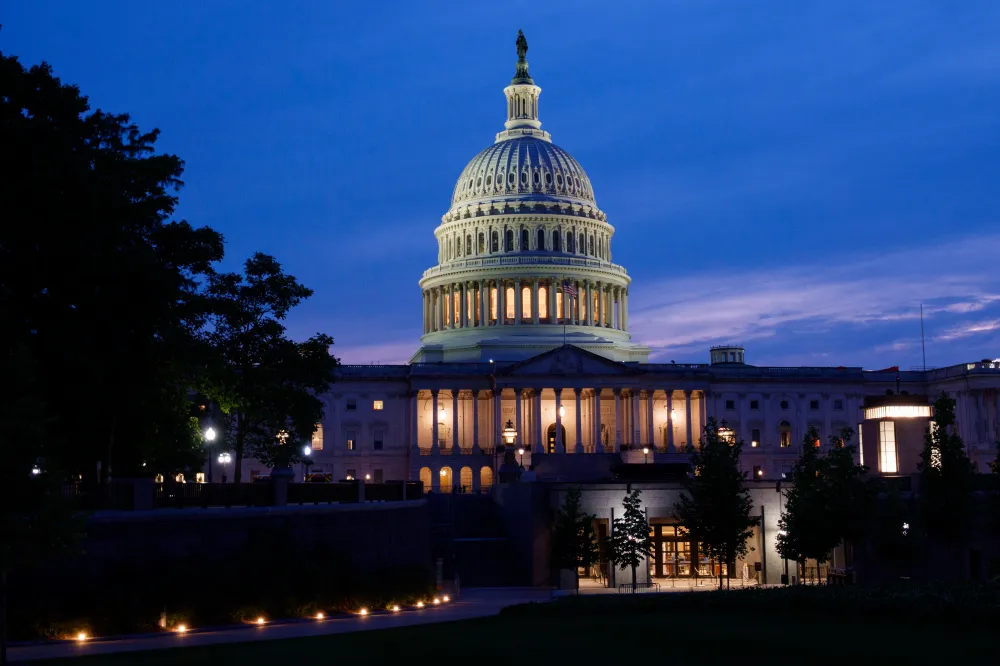
The Constitution gives the President the power to nominate officers and judges, and it gives the Senate the power to decide whether those nominees actually take office for positions that require advice and consent. That second half is easy to summarize and hard to understand in practice. “Advice and consent” sounds like a polite conversation. In reality, it is a pipeline with choke points: committee referrals, background checks, hearings, holds, calendar time, cloture votes, and final confirmation votes.
This explainer walks through the modern Senate confirmation process for both executive branch appointments and federal judges, not just Supreme Court nominees. If you have ever wondered why some nominees glide through in days while others stall for months, the answer is almost always procedural.
Join the Discussion
The constitutional foundation
Article II, Section 2, Clause 2 is the source of the confirmation process, often called the Appointments Clause. It says the President “shall nominate, and by and with the Advice and Consent of the Senate, shall appoint” ambassadors, other public ministers and consuls, judges of the Supreme Court, and “all other Officers of the United States” whose appointments are not otherwise provided for.
Three quick clarifications matter for understanding the pipeline:
- Nomination is unilateral. Only the President nominates. The Senate cannot pick the nominee, but it can say no.
- Confirmation is the Senate’s leverage. The Senate’s “yes” is what turns a nominee into an officer or judge.
- Congress can create exceptions for “inferior Officers.” For some positions, Congress can vest appointment in the President alone, in courts of law, or in department heads. Many high-profile positions still require Senate confirmation.
In other words, confirmations are not a courtesy. They are a constitutional checkpoint designed to distribute power.
Step 1: The President submits a nomination
A nomination reaches the Senate when the White House formally transmits it. The Senate receives and numbers the nomination, then refers it to the committee with jurisdiction.
Where a nomination goes depends on the job:
- Cabinet and many executive roles: referred to the committee overseeing that policy area (for example, Health and Human Services nominees often go to HELP; defense nominees to Armed Services).
- Ambassadors and many State Department roles: Foreign Relations.
- Federal judges: Judiciary (district courts, courts of appeals, and the Supreme Court).
Referral matters because committees do most of the vetting and create the record senators rely on, even if only a fraction of senators attend every hearing.
Step 2: Paperwork, vetting, and the quiet negotiations
Before a nominee ever answers questions on camera, there is a long pre-hearing phase that can move quickly or crawl, depending on politics, staffing, and controversy.
Background investigations and disclosures
Nominees typically complete extensive questionnaires and financial disclosures. Executive branch nominees typically undergo background checks and ethics reviews, including conflict-of-interest analysis and recusal plans, coordinated through the White House and relevant agencies (often including the FBI for Senate-confirmed roles). Judicial nominees submit detailed questionnaires to the Senate Judiciary Committee and often meet with senators privately.
For judges, the American Bar Association has historically evaluated professional qualifications, though the relationship between the ABA and the Senate has shifted over time depending on the administration and the committee’s preferences.
Courtesy meetings
It is common for nominees to meet with senators, especially those on the committee of jurisdiction and those from the nominee’s home state. These meetings are not required by the Constitution, but they are part of how senators gather information and signal support or opposition.
Holds and informal leverage
Senators sometimes place “holds” to signal they will object to moving a nomination quickly. A hold is not a constitutional power and it is not always formal, but it can slow the Senate’s schedule because the majority leader must decide whether to spend floor time overcoming it.
Holds matter because the Senate runs on unanimous consent for speed. If a single senator objects, the chamber can still proceed, but it often has to burn valuable floor time to do it (for example, bundling routine nominees into quick votes, or clearing noncontroversial ambassadors by consent).

Step 3: Committee hearings
Committees are where nominations become legible to the public. Hearings create a record, highlight controversies, and give senators a structured chance to test competence, temperament, and candor.
What happens at a hearing
- Opening statements: the chair and ranking member frame the stakes.
- Nominee statement: a prepared introduction, often emphasizing experience and public service.
- Questioning rounds: senators ask about policy, management, ethics, and past statements.
- Written follow-ups: nominees often answer additional questions afterward in writing.
Judicial nominees typically avoid previewing how they would rule in specific future cases, but they are still questioned about judicial philosophy, past writings, and respect for precedent.
Hearings are not always required
Many nominations, especially lower-profile executive roles, can move with little fanfare. Some are approved by voice vote without a full public hearing, though they generally still receive committee-level vetting and paperwork review that varies by committee.
Blue slips
The phrase “blue slip” is a small piece of Senate jargon that causes outsized confusion. A blue slip is a Judiciary Committee tradition that asks home-state senators for their views on a federal judicial nominee, especially for district court and circuit court seats.
Here is the neutral, factual core:
- It is a committee practice, not a constitutional requirement. The Constitution does not mention blue slips.
- It is tied to home-state input. The committee solicits approval or disapproval from senators representing the state where the judge would serve.
- Its practical effect depends on the committee chair. Historically, some chairs treated a negative or unreturned blue slip as a near-veto. Other chairs have treated it as consultative input rather than a stop sign.
- It does not apply the same way to every kind of nomination. The concept is mainly associated with lower federal courts, not executive branch positions, and it is not the framework used for Supreme Court nominees.
Blue slips are best understood as a tool for negotiating between the White House and senators about judicial selection. Sometimes they protect senatorial influence. Sometimes they become a battlefield about whether that influence should block a nomination.
Step 4: Committee vote and the calendar
After a hearing and any follow-up questions, the committee decides whether to “report” the nomination to the full Senate. (In Judiciary, this often happens at an executive business meeting or “markup.”) The committee can:
- Report favorably: a recommendation to confirm.
- Report unfavorably: a recommendation to reject, which still sends the nomination to the floor.
- Report without recommendation: effectively, “we are sending it up, make your own decision.”
- Take no action: the nomination stalls.
Once reported, the nomination goes to the Senate’s Executive Calendar, where it waits for the majority leader to schedule floor consideration. This is another bottleneck: the Senate can only spend so much time on confirmations while also passing bills, funding the government, and responding to crises.
A simple way to picture the difference between “easy” and “stuck” is this: a routine nominee (say, a lower-profile ambassador) might clear committee and move by unanimous consent, while a controversial agency head might face a hold that forces the leader to choose between spending floor time on that one nomination or moving on to other business.
Step 5: Floor debate and cloture
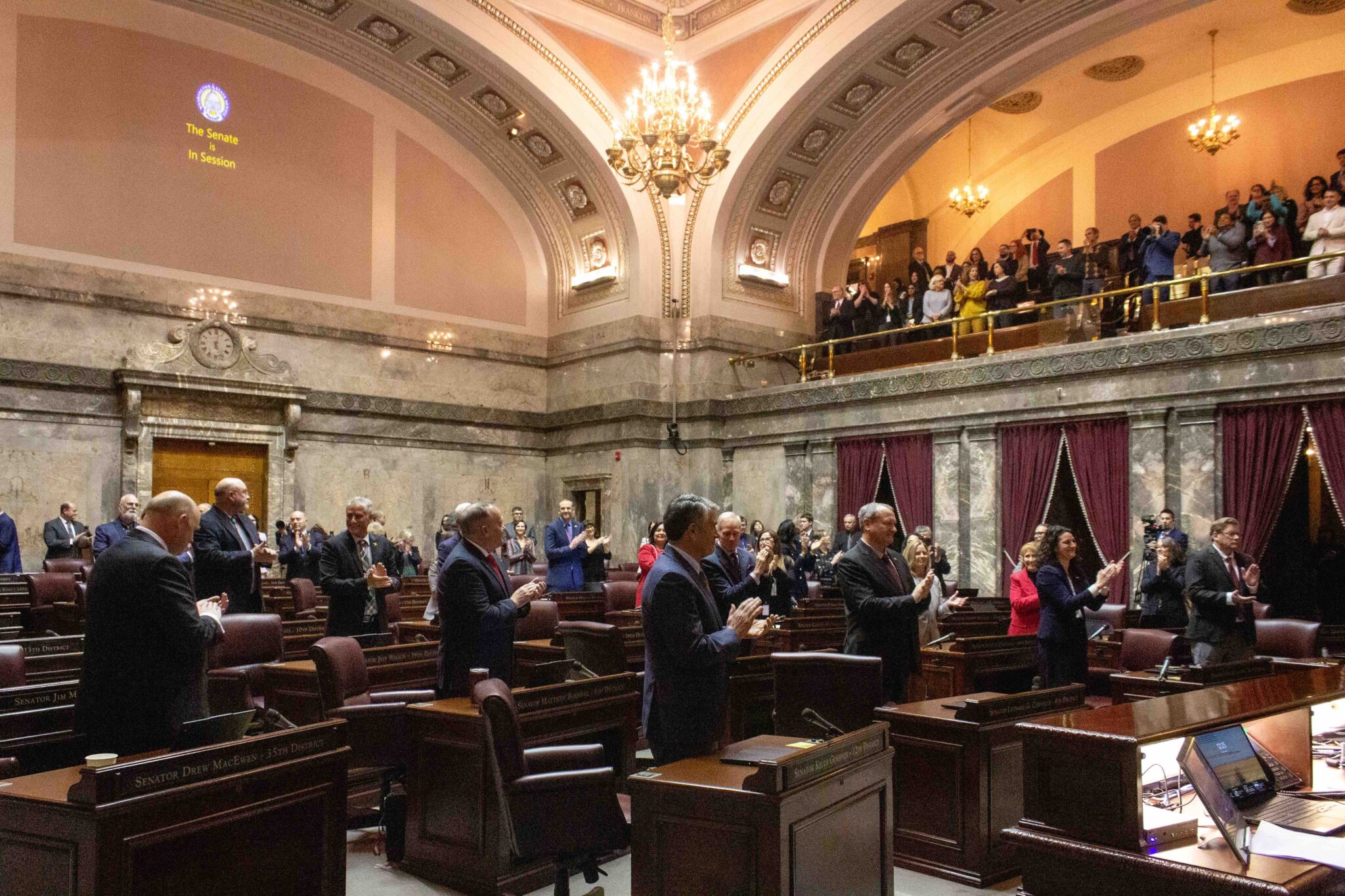
On the Senate floor, the central question is not just “Do we have the votes to confirm?” It is also “Do we have the votes and time to get to the vote?” That is where cloture comes in.
What cloture does
Cloture is the Senate’s procedure for ending debate on a matter and moving toward a final vote. In a chamber that prizes extended debate, cloture is the tool that prevents debate from becoming indefinite delay.
One point that trips up readers: invoking cloture is not the same as confirming the nominee. Cloture limits debate and sets the path to a final up-or-down vote, but the Senate still has to take that final confirmation vote.
How many votes does cloture require
For most legislation, the classic cloture threshold is three-fifths of the full Senate, typically 60 votes if there are no vacancies. But nominations are different today because of rule and precedent changes over the last decade:
- Most executive branch nominations and lower federal judges: cloture can be invoked by a simple majority.
- Supreme Court nominations: cloture can also be invoked by a simple majority under current Senate practice.
This is why you will hear commentators say the “filibuster does not apply to nominations” in the way it applies to most bills. The more precise statement is that the Senate has made it possible to end debate on nominations with a majority vote.
Why cloture still matters
Even when cloture requires only a majority, it can still be consequential because it consumes floor time. The timing is not static and the Senate has adjusted it, including reducing post-cloture debate time for many lower-level nominations (from 30 hours to 2 hours in 2019) to combat delay tactics. The exact time available can also vary by nomination type and the Senate’s current precedents.
Step 6: The final confirmation vote
After debate concludes or time expires under cloture, the Senate holds a confirmation vote. Most confirmations require a simple majority of senators voting, with the Vice President able to break a tie as President of the Senate.
Votes can occur by:
- Roll call vote: each senator’s position is recorded.
- Voice vote: used for many noncontroversial nominations.
- Unanimous consent: for groups of nominees or expedited consideration when no senator objects.
If confirmed, the nominee is not instantly “in office” in a literal sense. The appointment is completed through the formal commissioning and the taking of any required oaths. But the decisive Senate hurdle is over.
Workarounds: recess and acting officials
If confirmations are the normal pipeline, presidents also have limited ways to staff positions temporarily when the pipeline is slow or blocked.
Recess appointments
The Constitution allows the President to fill certain vacancies during a Senate recess. A recess appointee can begin serving without immediate Senate confirmation, but the appointment is temporary and expires unless the Senate later confirms the nominee. In modern practice, recess appointments are rarer and often legally and politically contested, in part because the Senate can structure its schedule to limit long recesses.
Acting officials
Presidents can also rely on “acting” officials, often under the Federal Vacancies Reform Act and related statutes. Acting service can keep an office functioning without a confirmed appointee, but it is time-limited and can trigger its own disputes about eligibility, authority, and whether the White House is sidestepping the Senate for too long.
What happens if the Senate does nothing
Not every nomination ends with a dramatic vote. Some simply expire.
Returned or withdrawn nominations
- Returned: Under Senate rules, nominations are often returned to the President at the end of a session, and especially at the end of a Congress, unless the Senate agrees to carry them over. A returned nomination can be resubmitted, but the clock essentially resets.
- Withdrawn: The President can withdraw a nomination, sometimes after it becomes clear that confirmation is unlikely.
This is one reason confirmation politics often centers on delay. Delay can be a strategy in itself, especially near election season or when Senate control may change.
Judges vs. executive nominees
The procedural steps are broadly similar, but the political and institutional incentives differ.
Why judicial nominations can be more volatile
- Lifetime tenure: Article III judges serve during “good Behaviour,” which in modern practice means they serve for life unless they resign, retire, or are removed through impeachment.
- Case-by-case power: judges can shape the law for decades through precedent.
- Fewer levers for correction: unlike executive officials, judges are not fired by the next President.
Why executive nominations can bog down anyway
Executive branch nominees often face intense scrutiny because they directly implement policy. Senators may use confirmations to extract commitments, raise local issues, or force votes that put colleagues on the record. Even routine positions can become leverage in larger fights over budgeting, oversight, or foreign policy.
A timeline you can remember
If you want a mental model that fits on a sticky note, it is this:
- Nomination submitted
- Referred to committee
- Vetting and paperwork
- Hearing (often)
- Committee vote
- Placed on calendar
- Floor debate and cloture (if needed)
- Final confirmation vote
The Constitution sketches the endpoints. The Senate’s rules and traditions define the journey. And the political reality is that every step is an opportunity: to investigate, to negotiate, to delay, or to force a decision.
That is the deeper meaning of “advice and consent.” It is not a single vote. It is a process built to make appointments harder than announcements, and to make power answerable before it becomes permanent.