
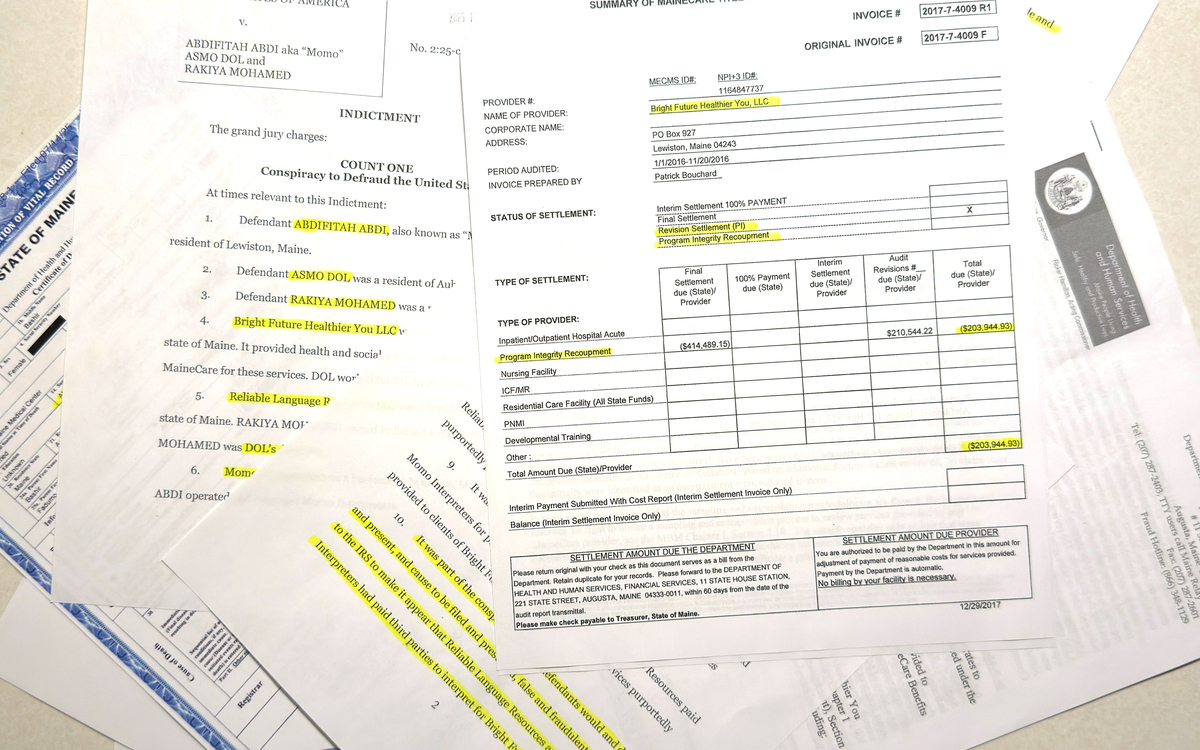
When Americans hear the phrase healthcare fraud, it often lands as a moral headline. Someone is cheating, someone is getting rich, and someone else is left holding the bag.
But the practical issue is more concrete. Fraud and abuse in federally subsidized healthcare can drain taxpayer dollars and strain programs that millions of people rely on. In a report released Tuesday, the House Energy and Commerce Committee warned that these programs are rife with fraud and abuse, “impacting every single American, in one way or another.”
The scale is not subtle. Rep. Jodey Arrington, discussing a joint op-ed with Rep. Blake Moore, warned that Medicare and Medicaid fraud is costing taxpayers $1 million every minute.
There is no estimate for Medicare and Medicaid fraud specifically. But a 2024 Government Accountability Office estimate found $233 billion to $521 billion in taxpayer dollars across federal programs may be lost to fraud every year. Federal healthcare programs made up 24% of federal spending in 2024.
Join the Discussion
What counts as fraud
Fraud is not the same thing as a billing mistake, and it is not the same thing as a policy dispute over what government should cover. In plain terms, healthcare fraud is deception aimed at getting public money paid out improperly.
The House Energy and Commerce Committee’s report focused heavily on provider fraud, where the money moves through doctors, clinics, suppliers, and other entities that submit claims. Examples described include providers submitting multiple claims for a single service, or billing for services and equipment for patients they have never seen at all.
That distinction matters because it affects what comes next. A sloppy claim can trigger audits and corrections. A scheme can trigger investigations and enforcement designed to stop repeat behavior and recover funds.
Why Medicaid is vulnerable
Medicaid is large, complicated, and shared between state and federal governments. The committee warned that Medicaid has vulnerabilities that make it particularly susceptible to fraud and abuse, tied in part to the program’s size and complexity.
For states, Medicaid is not a minor line item. The committee said Medicaid spending accounts for an average 30.7% of states’ budgets, and that those outlays have increased exponentially in recent years.
The report also highlighted how fast projected costs can grow inside state programs. It said California’s Medi-Cal spending is expected to rise from $83 billion per year in 2014 to $219.7 billion by 2027. It also said New York is projected to spend 11% more on Medicaid from all funding sources in 2027, totaling $124 billion.
Pay and chase
One of the most revealing phrases in the committee’s report is “pay and chase.”
That describes a familiar enforcement model in large benefit programs. Claims are paid first, then law enforcement investigates later if something looks suspicious. The committee argued this model is a poor fit for massive, complex healthcare programs because once money has gone out the door, recovering it is harder and slower, and the incentives for bad actors remain.
Who investigates
When fraud is tied to federal dollars, the federal government has a direct interest in policing it, and multiple layers of enforcement can be involved.
The committee highlighted the Department of Justice’s “Operation Gold Rush,” described as uncovering a scheme in which Russian organized crime actors billed over $10 million in false claims through 30 medical supply companies they purchased in a years-long scheme.
The committee also described additional foreign-linked schemes involving malign actors in places including Hong Kong, Georgia, Estonia, and Pakistan, alleging efforts to steal billions more in taxpayer dollars.
What Congress is doing
House Republicans are rolling out a package of 14 bills framed around closing loopholes, shrinking bureaucracy, improving fraud detection, helping states recoup losses, and creating incentives for states to pursue fraud.
The proposals were described as falling into three broad categories:
- Better identification of fraud in state and federal health programs
- Stronger enforcement of anti-fraud rules
- Accountability for states where fraud is allowed to run rampant
Several examples show how lawmakers are targeting specific control points where fraud can survive:
- A proposal led by Rep. August Pfluger would require states to designate a single role responsible for internal financial controls in state Medicaid programs.
- A proposal by Rep. Mike Rulli would require each state to report annually to the federal government on potential Medicaid fraud vulnerabilities and the state’s plan to fix them.
- A proposal by Rep. Nick Langworthy would require states to check whether someone enrolling in Medicaid had been removed from another taxpayer-funded healthcare program.
House Energy and Commerce Committee Chairman Brett Guthrie described the stakes in taxpayer terms: “Every dollar stolen by fraudsters or wasted on improper payments is a dollar that cannot be used to support families in need who rely on these programs.”
Eligibility and enrollment
Fraud does not only occur at the provider level. Eligibility and enrollment can be exploited too, especially when programs are large and verification is weak.
Vice President JD Vance announced last week that 760,000 enrollees under the Affordable Care Act, also known as ObamaCare, would be removed over fraud claims.
Why it matters
The committee’s report tied the issue to costs that reach beyond any single program. “Taxpayers that fund benefit programs with federal and state taxpayer dollars are cheated by fraud, inflating healthcare costs that are passed along to everyone.”
As lawmakers debate how to tighten oversight, the key questions are structural. Will enforcement remain pay and chase, or will policy push more verification and prevention upfront. And will states face clearer reporting duties and stronger incentives to close vulnerabilities before money goes out the door.