You can read the Sixth Amendment in under a minute. Its promise takes longer to absorb: “In all criminal prosecutions, the accused shall enjoy the right … to have the Assistance of Counsel for his defence.”
For much of American history, that sentence did not mean what modern audiences assume it means in state courts. It did not automatically guarantee a lawyer for a person too poor to hire one. And it certainly did not bind every state courtroom in the country.
Gideon v. Wainwright in 1963 is the case that turned the right to counsel from a federal ideal into an everyday reality for state felony trials. It is also a reminder of how constitutional rights often become “real” only after someone without power insists on being treated as if the text matters.
Join the Discussion
Gideon’s case began like a thousand others
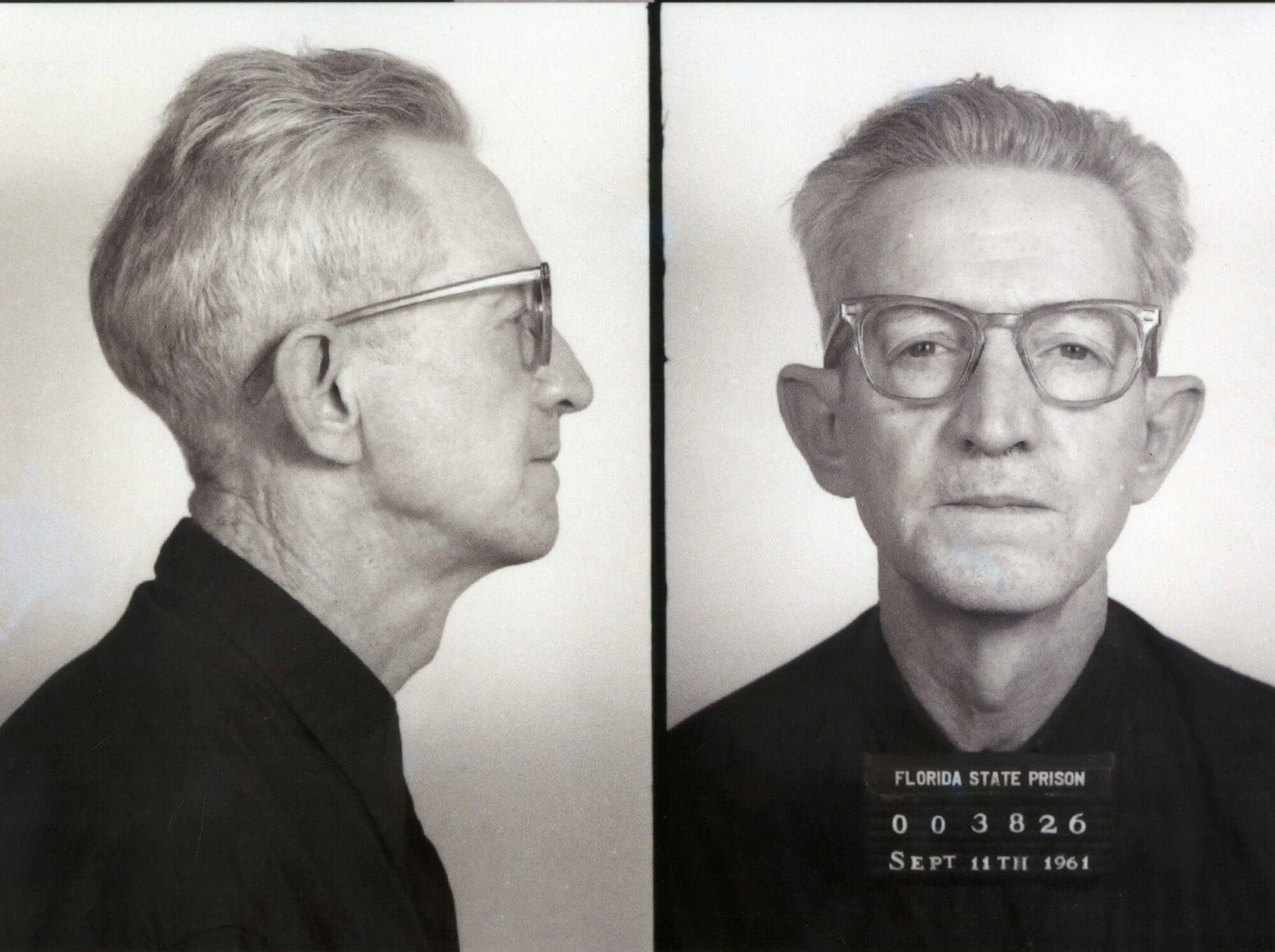
In 1961, Clarence Earl Gideon was charged in Florida with breaking and entering the Bay Harbor Poolroom in Panama City, with intent to commit petit larceny. Under Florida law, the charge was treated as a felony. Gideon was not wealthy. When his case went to trial, he asked the judge to appoint him a lawyer.
The judge refused. At the time, Florida required appointed counsel in capital cases, and appointment in other cases was limited and inconsistent. Gideon had to represent himself.
He tried anyway. He cross-examined witnesses, argued his own case, and did what a non-lawyer can do inside a system built by lawyers. The jury convicted him. He was sentenced to prison.
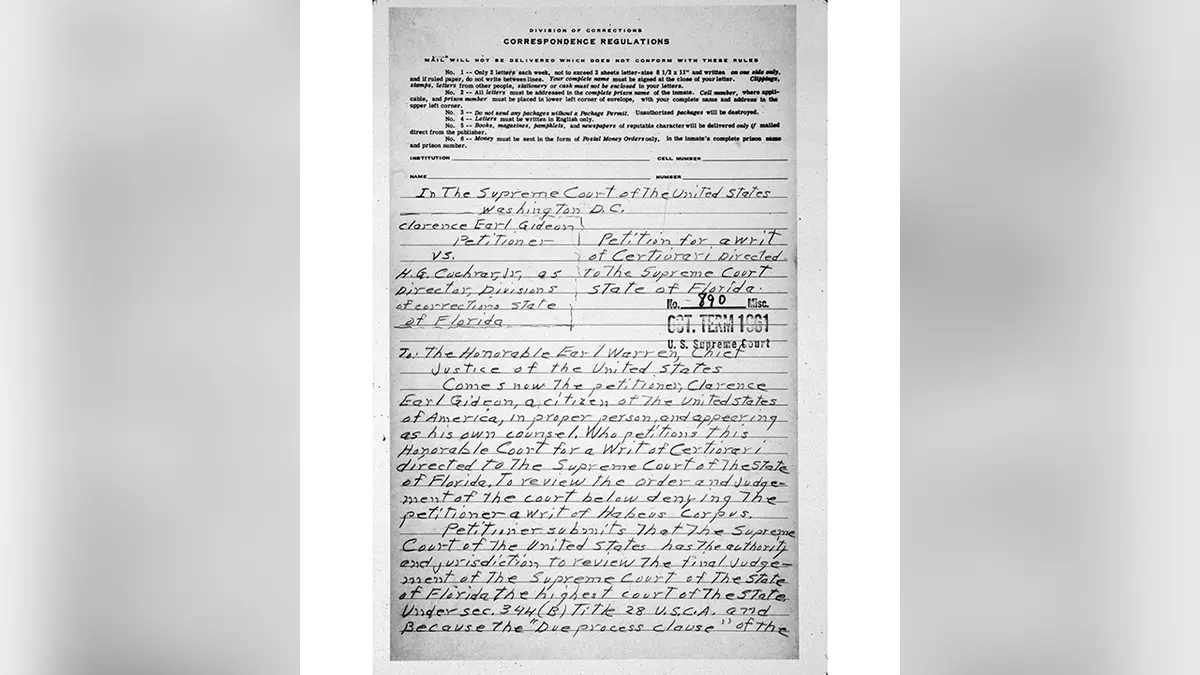
From his prison cell, Gideon wrote a petition to the Supreme Court of the United States on prison stationery, arguing that his conviction violated the Constitution. The Court agreed to hear him.
The Sixth Amendment did not automatically bind the states
This is the part many civic summaries skip, but it is the heart of Gideon: the Bill of Rights originally limited the federal government, not the states. That changed gradually through the Fourteenth Amendment, ratified after the Civil War, which prohibits states from depriving any person of liberty without due process of law.
Over the 20th century, the Supreme Court used the Fourteenth Amendment’s Due Process Clause to apply, or “incorporate,” many Bill of Rights protections against the states. Incorporation did not happen all at once. It happened case by case, right by right.
Before Gideon, the Court had taken a narrower view of the right to appointed counsel in state cases. In Betts v. Brady (1942), the Court held that states did not have to appoint counsel for indigent defendants in all felony cases, except in “special circumstances.” That approach produced inconsistent results and put trial judges in the position of deciding, case by case, whether a defendant was too helpless to go without a lawyer.
Gideon forced the Court to answer a simpler question: is a lawyer so fundamental to a fair felony trial that the Constitution requires states to provide one?
What the Court decided
In Gideon v. Wainwright (1963), the Court unanimously ruled that the Sixth Amendment right to counsel is a fundamental right essential to a fair trial. Because it is fundamental, it applies to the states through the Fourteenth Amendment.
The decision overruled Betts v. Brady. The Court’s message was plain: a felony trial is not a fair contest if one side has the machinery of the state and the other side has only the defendant’s untrained voice.
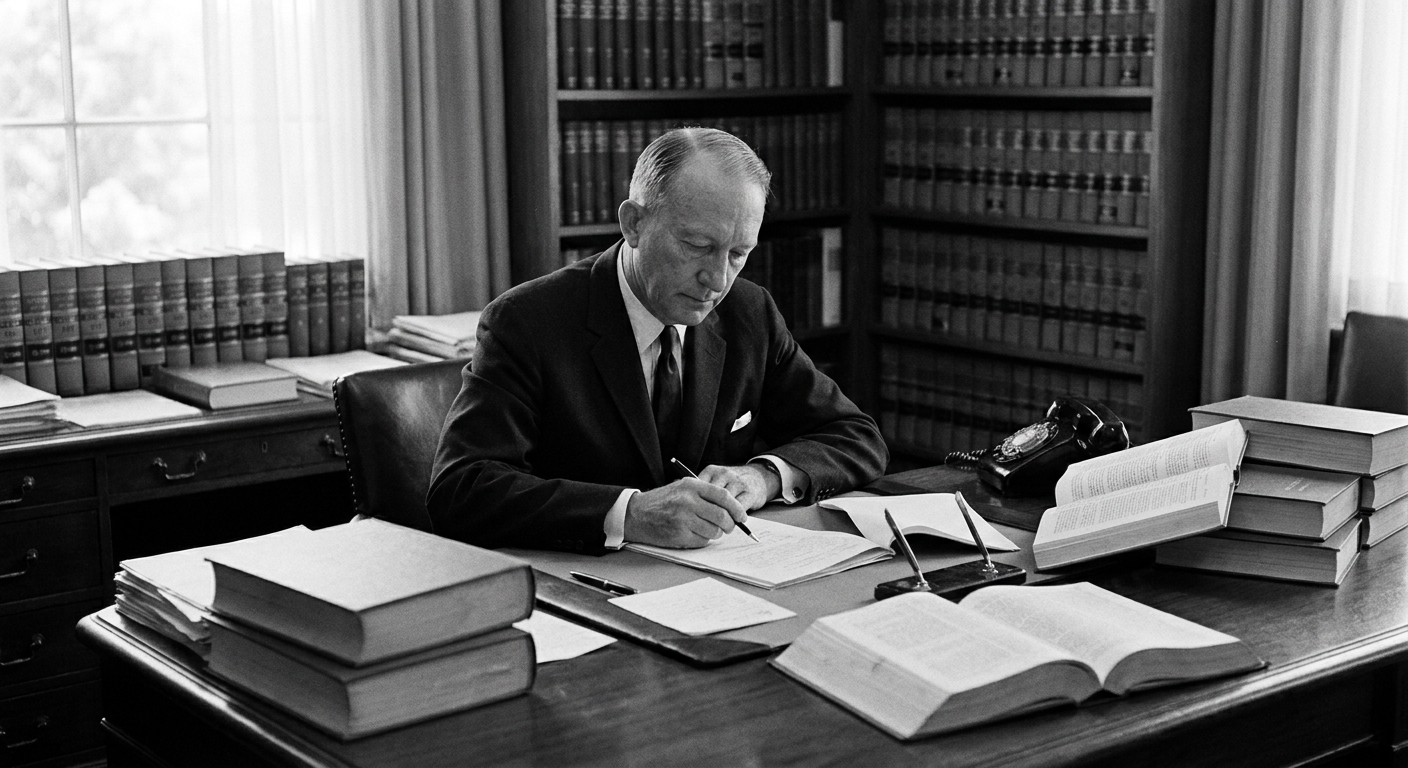
Justice Hugo Black wrote for the Court. His reasoning was practical as much as it was constitutional: even an intelligent person is usually no match for criminal procedure, rules of evidence, and the high stakes of imprisonment. A lawyer is not a luxury item in that setting. It is the basic tool needed to defend liberty.
In plain English: if the state charges you with a felony and you cannot afford a lawyer, the state must provide one.
Gideon was returned to Florida for a new trial, this time with counsel. With a lawyer, Gideon was acquitted.
What Gideon required states to do
After Gideon, states had a constitutional obligation to provide counsel to indigent defendants charged with serious crimes. In practice, that meant building or expanding systems to supply defense lawyers when a person could not afford one.
Two common models developed:
- Public defender offices, where salaried lawyers represent indigent defendants.
- Assigned counsel systems, where private attorneys are appointed by the court and paid by the state or county.
Gideon did not create public defender offices out of thin air, and some existed before 1963. But it created nationwide constitutional pressure. If a state could not supply lawyers, it could not constitutionally run felony prosecutions the way it always had.
It also changed what “fairness” had to look like in the real world, where most cases end in pleas rather than trials. Over time, the Supreme Court made clearer that the right to counsel includes competent advice during plea bargaining, especially once later decisions addressed plea offers and their consequences directly.
Felonies first, then more
Gideon involved a felony charge, and the holding is usually summarized that way. But the right to appointed counsel did not stay confined to felonies.
Any case that can put you in jail
In Argersinger v. Hamlin (1972), the Court held that a person may not be imprisoned for any offense, felony or misdemeanor, unless they were represented by counsel or validly waived counsel. Later, Scott v. Illinois (1979) clarified the line: counsel is constitutionally required when a defendant is sentenced to jail, not merely when jail is authorized as a possible penalty.
Then Alabama v. Shelton (2002) added an important layer: if a court imposes a suspended jail sentence that could later be activated, the defendant must have had counsel at the original proceeding. You cannot be sent to jail on a sentence that traces back to an uncounseled conviction.
These cases are not footnotes. They explain why the right to counsel is sometimes present in lower-level cases and sometimes absent, even when the charge feels serious to the person facing it.
When the right attaches
“You have the right to an attorney” is often treated as a single moment, like a switch that flips on at arrest. In constitutional law, it is more specific.
The Sixth Amendment right to counsel attaches when the government has moved from investigation to prosecution, meaning when “adversary judicial proceedings” begin. That typically happens at one of these points, depending on the jurisdiction:
- formal charge
- initial appearance before a judge
- indictment or information
- arraignment
Once the right attaches, it applies at critical stages of the prosecution, stages where legal decisions can shape the outcome in ways a layperson cannot reasonably navigate alone.
Critical stages in plain language
A “critical stage” is basically any point where the defendant needs a lawyer not as a formality, but as protection. Examples commonly include:
- Arraignment and other proceedings where rights are asserted or waived
- Plea negotiations and the decision to plead guilty
- Trial, including jury selection and witness examination
- Sentencing
It can also include certain identification procedures and hearings, depending on the facts and the jurisdiction. The theme is consistent: if the proceeding is one where mistakes are hard to undo, the Constitution expects counsel.
Like many rights, this one can be waived, but only if the waiver is knowing and voluntary. Courts typically require some form of inquiry to make sure the defendant understands what they are giving up.
Gideon is about state court
Even before Gideon’s incorporation logic did its work, federal criminal defendants already had a strong right to counsel in federal court. Congress and the courts developed structures for appointing counsel in federal cases.
What Gideon did was force the same seriousness onto state systems, where the overwhelming majority of criminal prosecutions occur. In civic terms, that is why Gideon belongs in the small set of cases that changed daily life more than they changed theory.
When counsel fails
Gideon answers the “whether” question: whether the state must provide a lawyer in serious criminal cases. The next question is uncomfortable but unavoidable: what if the lawyer is there, but does not do the job?
That is the world of ineffective assistance of counsel, most famously associated with Strickland v. Washington (1984). The basic idea is that the Sixth Amendment promises not just a warm body with a bar card, but representation that meets a minimal constitutional standard.
Under the modern test, a defendant generally has to show two things:
- Deficient performance: the lawyer’s work fell below an objective standard of reasonableness.
- Prejudice: the failure mattered, meaning there is a reasonable probability the result would have been different without the errors.
This is a high bar, and it is not meant to turn every bad lawyering moment into a new trial. But it exists because Gideon’s promise would be hollow if states could satisfy it by appointing counsel in name only.
Why Gideon still matters
Gideon is often told as a triumphal story, and it is one. But it is also a story about the difference between a right on paper and a right that can be used by ordinary people.
In practice, the right to counsel is where constitutional principle meets budgets, caseloads, and local political will. Public defenders carry enormous workloads in many jurisdictions. Rural counties sometimes struggle to find enough lawyers willing to take appointments. Underfunding can mean delays, fewer investigative resources, and pressure to resolve cases quickly.
Still, the central civic point stands: the Sixth Amendment right to counsel is one of the clearest examples of the Constitution prioritizing procedural fairness. Gideon insisted that the state cannot prosecute you for a serious crime and also leave you alone to decipher the law that will be used to take your liberty. That is not a technicality. It is a definition of what a legitimate criminal court is.
And it has limits. Gideon does not guarantee counsel for most civil cases, and it does not require appointed counsel for offenses that do not result in jail time. But where liberty is on the line, Gideon remains the baseline promise.