
After a 75-day funding lapse that left much of the Department of Homeland Security in a prolonged partial shutdown, the House voted Thursday to approve a Senate-passed spending measure that funds most DHS operations through September. The bill is expected to be signed swiftly by President Donald Trump, restoring regular funding for major DHS components and easing the immediate risk of missed paychecks for employees across DHS operations.

Join the Discussion
What the House did
The House approved the Senate’s DHS funding measure by voice vote. In practical terms, that meant lawmakers did not demand an on-the-record roll call, even though the bill had been at the center of an unusually long standoff.
The measure covers most DHS appropriations through September, bringing relief to agencies and employees caught in the middle of the extended funding lapse.
Why Johnson reversed
Speaker Mike Johnson had held the Senate bill for weeks, arguing that its language amounted to defunding law enforcement. Many House Republicans treated the Senate bill as effectively a nonstarter after the Senate passed it unanimously in March.
That posture changed after the White House urged the House to move quickly, warning that the administration’s stopgap options were nearly exhausted.
Asked about the shift, Johnson told reporters Wednesday, We’re not defying the White House. Everybody understands what we're doing. We're all one team.
The pay crunch
The scramble centered on a basic appropriations reality: federal agencies cannot spend money that Congress has not appropriated. When appropriations lapse, some employees are required to keep working because their roles are considered essential, but their pay can be delayed until funding is restored.
In an internal memo sent to congressional offices, the White House warned that without House action it would be unable to pay DHS personnel beginning in May. The memo also warned of operational consequences: If this funding is exhausted, the Administration will be unable to pay DHS personnel beginning in May, which will once again unleash havoc on air travel, leave critical law enforcement officers including our brave Secret Service agents and the Coast Guard without paychecks, and jeopardize national security.
In other words, a budget impasse does not stay theoretical for long. It hits workers and the public quickly, especially in areas like travel security and frontline operations.
What gets funded
With this bill, funding is restored for a wide range of DHS operations, including the Secret Service, the Coast Guard, the Federal Emergency Management Agency, and the Transportation Security Administration, among other agencies.
Immigration and border enforcement funding is being pushed into a separate fight. Republicans are drafting a party-line package aimed at funding Immigration and Customs Enforcement (ICE) and Customs and Border Protection (CBP). But that legislation is not expected to move before Congress leaves Washington for recess.
President Trump has asked top Republicans to send that immigration enforcement measure to his desk by June 1.
Pressure inside the House
Not all of the push came from the White House. Some House Republicans argued the situation had become untenable, especially with recess approaching.
Rep. Nick Langworthy said, We have got to fund DHS, even if it's 80% of DHS. We’re in a dangerous position with funding levels right now. We have to get this done before we even think of leaving on a recess.
Rep. Troy Nehls framed it in human terms, asking why Congress would allow the standoff to continue when families were being squeezed: This is hurting families of individuals willing to serve their communities, their nation, their state. Why wouldn't we?
Shutdown fallout
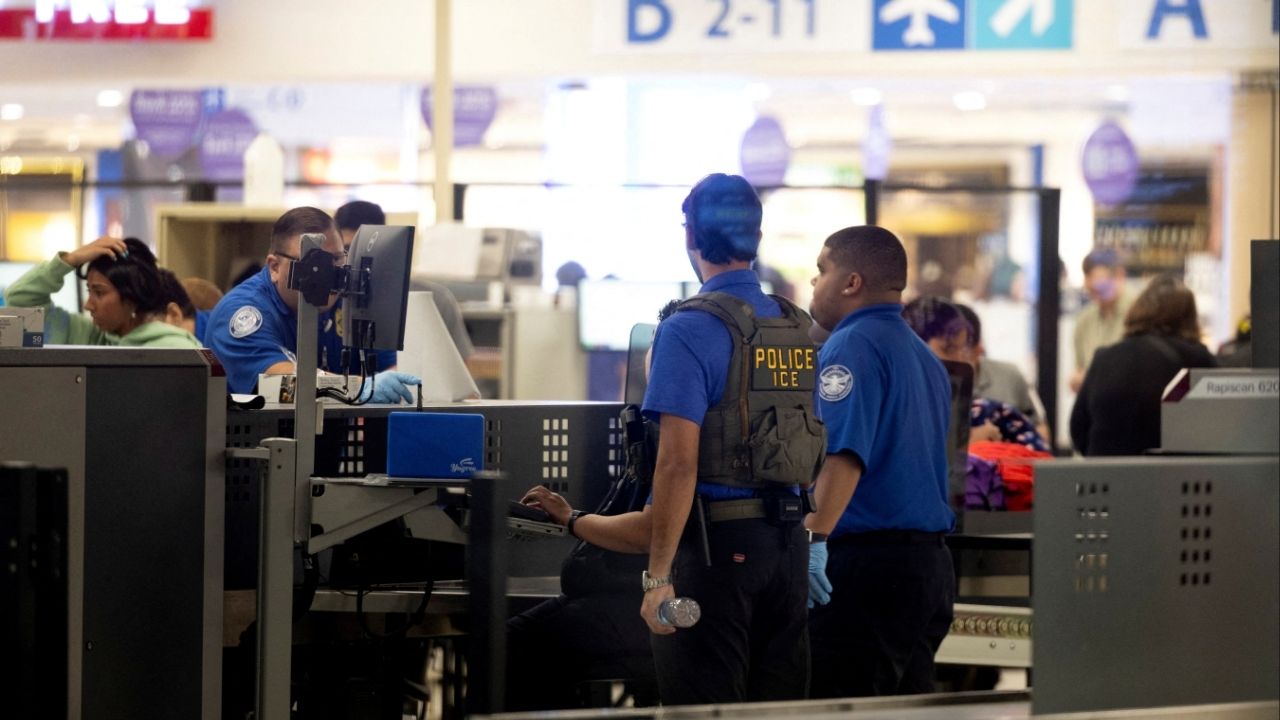
One of the clearest signs of strain came from TSA staffing. DHS announced this week that more than 1,000 TSA agents quit their jobs during the shutdown as pay was withheld for parts of the funding lapse.
Those departures matter beyond worker hardship. TSA staffing levels shape the daily experience of air travel, including screening throughput and checkpoint delays. In other words, a budget fight in Washington can quickly become a lived experience in airports across the country.
Why Democrats supported it
Democrats supported the Senate measure in part because it did not include funding for ICE and CBP, the agencies at the center of the immigration enforcement dispute that helped trigger the shutdown in the first place.
House Minority Leader Hakeem Jeffries described the bill at a Monday press conference as funding DHS except for immigration enforcement: Bring the bipartisan Senate-passed bill to the House Floor today, and it would fund the Department of Homeland Security in its entirety with the exception of ICE and the violent Republican mass deportation machine.
Why there was no roll call
Even some conservatives who objected to the broader precedent did not force a recorded vote. That procedural choice helped move the bill quickly, without weeks of additional intraparty friction.
Rep. Chip Roy explained the decision this way: That vote was going to pass if there was a suspension vote, so we agree to let it go by voice [vote].
The takeaway
It is easy to think of DHS funding as just another line item. The shutdown, and the rush to prevent missed May paychecks, shows how quickly an appropriations breakdown can ripple outward into airport security, delayed pay for law enforcement and Coast Guard personnel, and workforce attrition that can outlast a single budget deal.
Thursday’s vote does not end every dispute over immigration enforcement dollars, but it does move most of DHS back onto stable funding through September.