
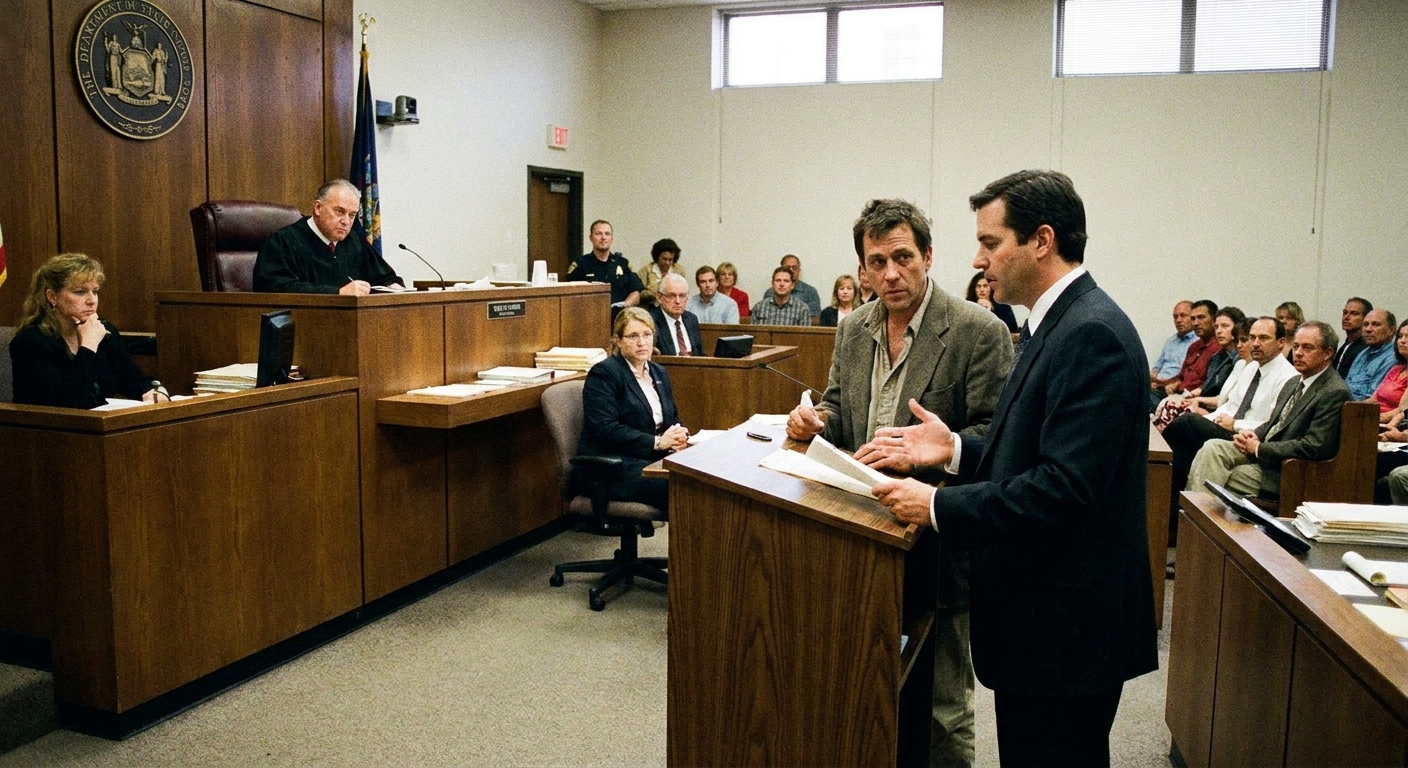
An arraignment is the moment the criminal justice system stops being abstract and becomes personal. It is often the first time you stand in front of a judge after an arrest or after charges are filed, and it answers a deceptively simple question: what, exactly, is the government accusing you of and what happens to you while the case moves forward?
If you have ever watched a courtroom scene where someone stands, hears the charge, and says “not guilty,” you have seen the cultural shorthand for arraignment. The real proceeding can be fast, procedural, and deeply consequential. It is where liberty, money, counsel, and time collide.
One important caveat: in many places, the “first appearance” (also called an initial appearance) is distinct from “arraignment,” especially in felony cases. Some courts combine these events. Others split them across separate dates and even separate judges.
Join the Discussion
The basic definition
An arraignment is a court hearing where a defendant is formally told the criminal charges and asked to enter an initial plea. In many jurisdictions it is also where the judge confirms whether the defendant has a lawyer and may address release conditions, including bail.
Arraignment can happen in state or federal court. The labels and steps vary by jurisdiction, but the core idea is consistent: the case becomes a case in open court, on the record, with the defendant present.
In some court systems, arraignment is bundled with an initial appearance and a bail hearing. In others, arraignment happens later, after a charging document is filed or after a grand jury returns an indictment.
What happens at an arraignment
Most arraignments follow a predictable sequence. Not every step occurs in every court, and some steps might happen at a separate initial appearance instead. These are the common building blocks.
1) The judge calls the case
The court confirms the defendant’s identity and that the right person is before the judge. This can sound mundane, but it matters. Criminal cases are paperwork heavy, and mistakes do happen.
2) The charges are read or summarized
The defendant is informed of the charge or charges. Sometimes the judge reads them; sometimes the judge confirms that the defendant received the charging document and understands the general nature of the allegations. In many courts the reading can be waived. In federal court, this is commonly tied to a complaint, information, or indictment.
3) The court addresses counsel
The judge asks whether the defendant has an attorney. If the defendant cannot afford one, the court may begin the process of appointing counsel or setting a public defender screening.
4) A plea is entered
The defendant is asked to plead. The most common arraignment plea is not guilty, which preserves the right to fight the charge and triggers the next stages of the case. Depending on the jurisdiction and the charge, other plea options can include guilty or no contest (where permitted). In some courts, if a defendant is unrepresented or chooses not to plead, the court may enter a not guilty plea on the defendant’s behalf.
5) Release and bail are addressed
If the defendant is in custody, arraignment or an accompanying initial appearance is often where the judge decides whether the person will be released and under what conditions. This is where bail, non-monetary conditions, protective orders, and “no contact” provisions often enter the picture.
6) Next dates and deadlines are set
The court schedules future hearings, such as a preliminary hearing, motion deadlines, or a pretrial conference. The case moves from “first hearing” to “calendar management,” which is where many outcomes are shaped.
Arraignment and other hearings
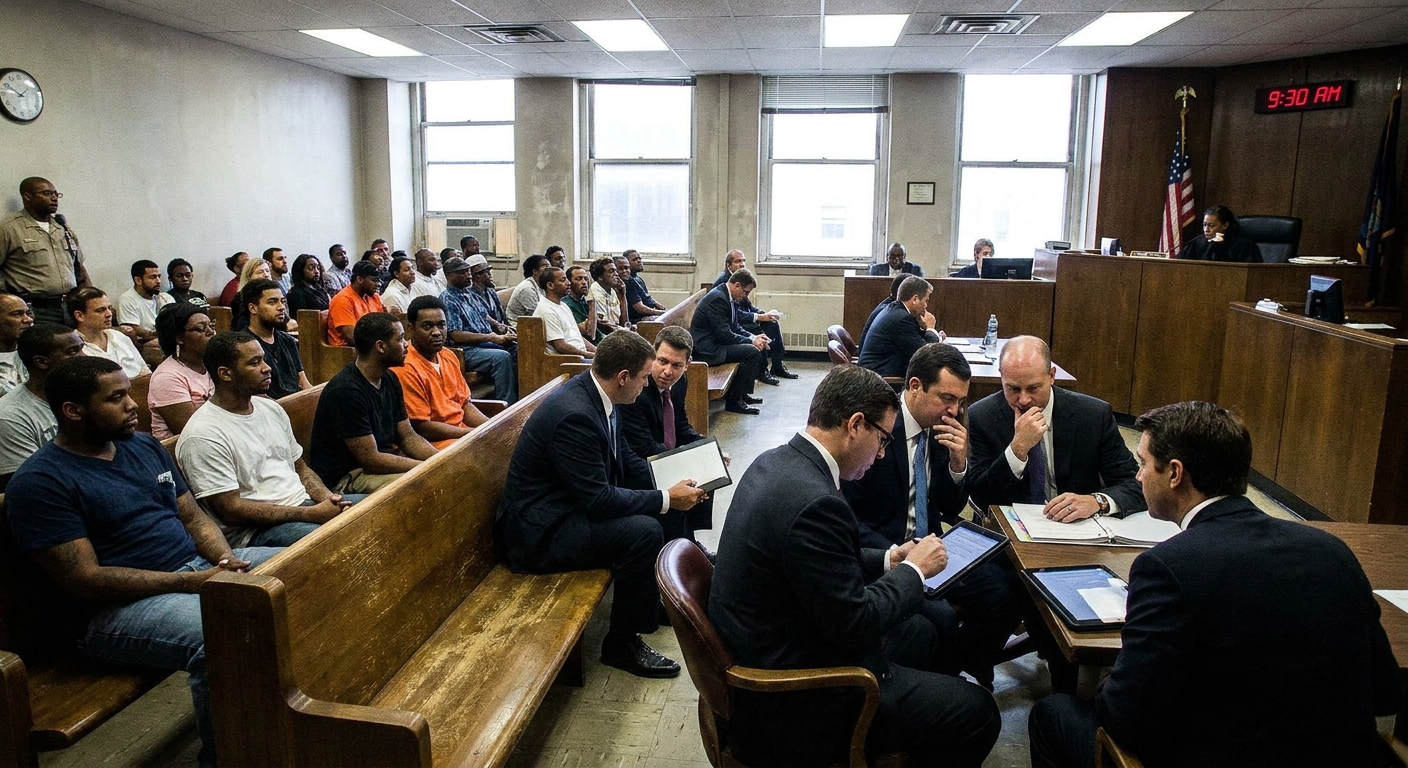
Criminal procedure uses overlapping terms, and courts do not all use them the same way. It helps to separate the concepts and remember they can be combined.
- Initial appearance or first appearance: an early hearing (often soon after arrest if the person is in custody) where a judge addresses basic rights, counsel, and release. In some places this is when bail is set.
- Arraignment: the hearing where charges are formally presented and a plea is entered.
- Indictment: a formal charging document issued by a grand jury (common in felonies and in federal cases for most serious charges).
- Information: a formal charging document filed by a prosecutor, typically without a grand jury.
- Preliminary hearing: a hearing where a judge decides whether there is probable cause to move forward on certain charges, if no grand jury indictment has already taken that role.
As a rough practical pattern, misdemeanor cases often move quickly from arraignment into pretrial conferences and plea negotiations. Felony cases more commonly route through a preliminary hearing or grand jury process, and arraignment may be one step in that longer track.
Why it matters
Arraignment can feel procedural, but it can change the case’s trajectory in practical ways that have nothing to do with guilt or innocence.
Bail decisions can pressure outcomes
If a defendant cannot afford bail and remains in jail, every day becomes leverage. People plead to get out. They miss work. They risk housing. They lose childcare. This is not theory. It is the real-world friction that turns legal rights into negotiated compromises.
Protective orders can redraw a life
In domestic violence cases or cases involving alleged threats, a judge may issue orders that restrict contact with certain people or bar a defendant from returning home. Those conditions can be necessary for safety, but they can also be sweeping. Often, this is where those lines are drawn first.
Clocks and deadlines can start early
Some key timelines, including speedy trial calculations and motion deadlines, may be tied to arraignment or another early event, depending on local rules and the type of case. The safe assumption is that early dates matter and missing them can have consequences.
Rights in play
The Constitution does not say “arraignment” in so many words, but arraignment and related first-appearance hearings sit at the intersection of several guarantees that do appear in the text and in Supreme Court doctrine.
Sixth Amendment: counsel
The Sixth Amendment guarantees “the Assistance of Counsel” in criminal prosecutions. Modern doctrine treats certain early proceedings as critical stages, meaning counsel is especially important because rights can be lost or positions can be cemented. When the Sixth Amendment right “attaches” depends on when adversarial judicial proceedings begin, which is often tied to formal charging and a first appearance before a judicial officer. In many jurisdictions, arraignment is a critical stage, but the timing and labels can vary.
Sixth Amendment: notice
The Sixth Amendment also promises that the accused shall “be informed of the nature and cause of the accusation.” Arraignment operationalizes that principle. It is the system’s formal way of saying: these are the allegations, in court, on the record.
Eighth Amendment: bail
The Eighth Amendment prohibits “excessive bail.” That does not automatically guarantee a right to bail in every case, and states vary widely in their bail systems. But early hearings are where bail is commonly addressed, and where the excessiveness principle becomes a concrete argument about amounts, conditions, and risk.
Fifth and Fourteenth Amendments: due process
Arraignment is part of due process because it is a structured, public procedure that helps prevent people from being held in limbo without being told why, without counsel, and without court supervision. In state cases, due process protections flow through the Fourteenth Amendment.
Fourth Amendment: probable cause and detention
The Fourth Amendment’s probable cause framework shadows the early timeline of a case. After a warrantless arrest, courts generally must make a prompt probable cause determination, often described through the Gerstein and Riverside line of cases and commonly happening within about 48 hours. Depending on the jurisdiction, that determination may occur at an initial appearance, at a separate probable cause review, or alongside an arraignment.
What plea to enter
For many defendants, the default plea at arraignment is “not guilty.” It is not a public declaration that you will go to trial. It is a legal move that preserves options while your attorney reviews the evidence, police reports, body camera footage, lab results, and witness statements.
Guilty pleas at arraignment do happen, especially in low-level cases where a negotiated disposition is already on the table. But entering a plea is not a formality. It is a choice with consequences and it should be made with counsel whenever possible.
This is general information, not legal advice. Plea options and best practices vary by state, court, and case facts. If you have a pending case, consult a licensed attorney in your jurisdiction.
How soon it happens
The timing varies by state, by county, and by whether the arrest occurred on a weekend or holiday. Many jurisdictions aim to bring arrested individuals before a judge quickly, often within a day or two, especially if the person remains in custody. If the person is cited and released, arraignment may be scheduled weeks later.
Because timing rules are local and fact-specific, the safest practical answer is: arraignment is usually one of the first scheduled court appearances after an arrest or after charges are filed, and it may be combined with or follow a separate initial appearance.
Can charges change
Yes. Charges can be amended, added, reduced, or dismissed as the case develops. Prosecutors may file additional counts after reviewing evidence. Defense attorneys may persuade prosecutors to dismiss weak allegations. Judges may dismiss certain charges if legal requirements are not met.
Arraignment is the starting line for the formal case, not the final word on what the case becomes.
Arraignment day questions
Will I be handcuffed in court?
Sometimes, especially if you are in custody. Court security practices vary by courthouse and by the judge’s policies.
Will the judge hear my side?
Arraignment is usually not where the facts are litigated in full. The judge may hear limited information relevant to bail and conditions. A full defense typically comes later through motions, negotiation, and trial.
Can I talk to the prosecutor?
Many courts encourage counsel-to-counsel conversations. Defendants who are represented generally should not speak directly to the prosecutor without their attorney.
What if I miss it?
In many jurisdictions, missing arraignment can trigger a bench warrant and may result in stricter release conditions. Depending on the facts and local law, it may also lead to a separate failure-to-appear charge. If you cannot appear, contact your attorney immediately and follow local court instructions.
What should I bring or ask for?
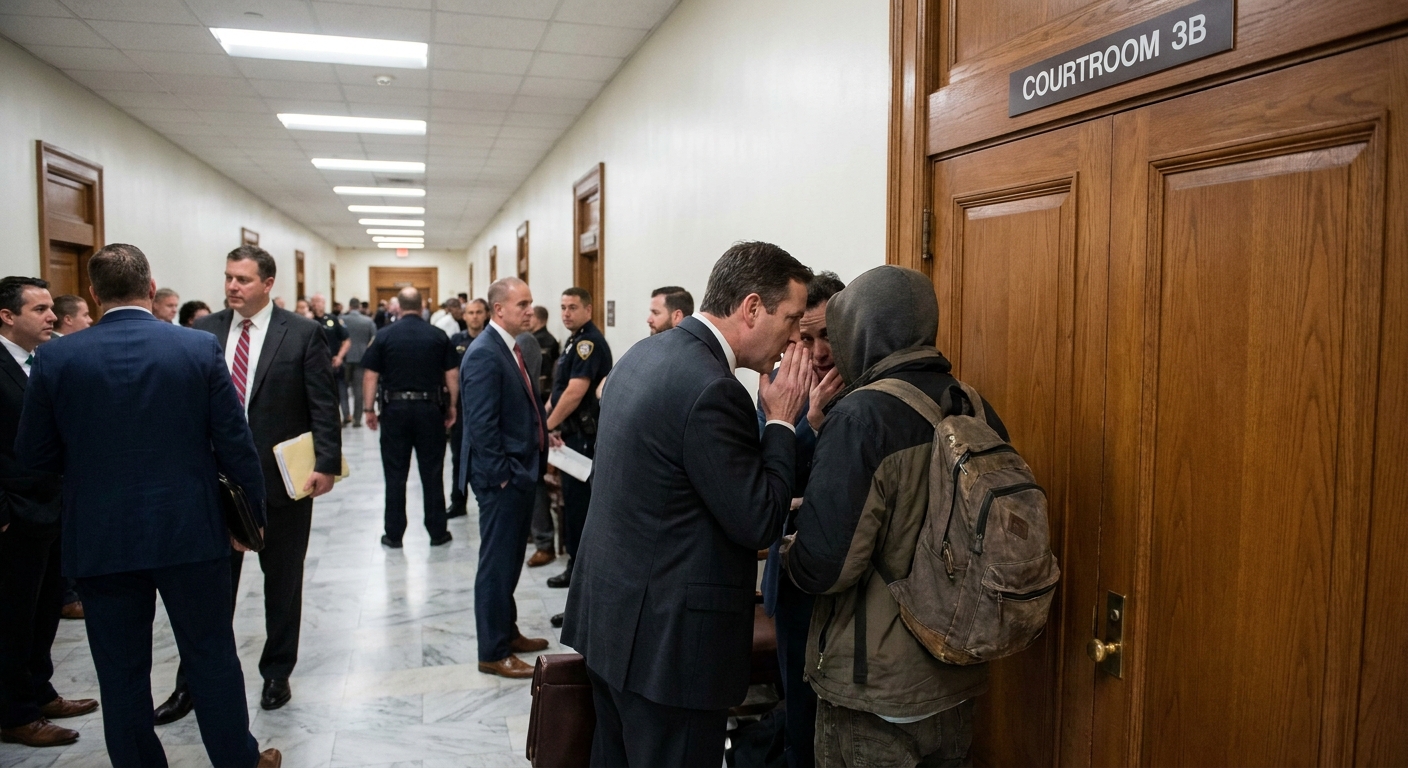
Bring any paperwork you were given at arrest or release (citations, bond papers, notice of hearing), and any proof relevant to release conditions if your attorney requests it. If you need an interpreter or disability accommodation, ask the court as early as possible. Some courts conduct arraignments by video, especially for in-custody defendants, so do not be surprised if the proceeding is remote.
The civics point
Arraignment is easy to dismiss as procedural, which is exactly why it matters. It is one of the few moments early in a case where constitutional ideals are supposed to become real: notice, counsel, judicial oversight, and limits on arbitrary detention.
When arraignment works well, it is a guardrail. When it becomes rushed, inaccessible, or driven by money bail alone, it becomes a funnel.
Either way, it is not a TV scene. It is the opening chapter of the government’s case against a person, written in the language of rights, deadlines, and decisions that can echo for years.
Quick takeaways
- Arraignment is a formal hearing where charges are stated and a plea is entered.
- Depending on the jurisdiction, arraignment may be separate from or combined with an initial appearance and a bail hearing.
- It often includes decisions about bail and release conditions.
- Key constitutional principles implicated include notice, counsel, due process, and limits on excessive bail.
- A not guilty plea at arraignment is common because it preserves options while evidence is reviewed.