
Congress can investigate you. Congress can subpoena you. Congress can vote to hold you in contempt.
But there is one power that feels uniquely severe because it is personal and final: Congress can kick out one of its own.
That power is called expulsion, and it is not a criminal conviction. It is not a recall election. It is Congress using its own constitutional authority to protect its institutional integrity and, in theory, the public’s trust.
It is also rare. In all of U.S. history, Congress has expelled 20 members total: 15 senators and 5 House members. Most of those cases cluster around the Civil War and a smaller set of corruption and criminal scandals.

Join the Discussion
Where the power comes from
The authority is explicit in the Constitution. Article I, Section 5, Clause 2 provides:
“Each House may determine the Rules of its Proceedings, punish its Members for disorderly Behaviour, and, with the Concurrence of two thirds, expel a Member.”
That sentence does a lot of work. It means expulsion is not something Congress “invented” through custom. It is part of the constitutional design. Each chamber is expected to police itself, and the Constitution sets a high threshold: a two-thirds vote.
One technical but important point: in practice, “two-thirds” is understood as two-thirds of the members present and voting (with a quorum), not necessarily two-thirds of the total membership.
It is also important what Article I does not do. It does not define “disorderly Behaviour.” It does not list offenses. It does not prescribe a trial format. Instead, it gives each chamber broad discretion to build procedures through its rules, committees, and precedents.
How expulsion happens
The exact steps can vary, but the typical modern pathway is recognizable:
- A resolution is introduced proposing expulsion (or directing an inquiry).
- An investigation develops a record, often through the House or Senate ethics committee, sometimes with a special investigative panel.
- A committee report lays out findings and recommends an outcome.
- The full chamber debates the resolution.
- The chamber votes. Expulsion requires two-thirds of those present and voting (with a quorum).
This is not a courtroom process, but it is still a process. And when Congress is doing something as drastic as removing an elected member, the record is the difference between an institutional act and a political stunt.
Expulsion is rare by design
Expulsion is Congress’s most extreme internal penalty, and it is historically uncommon. The two-thirds requirement makes it hard to do in a highly partisan environment, and the political costs can be high even when the conduct is widely condemned.
Most expulsions have occurred in a narrow set of circumstances:
- Civil War era cases, when members were expelled for supporting the Confederacy.
- Bribery, corruption, or serious criminal conduct, typically when evidence is overwhelming and public pressure is intense.
In modern times, expulsions are so uncommon that a single case can become the reference point for a generation. One recent example is Rep. George Santos, who was expelled from the House in 2023 after a House Ethics Committee report and mounting legal and political fallout.
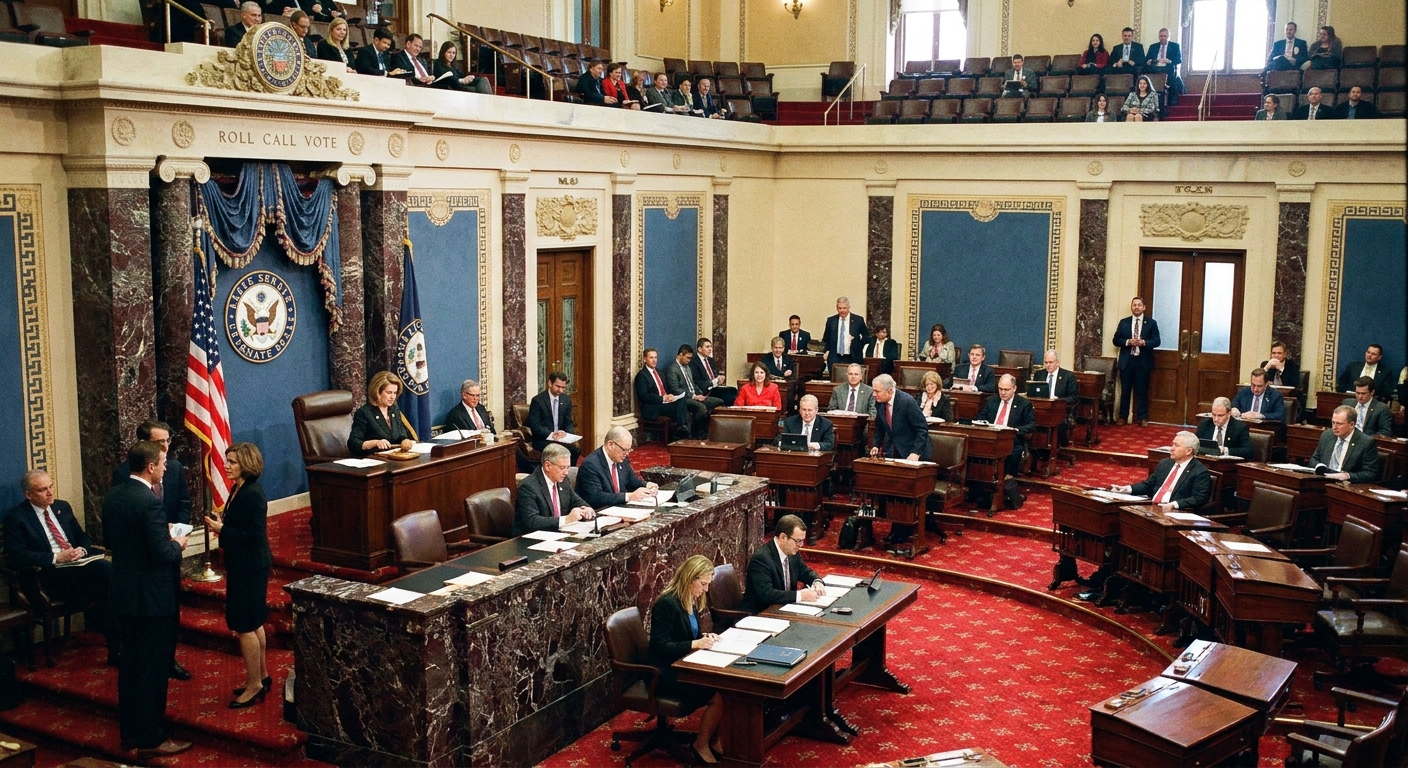
Expulsion vs. other penalties
These terms get blurred together in headlines, but they are constitutionally and practically different.
Expulsion
- Who does it: The House or the Senate, to one of its own members.
- Vote threshold: Two-thirds of members present and voting (with a quorum).
- Effect: The member is removed from office immediately. The seat becomes vacant and is filled under state law, usually by a special election for the House. Senate vacancies follow state-specific rules under the framework of the 17th Amendment, and many states allow a temporary gubernatorial appointment until an election, but not all do.
- Political meaning: Congress is saying, “You are no longer fit to sit with us.”
Censure and reprimand
Censure is often described as Congress formally condemning a member. A reprimand is generally viewed as less severe. The exact labels and consequences depend on chamber rules and precedent, but the core point is consistent:
- Vote threshold: Typically a simple majority.
- Effect: The member keeps the seat. The punishment is reputational and institutional, not removal.
Other consequences can also attach, including loss of committee assignments or other internal restrictions. Some sanctions can have financial dimensions in specific contexts, but expulsion is the cleanest and most absolute tool: removal.
This article is not a substitute for our deeper explainer on censure, but the contrast matters. Censure is punishment that leaves voters’ choice intact. Expulsion overrides it for the remainder of the term.
Resignation
Resignation is not a congressional punishment at all. It is a member’s choice to leave office. Sometimes it happens because an expulsion vote is looming, because a criminal case is advancing, or because party leaders are applying pressure behind closed doors.
From the public’s perspective, resignation can look like accountability. From Congress’s perspective, it can also function as an escape hatch that avoids the two-thirds vote and sets no formal precedent.
Expulsion vs. exclusion
One common source of confusion is the difference between expulsion and exclusion.
- Expulsion removes a sitting member and requires a two-thirds vote under Article I, Section 5.
- Exclusion is the refusal to seat a member-elect. It is a separate power tied to each chamber’s authority to judge elections and qualifications. It is not the same as expelling someone who has already been sworn in, and it operates under different rules and precedents.
If readers take only one thing from this distinction, it should be this: expulsion is Congress removing one of its own midstream. Exclusion is Congress refusing to begin that relationship at all.
What “due process” means inside Congress
When people hear “due process,” they often picture a courtroom. But expulsion is not a criminal prosecution. It is an internal constitutional power exercised by a legislative body.
Still, Congress is not a free-for-all. In modern practice, both chambers generally provide procedural safeguards that resemble due process norms, even if they are not identical to judicial due process.
Common expectations
- Notice of the allegations and the basis for potential discipline.
- An investigative record, often compiled by an ethics committee or a special investigative panel.
- An opportunity to respond, including written responses and sometimes testimony.
- Committee review with findings and recommendations.
- A vote of the full chamber for expulsion, with the two-thirds requirement.
These steps matter for legitimacy. If expulsion is supposed to be an institutional act, not a partisan weapon, it needs to be anchored in a record that other members and the public can evaluate.
There is also a practical reason Congress tends to build a robust record: expulsion is easy to frame as disenfranchisement. Removing an elected representative is one of the few actions Congress can take that directly nullifies voters’ immediate choice. A careful process is how Congress defends that decision.
House vs. Senate practice
The Constitution gives the House and Senate the same expulsion power, but the chambers operate differently, and those differences shape how discipline unfolds.
The House
- Size and pace: With 435 members and frequent turnover, House discipline can move in a more publicly visible and politically volatile way.
- Ethics structure: The House has a standing ethics process, and it has also used special investigative mechanisms in major cases.
- Vacancies: A House expulsion creates a vacancy filled by special election, which can alter political control in close margins.
The Senate
- Institutional culture: The Senate is smaller, longer-serving, and often more protective of norms and relationships, even when those norms are strained.
- Ethics structure: The Senate also has an ethics committee, and disciplinary matters often feel more deliberative, in part because there are only 100 members and each is a higher-profile institutional actor.
- Vacancies: A Senate expulsion triggers state-specific vacancy rules under the 17th Amendment framework. Many states permit temporary appointments by the governor until an election, but the details vary.
In both chambers, though, the math is the same: getting to two-thirds usually requires bipartisan agreement. That is why expulsions tend to cluster around moments when the evidence is overwhelming or the conduct is viewed as incompatible with membership itself.

Can Congress expel someone without a conviction?
Yes. Expulsion is not conditioned on a criminal conviction. Article I gives each chamber authority to punish and expel for “disorderly Behaviour,” a phrase that can include but is not limited to criminal acts.
That said, criminal convictions often provide clarity. They create a public factual record and remove ambiguity about what happened. In cases without convictions, the chamber usually faces more intense scrutiny over whether the process was fair and whether the evidence meets an institutional standard worthy of expulsion.
Can voters override an expulsion?
Sometimes, indirectly. Expulsion creates a vacancy, and the seat is filled under state law. The expelled member can, depending on state election rules and party dynamics, run again for the seat.
The Constitution itself does not impose a permanent ban on future service as a consequence of expulsion. So expulsion is best understood as removal from the current term, not automatic political exile.
Why this power matters
Most of the time, Congress chooses lesser tools: investigation, public criticism, internal sanctions, committee removal, or the slow pressure of reputational damage. Expulsion sits at the far end of that spectrum, and the fact that it is rarely used is part of its constitutional function.
It is the warning label on self-government: the people elect members, but the chambers retain a backstop to protect the institution when a member’s conduct threatens it.
If you want the enduring civics lesson, it is this. Congress was built with internal discipline because the Framers assumed politics would be messy. They did not assume it would be self-correcting. That is why the Constitution includes an option that is both drastic and deliberately difficult.
Quick takeaways
- Source: Article I, Section 5, Clause 2.
- Threshold: Two-thirds of members present and voting (with a quorum) in the House or the Senate.
- Nature: Legislative discipline, not criminal punishment.
- Rarity: 20 total expulsions in U.S. history (15 senators, 5 House members), concentrated in the Civil War era and a smaller set of major corruption and criminal cases.
- Alternatives: Censure and reprimand condemn without removing. Other sanctions can include committee penalties. Resignation is voluntary.
- Process: Not a courtroom, but modern practice typically includes notice, investigation, an opportunity to respond, and a recorded vote.
- Common confusion: Expulsion (removing a sitting member) is different from exclusion (refusing to seat a member-elect).