
There is a particular kind of constitutional alarm bell that rings when prosecutors go digging through a member of Congress’s communications records, especially when the member is not notified at the time because a third party is gagged from saying anything.
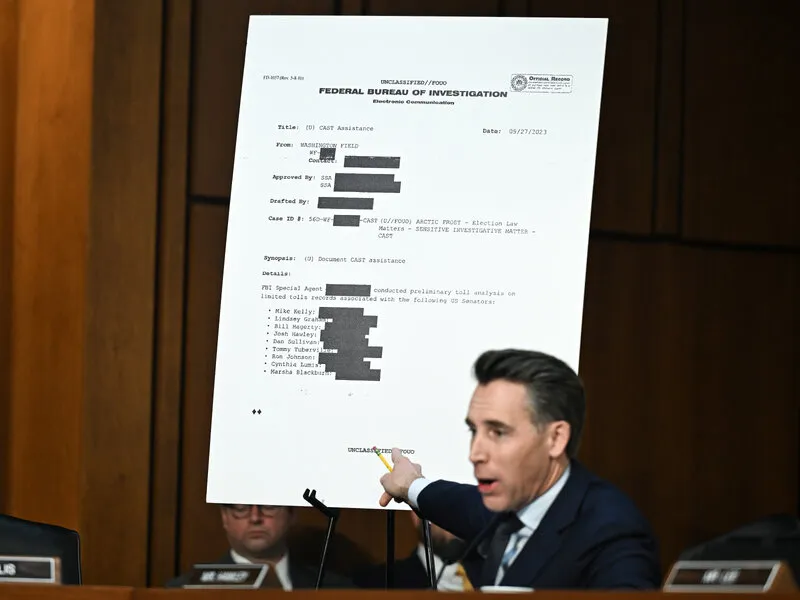
That alarm is sounding now because Sen. Marsha Blackburn has filed a federal lawsuit against John L. “Jack” Smith in his personal capacity after her phone toll records were obtained through a grand jury subpoena during Smith’s special counsel investigation known as Arctic Frost. Her complaint asks a court to declare Smith’s appointment unconstitutional, require the return and destruction of the records, and award $1 in nominal damages.
Underneath the headlines is a durable civics question: Can a special counsel lawfully obtain a senator’s phone records? The Constitution does not give a one-sentence answer. It gives a structure, and then it forces everyone to argue inside it.
Join the Discussion
Start with the tool: subpoena, not raid
The first constitutional instinct many people have is to picture a search warrant and a team of agents. But what happened here, as described in Blackburn’s complaint, is different: a grand jury subpoena sent to a phone carrier for toll records, paired with a court-approved nondisclosure order that barred the carrier from notifying the customer.
In May 2023, Smith’s office issued a subpoena seeking Verizon toll records, and the nondisclosure order prevented Verizon from notifying affected customers, including Blackburn, that its information had been turned over.
Blackburn’s lawsuit adds a detail that becomes constitutionally important: it alleges Smith’s office obtained the court-approved nondisclosure order without informing the judge that the subpoena sought records belonging to a sitting U.S. senator.
As a matter of constitutional analysis, subpoenas and secrecy orders raise a different set of concerns than a physical search. A subpoena typically runs through motions to quash, privilege assertions, and later suppression fights. When notice is delayed by a nondisclosure order, those checks can be harder to trigger in real time.
The Fourth Amendment issue: what is private in toll records?
Blackburn’s lawsuit highlights a familiar modern anxiety: even if the government does not have the content of your calls, it can still assemble a detailed picture through metadata.
Her complaint says the records did not include the contents of conversations, but did show whom she communicated with, when, and for how long. That kind of information can map networks and patterns, especially for an elected official whose job is communication.
The Fourth Amendment bans “unreasonable searches and seizures,” but it does not give a simple rule for every category of modern business records. In cases like this, the constitutional dispute tends to center on what process is required, what a person can reasonably expect to remain private, and whether the government’s method and scope were reasonable.
Separation of powers: the Speech or Debate Clause
When the records belong to a sitting senator, the Fourth Amendment is not the only constitutional barrier in the room.
The Constitution’s Speech or Debate Clause exists to protect legislative independence. Its core purpose is structural: Congress cannot function as a co-equal branch if executive-branch prosecutors can use legislative work as evidence or leverage.
This dispute is sharpened by the nondisclosure order. The lawsuit alleges the secrecy order prevented Blackburn from challenging the demand under the Constitution’s Speech or Debate Clause.
The case also comes one day after Smith’s contentious Senate Judiciary Committee testimony, during which he acknowledged approving subpoenas for members of Congress despite understanding that nondisclosure orders prevented them from challenging the seizures under the Speech or Debate Clause.
None of that automatically means every subpoena touching a lawmaker is unconstitutional. It does mean courts must police a boundary between legitimate fact-gathering in a criminal investigation and improper intrusion into legislative acts.
Article II: was the special counsel lawfully appointed?
Blackburn is not only challenging what was taken. She is challenging who took it.
Her lawsuit asks a court to declare Smith’s appointment unconstitutional under the Appointments Clause. Her lawyers argue then Attorney General Merrick Garland appointed Smith as special counsel in November 2022 even though, as they put it, “Then-President Biden did not nominate Smith, nor did the Senate confirm Smith as either Special Counsel or in any other position. And no statute authorized his appointment.”
As constitutional analysis, the question is whether the position Smith occupied was filled through a lawful appointment mechanism, and what that means for acts taken under that asserted authority, including subpoenas.

Why Blackburn sued Smith personally
One unusual feature of the case is that Blackburn’s complaint names Smith in his personal capacity, rather than suing only the government.
The suit seeks $1 in nominal damages and focuses on declaratory and injunctive relief: a ruling that the appointment was unconstitutional and an order to return and destroy the phone records. Blackburn framed it this way: “This lawsuit is solely about holding Mr. Smith accountable and ensuring that our nation’s justice system can never again be weaponized against the American people.”
Blackburn’s suit is being brought by the nonpartisan New Civil Liberties Alliance on her behalf.
What the lawsuit asks the court to do
Blackburn’s complaint asks for three concrete outcomes:
- A declaration that Smith’s appointment was unconstitutional.
- An order requiring the return and destruction of her phone records.
- $1 in nominal damages.
In other words, the suit is not presented as a claim that a senator is categorically beyond criminal process. It is presented as a challenge to constitutional constraints, especially when prosecutorial tools reach into the legislative branch under conditions of secrecy.
Why the secrecy fight matters beyond one senator
The larger issue raised by this episode is not unique to members of Congress.
It is this: when the government obtains sensitive communications records while a nondisclosure order prevents timely notice, what constitutional check is left in the moment?
Courts can approve nondisclosure orders to protect investigations. At the same time, secrecy can delay the target’s ability to challenge the subpoena, including by invoking the Speech or Debate Clause in the case of a lawmaker.
That is why Blackburn’s allegation about how the nondisclosure order was obtained, including her claim that the judge was not informed the subpoena sought a sitting senator’s records, is not a side detail. It goes to whether the process used to keep the subpoena secret respected the constitutional structure that is supposed to constrain executive power.

Quick answers
Can prosecutors subpoena a senator’s phone records?
In this case, Smith’s office did so by grand jury subpoena for toll records, paired with a court-approved nondisclosure order. The legal fight is over constitutional limits, including the Speech or Debate Clause and whether the special counsel’s authority was lawful.
Do phone toll records include what was said?
Not as described in Blackburn’s complaint. She says the records did not reveal conversation content, but did show who she communicated with, when, and for how long.
Why does the Appointments Clause matter here?
Blackburn argues Smith was never lawfully empowered to wield special counsel authority. If a court agreed, it could affect how actions taken under that asserted authority are evaluated, including subpoenas.