
When a president says, in effect, “If the Senate will not confirm my pick, I will just keep him as Acting Attorney General,” it sounds like a simple workaround. It is not. It is a set of interlocking constitutional and statutory rules built around one core idea: the Department of Justice is powerful enough that who runs it, and how they got the job, matters.
This article explains three things the news cycle often compresses into one talking point: (1) what the Constitution requires to appoint an attorney general, (2) how an “acting” attorney general can temporarily serve without confirmation, and (3) what a proposed “Anti-Weaponization Bill” could change, and what it cannot change without colliding with the separation of powers.
Join the Discussion
The constitutional baseline
The attorney general is a principal officer of the United States. That matters because Article II, Section 2 of the Constitution, known as the Appointments Clause, sets the default rule for principal officers: the president nominates, and the Senate provides advice and consent.
In plain terms: the president cannot unilaterally install a permanent attorney general. The office is designed to require shared institutional buy-in, because the attorney general sits at the intersection of law and politics, and controls federal prosecution policy, civil enforcement, national security authorities, and the day-to-day machinery of federal power.
So why do acting officials exist at all?
Because government cannot stop every time a resignation, firing, illness, or transition creates a vacancy. The Constitution says how officers are appointed. Congress fills in the operational details of temporary service with statutes.
The statutes for an acting AG
Two legal frameworks matter here, and the distinction is easy to miss in headline debates.
First, the Department of Justice has an attorney general specific succession statute, 28 U.S.C. § 508. It sets a line of succession that begins with the deputy attorney general and then the associate attorney general, and it authorizes further succession designations within DOJ under defined conditions.
Second, the broader law governing who may serve in an acting capacity for most Senate-confirmed positions is the Federal Vacancies Reform Act of 1998, often shortened to the FVRA.
Those two can interact in complicated ways. In real disputes, administrations have sometimes leaned on the FVRA even when an agency specific succession statute exists, while critics argue the specific statute should control. The safe, reader-friendly takeaway is this: the attorney general role has extra succession rules beyond the FVRA, and DOJ continuity is typically managed through a mix of statute, internal succession orders, and delegation rules that determine who does what during a gap.
Who can serve temporarily?
Under the FVRA, acting service for a Senate-confirmed office generally comes from one of three categories:
- The “first assistant” to the office (often the deputy or the statutory second-in-command).
- A person already serving in another Senate-confirmed position whom the president directs to serve in an acting role.
- A senior agency employee (meeting time-in-service and pay-grade conditions) whom the president selects.
In DOJ, the most familiar line of succession typically runs through Senate-confirmed officials such as the deputy attorney general, with Section 508 and DOJ succession orders shaping who is next in line.
How long can an acting official serve?
This is where the “just keep him acting” claim hits a hard edge. Acting service under the FVRA is time-limited.
The baseline FVRA window is generally 210 days, keyed to the occurrence of the vacancy and the statute’s start-of-service rules. That period can be extended in several common situations, including when a nomination is pending, and it can reset after certain nomination events such as rejection, withdrawal, or return. There are also special timing rules around presidential transitions that can change the effective starting point early in a new administration.
The core design is clear: acting status is meant to be temporary and tied to the nominations process, not a substitute for it.
What happens if the clock runs out?
If the FVRA time limits are violated, the statute’s enforcement mechanism focuses on a narrower category than many people assume. It can bar an improperly serving official from performing certain “functions and duties” that are required by statute or regulation to be performed only by that officer.
That does not necessarily freeze the entire department. Many DOJ actions can be delegated within the agency. But the FVRA can still create serious litigation and operational risk, because it invites arguments that particular actions were taken by someone who lacked authority to take that specific kind of action.
Acting vs delegation
There is another continuity tool that often gets mixed up with “acting” status: delegation.
Even when a position is vacant, many responsibilities can be delegated to other DOJ officials under existing statutes and internal delegations. That can keep the department functioning without making a contested claim about who is “the” acting officer for Appointments Clause and FVRA purposes. The flip side is that delegation has limits too, especially where a law or regulation reserves a decision to the attorney general personally.
Can a president avoid the Senate?
Politically, a president can try. Legally, it is constrained.
The Constitution does not force a president to submit a nomination on a schedule. But once a president relies on acting leadership, the statutes governing that temporary service become the controlling limits. If the plan is to keep a favored person in place indefinitely by leaving the job “vacant,” the system is designed to make that plan difficult.
There is also a constitutional pressure point underneath the statutes. The Supreme Court has recognized that Congress can create offices and can attach reasonable conditions to how executive authority is exercised. But Congress cannot completely strip the president of executive power, and the president cannot simply erase the Senate’s constitutional role by relabeling a long-term appointment as “temporary.”
The fight, in other words, is not just “confirmation politics.” It is about what counts as an appointment in substance, not just in name.
And even if an acting official is validly serving, particular DOJ actions can still be challenged on other grounds, including administrative law constraints, due process arguments, or selective prosecution claims. “Acting authority” is only one axis of litigation.
A real example
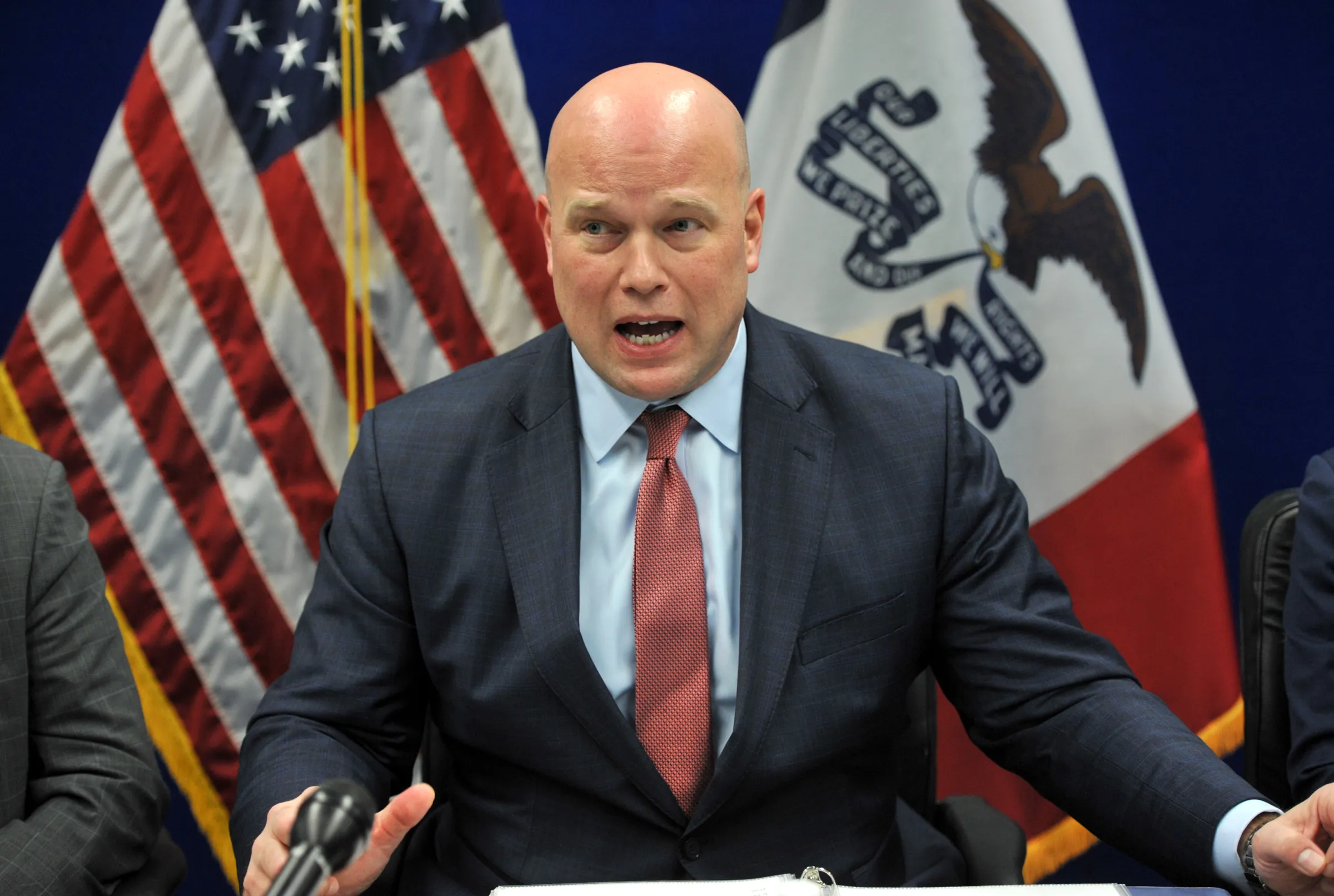
If this all sounds abstract, it has already been tested in modern form. In 2018, President Trump designated Matthew Whitaker as acting attorney general after Jeff Sessions resigned. That move triggered immediate controversy over whether the FVRA could be used for the attorney general role, how it interacted with DOJ succession norms, and what the Constitution allows when a principal office is filled temporarily without Senate confirmation.
Notably, DOJ’s Office of Legal Counsel issued an opinion supporting the legality of using the FVRA for Whitaker, while critics disputed that conclusion and raised Appointments Clause and statutory-interpretation objections.
The details of any future dispute will depend on the exact vacancy, the chain of succession in effect at the time, and which legal authority the president invokes. But the Whitaker episode is a reminder that “acting AG” fights are not theoretical. They become real separation-of-powers contests quickly.
What an Anti-Weaponization Bill could do
The presidential post referenced pushing an “Anti-Weaponization Bill” tied to alleged mistreatment by the prior administration and to federal prosecution practices. The phrase is politically loaded. The legal question is what such a bill would actually do in constitutional terms.
At a high level, Congress has real tools to shape DOJ and federal law enforcement. Most of DOJ’s structure and many of its powers are statutory. Congress can:
- Create or abolish DOJ components and offices.
- Define federal crimes and penalties.
- Set investigative authorities, reporting requirements, and oversight mechanisms.
- Condition appropriations, including funding limits and procedural prerequisites.
Illustrative tools lawmakers use
The specific text matters, but proposals in this lane often include illustrative provisions like:
- Reporting requirements for certain sensitive investigative steps, often to the Inspector General or to Congress under defined conditions.
- Process documentation rules, such as written approvals for particular investigative tools or for opening investigations of certain categories of targets.
- Funding riders that prohibit DOJ from using appropriated funds for specified activities unless criteria are met, a mechanism Congress has used in many policy areas to shape enforcement priorities indirectly.
- Special counsel triggers or standards that tighten when a matter must be referred for more independent review, while still keeping prosecution inside the executive branch structure.
Those are all areas where Congress can legislate without dictating the outcome of a specific case.
What it cannot do, or should not try to do
There is a line Congress cannot cross, or will very likely run into constitutional limits when it tries to: it cannot run prosecutions itself. The Constitution vests “the executive Power” in the president, and prosecution sits at the core of executive responsibility.
That does not mean Congress has zero ability to create mandatory duties in general terms. But a statute that tries to direct DOJ to prosecute particular people, or to drop particular cases, would be highly constitutionally suspect and would trigger severe separation-of-powers concerns.
Similarly, Congress has to be careful about trying to undo specific court outcomes through legislation. Attempts to reopen final judgments or legislate outcomes for named parties can raise Klein-type separation-of-powers concerns, as well as other constitutional problems depending on the design.
That does not mean Congress is helpless. It means the lawful options generally look like structure and process, not case-by-case control.
Confirmation and acting status
The practical issue is the connection between Senate votes on confirmation and a threat to rely on acting leadership instead.
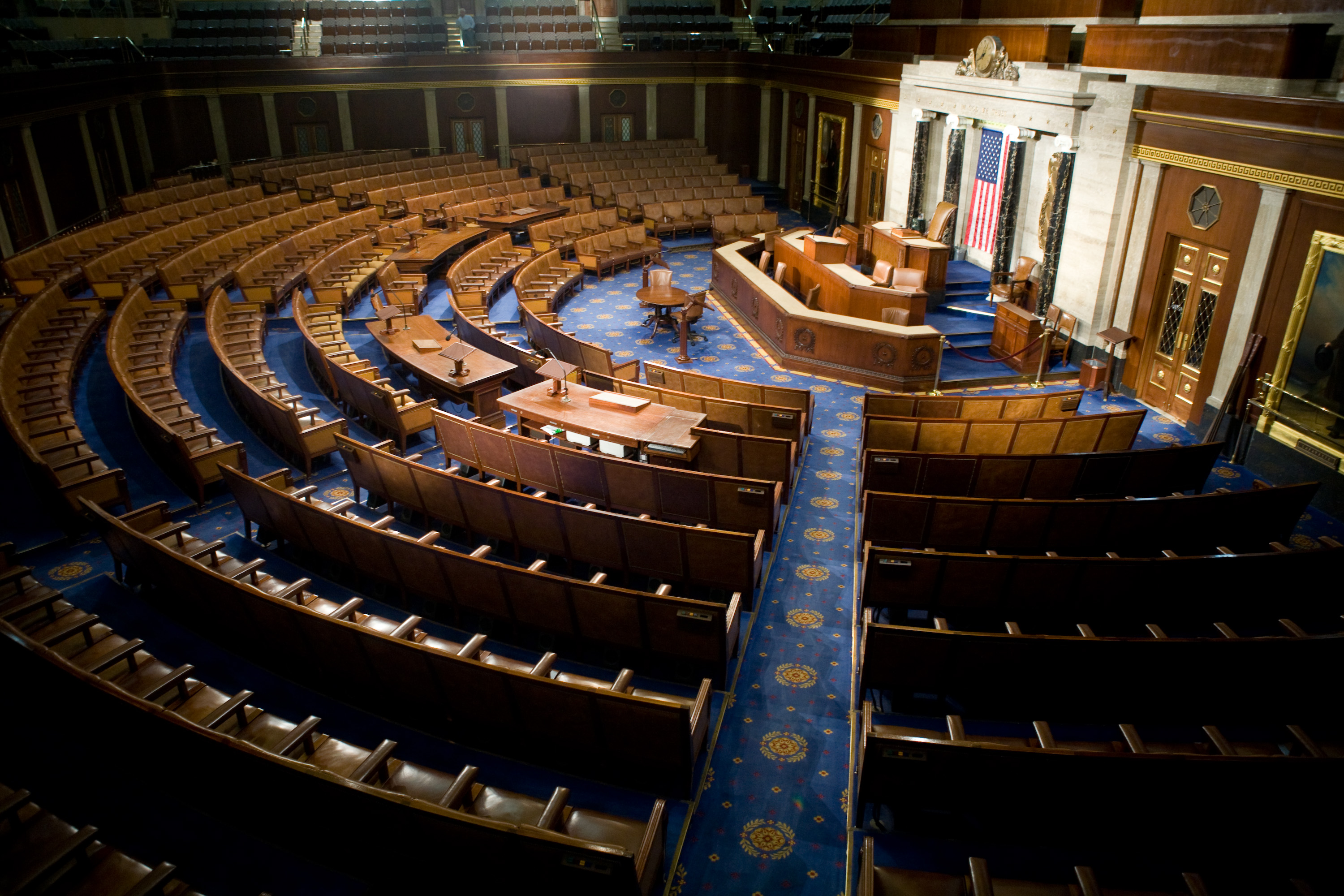
The constitutional lesson is older than any one controversy: the Senate’s “advice and consent” role is one of the few direct levers it has over the president’s control of the executive branch. When senators refuse to confirm, they are not simply expressing disapproval. They are using a tool the Constitution explicitly gives them.
The president’s counter-tool is the temporary continuity provided by succession and acting-service rules. But those tools are deliberately limited by statute, and the limit is the point. The system is built to force the branches back to the bargaining table.
Other workarounds
One more constitutional tool sometimes mentioned in these fights is the Recess Appointments Clause. A president may try to fill certain vacancies temporarily during a Senate recess. Recess appointments come with their own limits and political costs, and they raise different legal questions than acting service under the FVRA or succession under 28 U.S.C. § 508. But they are part of the broader menu presidents consider when confirmation battles harden.
FAQ
Can someone serve as Acting Attorney General without Senate confirmation?
Yes, temporarily, if they fit within the governing rules that permit temporary service, including the DOJ succession statute and, in many situations, the FVRA. But acting status is time-limited and not meant to replace confirmation for a long-term attorney general.
Can a president keep an acting AG indefinitely?
Not under the normal operation of the FVRA, and not without navigating DOJ specific succession rules. The system imposes deadlines and structural limits designed to prevent permanent governance by “acting” labels.
Does the Constitution require the attorney general to be Senate-confirmed?
The Constitution requires Senate confirmation for the appointment of principal officers, and the attorney general is treated as a principal officer. Temporary service is a statutory mechanism Congress has allowed to keep government functioning between confirmed appointments.
Would an Anti-Weaponization Bill stop politically motivated prosecutions?
It depends entirely on its text, and even then, no statute can guarantee pure motives. Congress can legislate transparency, oversight, funding conditions, and internal safeguards. But Congress cannot constitutionally take over specific prosecution decisions in individual cases without raising major separation-of-powers problems.
The deeper point
America’s design assumes that power will be contested. The Constitution does not try to eliminate conflict between the branches. It tries to channel it.
When a president pressures the Senate to confirm a nominee and hints at extended acting leadership instead, you are watching that channel at work: advice and consent on one side, executive continuity on the other, and statutory guardrails in the middle. The question is not whether either branch will attempt to push its advantage. The question is whether the legal limits that separate “temporary” from “permanent” will hold when politics gets impatient.