

The U.S. Constitution does not create a right to education. It does not assign schooling to Washington. And it does not mention a federal Department of Education. In practice, that has helped leave primary responsibility for schools with the states.
That said, the modern federal education state is not just a building with a seal on the door. It is a web of money, data, compliance, civil rights enforcement, and loan servicing that touches nearly every community in the country. So when a presidential administration says it wants to abolish the Department of Education, the real question is not only philosophical. It is operational.
Linda McMahon, a former pro-wrestling executive and business leader, now serves as Secretary of Education. President Trump has tasked her with eliminating the agency. Only Congress can formally abolish a Cabinet-level department. But an administration can still dismantle it in practice, and it can do so quickly, leaving the statutes intact while weakening the machinery meant to carry them out.
Join the Discussion
Who McMahon is
McMahon arrives with an unusual resume for an education secretary. She helped lead a pro-wrestling empire as CEO and was widely described as a savvy businesswoman. In President Trump’s first term, she also led the Small Business Administration, where she was described as steady and effective. Many people described her as capable, kind and empathetic.
She came to the Education Department with little experience in education policy but with an unwavering commitment to Trump’s goal of eliminating the department altogether. That distinction matters because the story here is not a policy rewrite. It is an execution problem: how to take an agency that runs large national systems and, without a repeal bill in hand, shrink it until it cannot function the way it used to.
Why wrestling matters
Her path through professional wrestling helps explain why she is suited to a role defined less by pedagogy than by organizational maneuvering. In that world, presentation, discipline, and control of complex operations sit beside the spectacle. McMahon’s work as an executive involved building a durable enterprise out of an industry that blended performance, branding, and logistics at scale.
That experience also put her in close proximity to a volatile and highly public figure in her husband, Vince McMahon, whose showmanship and allegations of sexual abuse have long trailed him, and who has denied those allegations. In politics, the ability to navigate pressure, loyalty, conflict, and headline risk can become its own form of preparation.
Constitution basics
As constitutional background, education is generally understood as a state responsibility in the American system. States create school systems, set curricula, license teachers, and decide how districts are organized. Over time, the federal government’s role has grown mainly through two tools commonly cited as central to modern education law: spending and civil rights enforcement.
1) Money
Congress can spend for the general welfare and attach conditions to federal dollars offered to states and school districts. Those conditions become the strings that shape policy even when Washington does not directly run schools.
2) Civil rights
Congress can legislate to enforce equal protection and prevent discrimination. In practice, that authority is one reason federal education law became tightly linked to civil rights law.
Put simply: schools are state-administered, but federal funding and federal civil rights statutes can turn local decisions into federal questions.
What Congress must do
Cabinet departments are created by statute. That means a secretary cannot sign the Department of Education out of existence. Only Congress can repeal the laws that created the department and assigned it duties.
But an administration still has meaningful room to maneuver inside that legal shell. It can reorganize, reduce staff, shift enforcement priorities, and transfer functions elsewhere when statutes allow or when transfers are authorized.
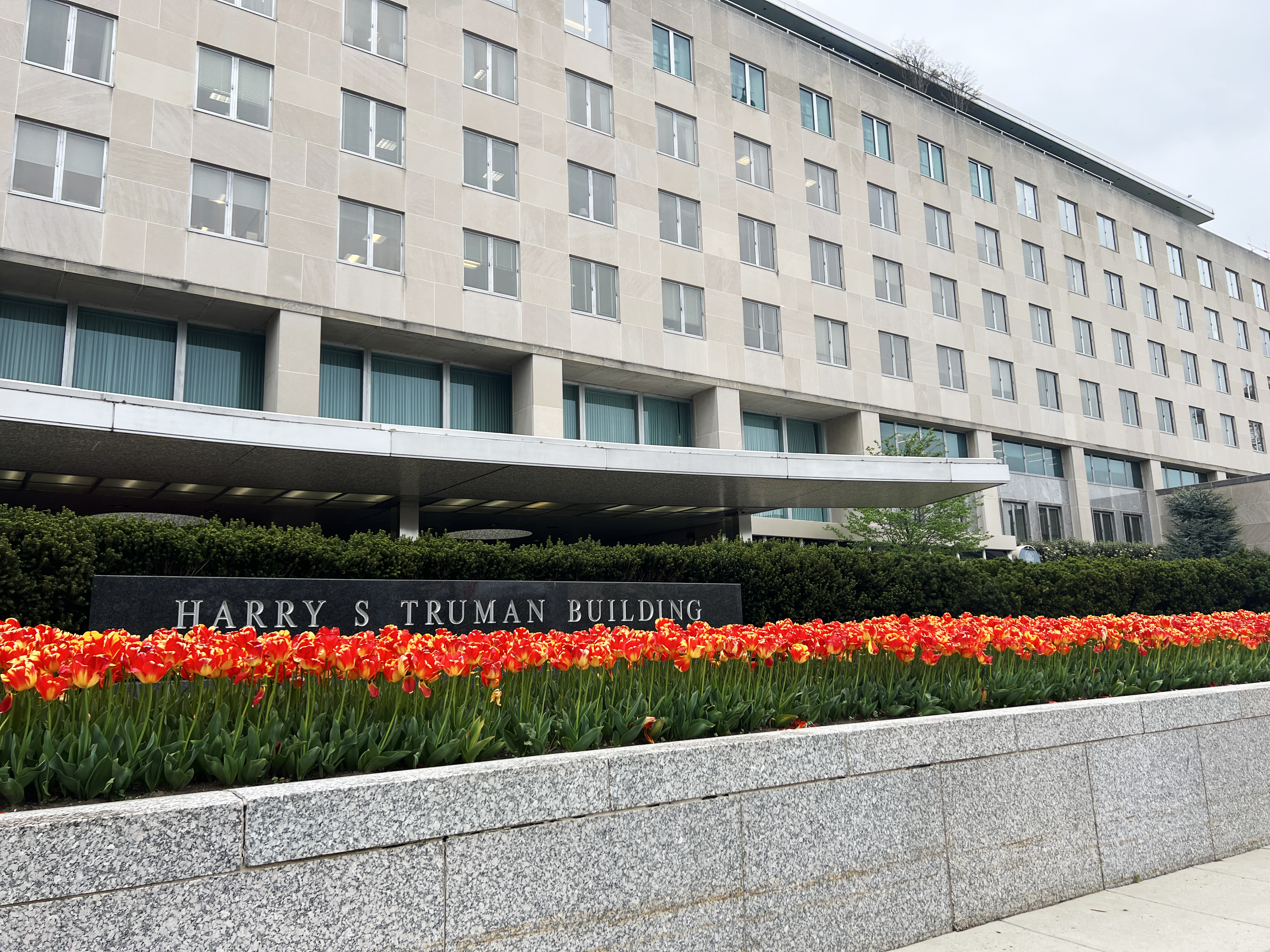
In McMahon’s early tenure, the department has already been dramatically reduced, with some 50% of its employees cut, while functions are being transferred elsewhere. Observers have described the results as major disruptions for education research, student loan management and programs for students with disabilities.
Power does not vanish
One of the most misunderstood dynamics in these debates is the idea that weakening a federal department automatically strengthens state control. Sometimes it does. Often it just changes which federal actor holds the reins.
If you dismantle a department while leaving federal money and federal obligations in place, you still need an entity to:
- interpret statutes through rules or guidance,
- monitor compliance for grantees,
- investigate civil rights complaints,
- administer or contract for major programs, and
- collect and publish data so the public can evaluate outcomes.
Those functions can be shifted to other agencies, contracted out, or fragmented across the executive branch. That may reduce centralized direction, but it can also reduce clarity. States and districts may face multiple federal mini-education offices instead of one primary regulator.
The real lever is money
In education, power often follows the checkbook. A department’s influence is frequently exercised through conditions on federal funding rather than direct mandates.
How strings work
The federal government typically does not order states to run schools a certain way. Instead, it offers funding and says: if you take it, you must comply with specified requirements. In theory, states can refuse. In practice, walking away can be politically and financially difficult.
What changes if the agency shrinks
If a weakened department cannot consistently oversee grants, audit spending, or enforce compliance, the strings can loosen without Congress ever cutting the funding. Federal dollars can keep flowing while federal accountability becomes uneven, delayed, or dependent on litigation.
Or the strings can remain just as tight, only administered by a different agency with different institutional instincts and priorities.
Civil rights stay federal
Even strong advocates of local control often pause at one point: civil rights. Federal education oversight is not only about pedagogy, testing, or paperwork. It is also about whether students are being denied equal access based on disability, race, sex, or other protected status.
If civil rights functions are downsized or scattered, the immediate question is enforcement: who investigates complaints, how quickly, with what remedies, and with what consistency across states?
A state can be fully in charge of its schools and still be subject to federal civil rights law. The tension is not whether civil rights statutes exist. The tension is whether the federal executive will enforce them aggressively, minimally, or inconsistently, especially when staffing and organizational capacity are cut in half.
Loans and scale
Education policy is not only K-12. The modern department is also a central node for federal student aid and student loan management. When those systems are disrupted, the consequences show up in household budgets, credit reports, and career decisions.
The current restructuring has been described as creating major disruption in student loan management. Even if one favors decentralization in principle, nationwide systems do not automatically decentralize cleanly. They either keep running under a different federal roof, or they fail in ways that force Congress and the courts to intervene later.
That is the uncomfortable reality of administrative dismantling: you can shrink an agency quickly, but you cannot shrink the public’s reliance on its functions at the same speed.
Research and visibility
Oversight is not only investigations and enforcement. It is also information. Federal education research and data collection create a baseline for accountability that states can use, parents can read, and journalists can challenge.
The current restructuring has been described as creating major disruption for education research. Cutting or dispersing research capacity does not just reduce federal involvement. It can reduce the country’s ability to measure whether policies work, whether gaps are widening, and whether money is reaching the students it was meant to serve.
In civic terms, this is not only about enumerated powers. It is also about the health of self-government. A self-governing people cannot evaluate its institutions if the institutions stop keeping legible records.
What dismantling means
There are two versions of the future embedded in the same slogan.
Version A: Clear devolution
This happens if Congress reduces federal conditions, devolves programs, and narrows federal enforcement to core civil rights obligations that remain anchored in federal law.
Version B: Fragmentation
This happens if federal money and legal duties remain, but administration becomes understaffed and scattered. States may gain discretion in day-to-day practice, but families may lose a clear place to file complaints, track outcomes, or demand consistent standards of fairness.
Either way, the Constitution does not require a federal education agency. But it does promise due process and equal protection. The practical question is whether those guarantees will be backed by institutions capable of enforcing them.
The accountability problem
For decades, Americans have argued about whether the Department of Education has too much influence or too little. The fight now is more basic: whether the federal government should continue to act like education is a national responsibility at all, even indirectly.
The Constitution leaves room for that debate because it largely leaves education to the states. But it also creates a national government capable of using money and civil rights law to shape what states do.
That is why the most important question is not, “Can a secretary dismantle a department?” The more durable question is: When federal power moves, who will be accountable for it, and how will citizens see it clearly enough to argue back?