
The question resurfaces every few years, usually after an offhand comment or a headline that sounds like a dare: can a president serve a third term?
Today the answer is straightforward in law and in practice. The Constitution, through the 22nd Amendment, forbids any person from being elected president more than twice. That is not a norm. It is a constitutional rule, adopted after Franklin D. Roosevelt won four elections.
Join the Discussion
The 22nd Amendment in plain English
Here is the core language of the 22nd Amendment (ratified in 1951):
"No person shall be elected to the office of the President more than twice" and "no person who has held the office of President, or acted as President, for more than two years of a term" to which someone else was elected "shall be elected" more than once.
That creates two rules most people can remember without a law degree:
- If you have been elected president twice, you cannot be elected again.
- If you took over midterm and served more than two years of someone else’s term, you can only be elected once. If you served two years or less, you can be elected twice.
In other words, the amendment caps a person at two elections, with a special accounting rule for vice presidents who inherit the office.
“Serve” vs. “be elected”
Notice what the 22nd Amendment says and what it does not say. It does not use the phrase “serve more than two terms.” It says “be elected” more than twice.
That wording is why people speculate about loopholes. If the amendment blocks election, could a twice-elected president still become president some other way?
This is where the 22nd Amendment runs into other constitutional text, especially the 12th Amendment, the 25th Amendment, plus the statutes that govern succession.
Can a former two-term president run again?
Not lawfully, if the plan is to win another presidential election. The 22nd Amendment’s prohibition is direct: a person who has already been elected president twice cannot be elected president again.
In real life, the friction points are procedural:
- Party nomination: parties can choose their nominees under party rules, but picking a constitutionally barred candidate would invite immediate eligibility fights.
- Ballot access: states would face lawsuits over whether the candidate can appear on the ballot.
- Electoral votes and counting: if electors purported to vote for a barred candidate, disputes would likely shift to whether those votes can be treated as valid and counted when Congress meets to tally the Electoral College.
The United States has not had a modern Supreme Court decision that squarely resolves a real third-term candidacy by an already twice-elected president. The issue has not produced a clean, definitive test case that runs through the full election process and results in a final merits ruling.
The vice president theory
One of the most common theories goes like this: a twice-elected former president could run for vice president, win, and then become president after the president resigns.
There is a reason this theory keeps coming up. The 22nd Amendment speaks in terms of being elected, and succession is not an election. But the theory runs into major constitutional and practical problems, and it is also unresolved by the Supreme Court.
The 12th Amendment issue
The 12th Amendment says: “no person constitutionally ineligible to the office of President shall be eligible to that of Vice-President of the United States.”
So the fight turns on a single word: ineligible. Many constitutional scholars and election lawyers argue that the 22nd Amendment effectively makes a twice-elected former president constitutionally ineligible for the presidency, at least for purposes of holding the office again. Under that reading, the 12th Amendment blocks that person from being vice president too.
Others dispute that and argue the 22nd Amendment creates an election disability rather than a blanket eligibility disability. On that view, a twice-elected former president might be barred from winning a third election but not necessarily barred from serving again through succession. Courts have not definitively settled which reading controls, and different actors in the system, including state election officials, courts, and Congress, could reach different conclusions in a fast-moving dispute.
The 25th Amendment adds another collision point
Even if a twice-elected former president were somehow elected vice president, the plan still depends on the 25th Amendment, which provides that the vice president becomes president upon a president’s resignation. That handoff would put the same unsettled eligibility question back on the table again, just at a later stage.
Even under the narrow reading, succession is not a clean escape hatch
Even if you assume the narrowest possible reading of the 22nd Amendment, a ticket built around this idea would likely trigger immediate litigation and political confrontation:
- States and parties would face pre-election suits about whether the vice presidential candidate is constitutionally eligible under the 12th Amendment.
- Congress would face objections at the counting stage if electoral votes were cast for a disputed ticket.
- Courts would be asked to reconcile the amendments, and courts generally try to read constitutional provisions in harmony rather than creating an easy end-run around one of them.
So while the theory is not “impossible” in the abstract, it is also not a stable legal plan. It is a high-risk attempt to drive through disputed language while other parts of the Constitution push back.
What about Speaker and succession?
Another version swaps in the Presidential Succession Act and the Speaker of the House. The idea is that a twice-elected former president could become Speaker, then become acting president if both the presidency and vice presidency become vacant.
But succession does not float above the Constitution. It operates within it. And the statutory language matters here: under the Presidential Succession Act, an officer can act as president only if that officer is eligible to the office of President. The office in this scenario is Acting President, and some arguments try to draw meaning from that label, but a statute still cannot override a constitutional limit on eligibility.
So the same core question returns: if the Constitution makes a twice-elected former president ineligible, succession cannot be used to restore eligibility by relabeling the pathway.
Why the 22nd Amendment exists
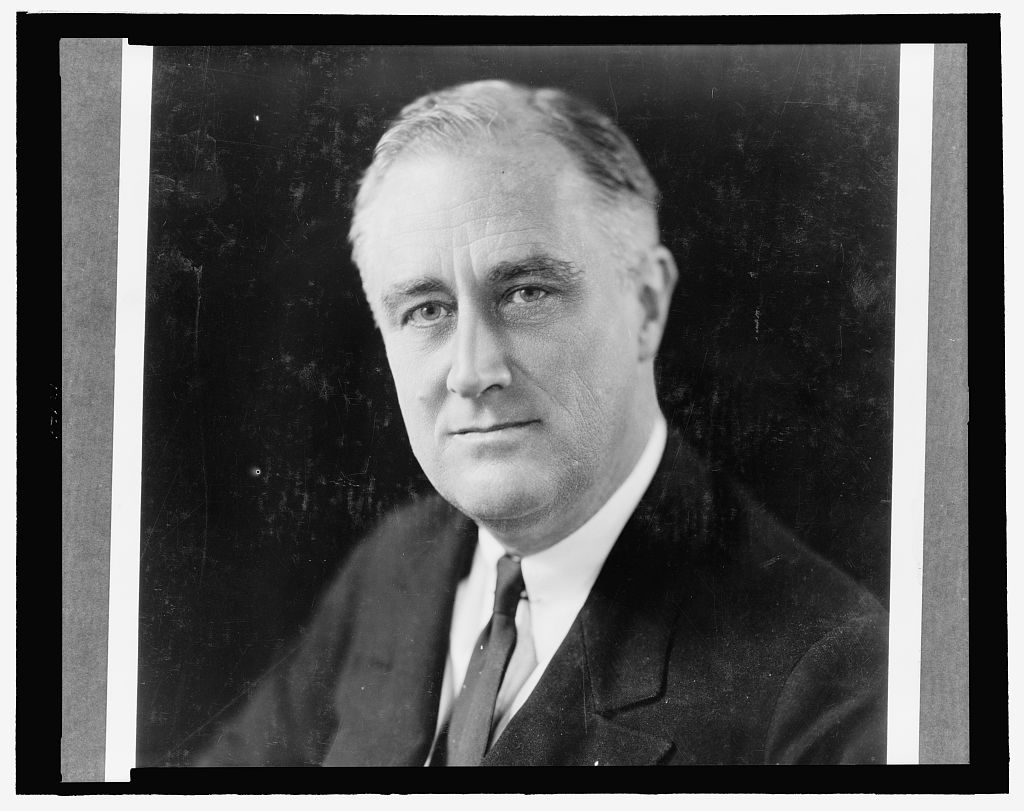
For most of American history, term limits were a tradition, not a rule. George Washington stepped aside after two terms and set a powerful precedent. Presidents generally followed it, until Franklin D. Roosevelt won third and fourth terms during the Depression and World War II.
After Roosevelt’s presidency, Congress proposed the 22nd Amendment and the states ratified it in 1951. The country decided that informal restraint was not enough. It wrote the limit into the Constitution itself.
Does it cap service at eight years?
Not exactly. The 22nd Amendment limits elections, with a time-served rule for successors. That time-served rule can make the total time in office longer or shorter depending on when the person took over.
- If you served two years or less of someone else’s term, you can still be elected twice. That is how you get to the practical maximum of just under ten years in office.
- If you served more than two years of someone else’s term, you can be elected only once. In that scenario, the total time in office can be just under eight years (a long partial term plus one elected term).
A concrete example helps. If a vice president takes over with 18 months left in a term, they could still be elected twice afterward. If they take over with three years left, they could be elected only once.
Could Congress repeal the 22nd?
Congress cannot repeal an amendment by ordinary legislation. The only way to get rid of the 22nd Amendment is another constitutional amendment.
That means Article V applies:
- Proposal: two-thirds of both the House and Senate, or a convention called by two-thirds of the states (never successfully used for this purpose).
- Ratification: approval by three-fourths of the states.
That is intentionally difficult. Presidential term limits are part of the Constitution’s structural design now, not a policy choice that swings with the news cycle.
If someone tried anyway
The likely battlegrounds would be ballot access, elector choices, and Congress’s count of electoral votes.
- Before Election Day: states would have to decide whether to certify the candidate for the ballot, and state courts and federal courts would likely be asked to review those decisions.
- After Election Day: disputes would likely shift to whether electors can cast valid votes for a barred candidate, and what Congress must do when it counts the Electoral College votes under the modern statutory framework for objections and counting.
Because the 22nd Amendment is explicit, courts would not need new doctrines to enforce it. They would be asked to apply constitutional text to real election machinery, which is exactly what amendments are for.
The bottom line
A president who has been elected twice cannot lawfully be elected a third time under the 22nd Amendment. The popular “workaround” theories usually run into the 12th Amendment’s eligibility language, the 25th Amendment’s succession mechanics, the succession statute’s eligibility requirement, and the broader principle that sequencing cannot override constitutional limits.
Could the rule be changed? Yes, but only through the amendment process, not through interpretive games. That is the point of writing a restraint into the Constitution. It is supposed to be stronger than any one person’s ambitions and sturdier than any one election’s temptations.
Quick FAQ
Can a president serve three terms if they are not consecutive?
No. The 22nd Amendment does not care whether the terms are consecutive. It bars being elected more than twice.
Can a two-term president run as vice president?
It is debated. Many scholars argue the 12th Amendment makes a person ineligible for the vice presidency if the Constitution makes them ineligible for the presidency, and they treat the 22nd Amendment as creating that ineligibility. Others argue the 22nd blocks only election to the presidency and does not fully answer the vice presidency question. There is no definitive Supreme Court ruling resolving it.
What about a national emergency?
The Constitution does not include an emergency exception to the 22nd Amendment. Changing the rule would still require a new amendment.