
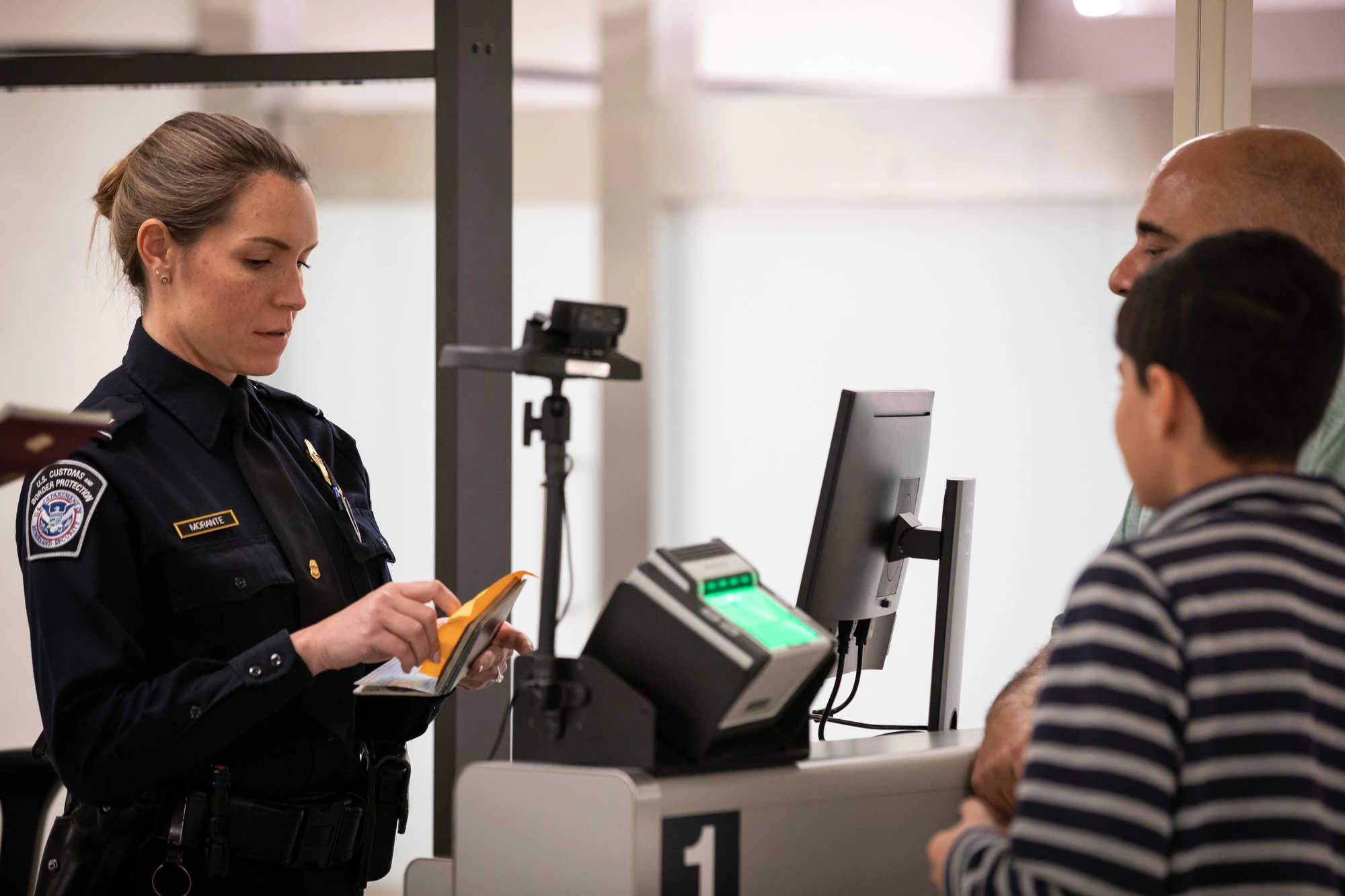
You can board a plane with a pocket-sized archive of your life: your messages, your photos, your health portals, your banking apps, your location history, and your cloud credentials. In many settings, the Fourth Amendment sharply limits when the government can search that kind of information.
But the border is not “many settings.”
In a recent decision, the U.S. Court of Appeals for the Second Circuit held that federal officers may perform a manual search of a traveler’s cell phone at the international border with no warrant and no individualized suspicion. If you enter the United States through an airport or land crossing within the Second Circuit, that rule now governs the federal appellate circuit covering New York, Connecticut, and Vermont.
The decision is not just about one defendant. It is about the constitutional category we have quietly built around the border, a place where the normal rules of privacy become negotiable.
Join the Discussion
The case

The case is United States v. Alisigwe. The Second Circuit’s majority opinion, written by Judge Steven Menashi, treated a cell phone as property subject to the border-search doctrine’s most permissive rule: routine property searches are reasonable simply because they occur at the border.
The traveler, Chinwendu Alisigwe, is a lawful permanent resident. Returning to the United States from international flights, he was stopped at John F. Kennedy International Airport and asked to unlock his phone. He complied. Officers looking for fraud records skimmed through what was accessible to the user and saw evidence of Alisigwe’s fraud crimes.
The constitutional question was not whether border agents can ever search phones. The question was whether digital devices are so privacy-dense that they should trigger a higher threshold, like a warrant or at least reasonable suspicion.
The Second Circuit said no. For a manual search, the court concluded the Fourth Amendment permits the search without any suspicion at all.
The border exception
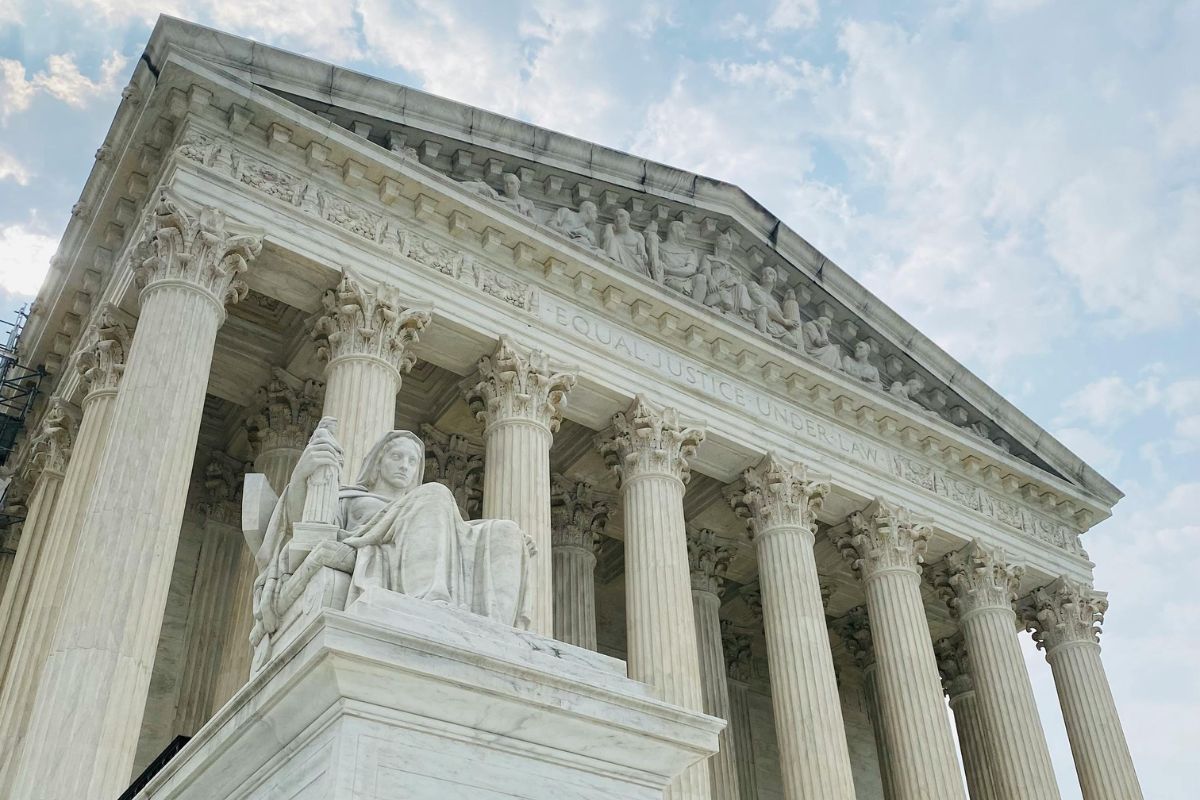
The Fourth Amendment prohibits “unreasonable searches and seizures.” In practice, many searches away from the border end up tied to warrants, probable cause, and carefully defined exceptions. But at the border, courts have long treated reasonableness differently.
The Supreme Court has described the government’s border interest as being “at its zenith.” And in United States v. Ramsey (1977), the Court recognized “the longstanding right of the sovereign to protect itself by stopping and examining persons and property crossing into this country.”
That is the border-search exception: the idea that the act of entering the United States places you in a constitutional zone where officers can inspect what you bring, even when they lack probable cause and even when there is no warrant.
The traditional justifications are easy to picture in a suitcase world: preventing the importation of contraband, enforcing immigration laws, and making sure tariffs are paid. The fight today is whether those justifications map cleanly onto a device that can hold years of private life but weighs less than a passport.
Routine vs. nonroutine
Border-search law works like a hinge. Everything turns on whether a search is called routine or nonroutine.
- Routine border searches of property typically require no suspicion.
- Nonroutine searches are more invasive and, in many cases, require reasonable suspicion.
Courts have usually treated “nonroutine” as a label reserved for intrusive searches of the person, such as strip searches or body-cavity searches. The Second Circuit leaned hard on that tradition and concluded that a phone is still “property,” even if it is property that contains a psychological biography.
So the court’s move was not subtle. It was categorical: a cell phone is property, and property searches at the border are routine, therefore suspicion is not required.
Why Riley did not control
If you follow privacy law at all, you may be thinking of Riley v. California (2014). That is the Supreme Court case that largely barred warrantless searches of cell phones incident to arrest. The Court recognized the obvious: searching a phone is not like searching a wallet. It is closer to searching a home, a diary, and a filing cabinet at once.
The Second Circuit rejected the analogy. Riley dealt with a different exception, search-incident-to-arrest, justified by officer safety and preventing the destruction of evidence. In Riley, the Court emphasized that those rationales have limited force when the “search” is of digital data.
At the border, the rationale is different. It is not about preserving evidence on the spot. It is about controlling who and what enters the country. The Second Circuit held that this sovereign interest can apply to digital content too, including what courts have called “digital contraband,” such as child sexual abuse material.
In Alisigwe’s case, the court also reasoned that lists of stolen personally identifiable information can be contraband whether in digital or physical form. That logic helps explain the majority’s bottom line: if digital files can be contraband, then searching for contraband can justify looking through a phone, and if that kind of search is “routine,” suspicion drops out.
Criminal evidence at the border
Here is the part that should make even non-lawyers pause. The Second Circuit reaffirmed that a border search does not become unconstitutional merely because officers are motivated by ordinary criminal investigation.
In other words, the border is not limited to searches for things like prohibited agricultural products, undeclared cash, or items subject to customs duties. Under Second Circuit precedent, officers may search even when the real purpose is to find evidence of non-border crimes.
This is not a new instinct in Fourth Amendment law. Courts often refuse to make constitutional rights depend on an officer’s subjective motives. But at the border, that general principle produces a dramatic result: an exception designed for entry control can become a general evidence-gathering tool, activated by the fact that you crossed a line on a map.
The majority treated that as settled. Judge Eunice Lee concurred in the judgment but suggested the Constitution should at least require some level of suspicion for cell phone searches, even if it does not require a warrant.
The dispute under the surface
There is also an analytical fight embedded in the opinion that helps explain why this issue is headed for continued litigation.
One way to frame it is as two separate questions: what government interests justify a special border rule in the first place, and whether officers can still use that rule even when their real-world motive is ordinary criminal enforcement. The Second Circuit’s approach treats the government’s “broad authority to control who and what enters the country” as sufficient to cover suspicionless phone searches, and it emphasizes that border searches remain valid even when they further a criminal investigation.
Critics of that reasoning argue that allowing broad pretextual use at the application stage should not automatically expand the set of interests that justify the rule itself. If the justification becomes “finding evidence of criminality among those entering the country,” the worry is that a border doctrine designed for entry control becomes, in practice, a permission slip to look through everyone’s phone for evidence of crime.
What it means when you fly
If you are entering the U.S. through an airport or other port of entry in the Second Circuit, the practical takeaway is blunt: a CBP officer can ask to look through your phone and, for a manual search, the Fourth Amendment will not require a warrant or suspicion.
That does not mean you have no rights. It means your rights operate differently, and usually later. Border searches are often litigated after charges are filed, through motions to suppress evidence. That is cold comfort if your goal is keeping your private life private at the moment of inspection.
It also does not necessarily answer every question about forensic searches, where officers use specialized tools to extract data, recover deleted files, or copy large portions of a device. Courts around the country have drawn lines differently between manual scrolling and deeper extraction. The Second Circuit’s decision focused on a manual search and did not resolve every possible scenario.
Before you travel
This is not legal advice, and every situation is fact-specific. But civics education is partly about realism. If the law treats border phone searches as broadly permissible, then privacy becomes something you practice, not something you assume.
- Minimize what is on the device. The easiest search to survive is the one that finds nothing sensitive because it is not stored locally.
- Separate accounts and devices. Some travelers use a dedicated travel phone with limited apps and data.
- Use strong device security. A long passcode is generally harder to defeat than a short PIN. Biometric unlock can be convenient, but convenience is not the same as control.
- Track what happens. Officers may ask you to unlock a device. Courts evaluate what happens next based on consent, detention, and the scope of the search. Those details matter later.
The larger point is constitutional, not tactical: when legal doctrine treats your phone as a suitcase, the burden of protecting private life shifts sharply onto the individual.
What the Supreme Court has not answered
The Supreme Court has already recognized that digital searches are different in kind, not just degree. Riley said that explicitly in the arrest context. The border context is the next obvious battleground because the border-search exception is one of the government’s broadest Fourth Amendment powers.
The Second Circuit’s ruling sets up a simple, unsettling principle: cross an international border, and the government can scroll through the portal to your life without suspicion.
If that feels inconsistent with the Court’s modern rhetoric about digital privacy, it is because the law is still deciding whether the border is a place where old analog categories can swallow new realities. The Constitution does not give us the answer in text. It gives us a standard, “reasonableness,” and asks judges to translate that word into a world the Founders could not have imagined.
That translation is not over. But for now, at least in the Second Circuit, the border remains a constitutional pressure point where privacy yields first and asks questions later.
FAQ
Does this apply to U.S. citizens?
The Second Circuit’s reasoning is about the border-search power over property at entry, not citizenship status. The case involved a lawful permanent resident, but the doctrine generally applies to travelers entering the country, including citizens.
Does CBP need probable cause to search my phone at the airport?
Not for a manual search under the Second Circuit’s rule. The court held that neither probable cause nor reasonable suspicion is required for that kind of search at the border.
Is a forensic download treated the same way?
Not necessarily. The decision addressed a manual search. Other courts have treated forensic extraction as more intrusive. The law is unsettled, and the details matter.