
Jury selection is one of the few moments in American law where vibes can look like doctrine.
In theory, a juror is removed for a clear reason: bias, a conflict of interest, an inability to follow the law. In practice, lawyers also get a limited number of “peremptory strikes,” which allow them to excuse a juror without giving the court a reason at all.
That last phrase is where the Constitution starts tapping the microphone. Peremptories may be “without explanation,” but they are not beyond constitutional limits.
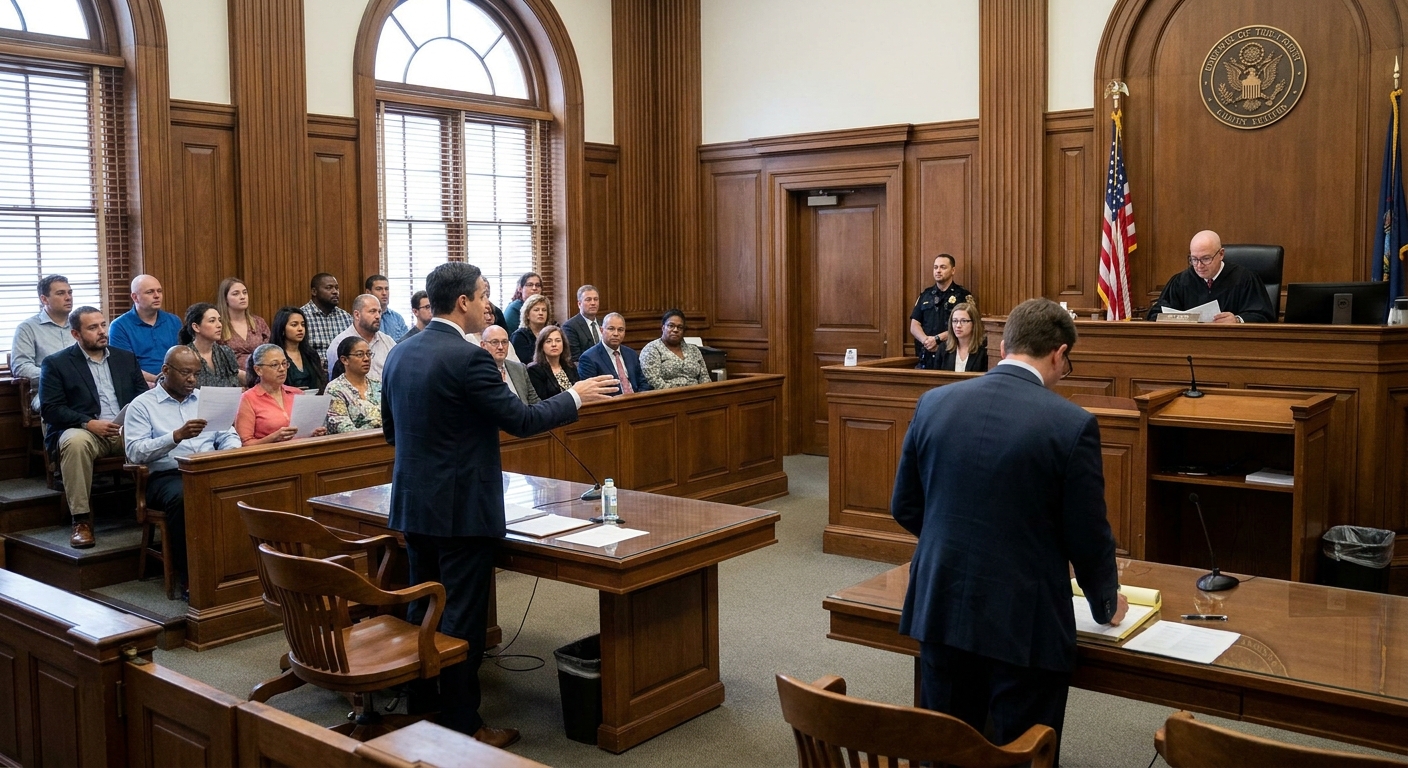
The Supreme Court has held that peremptory strikes cannot be used to discriminate based on race. That rule comes from Batson v. Kentucky (1986), and it created a now-familiar courtroom exchange: an objection, a demand for an explanation, and a judge deciding whether the stated reason is legitimate or a pretext.
Join the Discussion
Two ways to remove a juror
Challenges for cause
A challenge for cause argues that a juror is legally unfit to serve because the juror cannot be fair or cannot follow the court’s instructions.
- Examples: A juror admits they already believe the defendant is guilty, a juror is related to a witness, a juror says they will not apply the law if they disagree with it.
- How many? Generally unlimited, because the goal is to seat an impartial jury.
- Who decides? The judge. If the judge agrees there is “cause,” the juror is excused.
Peremptory strikes
A peremptory strike allows each side to remove a juror without stating a reason. It is a strategic tool, rooted in tradition, and deeply controversial.
- Examples: A lawyer strikes a juror who seems hostile, inattentive, overly eager to talk, or simply “not a good fit.”
- How many? Limited by statute or rule, and the number varies by jurisdiction and by case type.
- The catch: You can strike without giving a reason, but you cannot strike for an unconstitutional reason.
If challenges for cause are about incapacity for fairness, peremptory strikes are about predictions. Batson is the constitutional line between a prediction and a prohibited stereotype.
What Batson changed
Before Batson, the Court had effectively tolerated race-based peremptory strikes unless a defendant could prove a long-term pattern of exclusion across cases. That burden came from Swain v. Alabama (1965), and it was so heavy that discrimination could hide in plain sight.
Batson v. Kentucky lowered the bar for raising the issue in an individual case. The defendant, a Black man, argued that the prosecutor used peremptory strikes to remove Black prospective jurors. The Court held that using peremptory strikes to exclude jurors because of race violates the Equal Protection Clause of the Fourteenth Amendment.
Batson did not abolish peremptory strikes. It constitutionalized a process for policing them.
Batson in three steps
Batson created a structured, three-step inquiry. You will often hear lawyers and judges refer to “Batson step one,” “step two,” and “step three.”
Step 1: Make a prima facie showing
The objecting party must point to facts that support an inference the strike was based on race. Courts look at context, not mind reading.
- Was a juror struck who is a member of a racial group?
- Were multiple jurors of that group struck?
- Did questioning differ by race?
- Do the circumstances suggest the strike tracks group identity more than case-specific concerns?
This step is supposed to be modest. It is a threshold that gets you to the next question: “Explain yourself.”
Step 2: Require a race-neutral explanation
The striking party must offer an explanation that is race-neutral. Importantly, the reason does not have to be wise, persuasive, or even particularly strong at this stage. It just cannot be race as such.
- Common asserted reasons: prior negative experiences with police, body language, inattentiveness, a family member who was prosecuted, skepticism about eyewitness testimony, employment that suggests strong views about the issue in the case.
This is where Batson’s critics start to sharpen their knives. The bar is low enough that many reasons can be offered. The constitutional work is supposed to happen in step three.
Step 3: Decide whether there was purposeful discrimination
The judge decides whether the stated reason is genuine or a pretext for discrimination. This step is fact-intensive, and on appeal it is often reviewed with substantial deference to the trial judge’s credibility findings.
Courts often look for comparative juror analysis:
- If the prosecutor struck a Black juror for having a cousin with a criminal record, did the prosecutor keep a non-Black juror with the same trait?
- If “inattentiveness” is claimed, does the record show the judge observed it, or is it asserted only after the objection?
- If “strong opinions” are claimed, did the lawyer tolerate similar opinions from jurors of a different race?
Batson’s entire force depends on step three being more than a polite exchange. In many courtrooms, that is the struggle.
How a Batson objection works
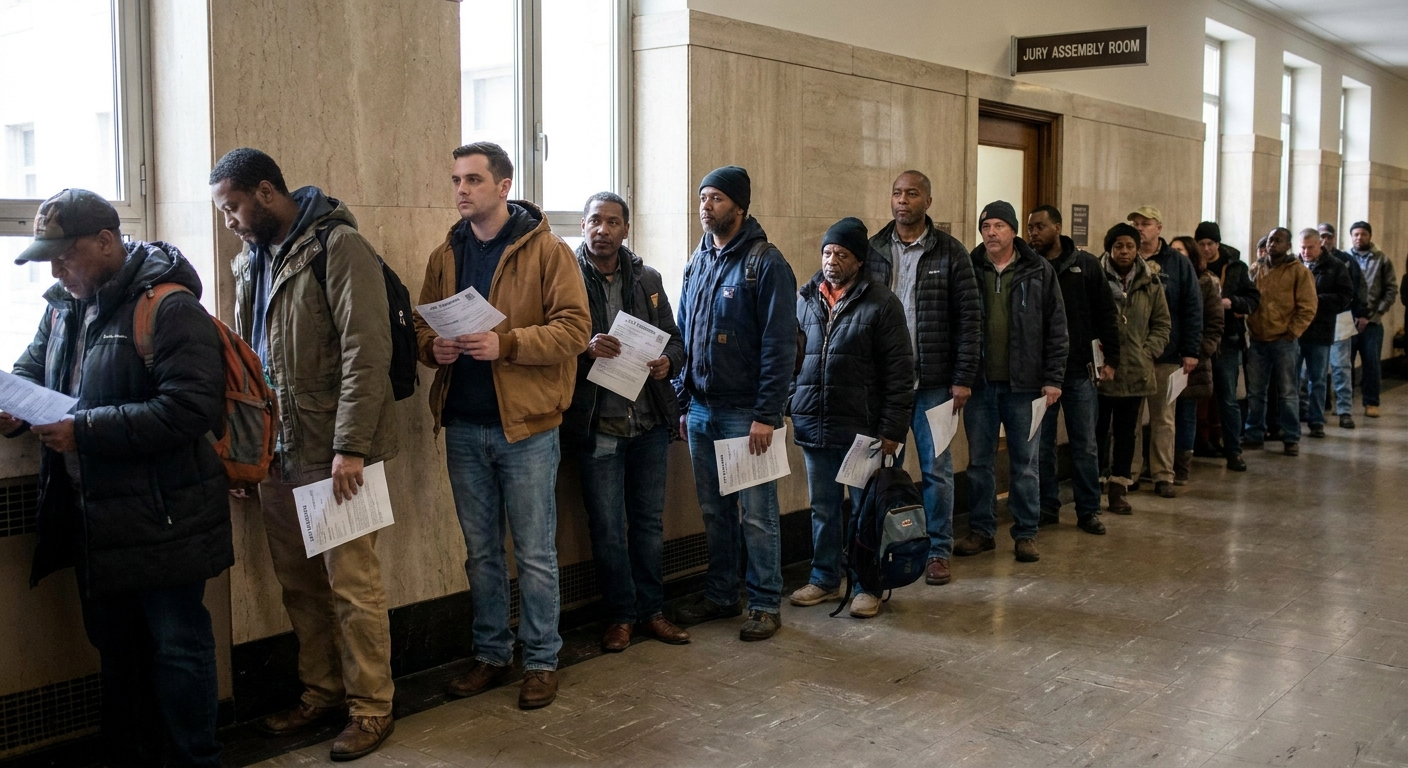
Batson is not only a test. It is a piece of courtroom choreography. Timing matters because once a jury is sworn and the panel is released, remedies get harder.
1) Object immediately
The moment the other side exercises a suspicious peremptory strike, the opposing lawyer should object before the next steps in selection move too far forward.
You may hear: “Batson challenge,” “Batson objection,” or “Batson motion.”
2) Make the record
Batson lives and dies on the record. The objecting lawyer should identify:
- Which juror was struck (by number and seat).
- The juror’s apparent race or ethnicity, and the basis for that description (for example, self-identification in voir dire, the juror questionnaire, or counsel’s good-faith observation), recognizing courts handle this sensitively and not every record labels race explicitly.
- Any pattern in strikes or questioning.
- Comparisons to similar jurors who were not struck.
Judges may not remember every answer from every juror. A good Batson argument politely forces the court to look back at the transcript-like details of voir dire.
3) The court asks for an explanation
If the judge finds step one satisfied, the judge will ask the striking party to articulate a race-neutral reason.
4) The opponent argues pretext
The objecting lawyer responds by showing why the reason is implausible, inconsistent, or unevenly applied.
5) The judge rules and orders a remedy
If the judge finds purposeful discrimination, remedies vary by jurisdiction and timing but may include:
- Seating the struck juror.
- Restarting selection with a new panel.
- Other corrective steps ordered by the trial court. A mistrial is possible in some circumstances, but it is not the default remedy in every court.
On appeal, Batson claims can be difficult because appellate courts often defer to the trial judge’s credibility determinations. That makes the trial record even more important.
Modern extensions
Batson started as a race case against a prosecutor. It did not stay there.
Who can raise it
Batson challenges are not limited to defendants of the same race as the struck juror. In Powers v. Ohio (1991), the Court recognized that discriminatory strikes injure the excluded jurors as well as the parties, and it allowed a defendant to object even when the defendant and the struck juror are of different races.
Defense lawyers too
In Georgia v. McCollum (1992), the Court held that a criminal defendant also cannot use peremptory strikes in a racially discriminatory way. Equal protection limits apply to both sides.
Sex-based strikes are barred
In J.E.B. v. Alabama ex rel. T.B. (1994), the Court extended Batson to peremptory strikes based on sex. The premise is familiar: jurors cannot be excluded because of group stereotypes about how they will decide a case.
Civil cases too
Batson principles apply in civil jury selection as well. In Edmonson v. Leesville Concrete Co. (1991), the Court held that even private civil litigants cannot use peremptory strikes in a racially discriminatory way because jury selection involves state action.
Ethnicity, religion, sexual orientation, and more
Here the law becomes uneven across jurisdictions. The federal constitutional minimums are clearest for race and sex. Beyond that, protections often depend on lower-court doctrine, state constitutions, and court rules.
- Ethnicity and national origin: Sometimes treated as closely tied to race discrimination principles, but the framing and coverage vary.
- Religion: Some courts allow Batson-style claims, others resist, and the details can hinge on whether the strike targets religious status versus case-relevant beliefs.
- Sexual orientation and gender identity: Some state courts and rules recognize protections, but the Supreme Court has not announced a single nationwide Batson rule for every category people argue about.
The overall direction is clear even when the boundaries are contested: the more jury selection looks like exclusion based on identity rather than case-specific impartiality, the more pressure the Constitution puts on peremptories.
Sixth Amendment, briefly
Batson is mainly an Equal Protection doctrine. But it sits next to a different constitutional promise that many people mentally merge with it: the Sixth Amendment right to an impartial jury.
The Sixth Amendment has produced its own line of cases about a jury drawn from a fair cross-section of the community. That concept generally concerns the jury pool (the venire), not the final twelve after strikes. In other words, it is about how the system summons jurors in the first place, not only how lawyers use peremptories at the finish line.
Still, the ideas rhyme. When peremptory strikes are used as a tool of racial exclusion, the public sees something that looks like a rigged jury, even if the initial pool was diverse. Batson is the Court’s attempt to keep the last stage of selection from undermining legitimacy that the Sixth Amendment is supposed to protect.
If you want the deeper dive on the Sixth Amendment itself, we cover the amendment’s structure and its jury principles separately. Here, the takeaway is narrower: Batson is the bridge between jury selection practice and constitutional equality.
Why Batson is criticized
Batson is famous, but it is not universally loved, including by judges who apply it.
1) “Race-neutral” can be easy to say
Because step two requires only a race-neutral explanation, lawyers can offer reasons that are hard to disprove: “demeanor,” “tone,” “gut feeling,” “seemed hostile.” Those can become convenient containers for bias, even when the lawyer is not consciously acting on it.
2) Trial judges get stuck in the middle
Batson asks judges to decide whether another lawyer is lying or acting on an impermissible motive, often in the middle of a fast-moving selection process, with limited information.
3) Remedies are imperfect
Seating a juror after a contested strike can create awkwardness. Starting over is costly. Appellate reversal is slow. None of these options cleanly solves the underlying problem.
4) Peremptories are under pressure
Some scholars and judges have argued that the only way to end discriminatory peremptories is to end peremptories. Others argue that peremptories serve an important function by allowing both sides to remove jurors who appear biased in subtle ways that do not rise to “cause.”
Several states have experimented with reforms, including rules that treat certain commonly given reasons as presumptively invalid when they correlate strongly with race. For example, Washington’s General Rule 37 and California’s CCP § 231.7 (enacted via AB 3070) both attempt to make it harder to launder discrimination through familiar, vague justifications like “demeanor” or certain criminal-justice contacts, though the details differ.
Quick glossary
- Voir dire: The questioning of prospective jurors.
- Venire: The larger pool of potential jurors summoned to court.
- Peremptory strike: A limited strike used without stating a reason, subject to Batson limits.
- Challenge for cause: A request to remove a juror for demonstrated bias or legal disqualification.
- Batson challenge: An objection that a peremptory strike was used in a discriminatory way.
- Comparative juror analysis: Comparing struck jurors to similar jurors who were kept to test for pretext.
The bigger point
Peremptory strikes are a reminder that the jury system is not only a constitutional ideal. It is a human process built out of quick judgments, imperfect information, and competing narratives about who seems trustworthy.
Batson does not eliminate that humanity. It tries to set a floor beneath it: whatever else lawyers do during jury selection, they cannot use the state’s jury power to sort citizens by race.
And if that sounds like a narrow rule, remember what jury service represents. It is one of the rare places the government does not just regulate the public. It drafts the public into the act of governing. Exclusion there is not only unfair to a defendant. It is a statement about who belongs in the republic.