
Abbott Laboratories (NYSE: ABT) did something that reliably lights up search engines: it reported an earnings quarter that was not dramatic on the surface, then gave the market a reason to breathe anyway.
Q2 2024 results landed largely in line with Wall Street’s expectations. That is the part that confuses people. If nothing was “beaten,” why did the stock rally hard enough to trigger a wave of abt stock, ABT undervalued, and “buy the dip” searches?
The answer is not hidden in one magic number. It is about context, the same way constitutional disputes are rarely about one sentence in isolation. In Abbott’s case, the context was a roughly 31% selloff from recent highs colliding with raised full-year guidance and a market that had been pricing in a more cautious tone.

Join the Discussion
Why in-line earnings can still move a stock
Investors do not trade the past. They trade the gap between what they feared and what they are now willing to believe.
When a widely held healthcare name is already down sharply, expectations get compressed. Traders go into earnings asking less, but also hoping the report will remove uncertainty. That is why an in-line print can be enough to spark a rally if it checks three boxes:
- It does not confirm the bear case. If the narrative was “growth is rolling over,” an in-line quarter can be interpreted as stability.
- Management sounds confident about the next few quarters. Raised full-year guidance is the cleanest version of that.
- The stock’s prior decline sets the stage for a relief move. A 31% drawdown increases the odds that sellers are already exhausted, so even modestly good news can force repositioning.
That is the real story behind today’s trend: Abbott did not need to deliver fireworks. It needed to deliver permission for the market to stop assuming the worst.
Raised 2024 guidance mattered most
In earnings season, there are two different events happening at once:
- The company reports what just happened.
- The company tells you what it thinks will happen next.
Abbott’s Q2 2024 results were mostly in line, but the guidance increase changed the forward narrative. To many investors, that reads as: costs, demand, and execution are tracking well enough that management is willing to put more optimism in writing.
Guidance changes also matter mechanically. Many valuation models begin with expected full-year earnings or cash flow. Raise the expected “E” in price-to-earnings, and the stock can look cheaper on the same price.
And after a 31% slide, “cheaper” is precisely the question that dominates retail search behavior.
Why the selloff made this trend
If Abbott had reported the same in-line quarter after a steady six-month climb, the reaction might have been a shrug. But a big drawdown rewires how people read the same facts.
A decline of that magnitude tends to produce three overlapping audiences:
- Long-term holders asking whether the thesis broke or whether the market overshot to the downside.
- Dividend and defensive investors looking for “quality at a discount.”
- Short-term traders hunting for a post-earnings reversal and a fast mean reversion.
When those groups are all watching the same report, you get what we saw today: price action first, explanation second. Search interest follows the movement.
What investors buy with Abbott
Abbott is not a single-product story. It is a diversified healthcare business with major exposure to:
- Diabetes care, including FreeStyle Libre continuous glucose monitoring.
- Cardiovascular devices.
- Diagnostics, including lab testing and related platforms.
- Nutrition, with brands like Ensure.
That diversification is why Abbott often trades like a “core holding” in healthcare portfolios. It can also be why the stock sometimes sells off in a way that frustrates investors: the market tries to compress many moving pieces into one simple verdict.
After this quarter, the market’s short-term verdict looked like: the fear got ahead of the facts, at least for now.
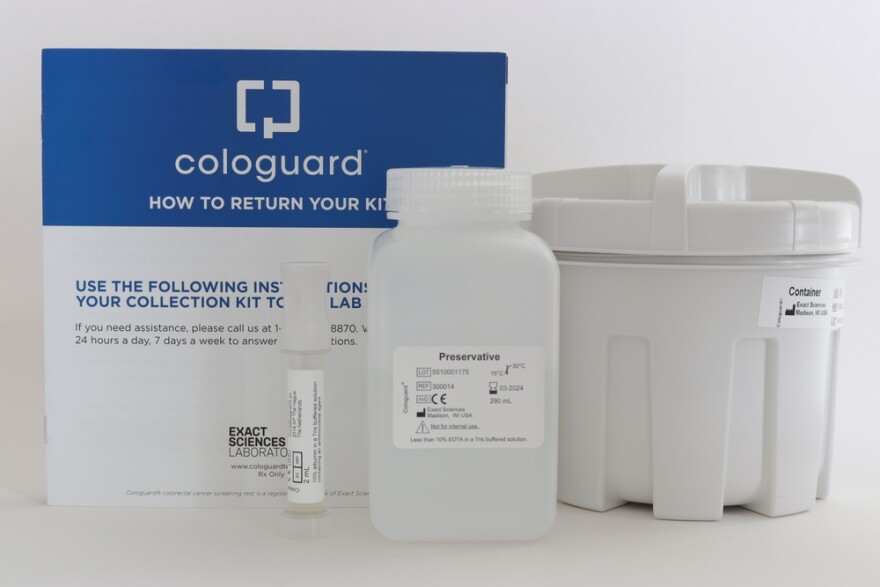
Colorectal screening headlines: mostly noise
Some of the day’s news flow includes updated colorectal cancer screening guideline coverage mentioning stool-DNA tests such as Cologuard. That is a real and important public health topic, but it is not the clean explanation for today’s ABT search spike or price move.
Abbott has a diagnostics business, but the earnings-driven trend is centered on the company’s quarterly results and forward guidance, not on a single guideline-related headline. In a viral market moment, unrelated or tangential healthcare headlines often get pulled into the same social media gravity well.
The “undervalued” question
The internet loves a single-word conclusion: undervalued, overvalued, buy, sell. Markets rarely cooperate.
If you are trying to evaluate whether the post-selloff Abbott move is a true value opportunity or just a relief bounce, look at the questions that do not fit cleanly into a screenshot:
- Is raised guidance driven by sustainable demand, or by temporary tailwinds? Listen for specifics in management commentary and watch whether the next quarter confirms it.
- Which segments are doing the heavy lifting? A diversified company can hide weakness in one division with strength in another. You want to know which engine is powering the upgrade.
- What is the market’s “new normal” multiple for this business? A stock can be down 31% and still not be “cheap” if investors have re-rated the category.
- What changed between the recent highs and today? If the only change is sentiment, rebounds can be sharper. If fundamentals shifted, the old highs may be the wrong anchor.
None of this is a substitute for investment advice tailored to your situation. It is simply the checklist that prevents the most common retail mistake: treating a percentage drop as proof of value.
Why this fits on a civics site
Markets are not just math. They are behavior, incentives, and rules. And Americans now experience “finance” the way they experience politics: through rapid viral narratives that simplify complex systems into one trending phrase.
In civic life, we learn to ask: what is the underlying structure, who has the power, and what are the incentives? In market life, the same questions apply. Today’s Abbott spike is a case study in how expectations act like an invisible constitution for price action, setting what counts as “good enough” before the vote is even cast.
What to watch next for ABT
If you want to follow this story without getting trapped in day-to-day noise, focus on a few durable signals over the next several quarters:
- Whether Abbott maintains or further raises full-year 2024 guidance. The market will test that confidence.
- Performance in core device and diabetes franchises. Durable growth there tends to matter more than one-off diagnostic swings.
- Margins and cost discipline. In healthcare, execution shows up in profitability, not just revenue.
- How the stock behaves on the next broad market pullback. Relief rallies are real, but so is the question of whether buyers stay when conditions worsen.
The viral trend will fade. The underlying question will not: did the market over-punish Abbott, or did this quarter simply interrupt a longer repricing? Q2 2024 did not end that debate. It reopened it.