
There is a particular kind of political despair that does not look like quiet resignation. It looks like acceleration. It looks like a person deciding that the ordinary channels of democracy are not just slow, but fake. That the doors marked petition, vote, and litigate are props on a stage, not exits from the building.
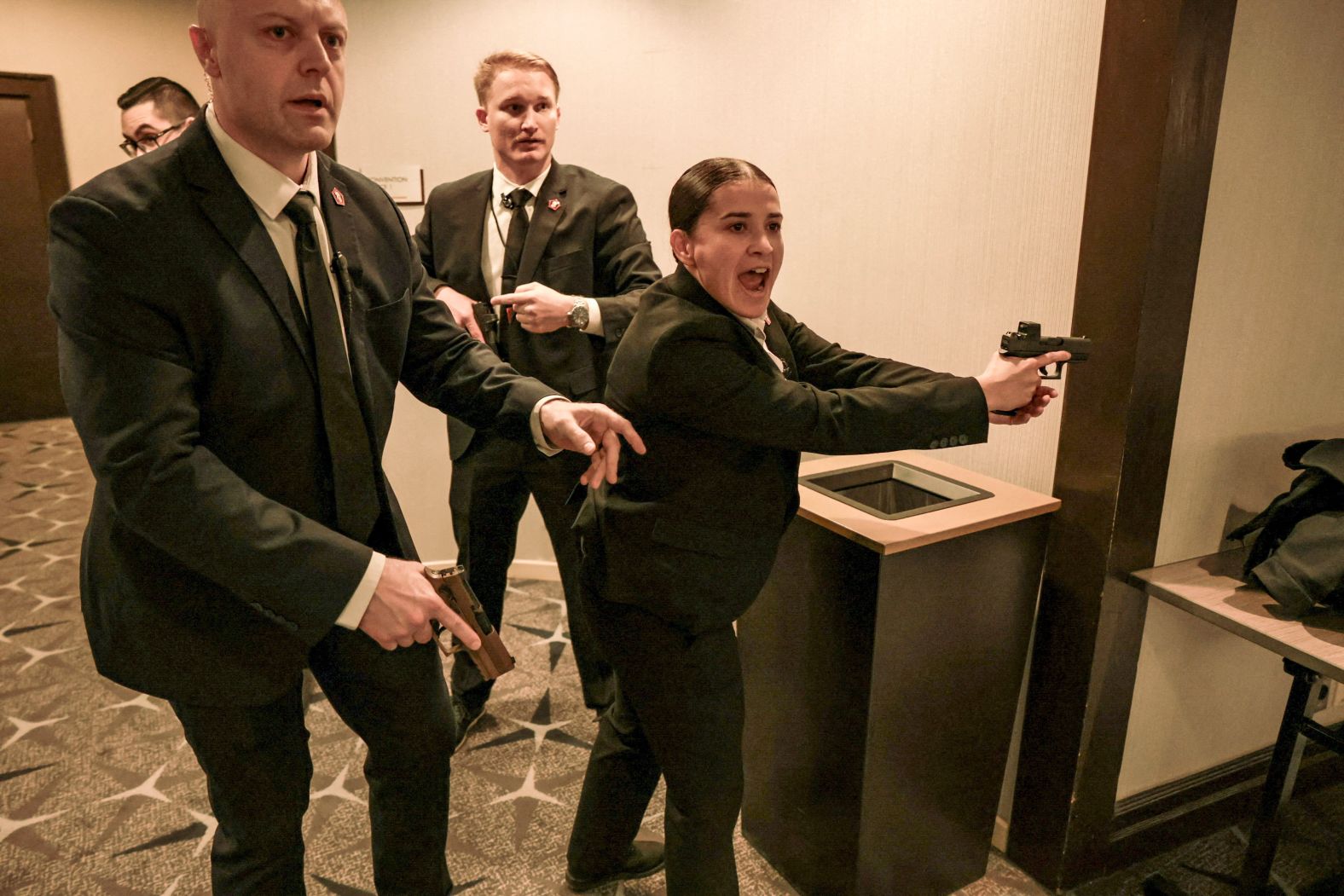
That is one civic atmosphere worth keeping in mind when you hear about an armed man who rushed the White House Correspondents’ Association dinner.
It is easy to treat an incident like that as a single person’s pathology, a one-off security failure, or a bizarre footnote to an elite social ritual. But it can also be read, by some observers, as a warning flare about legitimacy. Not legitimacy in the abstract, but legitimacy as an everyday experience: the belief that if the government abuses power, there remains a lawful way to push back.
To be clear, this is not a claim about what the person intended. It is a way to situate the reaction that followed and the civic fears it surfaced.
Join the Discussion
The quote
In a social-media thread reacting to the incident, a Bluesky user posting under the handle espiers.bsky.social put one fear plainly: “This guy is indicative of people who are anti Trump not having a voice because Congress and SCOTUS have enabled Trump to obliterate any recourse they have when he does horrible things.”
That is one commenter’s interpretation, not a proven account of motive. Still, the constitutional issue it points to is the belief it describes. When someone becomes convinced that every lawful remedy has been sealed off, the temptation is to invent a new remedy. History suggests those inventions are rarely peaceful.
Conflict by design
The American constitutional design is often misdescribed as a machine for producing agreement. It is not. It is a system for managing conflict without violence.
We do that through redundancy and friction. Elections on staggered schedules. Two houses of Congress. Federalism. Courts that move slowly. Rights that limit even popular majorities. The whole point is to force political energy through narrow channels so it does not spill into the street as force.
When people say “the system is broken,” they often mean “the system is not producing the outcomes I want.” But the more dangerous meaning is this: “the system no longer recognizes my side as legitimate participants.” That is when constitutional friction stops feeling like stability and starts feeling like a locked door.
Recourse matters
In civics, we teach remedies like they are always available. Call your representative. File a lawsuit. Vote. Protest.
But remedies are not just theoretical. They are a lived reality. When oversight is experienced as performative, it can stop feeling like a remedy. When courts are perceived as inaccessible, litigation can start to feel like theater. When elections are experienced as noncompetitive or unresponsive, voting can feel like participation without power.
The Constitution does not guarantee you will win. It does not guarantee the branch you dislike will change its mind. What it implicitly promises is something more modest and more essential: that you can still try in a way the system recognizes.
Speech is not enough
There is a persistent American mistake that goes like this: if you still have the First Amendment, you still have democracy.
But speech is not self-enforcing. The right to criticize power is indispensable, and it is also incomplete. A constitutional republic needs functioning institutions that translate dissent into constraints on power. Without that translation, free speech can become a vent that releases pressure without changing anything. That is not stability. That is steam whistling from a sealed kettle.
This is not a call to treat violence as inevitable. It is the opposite. It is an argument that we should treat institutional responsiveness as a public safety issue, not just a procedural nicety.
What despair changes
The Founding generation was not naive about demagogues or faction. They built a system on the assumption that ambition would clash with ambition and that citizens would sometimes be furious with the outcomes.
What they feared was not disagreement. What they feared was the moment citizens stop believing law can contain power. In that moment, the social contract does not “break” with a dramatic snap. It frays. People begin to treat politics as something done to them, not something they participate in. And in the vacuum left by lawful participation, you can get radical shortcuts.
Again, that is a general civic dynamic, not a diagnosis of one person. But it is one reason incidents like this can feel like a stress test, not just a spectacle.
A better reflex
If an incident like this makes you feel the urge to pick a team and mock the other side’s instability, you are missing the lesson.
A better reflex is to ask a harder question: what lawful pathways are available right now for intense dissent, and do they feel real to ordinary people?
- Oversight: Does Congress still behave like a rival branch, or like a shield?
- Courts: Are claims heard on the merits, or dismissed in ways that can make justice feel unreachable?
- Elections: Do voters believe outcomes are responsive, competitive, and fairly administered?
- Protest: Is public assembly treated as a constitutional right or as a security nuisance to be contained?
These are not accusations disguised as a checklist. They are diagnostic questions about whether the system is still legible as a system of recourse. They do not require you to endorse anyone’s politics. They require you to care about the republic’s most basic promise: that power can be contested without anyone bringing a weapon to a dinner.
Closing thought
Constitutional government is not just a set of rights on paper. It is a collective habit of accepting that the way you fight is as important as what you are fighting for.
When someone tries to force their way into the political conversation with a weapon, that is a personal failure. It can also be a civic symptom, or at least a civic stress test, in the eyes of the people watching. It suggests that somewhere, someone has stopped believing in recourse, or has stopped trusting it.
The Constitution cannot make people trust it. But it can give them reasons to. That takes officials who treat oversight as duty, courts that remain open to real claims, and citizens who refuse the seductive lie that only violence counts as power.