
“Dark money” sounds like a spy movie phrase. In American politics, it is something more ordinary and more influential: money spent to shape elections or public policy where the true donors are not disclosed to the public.
That last part is the key. Dark money is not necessarily illegal money. It is undisclosed money. And because the Constitution protects political speech, the fight over whether the public has a right to know who is funding that speech has become one of the most persistent tensions in modern election law.
Join the Discussion
Dark money, defined
In most election contexts, when you hear “money in politics,” you are really hearing about two separate questions:
- How much money can be spent?
- Who has to be identified when money is spent?
Dark money is primarily about the second question. A basic working definition is:
Dark money is political spending by organizations that are not required to publicly disclose their donors.
These organizations can run ads, fund advocacy campaigns, bankroll mailers, or support voter outreach operations, all while keeping the original source of funds out of public view.
Where dark money comes from
Much dark money in the United States flows through certain types of nonprofits, because nonprofit disclosure rules are different from candidate and party disclosure rules and because rules vary across federal and state systems.
501(c)(4) “social welfare” groups
Organizations organized under Internal Revenue Code 501(c)(4) can engage in political activity as long as it is not their “primary” purpose. They can spend on elections in various ways, and they generally do not publicly disclose donors.
In many cases, donors remain undisclosed publicly, though some spending types and some states can trigger partial donor disclosure, and certain federally regulated communications can create narrower reporting obligations.
501(c)(6) trade associations
Business leagues and trade associations under 501(c)(6) can also spend on political advocacy and often do not disclose donors publicly. As with 501(c)(4)s, the details can change depending on the type of spending and the jurisdiction.
Super PACs (often connected)
Super PACs must disclose donors. That is why the typical move is not “hide money inside a super PAC.” A common method is: route money first through a nonprofit, and then have the nonprofit fund the super PAC. The super PAC discloses the nonprofit as the donor, but the public still cannot see who funded the nonprofit.
In practice, other pass-through entities can also appear in the chain, including LLCs and other corporate vehicles, depending on the rules in play.
A simple example
Imagine Donor X gives $1 million to Group A, a 501(c)(4). Group A then gives $1 million to Super PAC B, which runs ads in a Senate race. Super PAC B reports “Group A” as the source of the money. The public sees the spending, but not Donor X.
This is how “dark money” can sit right next to a disclosure regime without technically breaking it.
Dark money vs. soft money vs. PAC money
These terms are often used interchangeably, but they are not the same thing.
- Dark money: spending where donors are not publicly disclosed.
- Soft money: historically, large donations to political parties for “party-building” activities; heavily restricted by the Bipartisan Campaign Reform Act of 2002 (McCain-Feingold).
- PAC money: money raised and spent by political action committees; PACs typically have disclosure obligations, depending on structure and activity.
The practical effect is that someone can be loudly “pro-disclosure” about PACs and still support nonprofit structures where major streams of influence remain hard to trace.
How it shows up in campaigns
Dark money is most visible during election season, but it can operate year-round. Common uses include:
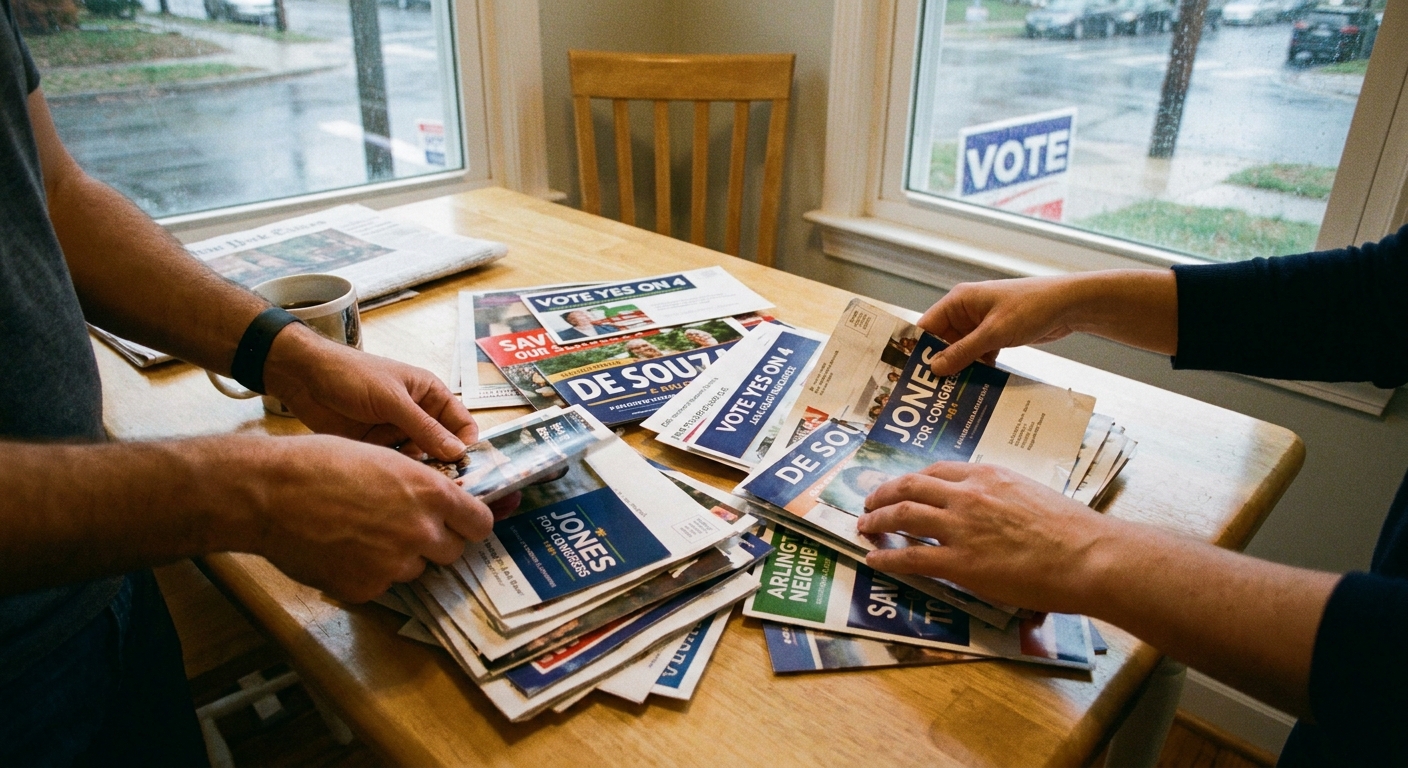
- Issue ads that stop just short of explicitly saying “vote for” or “vote against” a candidate.
- Electioneering communications, such as certain broadcast ads close to an election that can be regulated even without “magic words.”
- Independent expenditures supporting or opposing candidates, made outside official campaigns.
- Ballot measure campaigns that can reshape tax law, criminal law, abortion policy, labor rules, and more.
- Litigation and legal advocacy that helps build long-term policy infrastructure.
- Public pressure campaigns aimed at regulators and legislators.
Dark money is not only about “buying elections.” It is also about building durable power that outlasts any single election cycle.
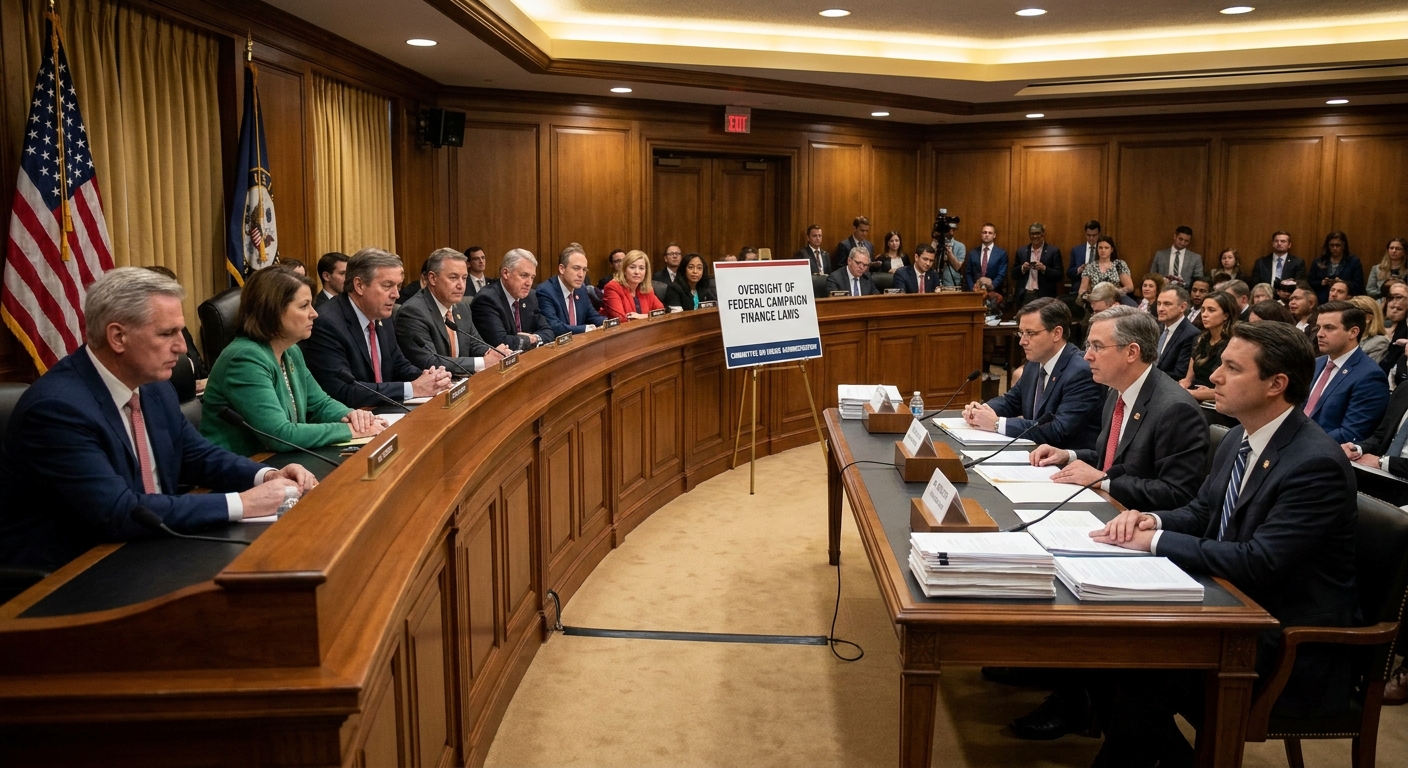
The constitutional tension
Dark money exists in the space between two principles that Americans tend to support at the same time, until they collide.
1) Political speech gets strong protection
The Supreme Court has repeatedly treated spending on political communication as a form of protected speech under the First Amendment, even if it is not identical to “speech” in the everyday sense.
2) Voters want transparency
Disclosure supports anti-corruption goals and helps the public evaluate messages. When you know who paid for an ad, you know something about its incentives.
Dark money thrives when the legal system emphasizes (1) more than (2), or when disclosure laws contain exceptions, narrow definitions, or enforcement gaps.
Key Supreme Court cases
Dark money is not the product of a single case. It is the product of a legal environment created over decades. Still, a few decisions come up constantly.
Buckley v. Valeo (1976)
Buckley drew foundational lines in modern campaign finance law, including treating expenditure limits and contribution limits differently under the First Amendment. It also upheld certain disclosure regimes, recognizing transparency as a legitimate governmental interest.
Citizens United v. FEC (2010)
Citizens United held that the government cannot restrict independent political expenditures by corporations and unions simply because of the speaker’s identity. Importantly, the decision also endorsed disclosure requirements in principle. The case expanded the universe of permissible independent spending, which in practice increased the value of structures that can spend while keeping donors hidden.
SpeechNow.org v. FEC (D.C. Cir. 2010)
This lower-court decision, relying on Citizens United, helped clear the path for what we now call super PACs.
Americans for Prosperity Foundation v. Bonta (2021)
Bonta dealt with compelled donor disclosure to the government in the nonprofit context and emphasized First Amendment concerns about donor privacy and associational rights. While not an election case, it is part of the broader constitutional argument that disclosure can chill participation.
Put these together and you get the modern dispute in its simplest form: how do you protect robust political advocacy without making elections functionally anonymous auctions?
Why disclosure is hard
Many people’s first reaction is, “Just require everyone to disclose donors.” But the law runs into real complications quickly.
Disclosure can chill speech
The Supreme Court has long recognized that forced exposure can deter membership and donations, especially for unpopular causes. The classic reference point is NAACP v. Alabama (1958), where the Court protected the NAACP from being compelled to reveal its membership list to the state.
Definitions do the work
Is an ad “issue advocacy” or “express advocacy”? Does it qualify as an “electioneering communication”? Is an organization’s “primary purpose” political? What counts as “coordination” with a campaign? Dark money often exists because the lines are technical and the incentives are enormous.
Enforcement is a real constraint
Even strong disclosure rules can collapse in practice if enforcement agencies lack resources, have gridlocked leadership, or face procedural hurdles.
Is it legal?
Often, yes.
“Dark money” is not a formal legal category. It is a public label for a real outcome: donor anonymity in political influence campaigns.
That means two things can be true at once:
- Some dark money activity is fully lawful under current nonprofit and election law rules.
- Some activity crosses lines, like illegal coordination, straw donors, foreign-national involvement, or false reporting.
The hard part is that the public typically only sees the final ad buy, not the compliance trail that would reveal whether anything unlawful happened.
Why it matters
The Constitution does not design election law in detail. It sets the architecture. The rest is statutes, regulations, and court doctrine. But dark money pressures some of the Constitution’s most important assumptions.
Accountability needs visibility
In a republic, voters are supposed to evaluate arguments, judge interests, and reward or punish governing coalitions. Donor anonymity can make influence feel unaccountable, even when the messaging is legal.
Corruption is not only bribery
Modern campaign finance law often focuses on quid pro quo corruption, the explicit trade of money for official action. But public trust can erode long before anything meets that definition. Dark money can intensify the sense that policy is being purchased off-camera.
Transparency is contested power
Disclosure rules are framed as neutral good-government reforms. In practice, they can advantage or disadvantage certain strategies, coalitions, and institutions. That makes transparency itself politically contested.
Reforms and limits
Common proposals include:
- Expanded donor disclosure for groups spending above certain thresholds on elections.
- Stronger “true source” rules requiring disclosure of the original donor behind pass-through entities.
- Tighter coordination standards to prevent nominally “independent” spending from acting like an unofficial campaign arm.
- Improved enforcement capacity for federal and state election agencies.
The obstacle is not a lack of ideas. It is that every reform has to navigate:
- First Amendment limits on compelled disclosure and political association.
- Federalism, because election administration is primarily state and local while campaign finance rules and disclosure obligations vary across federal and state systems.
- Incentives, because the beneficiaries of the current system often have influence over whether it changes.
What to watch for
You do not need to memorize tax code sections to be an informed citizen. But you can look for signals that tell you when dark money is shaping what you are seeing.
- Read the disclaimer on political ads. “Paid for by” tells you the immediate spender, even if it does not reveal the original donor.
- Notice naming patterns. Groups with patriotic or neutral names often exist for a single election or a single legislative fight.
- Look for timing spikes near elections and during key legislative sessions.
- Distinguish campaigns from outside groups. Outside groups are not accountable at the ballot box in the same way.
Dark money works best when it feels like background noise. Paying attention is not cynicism. It is citizenship.
The question it forces
Every system picks its tradeoffs. In American election law, the unresolved tradeoff is this:
How much donor privacy should the Constitution protect when private money is being used to influence public power?
The United States has never fully settled that question. And each election cycle re-asks it, louder.