
DACA stands for Deferred Action for Childhood Arrivals. It is a federal immigration policy announced in June 2012 by the Obama administration that allows certain undocumented immigrants who came to the United States as children to request two things: temporary protection from deportation and work authorization.
It can sound like a law, but it is not. DACA is an exercise of executive branch discretion, meaning it is a policy for how immigration enforcement should be prioritized. That detail matters because it helps explain why DACA has survived for years while also remaining legally vulnerable.

Join the Discussion
What DACA does and does not do
What DACA does
- Defers removal: If approved, the federal government agrees to postpone deportation action against the recipient for a set period, traditionally two years at a time.
- Allows work authorization: Approved recipients can generally apply for an Employment Authorization Document (EAD), which makes lawful employment possible (including completing the standard I-9 employment verification process).
- Enables practical stability: With work authorization often comes the ability to get a Social Security number and, depending on state law, access to items like driver’s licenses.
What DACA does not do
- It does not give lawful status: DACA is not a visa, green card, or citizenship.
- It does not create a direct path to citizenship: Any direct path to citizenship would require Congress to pass new immigration legislation.
- It is temporary and revocable: Deferred action can be rescinded, denied, or terminated, and renewals are not automatic.
- It does not create uniform benefits: Some benefits vary by state, and DACA does not automatically make someone eligible for every public program or form of financial aid.
In plain terms: DACA is a pause button on deportation plus a work permit, not an immigration “fix.”
Who qualifies for DACA?
DACA eligibility is defined by federal criteria set by the Department of Homeland Security (DHS) and administered largely through U.S. Citizenship and Immigration Services (USCIS). Requirements have been updated over time and are affected by court rulings, but the core idea has remained consistent: DACA is aimed at people who arrived as children, have lived in the U.S. for years, and meet schooling or military service expectations, while also passing background checks.
Common eligibility elements have included:
- Arrival in the United States before a specified age threshold (often described as arriving as a child)
- Continuous residence in the U.S. since a specified date
- Physical presence in the U.S. at key dates
- Education or service criteria (such as being in school, having graduated, obtaining a GED, or qualifying military service)
- No disqualifying criminal history and passing security-related screening
Important: Because eligibility rules and application availability have shifted due to ongoing litigation, readers should check the current USCIS DACA page for up-to-date filing guidance.
Current as of May 2026: DACA’s day-to-day availability has been shaped by litigation and policy updates. Because that posture can change, the most reliable source for what USCIS is currently accepting is USCIS itself.
How DACA works in real life
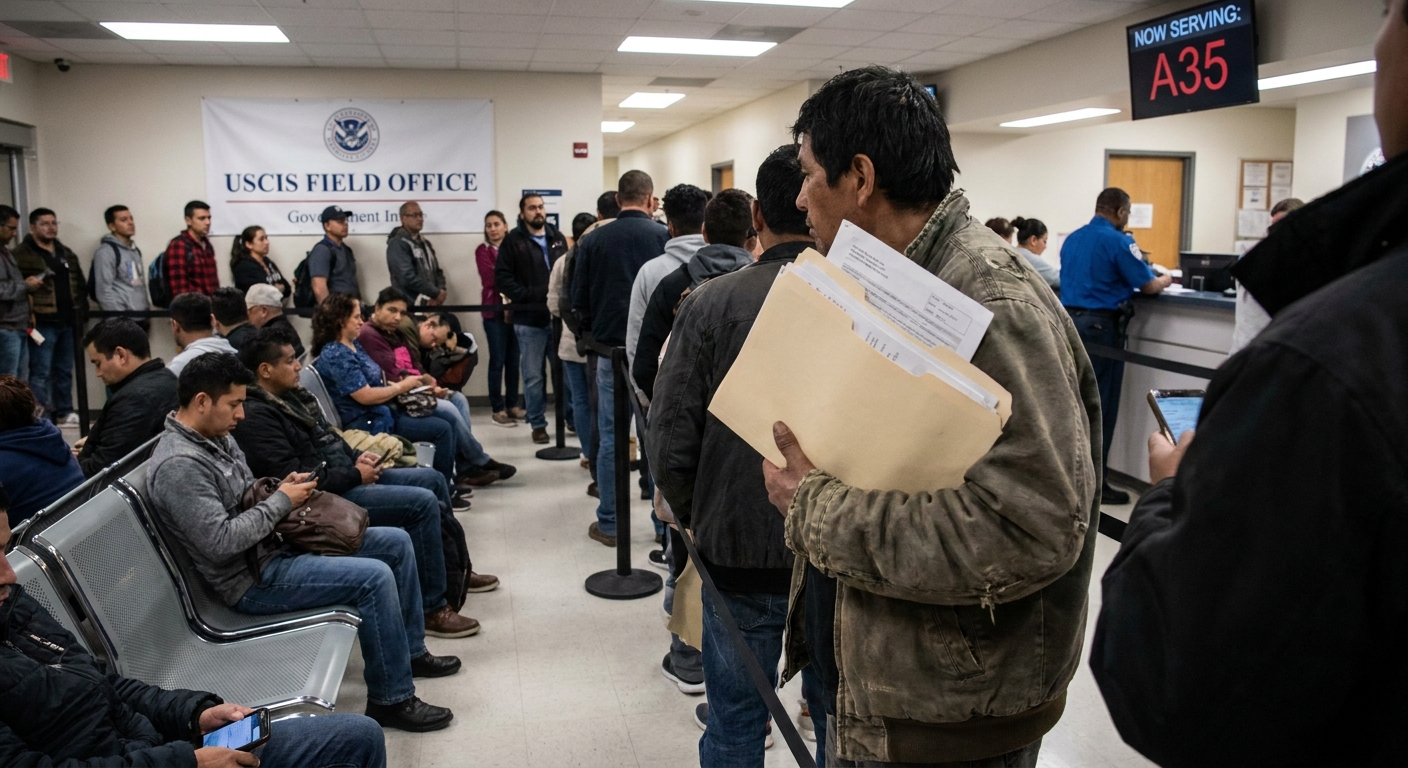
DACA is administered through an application process. Applicants submit forms, documentation, and fees, and they undergo background checks. If approved, they receive a period of deferred action and can request work authorization for the same period.
For recipients, the practical impact is often straightforward: the ability to work legally, keep a job, plan schooling, and live with less fear that a routine interaction will trigger removal proceedings. But the legal foundation is not a statute passed by Congress. It is policy.
It also requires maintenance. DACA is time-limited, and recipients typically must renew to keep deferred action and work authorization in place. Timing and eligibility details matter, so people usually watch USCIS updates closely.
The legal question underneath it all
To understand why DACA has been repeatedly challenged, it helps to zoom out and ask a basic civics question: who gets to make immigration law?
Congress sets immigration rules through legislation, and the executive branch enforces those laws. In the real world, immigration enforcement involves limited resources and constant prioritization. That is where prosecutorial discretion comes in: the executive branch cannot remove everyone who could be removable, so it decides who to prioritize.
Supporters of DACA emphasize that deferred action has long existed as a tool of enforcement discretion. Critics argue DACA went beyond case-by-case discretion and crossed into something that looks like lawmaking, particularly because it provided a structured, large-scale program with eligibility categories and work authorization.
This is a classic separation-of-powers tension: discretion versus legislation. The courts have been asked, repeatedly, to decide which side DACA falls on.
Key court battles
DACA’s legal history is long, but a few highlights explain the “why does this keep happening?” feeling many readers have.
Rescission attempt and the Supreme Court (2020)
In 2017, the federal government moved to end DACA. The Supreme Court’s 2020 ruling in Department of Homeland Security v. Regents of the University of California was not a full endorsement of DACA’s legality. Instead, the Court held that the way DACA was ended was procedurally deficient under administrative law rules. In other words, the Court said the government could not terminate the program in that particular way, with that particular explanation.
That decision kept DACA alive at the time, but it did not settle the deeper question of whether DACA is lawful in the first place.
Ongoing challenges to DACA’s legality
Separate lawsuits have argued that DACA violates federal law governing agency action and exceeds executive authority. As lower court rulings and appeals have progressed, the practical availability of DACA has shifted, including periods when renewals continued but new applications were restricted.
The takeaway for a civics-minded reader is simple: when a major policy is built on executive action rather than a statute, it lives closer to the legal fault line. It can be revised by later administrations and more easily attacked in court.

DACA vs the DREAM Act
No. The DREAM Act is proposed legislation that has been introduced in various forms over the years. If passed, it would create a statutory pathway, often involving conditional residency and later eligibility for permanent residency, for certain undocumented immigrants brought to the U.S. as children.
DACA is not the DREAM Act. DACA is executive policy. The DREAM Act would be a law passed by Congress. That difference is the difference between something that can be changed with a new administration’s approach and something that generally requires Congress to amend or repeal.
Does DACA provide legal status?
This is one of the most common points of confusion. DACA recipients are sometimes described as being “here legally,” but the more accurate legal framing is narrower: DACA confers deferred action and may permit lawful employment for the duration of the grant.
It can also affect how the government treats someone’s lawful presence for specific purposes while DACA is in effect. But lawful presence is not the same as lawful status. DACA does not turn an undocumented entry into a visa, a green card, or citizenship.
Why DACA matters for civics
DACA is not only an immigration story. It is a constitutional story about how the United States governs itself when a hard problem remains unresolved by Congress.
When Congress does not pass an enduring solution, presidents face pressure to act using the tools available to the executive branch. When presidents do act, courts are asked to draw boundaries around executive power. DACA sits right in that triangle of pressure.
However you feel about the policy outcome, DACA is a civics lesson in real time: the separation of powers is not abstract. It decides whether the rules of millions of lives are written through legislation or through discretion.
Quick answers
Can DACA recipients be deported?
Yes, it can still happen. Deferred action reduces the likelihood of removal during the grant period, but it is not an absolute shield. DACA can be terminated, and recipients can become priorities due to certain conduct or disqualifying factors.
Can DACA recipients travel outside the U.S.?
Only with approval in advance in many cases. Travel has often depended on a separate process called advance parole. It is not automatic and typically must be approved before travel. Anyone considering travel should check current USCIS guidance and seek qualified legal advice because travel and re-entry can carry serious risk.
Is DACA still available?
Sometimes, and it depends on the moment. DACA’s availability has been shaped by ongoing litigation and federal policy decisions. The most reliable source for current filing status is USCIS.
The bigger question
DACA was built to be temporary. That is not a critique, it is in the name: deferred action. The program’s durability has always depended on whether Congress turns the underlying idea into law, or whether courts decide the executive branch went too far.
Until that larger question is resolved, DACA will remain what it has been since 2012: life-changing relief that exists on contested ground.