
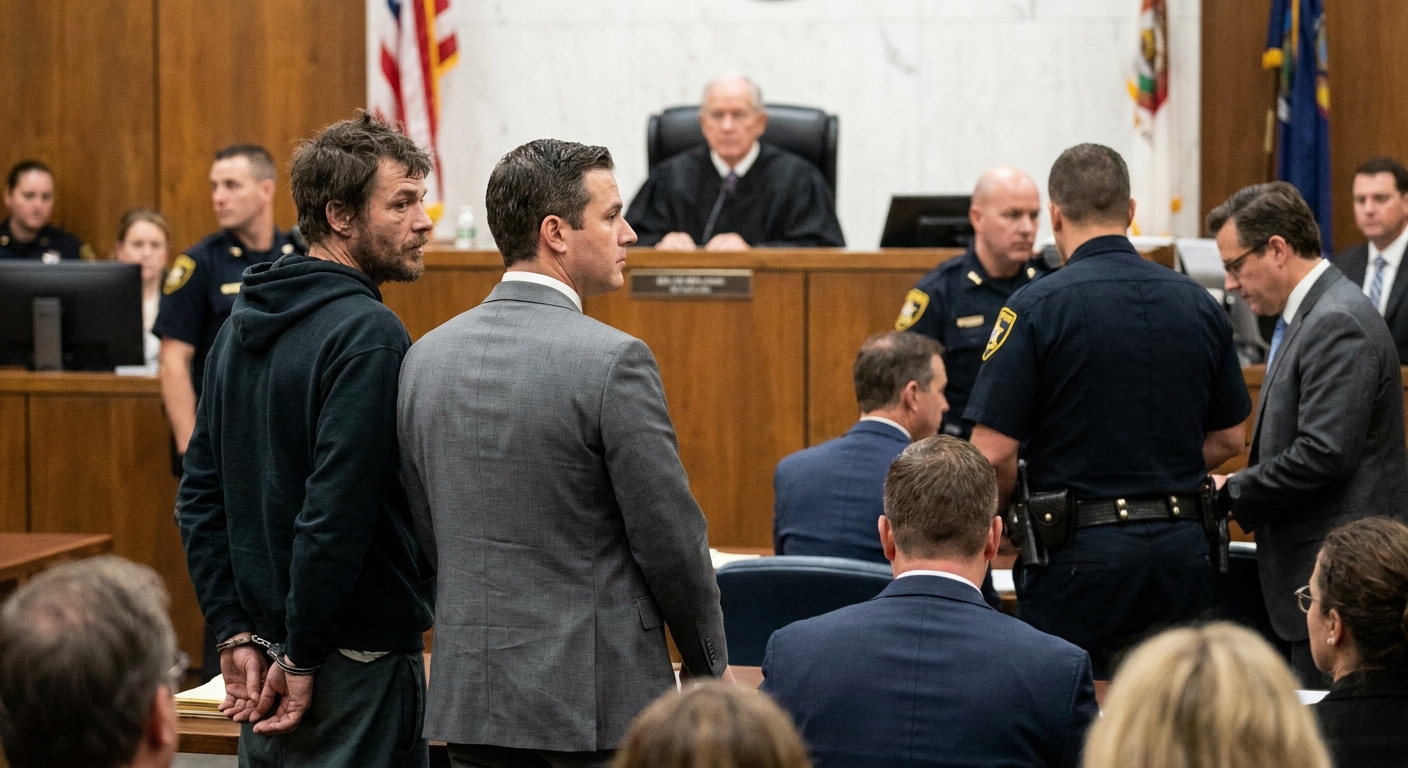
You can tell how early a case is by how little has actually been decided. An arraignment is that moment. It is often the first formal court appearance where the case becomes official in open court and the system puts its cards on the table: the charges the government is bringing, the rights the defendant has, and the basic ground rules for what happens next.
People sometimes imagine an arraignment as a mini trial. It is not. There is usually no witness testimony, no cross-examination, and no verdict. But what happens at arraignment can shape the entire case, especially on release conditions, the pace of the prosecution, and sometimes bail.
Join the Discussion
Arraignment, defined
An arraignment is a court hearing where a judge:
Formally tells the defendant what they are accused of
Confirms the defendant’s identity and that they understand their rights
Ensures the defendant has counsel or can request appointed counsel
Asks for a plea (commonly not guilty at this stage)
Addresses pretrial release, bail, and conditions of release (or schedules a separate hearing for those issues)
Sets the next court dates
In plain terms, the arraignment is where the case becomes official on the record.
Where it fits in the process
Most cases follow a rough sequence, though details vary by state and by whether the case is in state or federal court:
Arrest or citation (or a summons to appear)
Charging decision by prosecutors (complaint, information, or indictment)
Initial appearance and bail review (sometimes combined with arraignment)
Arraignment (formal notice of charges and plea)
Pretrial process (discovery, motions, plea negotiations)
Trial or plea and sentencing
Many jurisdictions use the term “arraignment” for a hearing that also functions as the first appearance. Others separate them, with an initial appearance (sometimes called presentment) first, and an arraignment later. Either way, the core constitutional concerns are the same: notice, counsel, and liberty pending trial.
What happens in court
The judge calls the case
The court confirms the defendant’s name and basic information. If an interpreter is needed, this is often handled right away. The courtroom can be fast-moving, especially in high-volume dockets where dozens of cases are scheduled for the same session.
The charges are read or summarized
The defendant is told the charges, often by reference to the charging document (a complaint, information, or indictment). In some courts the judge reads the charges; in others, the judge summarizes them and confirms the defendant received a copy.
Rights are explained
Judges typically advise defendants of key rights, including the right to counsel and the right to remain silent. Some courts do this as a group advisement, then confirm individually that each person understands.
Lawyers are addressed
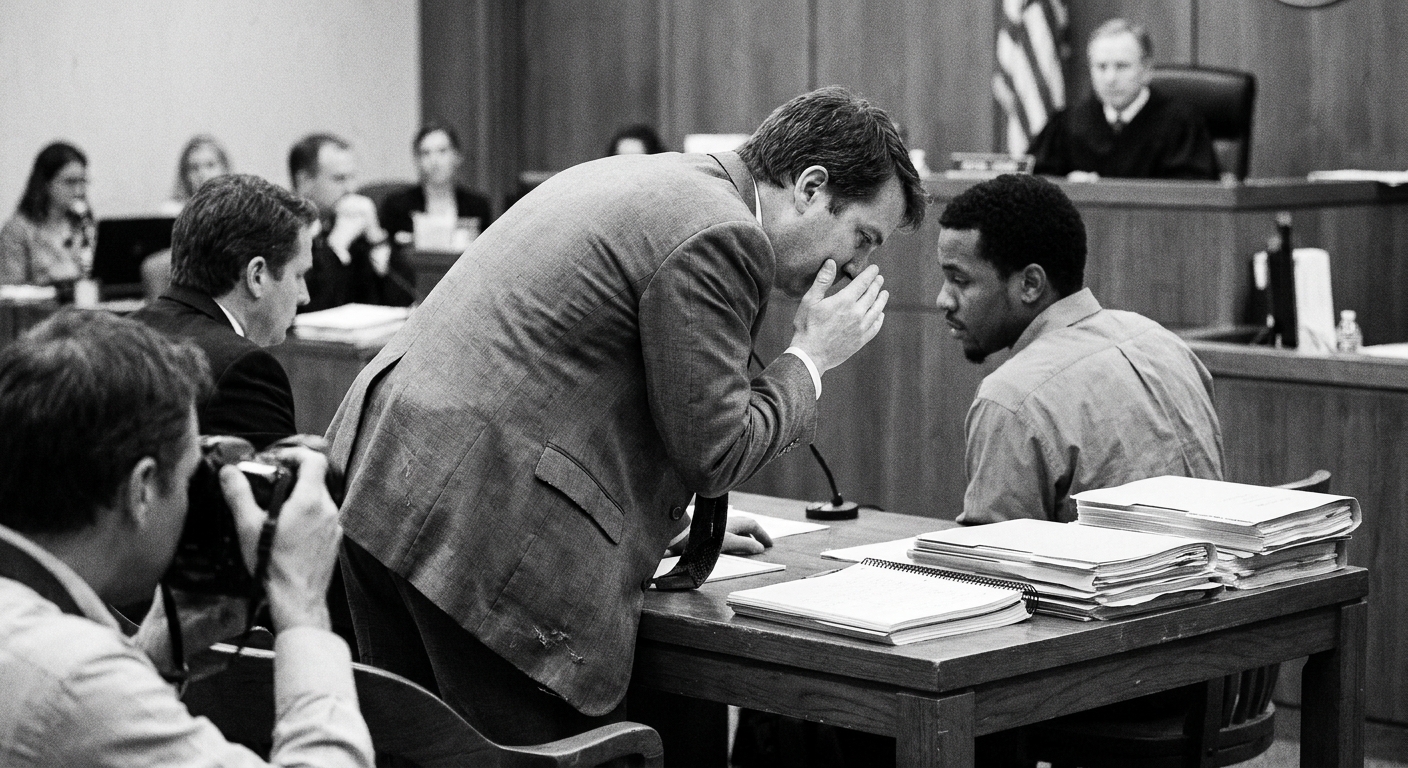
If the defendant has a lawyer, that attorney enters an appearance. If the defendant cannot afford counsel, the court may appoint a public defender or set a process for determining eligibility.
Defendants may also be given (or asked to confirm receipt of) basic paperwork, such as the charging document and a written advisement of rights, depending on local practice.
The plea and why “not guilty” is common
At arraignment, the judge asks for a plea. The familiar options are:
Not guilty
Guilty
No contest (nolo contendere), where permitted
Most defendants plead not guilty at arraignment. That is not a statement that plea negotiations will never happen. It is often a way of preserving time and leverage while the defense reviews evidence, evaluates legal issues, and considers options.
In some courts, if a defendant “stands mute” or does not enter a plea, the judge will enter a not-guilty plea on the defendant’s behalf.
A guilty plea can move a case straight toward sentencing. That is why judges also make sure any guilty plea is knowing and voluntary. In lower-level cases, some defendants do plead guilty or no contest at arraignment. If a defendant is unrepresented, courts may strongly discourage an immediate guilty plea, depending on local rules and the seriousness of the charge.
Bail and release conditions
For many defendants, the most consequential part of early court is whether they go home afterward and under what conditions. In many state courts, that question is addressed at arraignment. In federal court, and in some states, release or detention is often handled at an initial appearance and may be followed by a separate detention hearing.
Release, bond, or detention
Depending on the charge, prior record, and local law, the judge may:
Release on recognizance (release on a promise to return)
Set unsecured or secured bond (bail)
Impose conditions such as no-contact orders, travel restrictions, or alcohol monitoring
Order pretrial detention in limited circumstances
Courts consider factors like risk of flight and danger to the community. Many states also include public safety and victim protection considerations in their bail statutes.
Common conditions of release
No contact with an alleged victim or witness
Stay away orders for certain locations
Drug testing or treatment requirements
Electronic monitoring
Surrendering firearms (in some cases, by statute)
Regular check-ins with pretrial services
These conditions can feel like “punishment before conviction” to defendants and critics, which is part of why bail and pretrial detention remain ongoing constitutional and policy flashpoints in American law and politics.
The rights in play
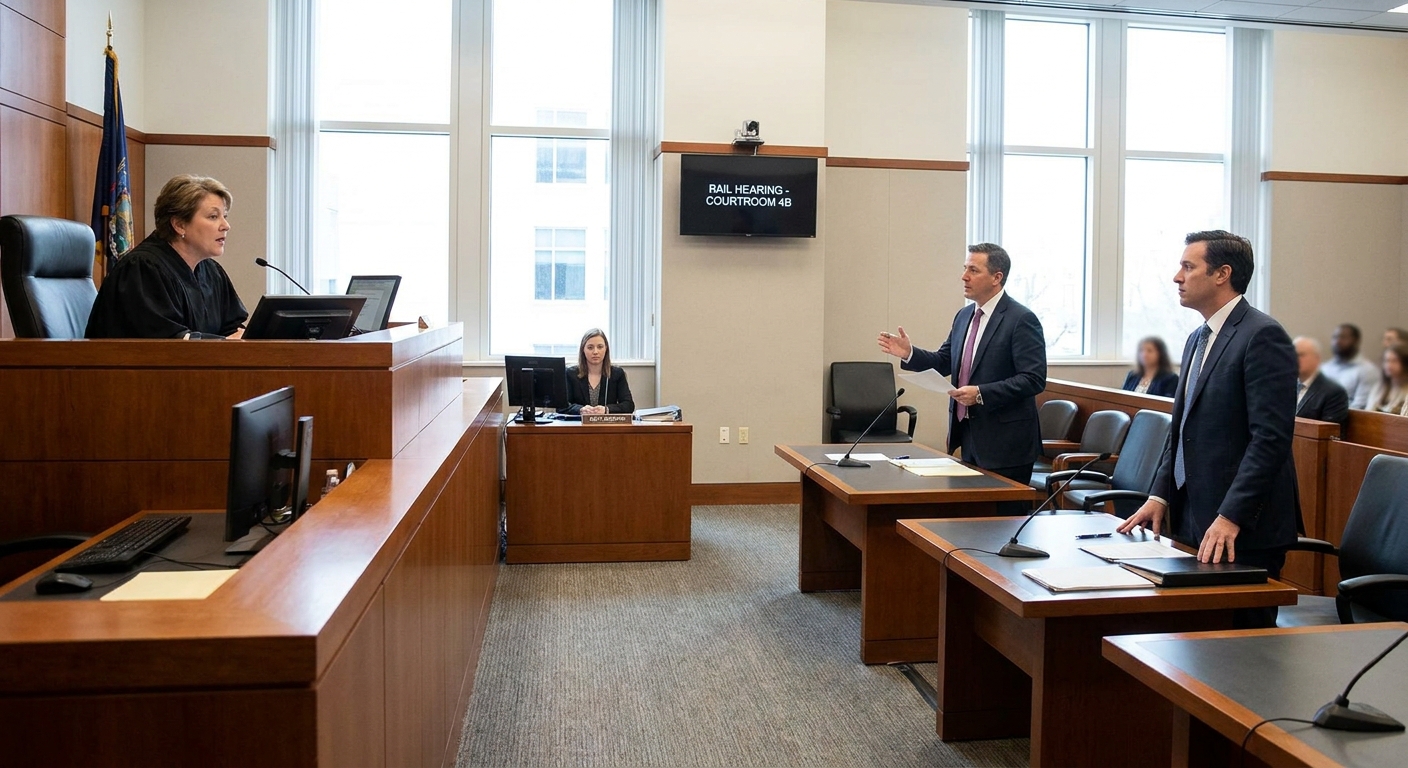
The Constitution does not contain a single clause that says “arraignment.” But arraignment sits at the intersection of several rights that do appear in the text, and in the Supreme Court’s interpretation of that text.
Sixth Amendment
The Sixth Amendment guarantees the accused the right to be informed of the nature and cause of the accusation, and the right to assistance of counsel. Arraignment is one of the system’s main mechanisms for satisfying the “notice” requirement.
It is also a common moment for addressing counsel. The Supreme Court has recognized that the right to counsel attaches at critical stages of a prosecution, and early proceedings can qualify as critical when rights can be lost or decisions can shape the case.
Fifth and Fourteenth Amendments
Due process is the broader promise that criminal proceedings must be fundamentally fair. Arraignment supports that by putting charges on the record and ensuring the defendant has a meaningful chance to respond, starting with counsel and access to the court.
In state cases, these protections are largely applied through the Fourteenth Amendment, which constrains states through incorporation of many Bill of Rights guarantees.
Eighth Amendment
The Eighth Amendment prohibits excessive bail. It does not guarantee that bail must be offered in every case, and pretrial detention can be lawful in certain circumstances. Detention authority is typically set by statute and is evaluated under due process principles as well as bail protections.
In practice, the “excessive bail” question often turns on context: the seriousness of the offense, the evidence, the defendant’s history, and the court’s stated rationale for the amount and conditions.
Federal vs state
Arraignments look similar across the country, but the paperwork and timing can differ.
Federal court
In federal criminal cases, the process is governed by the Federal Rules of Criminal Procedure. The defendant is arraigned on an indictment or information, advised of charges, and asked to plead. Release and detention decisions often involve pretrial services and the Bail Reform Act framework, and may be addressed at an initial appearance and then at a separate detention hearing.
State court
State arraignment procedures vary. Some states use a complaint first and later move to an information or indictment. Some combine arraignment with first appearance. Many states rely on bail schedules for initial amounts, though judges can modify them based on individualized factors.
What it is not
Arraignment is a starting line, not the main event. Generally, it is not:
A trial where guilt is decided
An evidentiary hearing where witnesses testify at length
A sentencing (unless a guilty plea is entered and accepted and local rules allow rapid sentencing)
A place to “explain your side” to the judge in narrative form
That last point matters. Defendants often want to speak. Sometimes speaking can help, but it can also hurt. Anything said in court can become part of the record and may be used later. This is why lawyers commonly advise clients to keep remarks brief and strategic.
What happens after
After the plea is entered and release issues are addressed (or scheduled for further hearing), the court typically sets next steps. Those may include:
A pretrial conference
Discovery deadlines
Motion practice (suppression motions, dismissal motions)
Plea negotiations
A preliminary hearing (in jurisdictions that use it to test probable cause)
A trial date
Many cases resolve by plea. Some are dismissed. Some go to trial. But the arraignment is the moment the case becomes an organized, calendared conflict rather than a chaotic aftermath of arrest.
Common questions
Do you have to attend?
Usually yes. In some misdemeanor cases, local rules may allow counsel to appear without the defendant, or allow remote appearance. Failing to appear can lead to a bench warrant and, in some states or circumstances, a separate failure to appear charge.
Can the charges change later?
Yes. Prosecutors can amend charges or add counts depending on evidence and procedural rules, though the ability to do so can be constrained after certain stages. Grand jury indictments can also change the landscape. Arraignment is an early snapshot, not a guarantee.
Should you plead guilty at arraignment?
That depends on the case, but most defendants do not. A guilty plea can waive rights and accelerate sentencing. If you do not fully understand the evidence and consequences, “not guilty” keeps the process open while your lawyer evaluates options.
Is arraignment the same as being indicted?
No. An indictment is a charging document returned by a grand jury in some cases. An arraignment is the court hearing where charges are formally presented and a plea is entered. A person can be arraigned on an indictment, an information, or a complaint depending on jurisdiction and stage.
Why it matters
Arraignment is where the government has to stop speaking in generalities and start speaking in particulars. Not “we think a crime occurred,” but this charge, under this statute, against this person, in a courtroom with a judge, a record, and counsel.
That is the Constitution’s criminal procedure promise in miniature: not just that the state can prosecute, but that it must do so openly, with notice, with process, and with constraints on how easily it can take away someone’s liberty before a conviction ever happens. Procedures vary by jurisdiction, so local counsel is the best source for how arraignment works in a specific court.