
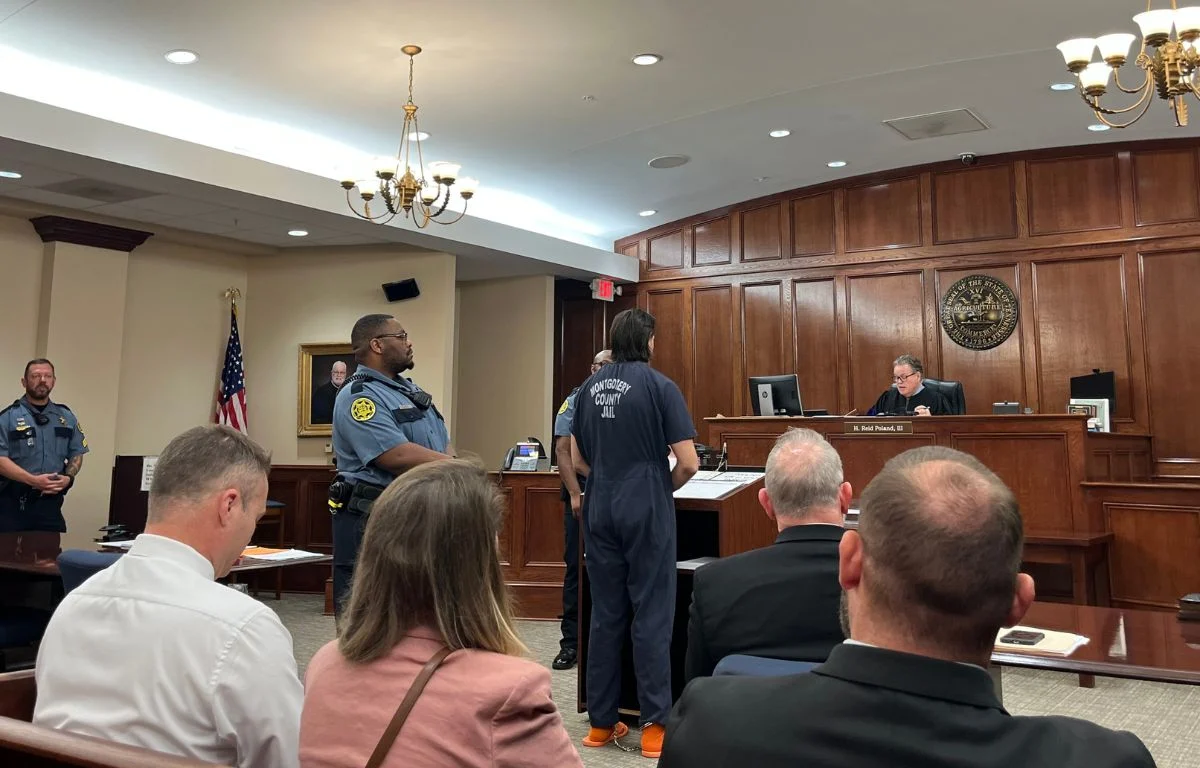
“Arraignment” sounds like legal jargon because it is. But it describes a very human moment: the first time the government looks you in the eye and says, in open court, this is what we say you did.
For many people, arraignment is their first courtroom experience. It is usually brief, often confusing, and it can be decisive, especially on release. A judge may set bail. A no-contact order might be issued. A public defender may appear for the first time. And the case starts moving from arrest paperwork into an official prosecution.
Join the Discussion
Arraignment, defined
An arraignment hearing is the court appearance where the defendant is formally told the charges and asked to enter a plea.
In many courts, arraignment is also the defendant’s first appearance before a judge. In others, especially in felony cases, there is an earlier initial appearance or first appearance (often before a magistrate) where basic rights and release are addressed, and arraignment happens later. Terminology and timing vary, but the purpose of arraignment is consistent.
At arraignment, the court typically:
- Informs the defendant of the charges (often by reading or summarizing the complaint, information, or indictment)
- Confirms identity and basic case information
- Advises the defendant of key rights (including the right to counsel, and in many courts a reminder not to discuss case facts in open court)
- Asks for a plea (often “not guilty” at this stage)
- Addresses release (bail, bond, conditions of release, or detention), either at arraignment or in a related hearing
- Sets next dates for future hearings
Arraignment is not a trial. Witnesses usually do not testify, and the judge typically does not decide guilt or innocence. Think of it as the legal “launch point” of the case, where the court ensures the defendant knows what is happening and what comes next.
Why the Constitution matters
Arraignment sits at the intersection of several constitutional protections. Not because judges recite the Constitution out loud, but because arraignment is where certain rights become practical.
Sixth Amendment: The right to counsel
The Sixth Amendment guarantees the right “to have the Assistance of Counsel” in criminal prosecutions. Arraignment is often treated as a critical stage, meaning it is a point in the process where having a lawyer matters because decisions made there can shape the case.
If a defendant cannot afford a lawyer, the court may appoint counsel at or around arraignment. The modern constitutional foundation for appointed counsel in serious cases is Gideon v. Wainwright (1963).
Fifth and Fourteenth Amendments: Due process
The government cannot take liberty without due process of law. In plain terms, arraignment is one of the system’s checkpoints that helps ensure charges are stated on the record and a case moves forward under court supervision rather than in the shadows.
In state court, due process obligations apply through the Fourteenth Amendment. In federal court, they flow from the Fifth Amendment.
Eighth Amendment: Bail and conditions
The Eighth Amendment prohibits excessive bail. That does not mean there is always a right to bail in every case, but it does mean bail conditions should not be set higher or harsher than reasonably necessary for legitimate goals like ensuring court appearances and protecting public safety.
In real life, the release decision made at or around arraignment can be the difference between preparing a defense from home or from a jail cell.
What happens at arraignment
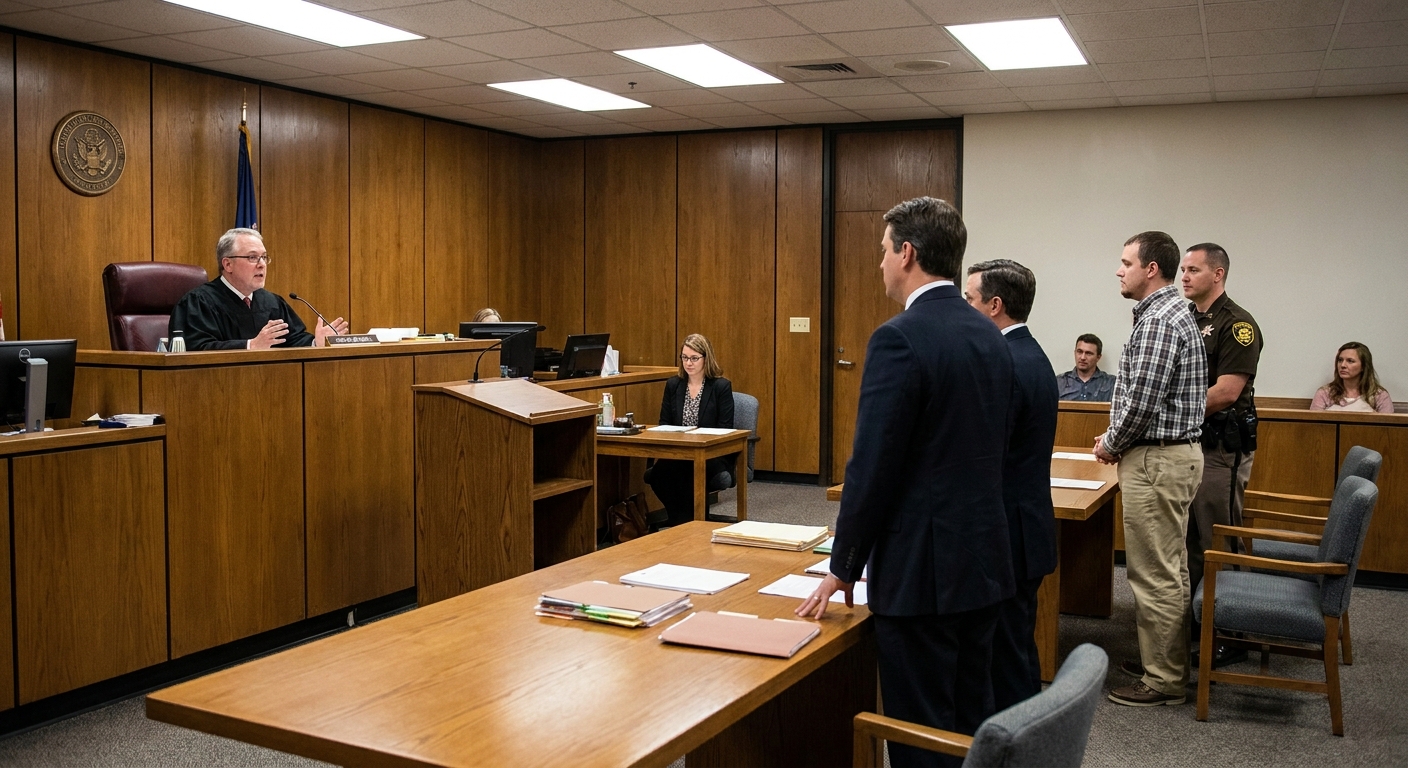
Procedures vary by state and by courthouse. Some courts combine steps; others separate them into different hearings. But a typical arraignment follows a familiar script.
1) The judge calls the case
The court identifies the defendant and the case number. The judge checks whether the defendant has counsel. If not, the court may ask questions about finances to determine whether appointed counsel is available.
2) The charges are read or summarized
The prosecutor or the judge states what offenses are being charged. This may come from:
- A criminal complaint, usually a sworn document used to start a case, often early on
- An information, a formal charging document filed by a prosecutor (in jurisdictions that use it, often after a waiver of grand jury)
- An indictment, a formal charging document approved by a grand jury in some felony cases
3) Rights are explained
Judges often give standard advisements about the right to counsel, the right to a trial, and (in some courts) a reminder that the defendant does not have to discuss the facts of the case in open court. This is one reason arraignments can feel repetitive. Courts do them all day, and the language is standardized for a reason.
4) The defendant enters a plea
At arraignment, the most common plea is not guilty, even when negotiations are already happening behind the scenes. A not guilty plea preserves the ability to review evidence, file motions, and negotiate from a more informed position.
Sometimes, a court will accept a guilty plea at arraignment in minor cases, or where a plea deal is already in place. But pleading guilty early can have lasting consequences. It is often the moment where trial rights are surrendered in exchange for a resolution.
If a defendant does not enter a plea, some courts may enter a not guilty plea on the defendant’s behalf. Practices vary by jurisdiction.
5) Release and conditions are addressed
The judge decides whether the defendant will be released, and on what terms. Conditions can include:
- Cash bail or bond
- Promise to appear (release without money)
- Travel restrictions
- No-contact orders
- Drug or alcohol testing
- GPS monitoring
- Surrendering firearms in some cases
The judge may also order detention without bail in limited situations allowed by law, depending on the jurisdiction and the charge.
Arraignment vs. other hearings
People often use “arraignment” to mean any early court appearance. The system is more segmented than that.
Arraignment vs. initial appearance
In many jurisdictions, an initial appearance (sometimes called a first appearance) happens soon after arrest. It often covers identity, basic rights, and release. Arraignment may occur at the same time, or later, when charges are formally presented and a plea is taken.
Arraignment vs. bail hearing
In some places, bail is handled during arraignment. In others, there is a separate bail hearing or detention hearing. The practical issue is the same: whether the defendant goes home while the case proceeds, and under what restrictions.
Arraignment vs. preliminary hearing
A preliminary hearing is usually where the judge determines whether there is probable cause to continue with felony charges, based on evidence presented in court. That is a more substantive event than arraignment and may involve witness testimony.
Arraignment vs. indictment
An indictment is not a hearing. It is a charging document issued by a grand jury in some felony cases. If there is an indictment, arraignment may be the first time it is formally presented to the defendant in open court.
Waiving arraignment
In many jurisdictions, a defendant who has already retained counsel can waive arraignment. This usually means the formal reading of the charges is skipped and a written not guilty plea is filed, sometimes without the defendant appearing in person.
Waiver rules vary. Some courts allow it only for certain charges, or only if the defendant is out of custody. Even when arraignment is waived, release conditions, protective orders, and scheduling can still be set or modified through separate filings or hearings.
Arraigned without a lawyer?
It is possible to appear at arraignment before counsel is fully in place, especially if the arrest happened on a weekend or the court is moving quickly. Courts often attempt to address this by:
- Appointing a public defender for the day
- Continuing the arraignment briefly to secure counsel
- Entering a temporary not guilty plea
Still, the stakes can be real. Release conditions, protective orders, and future court dates can be set immediately. If you are facing an arraignment, the most protective move is simple: ask for counsel and do not discuss facts of the case in open court beyond what is necessary to address release.
What to listen for
Even when arraignment feels fast, there are specific details worth catching, writing down, and confirming with counsel:
- The exact charges and the level (misdemeanor vs. felony)
- Next court date and what type of hearing it is
- Release conditions and how to comply
- No-contact orders and who they cover
- Bail amount and what is required for release
- Discovery timeline if mentioned
Many failures-to-appear are not acts of defiance. They are calendar mistakes. The system often treats them the same.
Missing court can trigger a bench warrant, and in some states it can also lead to a separate failure to appear charge. If you cannot make a court date, a lawyer can sometimes file a motion to continue or address the issue before it becomes a warrant.
How soon after arrest?
It depends on the jurisdiction, but these early appearances usually happen quickly, often within a day or two, especially when someone is in custody. Courts and statutes often impose deadlines for bringing an arrested person before a judge.
After a warrantless arrest, the Constitution generally requires a prompt judicial determination of probable cause. The U.S. Supreme Court has addressed this in County of Riverside v. McLaughlin (1991), which is commonly cited for the rule that delays beyond 48 hours are presumptively unreasonable, absent special circumstances.
If someone remains in custody without timely judicial review, that can raise serious due process and Fourth Amendment issues, and it is something defense counsel can challenge.
Does it mean you are guilty?
No. An arraignment is a procedural step, not a finding of guilt. The presumption of innocence remains in place, and the government still carries the burden to prove guilt beyond a reasonable doubt at trial or through a valid guilty plea.
That said, arraignment can change a person’s life immediately through detention, bail costs, employment consequences, and public visibility. It is one reason criminal procedure matters. Rights are not only about what happens at trial. They are also about what happens before you ever get one.
Federal arraignment
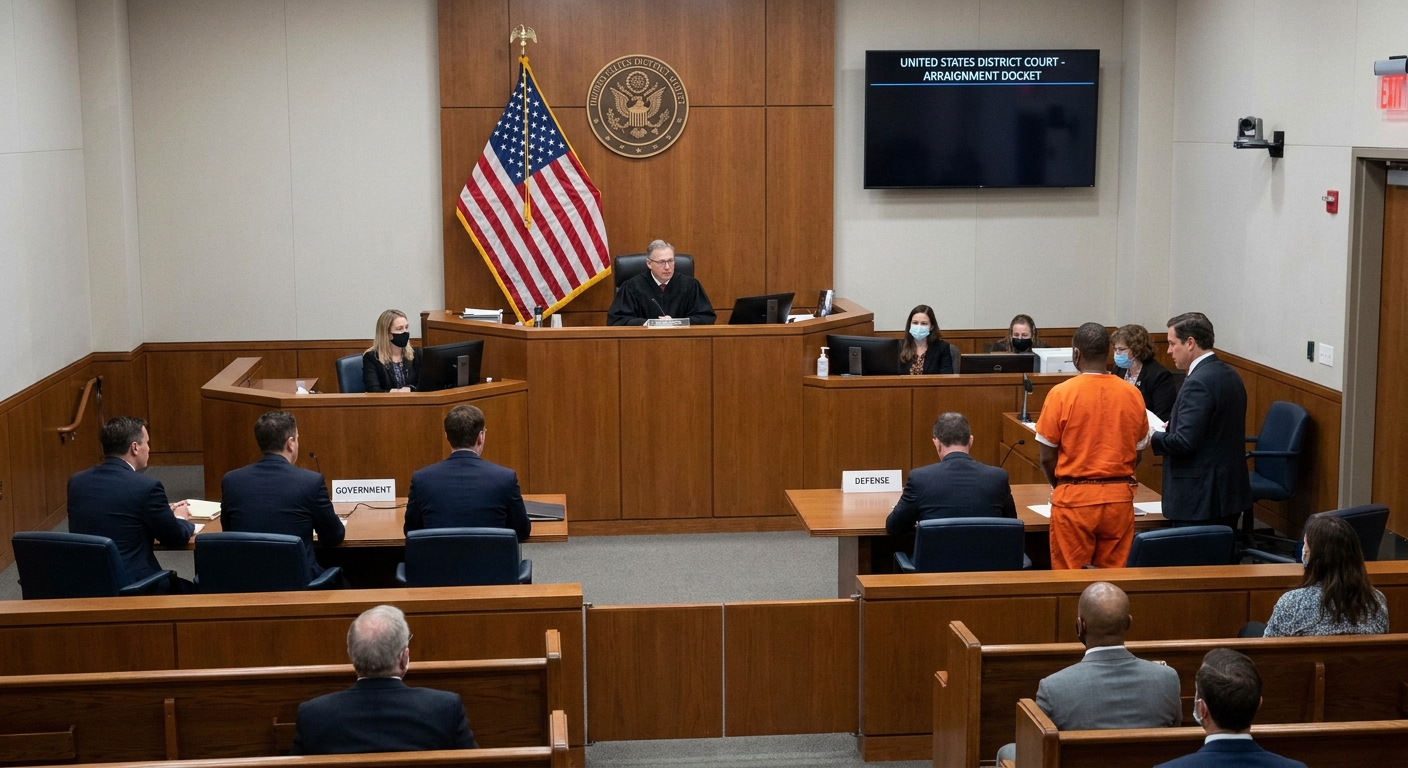
Federal arraignments operate under the Federal Rules of Criminal Procedure and tend to be more standardized. Defendants are arraigned on an indictment or information, advised of rights, and asked to plead.
Bail and detention are governed by the Bail Reform Act. In certain categories of cases, a rebuttable presumption may apply under 18 U.S.C. § 3142(e), meaning the court starts from the assumption that detention is appropriate unless the defendant produces evidence to counter it.
Common misconceptions
- “Arraignment is when the evidence is presented.” Usually no. That is more typical of a preliminary hearing, motions practice, or trial.
- “If I plead not guilty, the judge will punish me later.” A not guilty plea is a constitutional baseline. It is how you preserve the right to test the government’s case.
- “Bail equals freedom.” Bail can come with restrictive conditions. Violating them can lead to re-arrest or revocation.
- “If the charges are read, they must be true.” Charges are accusations, not findings. The legal system is supposed to treat them as unproven until proven.
Bottom line
An arraignment hearing is where a criminal case becomes official in open court: charges are announced, counsel is addressed, a plea is entered, and release decisions are made. It is quick, but it is not trivial.
The Constitution’s big promises, due process, counsel, and protection against excessive bail, are not abstract here. They show up as concrete questions: Do you have a lawyer? Do you understand the charge? Can the state keep you locked up while it builds its case?
If the Constitution is a structure, arraignment is one of the doors. And once you walk through it, the case moves forward whether you feel ready or not.
Note: This article is general information, not legal advice. Rules and terminology vary by jurisdiction, and facts matter.