
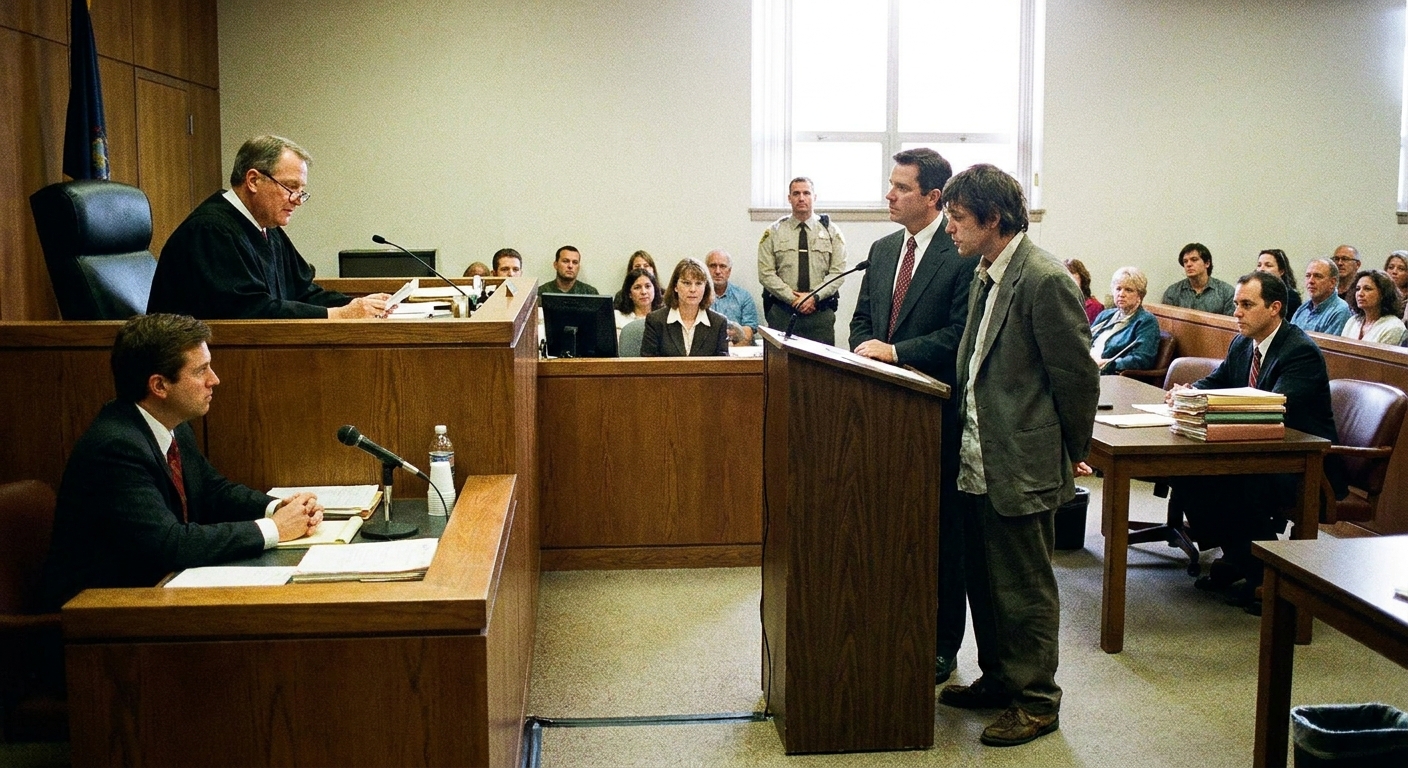
Most people imagine the criminal process begins with a dramatic trial. In reality, it often begins with something quieter and faster: an arraignment. It is the moment the court puts the charges on the record in open court, confirms that you have notice of the accusation, and asks for a plea.
Arraignments are often brief. They can also be decisive. In many courts, a few minutes can determine whether you go home while your case is pending, what restrictions you live under, and how quickly the case starts moving. (In some places, those decisions are handled in a separate first appearance or bail hearing.)
Procedures vary by state, and between state and federal courts. Terms like “first appearance,” “initial appearance,” and “arraignment” are sometimes used differently.
Join the Discussion
Arraignment definition
An arraignment is a court proceeding where:
- the defendant is informed of the criminal charges filed against them,
- the defendant is asked to enter a plea (often not guilty at this stage), and
- the court addresses legal representation and often release conditions such as bail.
Think of it as a formal, in-court checkpoint. The charges may already exist on paper through a complaint or indictment. Arraignment is where the court states them in open court, makes sure the defendant understands what is being alleged, and sets the early framework for what happens next.
When does an arraignment happen?
The timing depends on whether the person is in custody and on local rules, but arraignment generally happens soon after an arrest or after a criminal complaint or indictment is filed.
If you are arrested and held in jail, constitutional principles about prompt judicial review apply quickly. If you are cited and released, the arraignment may be scheduled weeks later by summons or a notice to appear.
Arrest, charging, and the first court date
Here is the basic sequence in many cases:
- Arrest or citation
- Charging decision (a prosecutor files a complaint, or a grand jury returns an indictment in some cases)
- First appearance and or arraignment (terminology varies by jurisdiction, and sometimes these are separate hearings)
- Bail decision or release conditions (may happen at the first appearance, at arraignment, or at a separate bail hearing)
- Future dates set (pretrial conference, hearings, trial schedule)
Some courts separate the “first appearance” from the “arraignment.” Others combine them. The key is what gets accomplished early: notice of charges, counsel, plea, and release decisions.
What happens at an arraignment?
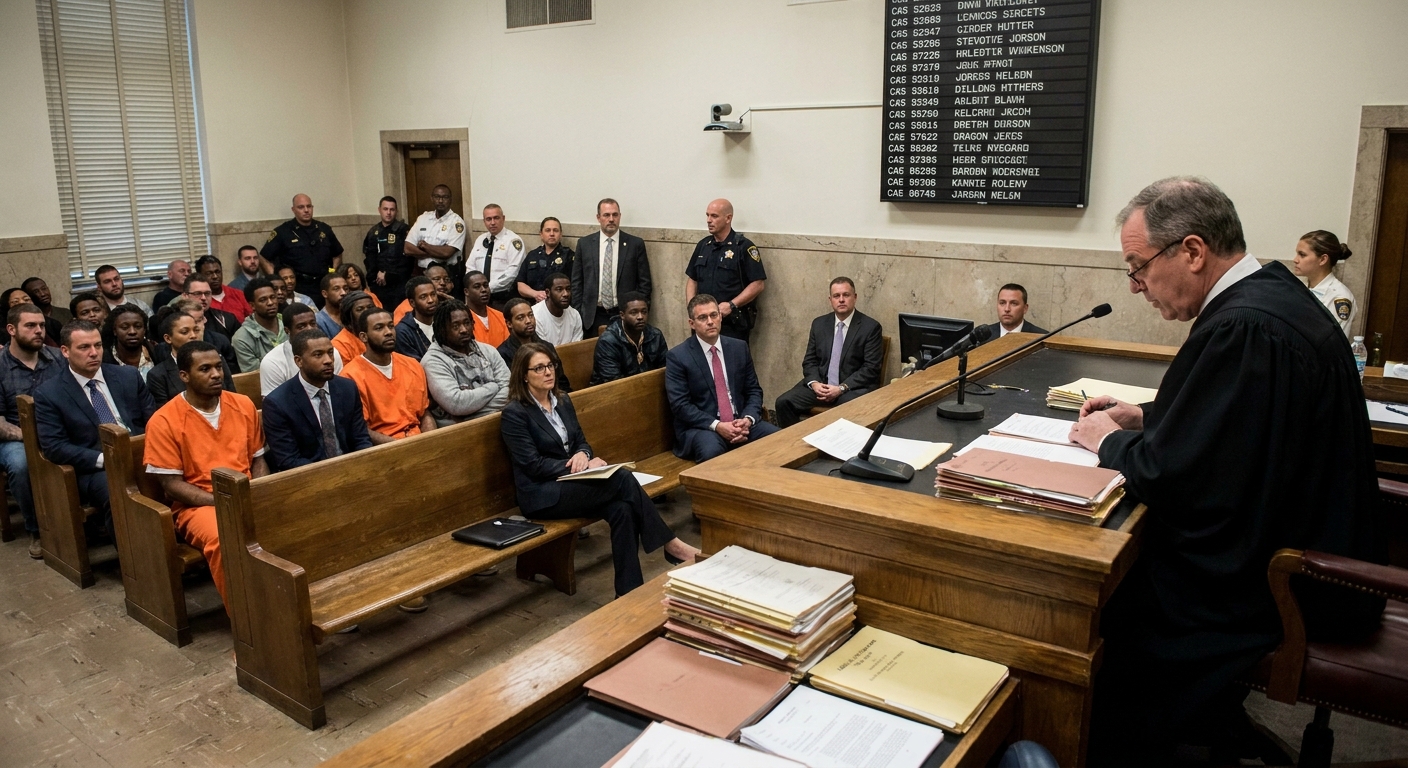
Arraignments can feel scripted because, in a way, they are. The court is establishing a record and making sure several constitutional and procedural boxes are checked. Common steps include:
- Calling the case and confirming the defendant’s identity
- Reading the charges or summarizing them on the record
- Advising the defendant of rights (varies by court)
- Addressing counsel (retained attorney, public defender appointment, or waiver issues)
- Entering a plea (not guilty is common; sometimes guilty or no contest)
- Considering release (bail, bond, or nonfinancial conditions)
- Setting future court dates and orders (such as no contact orders)
Bail, bond, and conditions are related but not identical. “Bail” often refers to the amount or mechanism that allows release. “Bond” can refer to a specific promise or financial instrument (for example, secured or unsecured). Courts also frequently use nonfinancial conditions such as reporting requirements, travel limits, or stay-away orders.
The plea at arraignment
Many defendants plead not guilty at arraignment even when they plan to negotiate a resolution later. It is often a way to preserve options.
A not guilty plea typically does three things:
- It maintains the government’s burden of proof if the case goes to trial.
- It allows the defense to review evidence (discovery) and file motions.
- It creates time for negotiations, investigation, and legal analysis.
In some courts, a defendant can plead guilty at arraignment. But doing so without counsel, without discovery, and without understanding collateral consequences can be a costly mistake.
Is bail decided at arraignment?
Often, yes. Many jurisdictions address bail or pretrial release at the first appearance or arraignment, especially when the defendant has been arrested and detained. In other jurisdictions, bail is addressed in a separate hearing.
The judge may:
- release the defendant on their own recognizance,
- set a money bond or other financial condition,
- impose conditions such as travel restrictions, GPS monitoring, drug testing, or no contact orders,
- or, in some cases, order detention where permitted by law.
The constitutional backdrop
The Eighth Amendment prohibits excessive bail. That does not mean there is always a right to bail in every case. It means that when bail is set, it cannot be used as a disguised punishment or set higher than necessary for legitimate goals recognized by the jurisdiction, such as ensuring court appearance and, in many systems, addressing safety risks.
Some systems explicitly permit preventive detention in limited circumstances, subject to statutory and constitutional limits.
Your rights at arraignment
The Constitution does not contain a single, neat “arraignment clause.” Instead, arraignment sits at the intersection of several rights that limit what the government can do once it accuses you of a crime.
Sixth Amendment: counsel
The Sixth Amendment guarantees the right to assistance of counsel in criminal prosecutions. In practical terms, arraignment is often when the court determines:
- whether you have a lawyer,
- whether you qualify for a public defender, and
- whether counsel needs time to prepare before key decisions are made.
If the proceeding involves critical stages that can affect the outcome, the right to counsel matters immediately, not later.
Sixth Amendment: notice
The Sixth Amendment also guarantees that the accused shall be informed of “the nature and cause of the accusation.” Arraignment is designed to satisfy that principle: you cannot defend yourself against a charge you have not been told about.
Fifth and Fourteenth Amendments: due process
Due process is the Constitution’s way of insisting that the government must follow fair procedures before it takes liberty away. Arraignment is part of that structure. It helps ensure that detention, release conditions, and the path toward trial are supervised by a judge, not just driven by arrest paperwork.
Fourth Amendment: early review after arrest
After a warrantless arrest, the Fourth Amendment requires a prompt judicial determination of probable cause. This is often handled through an early court appearance. Many jurisdictions treat 48 hours as a common benchmark, though the details can vary.
Fifth Amendment: self-incrimination
The Fifth Amendment protects against compelled self-incrimination. At arraignment, you are not required to explain what happened. The key formal action is the plea, which is not the same thing as giving a narrative statement. Still, defendants should be cautious about speaking in court without counsel.
Arraignment vs indictment vs hearing
These terms get blurred online because they all happen early. They are not the same.
Indictment
An indictment is a charging document returned by a grand jury. It is common in federal court and in many states for serious offenses. It is the charging mechanism, not the courtroom moment where you plead.
Criminal complaint
A criminal complaint is another charging document, typically filed by a prosecutor (often supported by a police affidavit). Many cases begin this way rather than by indictment.
Preliminary hearing
A preliminary hearing is an early hearing where a judge may decide whether there is enough evidence to keep the case moving forward, usually in felony cases that are not initiated by grand jury indictment. Witnesses can sometimes testify. The defense may cross-examine. Arraignment, by contrast, is usually not an evidence hearing.
Misdemeanor vs felony
The core purpose of arraignment is the same in misdemeanor and felony cases, but the path around it can look different.
- Misdemeanors often proceed by complaint, may move quickly, and may involve early plea offers or diversion screening. Some misdemeanor arraignments happen in high-volume calendars and can be very short.
- Felonies are more likely to involve layered early proceedings, such as a first appearance focused on custody, a later formal arraignment, and possibly a preliminary hearing or grand jury indictment depending on the jurisdiction.
Because felony stakes are higher, courts may impose stricter release conditions early, including protective or no-contact orders.
Virtual arraignments
Many courts now use remote or video arraignments, especially for in-custody defendants. The legal purpose is the same, but the logistics can change. For example, attorney consultation may happen through a breakout room or a separate call, and paperwork may be handled electronically.
What to do before arraignment
This is general information, not legal advice. Arraignments move quickly, and early decisions can linger. If you have an upcoming arraignment, consider these basic steps:
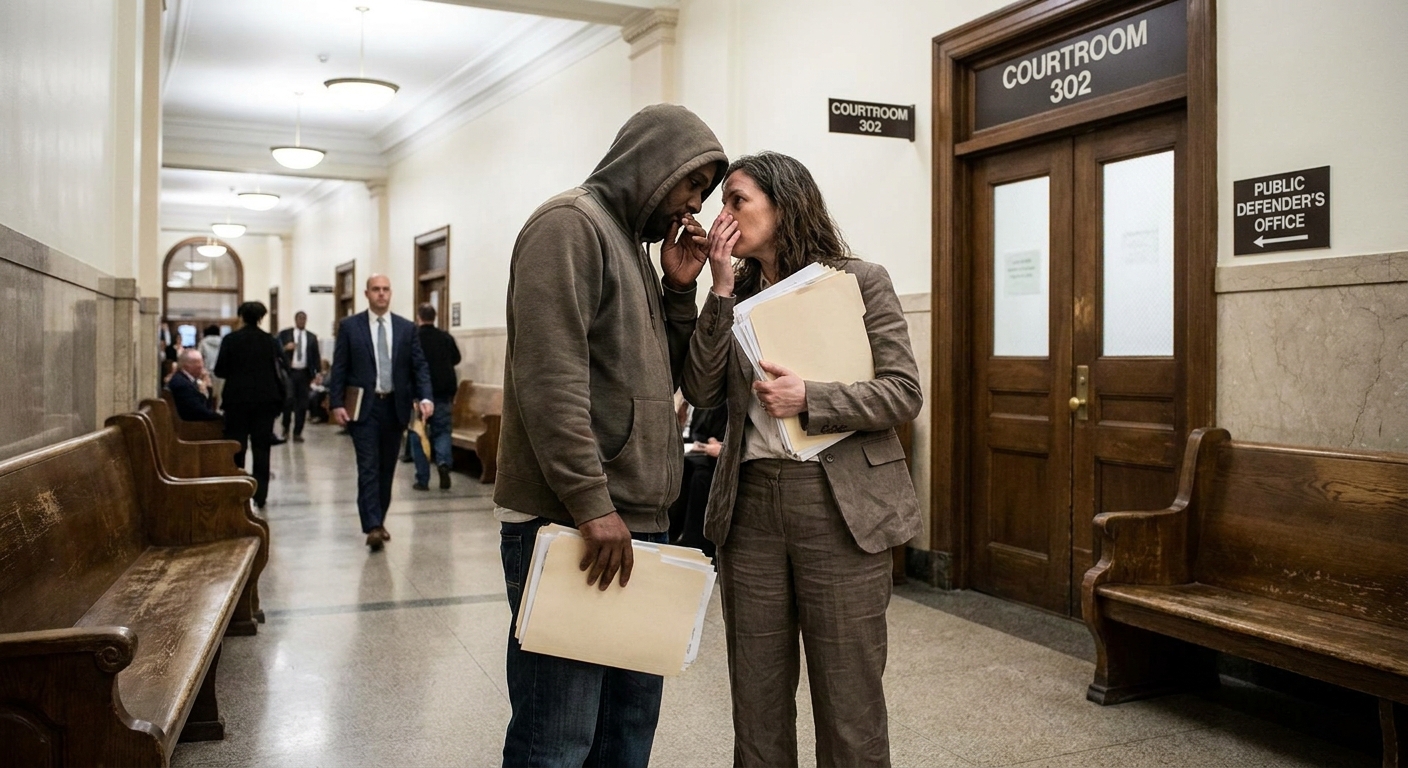
- Get a lawyer early if possible, or be prepared to request appointed counsel if eligible.
- Read your paperwork carefully: citation, complaint, conditions of release, and any notice to appear.
- Show up. Missing arraignment can trigger a bench warrant and, in some cases, a failure-to-appear charge.
- Be cautious about statements. If you are nervous, that is normal. But speaking off the cuff can create a record that follows you.
- Prepare for release arguments if custody or conditions are at stake: employment, family obligations, stable address, and prior court appearance history can matter.
Also be aware that courts may issue protective orders, including no-contact or stay-away orders, at or around arraignment. In some jurisdictions those orders can be entered quickly based on the allegations, with a later opportunity to challenge or modify them.
Common questions
Is arraignment the same as trial?
No. Arraignment is an early procedural hearing. A trial is where guilt is determined. Many cases resolve before trial through dismissal, diversion, or plea negotiations.
Can charges change after arraignment?
Yes. Prosecutors can amend charges in many jurisdictions, especially after reviewing evidence more closely. In felony cases, charges may evolve after a preliminary hearing or after grand jury action.
Do you have to plead at arraignment?
Typically, yes, the court will ask for a plea. In many courts, if a defendant refuses, the court will enter a not guilty plea on their behalf to keep the case moving while preserving rights.
Will I go to jail at arraignment?
If you are already in custody, the court may decide to release you, keep you detained, or set bail you cannot meet. If you appear out of custody, you usually remain out of custody unless there is a warrant issue, a violation of release conditions, or the court orders detention under applicable law.
Why arraignment matters
Arraignment can feel like paperwork with a judge’s signature. It is more than that. It is one of the procedural seams where the Constitution presses against government power.
The state has enormous leverage at the start of a criminal case: police reports, charging authority, and the ability to detain. Arraignment is where the court, at least in theory, forces that power to speak clearly in the open, to notify the accused, to address counsel, and to justify restrictions on liberty.
If you want a single takeaway, it is this: an arraignment is not where a case ends. It is where the government’s accusation becomes a formal, in-court event. And once that happens, every step that follows is shaped by what happens in that first, deceptively small hearing.