
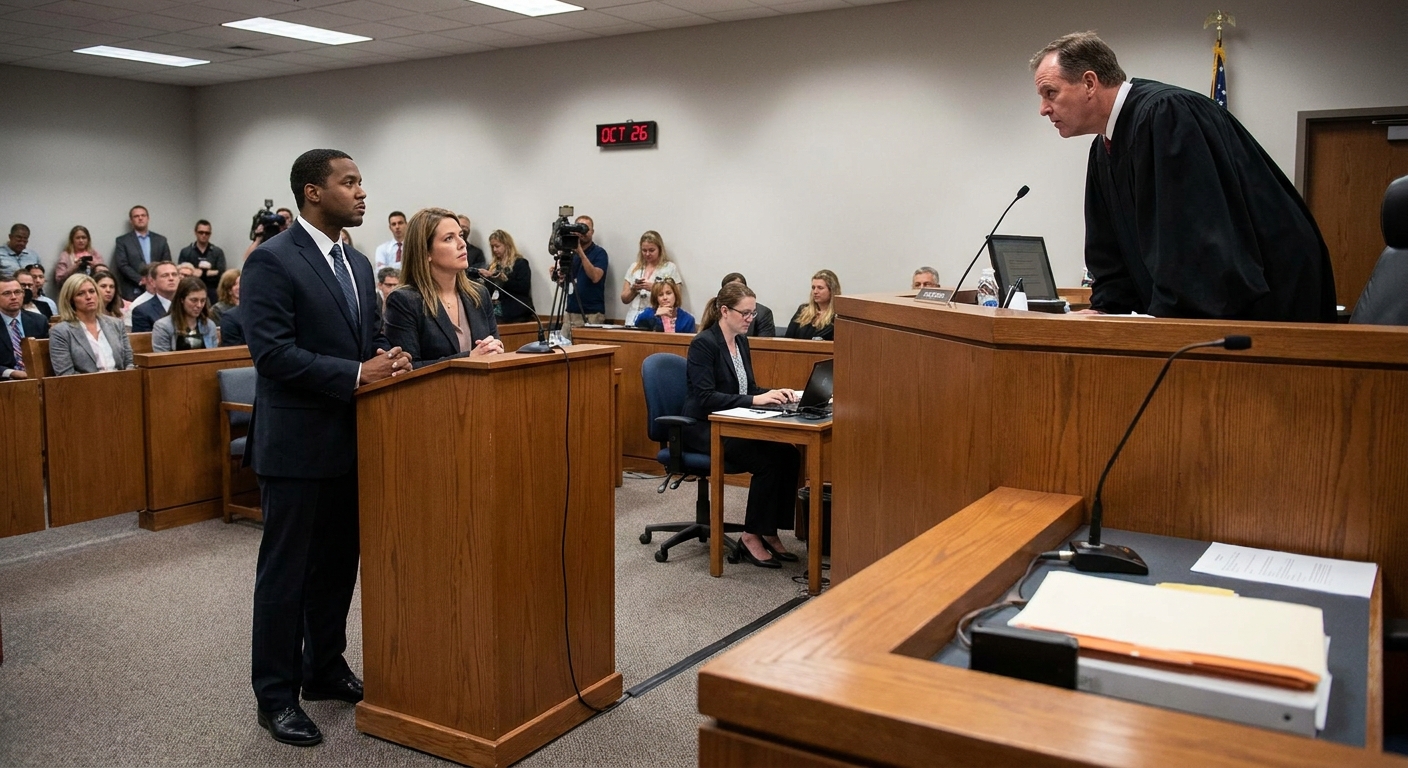
An arraignment is the moment the criminal justice system stops being a blur of flashing lights and holding cells and becomes something more formal. It is a court hearing where you are formally told what you are accused of and asked to enter a plea. In many jurisdictions, it is the first time you appear before a judge after an arrest or a criminal summons. In others, a separate “first appearance” or “initial appearance” happens first, and arraignment comes later.
People often imagine arraignments as dramatic, confession-heavy hearings. In real life, they are typically short and procedural. That does not mean they are low stakes. The decisions made at or around arraignment can shape your freedom, your ability to prepare a defense, and the pressure you feel to accept a quick deal.
Join the Discussion
Arraignment in plain English
At an arraignment, the court usually does four core things:
- Formally states the charges so the accusation is on the record.
- Advises you of key rights, including the right to counsel.
- Asks for a plea (most commonly “not guilty” at this stage).
- Addresses release conditions, such as bail, bond, or other restrictions (sometimes at this hearing, sometimes at a separate hearing depending on the court).
Depending on the state and the type of case, an arraignment may happen within a day or two of arrest, or it may be scheduled later if the case begins with a citation or summons. In federal court, the initial appearance and arraignment are sometimes separate events, and the detention decision may be handled at a separate detention hearing.
Why the Constitution cares
The word “arraignment” does not appear in the Constitution. But the constitutional concerns are everywhere around it. This is where several protections start doing real work, not just in theory, but in a specific courtroom with a specific judge deciding what happens to a specific person.
Due process and notice
The Fifth and Fourteenth Amendments protect against deprivation of liberty without due process of law. A basic part of due process is notice. You cannot defend yourself against a charge you have not been told about. At arraignment, the court typically reads or summarizes the charges in open court and provides the charging document or information about it, putting the accusation on the record and making the case harder to treat like an ambush.
Right to counsel
The Sixth Amendment guarantees the assistance of counsel in criminal prosecutions. The right to counsel generally attaches when adversarial judicial proceedings begin, for example with a formal charge, indictment, information, or arraignment. Whether a lawyer must be present at a particular hearing is often analyzed under the “critical stage” concept. Arraignment is commonly treated as a critical stage because rights can be lost and outcomes can shift based on what happens there, especially decisions about release and early procedural issues.
Bail and the Eighth Amendment
The Eighth Amendment prohibits excessive bail. It does not guarantee that bail must always be offered, but it does constrain the government’s ability to set bail as punishment before conviction. In many state systems, arraignment is where the judge decides whether bail is appropriate, and if so, at what amount and with what conditions. In federal court, the detention decision is often addressed at an initial appearance and then litigated at a separate detention hearing, with arraignment occurring later.
Prompt review after arrest
The Sixth Amendment guarantees a “speedy” trial, and the Fourth Amendment limits unreasonable seizures. Courts have also recognized a constitutional requirement for a prompt judicial determination of probable cause after a warrantless arrest (often discussed under Gerstein and Riverside, frequently described as within about 48 hours). That review may happen at an initial appearance, a probable cause hearing, or another local procedure. Sometimes it overlaps with arraignment. Sometimes it does not. The point is that early court involvement is supposed to be a check on extended detention without judicial oversight.
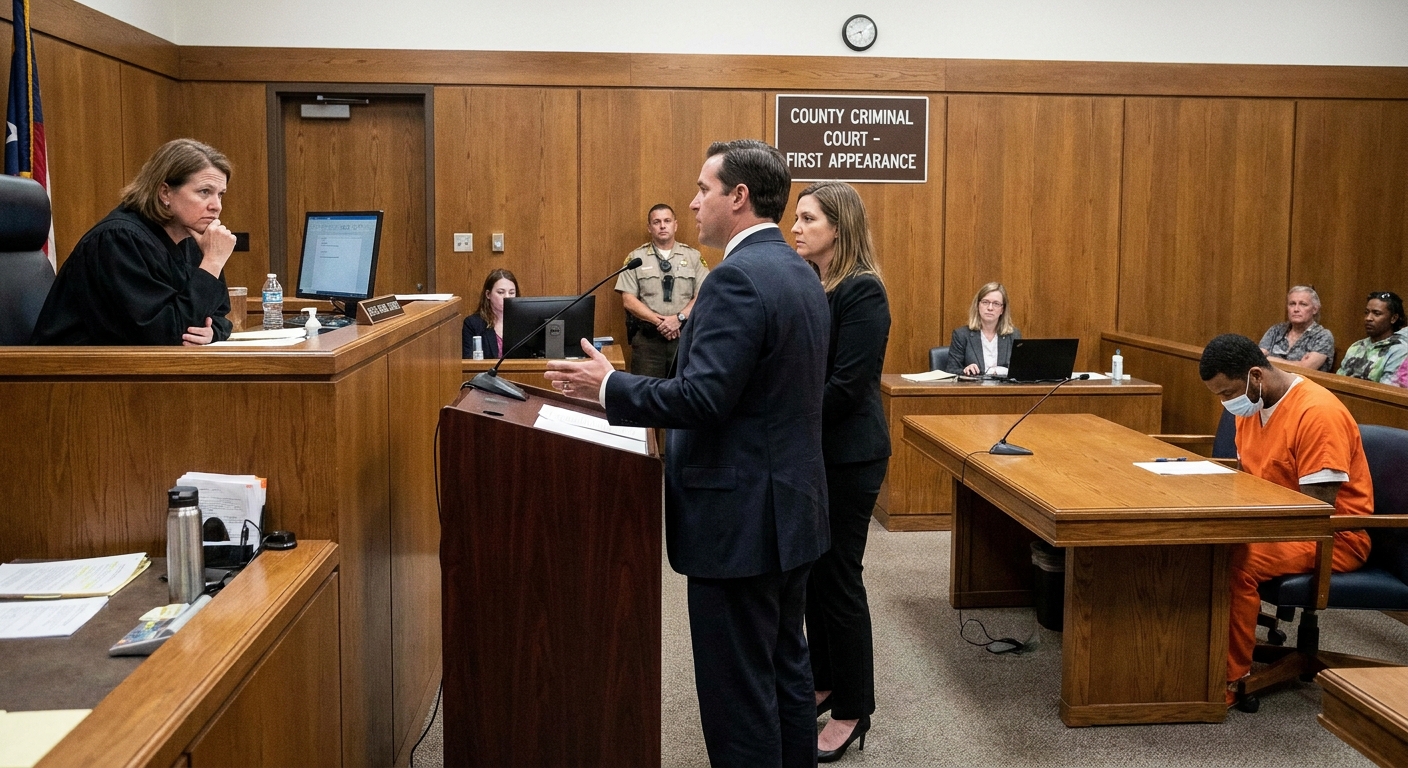
What happens at arraignment
Exact practice varies by state and by courthouse, but most arraignments follow a familiar script.
1) The judge confirms who you are
The court will verify your name and other identifying information. If there is confusion about identity, that is not a small detail. It can affect warrants, release conditions, and whether a case is tied to the correct person.
2) The charges are read or summarized
The judge (or clerk) states the charges, often by reading the complaint, information, or indictment, or by summarizing it. You may also receive paperwork describing the alleged offense and the potential penalties.
3) The judge advises you of your rights
This is where the court typically covers rights such as:
- The right to an attorney, and to a court-appointed attorney if you cannot afford one (for qualifying cases).
- The right to remain silent and not incriminate yourself.
- The right to a trial, and in many cases a jury trial.
- The right to confront witnesses and present evidence.
This part can feel like legal boilerplate. But it is also the record that the court informed you of the rights the system is required to respect.
4) You enter a plea
Common pleas at arraignment are:
- Not guilty: the standard plea that preserves your ability to challenge the case and forces the government to prove it.
- Guilty: an admission that may move the case toward sentencing, sometimes after the judge ensures the plea is knowing and voluntary.
- No contest (nolo contendere): you do not contest the charge. In many jurisdictions it is treated like a guilty plea for the criminal case. In related civil cases, it is generally not treated as an admission, but the rules and exceptions vary by jurisdiction and the conviction can still carry collateral consequences.
Many defense attorneys advise a “not guilty” plea at arraignment because it keeps options open while counsel reviews evidence, police reports, body camera footage, lab results, and witness statements.
5) Release conditions are decided
This is often the most consequential part of the hearing. Depending on the court, release may be decided at arraignment, at an initial appearance, or at a separate bail or detention hearing. The judge may:
- Release you on your own recognizance (promise to return).
- Set money bail or approve a bond.
- Order non-financial conditions like travel restrictions, no-contact orders, firearm restrictions, drug testing, or pretrial supervision.
- In some cases, order you held without bail if the law permits and the circumstances meet the standard.
The court may consider factors like risk of flight, public safety, criminal history, the seriousness of the alleged offense, and whether you have stable ties to the community. Because practices vary widely, two people accused of similar conduct can face very different outcomes depending on jurisdiction and local policy.
Bail vs. bond, quickly: “Bail” often refers to the amount of money or set of conditions required for release. A “bond” often refers to the mechanism for posting that bail, including a surety bond through a bondsman in jurisdictions that allow it. Some courts use the words loosely. If you are unsure what the judge ordered, ask your lawyer or the clerk to explain the exact terms in plain language.
Arraignment vs. indictment vs. trial
These words get blurred together in everyday conversation, but they are different events.
- Indictment: a formal charging document issued by a grand jury in many felony cases, especially in federal court and in states that use grand juries frequently.
- Information or complaint: charging documents filed by a prosecutor (information) or initiated by law enforcement or prosecutors (complaint), depending on the jurisdiction and stage.
- Arraignment: the court proceeding where the charges are presented to the defendant and a plea is taken.
- Trial: the process where the government must prove guilt beyond a reasonable doubt, unless the case ends earlier by dismissal or plea.
You can be arraigned on a complaint before any indictment. Or you can be arraigned after an indictment has already been returned. The sequence depends on the court system and the case.
Do you have to talk?
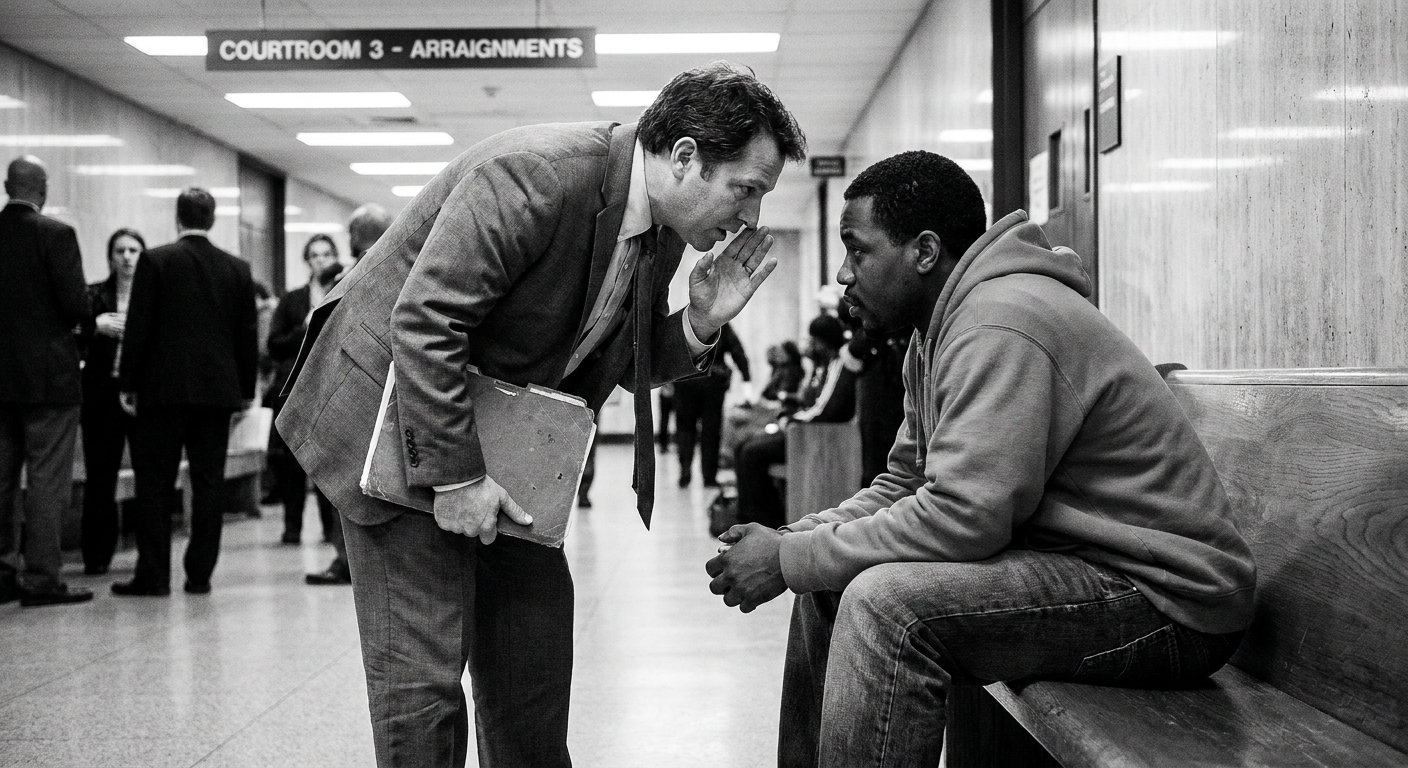
Usually, your lawyer does most of the speaking. You may be asked basic questions, and you will be asked for a plea. Beyond that, arraignment is usually not the time to “explain what really happened.”
Anything you say in court can become part of the record. Even statements that feel harmless can complicate your defense later, especially if they conflict with other evidence or can be interpreted as an admission. Your right to remain silent is not just a police station right. It is a courtroom right, too.
If you cannot afford a lawyer
If jail time is on the table and you qualify financially, the court can appoint counsel, typically a public defender or a court-appointed private attorney. The exact eligibility rules vary, but arraignment or the initial appearance is often where the process begins.
If you show up without counsel and do not understand what is happening, say so. A system that guarantees the right to counsel only in theory is not much of a guarantee at all. If you are unrepresented, it can help to do three simple things:
- Ask for a lawyer and ask what you need to do to apply for appointed counsel.
- Ask for time before entering any guilty plea, especially if the consequences are unclear.
- Avoid discussing the facts of the alleged offense in open court beyond what is required to answer basic procedural questions.
Practical details
Arraignments move fast. A few practical points can reduce surprises:
- Timing: You may wait a long time for a short hearing. Courts often call multiple cases in a row.
- What to bring: Any paperwork you were given, photo ID if you have it, and contact information for a lawyer or a family member who can help with bail logistics.
- What to wear: Clean, plain clothing is usually best. Avoid anything that looks like a uniform or sends an unintended message.
- Interpreter needs: If you need an interpreter, tell the court as early as possible. Many courts can provide one, but they may need notice.
- Video arraignments: Some jurisdictions use video for first appearances or arraignments, especially when someone is in custody. The process is similar, but it can feel even faster.
What if you miss court
Missing an arraignment or related first hearing is serious. In many jurisdictions, the judge can issue a bench warrant and you can be charged with failure to appear, lose any posted bail, or face stricter release conditions later. If you realize you missed a date or cannot make it, contact your lawyer immediately or contact the court clerk as soon as possible to ask what steps are available in that courthouse.
What happens after arraignment
Arraignment is not the end of the story. It is the doorway into the rest of the process. After arraignment, the case usually moves into:
- Discovery: exchange of evidence, including police reports and witness information (subject to local rules).
- Pretrial hearings: motions to suppress evidence, challenge searches, request dismissal, or limit certain testimony.
- Plea negotiations: potential agreements to resolve the case without trial.
- Trial: if no plea agreement is reached and the case is not dismissed.
- Sentencing: if there is a conviction by plea or verdict.
In many jurisdictions, the court will also set the next court date at the arraignment.
Common myths
Myth: Arraignment decides guilt
It does not. Arraignment is about charges and next steps. The presumption of innocence still governs, even if the setting feels intimidating.
Myth: Bail means the case is weak
Bail decisions are not supposed to be mini-verdicts. They are risk assessments under local law. A person can face strong evidence and still be released. A person can face weak evidence and still struggle to make bail if the amount is high.
Myth: Plead guilty quickly to get it over with
Sometimes a quick resolution is rational. But a fast guilty plea without counsel reviewing evidence can turn temporary panic into permanent consequences. Even minor convictions can affect employment, housing, immigration status, professional licenses, and firearm rights.
State vs. federal
Most criminal cases are in state court, and state practice varies dramatically. Federal cases follow the Federal Rules of Criminal Procedure, and the process is often more standardized, including advising of rights and confirming whether the defendant has counsel.
But the core idea is the same across systems: the government is making an accusation, and the court is formally bringing the accused into the process with notice, counsel protections, and a decision about pretrial liberty, whether that decision happens at arraignment or at a closely related hearing.
Why it matters
Arraignment can feel like paperwork in robes. Yet it is one of the few moments early in a case when a judge must look directly at the government’s decision to charge a person and decide what restrictions will be imposed before any verdict.
That is why arraignment sits at the crossroads of constitutional values: due process, the right to counsel, protection against excessive bail, and the basic rule that liberty cannot be taken casually. The hearing is brief. The consequences can be long.
Related questions
Is arraignment the same as a first appearance?
Sometimes they overlap. Some jurisdictions distinguish them: the first appearance focuses on rights and release, and arraignment focuses on the formal presentation of charges and plea. Other places combine both into one hearing.
Can charges change after arraignment?
Yes. Prosecutors can amend charges, add charges, or reduce charges depending on evidence, legal review, and negotiations, subject to procedural rules and judicial oversight.
Do you go to jail at arraignment?
You can, depending on what the judge orders. If you are in custody already, the arraignment or initial appearance is often where the court decides whether you stay in custody, are released, or are released with conditions.
General information notice: This article is for general educational purposes and is not legal advice. If you have a pending case, consider speaking with a qualified criminal defense lawyer in your jurisdiction.