
DACA is one of those acronyms that somehow became a stand-in for an entire national argument. It can mean paperwork, protection, identity, and a political flashpoint all at once. But constitutionally, it means something more specific and more fragile: a major immigration policy created by the executive branch without Congress enacting a new statute that specifically authorizes it.
That design choice is one reason DACA has survived for years and also one reason it has never stopped being litigated. If you want to understand DACA, you have to understand where immigration power comes from, what the President can do without Congress, and why procedure can be as important as substance in administrative law.
Join the Discussion
What DACA does
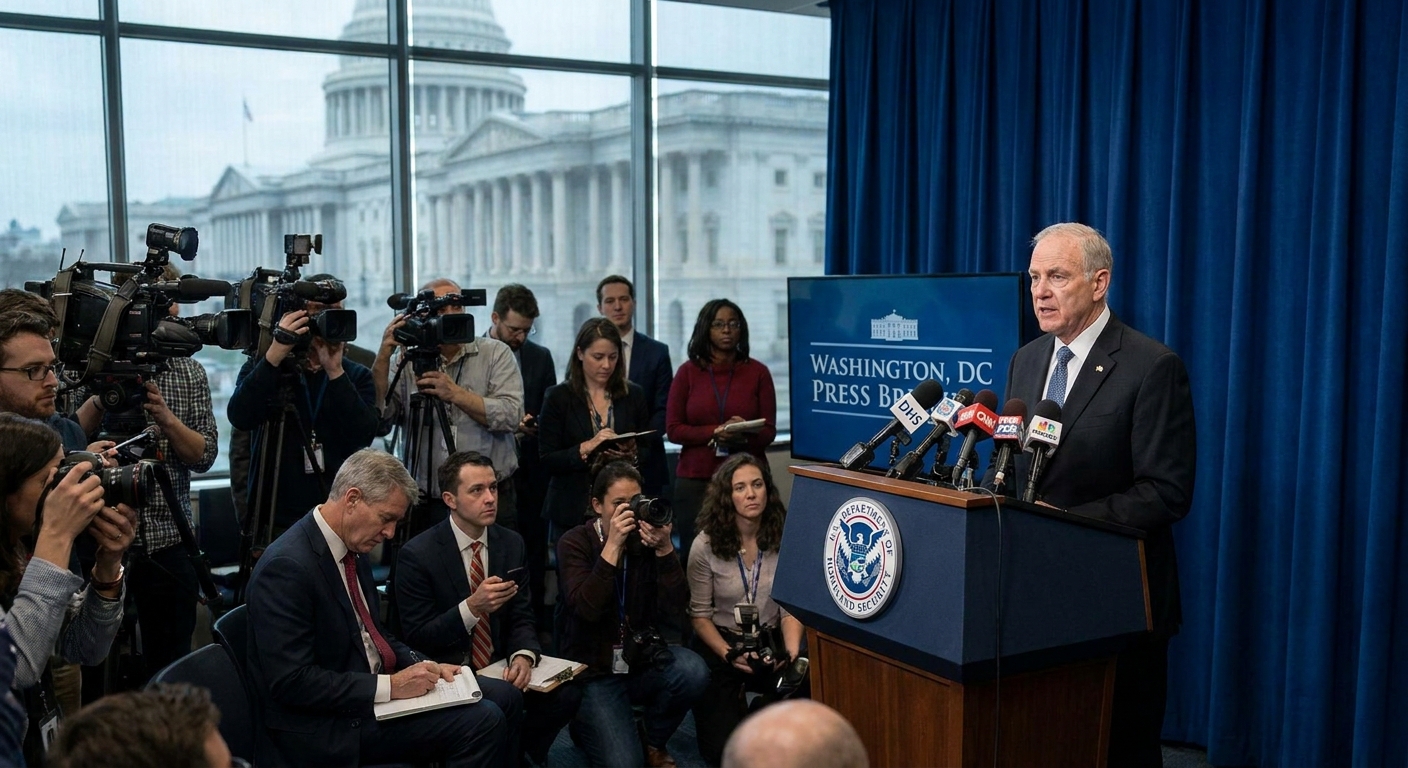
DACA stands for Deferred Action for Childhood Arrivals. Announced in 2012 by the Obama administration through the Department of Homeland Security (DHS), it offers two core benefits to certain undocumented immigrants who came to the United States as children and meet specific criteria:
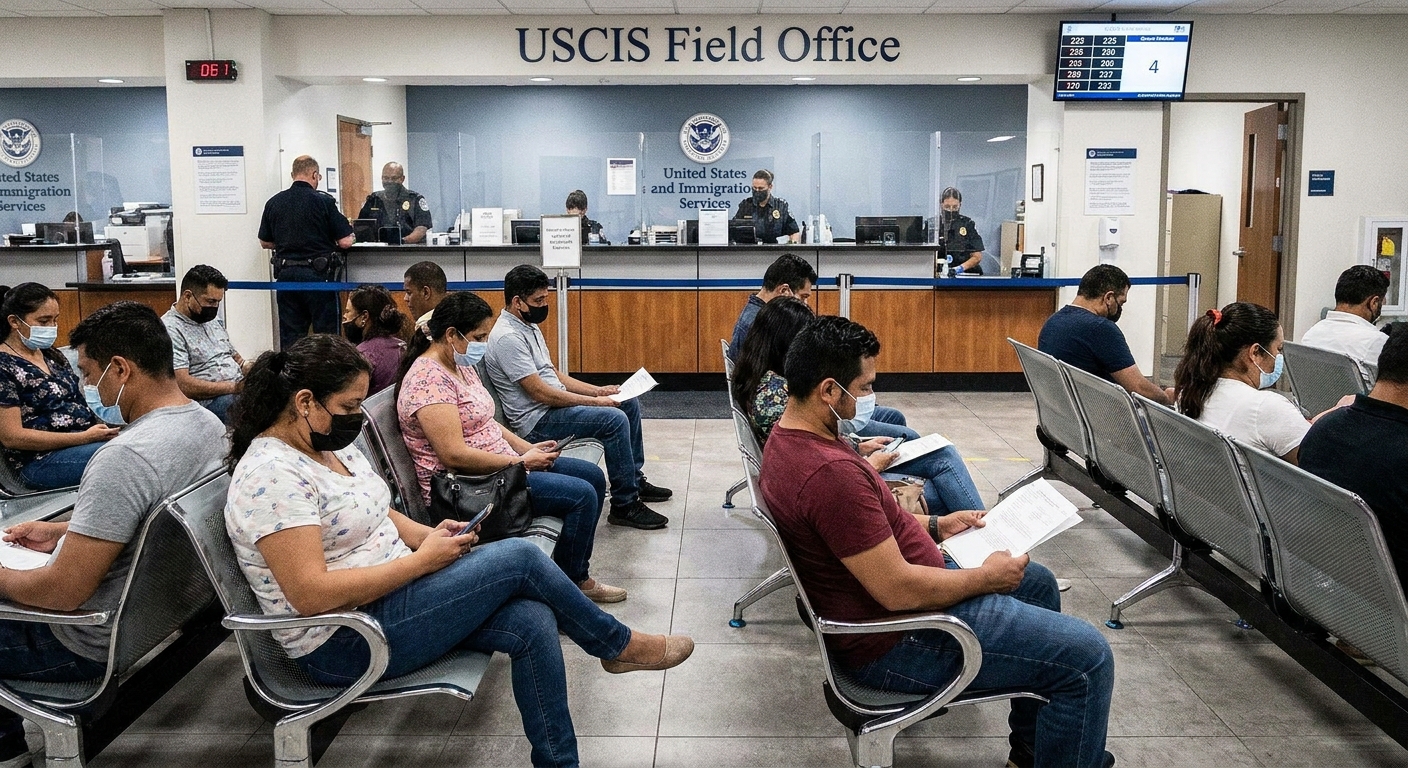
- Deferred action, meaning DHS chooses to temporarily postpone removal (deportation) for a renewable period (typically two years).
- Work authorization, which is available to many recipients through a separate application for an employment authorization document (EAD) under existing regulations. It is not automatic.
DACA does not create lawful permanent status. It does not create a direct path to citizenship. It does not guarantee protection in all circumstances. It is best understood as a structured, standardized form of something immigration authorities have long done: prioritize some cases and deprioritize others.
One distinction that helps clarify the stakes: DACA can confer a form of lawful presence for certain limited purposes during the deferred-action period, but it does not grant an admission to the United States and it does not create a durable immigration status that Congress has defined as permanent or independent of the program.
Who can qualify
DACA eligibility has been defined by DHS criteria, not by a statute like the DREAM Act. The exact requirements are detailed and technical, but the basic snapshot has focused on people who:
- Arrived in the United States as children and have lived here continuously for a required period
- Were present in the United States during specified dates
- Are in school, have graduated, have a GED, or have qualifying military service
- Have not been convicted of disqualifying crimes and do not pose certain public safety or national security concerns
The constitutional question
Most debates about DACA sound like moral debates or economic debates, and they often are. But the legal cases keep circling a narrower question:
Can the executive branch create a program this large through enforcement discretion and agency action without Congress?
That question sits at the intersection of three constitutional ideas:
- Congress’s power over immigration, grounded in its enumerated powers and long recognized by the courts as broad.
- The President’s duty to “take Care that the Laws be faithfully executed” in Article II.
- Separation of powers, meaning policy cannot be converted into law simply because an administration prefers it.
In plain English, DACA is controversial in court not because discretion is illegal, but because scale and structure can start to look like legislation.
Where the power lives
The Constitution does not contain a single, neat “immigration clause.” Instead, immigration law developed through a combination of:
- Naturalization power (Congress can establish a uniform rule of naturalization).
- Foreign affairs and national sovereignty concepts that courts have treated as inherent to the national government.
- Commerce and spending powers that support parts of the modern immigration system.
Over time, the Supreme Court has described immigration as an area where the political branches have especially wide latitude. That does not mean “anything goes,” but it does mean courts often treat immigration decisions as closely tied to national policy and executive implementation.
Why a memo, not a statute
In 2012, Congress had not passed the DREAM Act or any similar legislation that would have created legal status for many people who arrived in the United States as children. The Obama administration turned to executive branch tools that already existed, including DHS’s longstanding authority to set enforcement priorities and its history of granting deferred action in individual cases under the Immigration and Nationality Act (INA) framework and related regulations.
DACA’s defining feature is that it made this discretionary tool systematic. It created eligibility guidelines, an application process, and renewable periods of deferred action for a large category of people.
That is why supporters often describe DACA as humane governance within existing authority, and why critics describe it as a policy too big to be made without Congress. The constitutional clash is not about whether discretion exists. It is about whether discretion can be organized into something that functions like a program Congress never enacted.
The courts and the theories
DACA’s courtroom story has two tracks that readers often blend together.
1) Is DACA lawful under the INA?
One line of challenge argues that DACA exceeds what the INA allows the executive to do, especially when paired with work authorization and other downstream effects. In this view, DACA is not merely choosing enforcement priorities. It effectively grants a legal position Congress did not clearly authorize at this scale.
2) Even if it could be lawful, was it made the right way?
The other major track comes from administrative law. Under the Administrative Procedure Act (APA), agencies often must use notice-and-comment rulemaking to create binding legislative rules. Interpretive rules and general policy statements are typically exempt. A central question in DACA litigation has been which bucket DACA falls into.
This is where constitutional structure becomes practical. The Constitution creates a Congress that legislates and an executive that executes. The APA is one of the ways Congress polices that boundary: if agencies want to create sweeping policy with legal effects, they generally have to follow transparent procedures.
Regents did not settle it
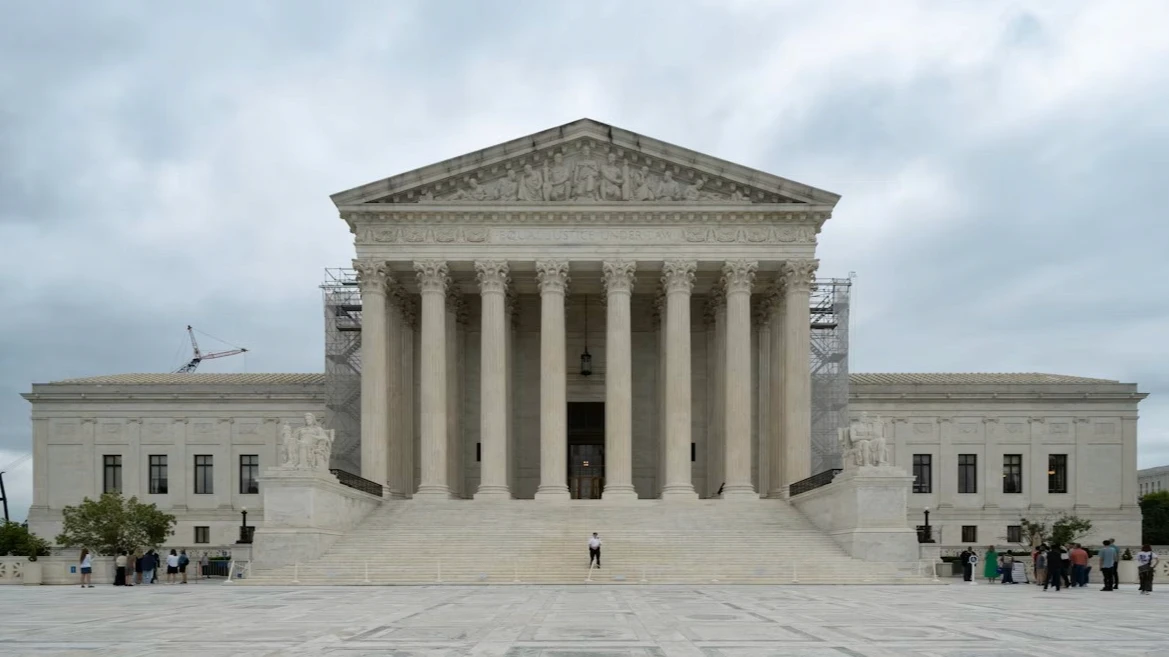
In Department of Homeland Security v. Regents of the University of California (2020), the Supreme Court did not declare DACA categorically constitutional or unconstitutional. Instead, it held that the Trump administration’s attempt to end DACA was arbitrary and capricious under the APA because it did not adequately consider important aspects of the problem, including reliance interests.
For maximum precision, the Court largely assumed (without deciding) that DHS could rescind DACA. It faulted the rescission explanation for not grappling with the possibility of keeping forbearance (deferred action) while separately reconsidering associated benefits like work authorization.
That ruling is often misunderstood as “the Supreme Court said DACA is legal.” It did not. It said the government must give a legally sufficient explanation when it changes course in a way that significantly affects people and institutions that relied on the earlier policy.
Procedure is power. And courts enforce it.
Where things stand
DACA remained in a legal and political pressure cooker after 2020. Several lower court decisions have treated DACA as unlawful or inadequately grounded, while allowing renewals to continue in varying forms during litigation.
Because operational details can shift with injunctions, stays, and appeals, it helps to anchor the story. Key rulings include Texas v. United States (S.D. Tex. 2021) and the Fifth Circuit’s 2022 decision, which left DACA largely in place for existing recipients while limiting the program’s expansion.
As of May 2026, the practical posture remains broadly consistent with that framework: renewals for existing recipients have generally continued, while new applications have largely not moved forward in the same way due to court orders. Readers should treat day-to-day processing as contingent on litigation and agency guidance.
One structural point is easy to miss unless you follow the lawsuits closely: many challenges are brought by states, which argue they bear downstream costs and therefore have standing to sue. That federalism angle helps explain why DACA fights so often begin outside Washington and still end up shaping national policy.
The real lesson
DACA forces a civics question that goes beyond immigration: what happens when Congress cannot or will not legislate, and the executive branch tries to fill the vacuum?
Sometimes the executive branch has room to maneuver. Prosecutorial discretion is real. Agencies interpret and enforce statutes every day. But the Constitution was built to make durable national policy hard to create without Congress. That difficulty is not a bug. It is a feature of a system designed to prevent any one branch from governing alone.
DACA exists in that tension. It is a modern example of how the separation of powers is not an abstract classroom concept. It determines whether protection is stable, temporary, or dependent on who wins the next election.
What makes DACA durable
The most durable solution would be statutory. Congress can pass a law that grants lawful status or creates a path to lawful status for a defined group, sets eligibility rules, and authorizes the benefits that come with that status. That kind of change is harder for future administrations to unwind and easier for courts to treat as legitimate because it comes from the branch that writes the law.
Short of legislation, an administration can try to strengthen DACA through formal agency processes. The Biden administration attempted this by issuing a final rule in 2022 after notice-and-comment rulemaking, in part to address APA vulnerabilities tied to how the program was created. But even a carefully written rule still depends on underlying statutory authority, and it still can be challenged on the theory that the INA does not permit a program of this kind. It also can be changed by later administrations that follow the required procedure.
Questions to ask
DACA coverage often turns into a scoreboard. A court blocks something. A court allows something. Applications open or close. That is the noise. The signal is constitutional and structural.
- Is the fight about the Constitution directly, or about what Congress authorized in the INA?
- Is the court focusing on substance, or on the APA process used to create or unwind the policy?
- What reliance interests are at stake? Schools, employers, military families, and communities build real lives around these decisions.
- Who should make this policy? If the answer is “Congress,” then the constitutional story is also a story about legislative paralysis.
DACA’s most uncomfortable truth is also its most educational one: in our system, some of the most consequential policies can exist for years without ever becoming law. That is not just a quirk of immigration. It is the separation of powers playing out in real time.