
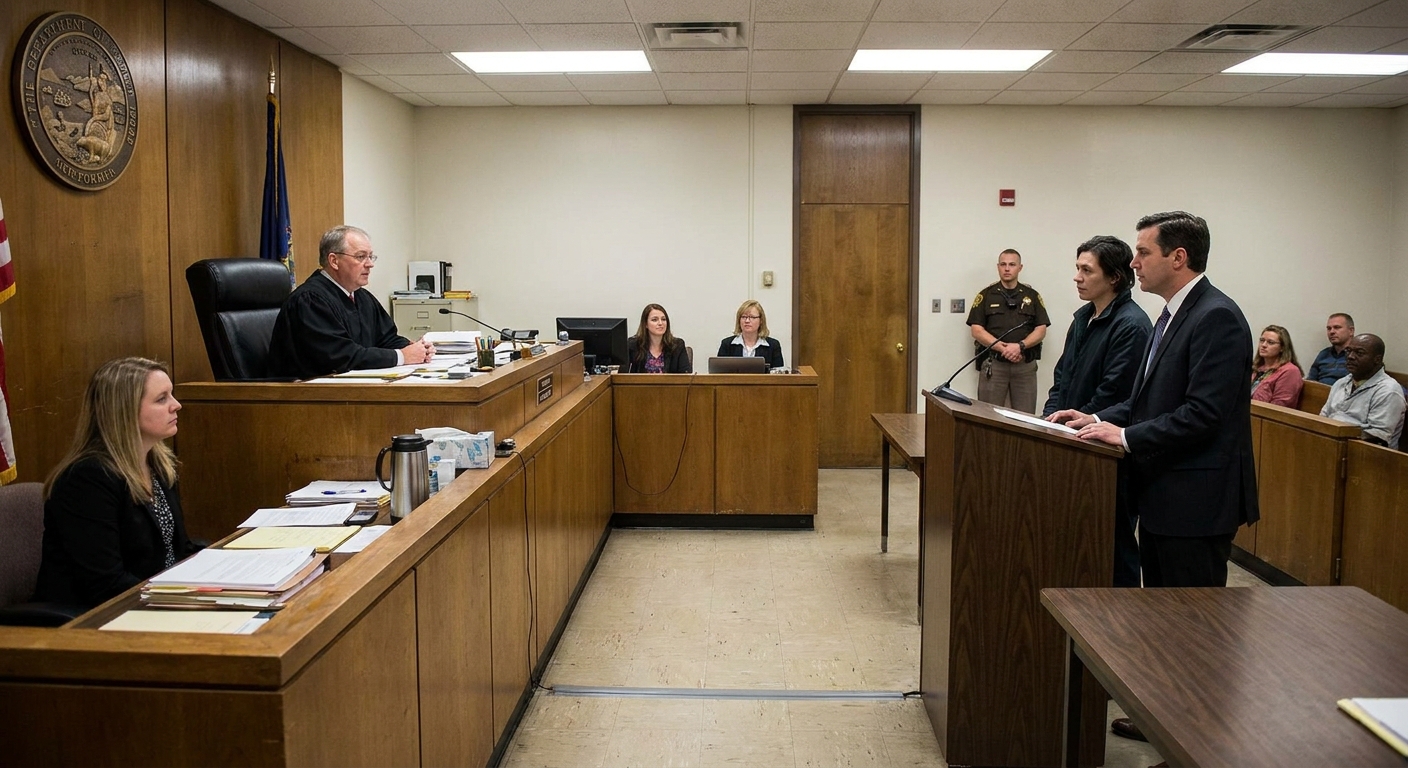
You can feel the system click into place at an arraignment. Not because guilt is being decided, and not because a trial is about to begin. But because this is the moment the government stops speaking in generalities and starts speaking in charges.
In plain English: an arraignment is a defendant’s first formal court appearance on a set of criminal charges. The court tells you what you are accused of, makes sure you understand your rights, asks for a plea, and decides whether you will be released or held while the case moves forward.
It is brief, procedural, and easily misunderstood. It is also one of the most constitutionally important moments in a criminal case, because it sits at the intersection of liberty and paperwork. A person can lose days, weeks, or months of freedom here, without any finding of guilt.
One timing caveat: jurisdictions do not all line up neatly. Some courts hold an earlier initial appearance or first appearance soon after arrest to address counsel and release, sometimes before an indictment or information is filed. In other places, arraignment handles most of that work.
Join the Discussion
The basic definition
An arraignment is a court hearing where the judge typically:
Formally informs the defendant of the charges (often by reading or summarizing the complaint, information, or indictment).
Ensures the defendant has counsel or understands the right to counsel.
Asks for a plea (most commonly “not guilty” at this stage).
Addresses release conditions such as bail, bond, or other pretrial restrictions.
Sets next dates for future hearings.
Depending on the state and the seriousness of the charge, arraignment may happen in a local or municipal court, a state trial court, or federal district court.
Where it fits
Arraignment is early, but it is not always the first thing that happens. A simplified sequence often looks like this:
Investigation and arrest (or citation/summons instead of arrest).
Booking and a decision about temporary holding.
A charging document is filed (complaint, information, or indictment). In some jurisdictions, this happens before the first court appearance. In others, the case may begin with a complaint and be formalized later.
Initial appearance or arraignment (sometimes separate, sometimes combined).
Pretrial hearings, motions, discovery, negotiations.
Trial or plea agreement.
Sentencing if there is a conviction or guilty plea.
Because terminology varies, it helps to focus on function: there is usually an early hearing to (1) put the charges on the record, (2) address counsel, and (3) make a release decision.
What happens at arraignment
1) The court calls the case and identifies the defendant
The judge confirms who you are, sometimes asks basic identifying questions, and confirms whether an interpreter is needed. The goal is administrative accuracy, because a criminal case is also a record-keeping system.
2) The charges are read or stated
The court states the charges. Depending on the jurisdiction and the type of case, the judge may also state the potential penalties or the maximum exposure.
3) Rights and counsel are addressed
The judge confirms whether you have a lawyer. If you do not, the court may:
Advise you of the right to counsel, including appointment of counsel if you qualify financially.
Set a later date for appointment paperwork and a new hearing.
In some cases, allow a defendant to waive counsel, but courts usually proceed carefully here.
4) The plea is entered
The court asks for a plea: guilty, not guilty, or sometimes no contest (nolo contendere). At arraignment, “not guilty” is common, even for defendants who expect to negotiate a plea later. It preserves options while the defense reviews evidence.
In some misdemeanor cases, local rules may allow counsel to enter a not guilty plea without the defendant appearing in person, or allow a written waiver. Other courts require an in-person appearance. Video arraignments are also common in many jurisdictions, especially for in-custody defendants.
5) Bail and pretrial release are decided
This can be the most consequential part. The judge may:
Release you on your own recognizance (a promise to return).
Set monetary bail (an amount you may have to post to secure release) or a bond (a mechanism to post bail, sometimes through a bail bond company, depending on the state).
Order conditions like travel limits, no-contact orders, alcohol testing, pretrial supervision, or electronic monitoring.
Order detention in circumstances allowed by law, typically based on factors like flight risk and public safety.
Legally, pretrial release decisions are supposed to be about ensuring you return to court and, where authorized, protecting public safety. In practice, it is also where unequal access to money can translate into unequal access to freedom.
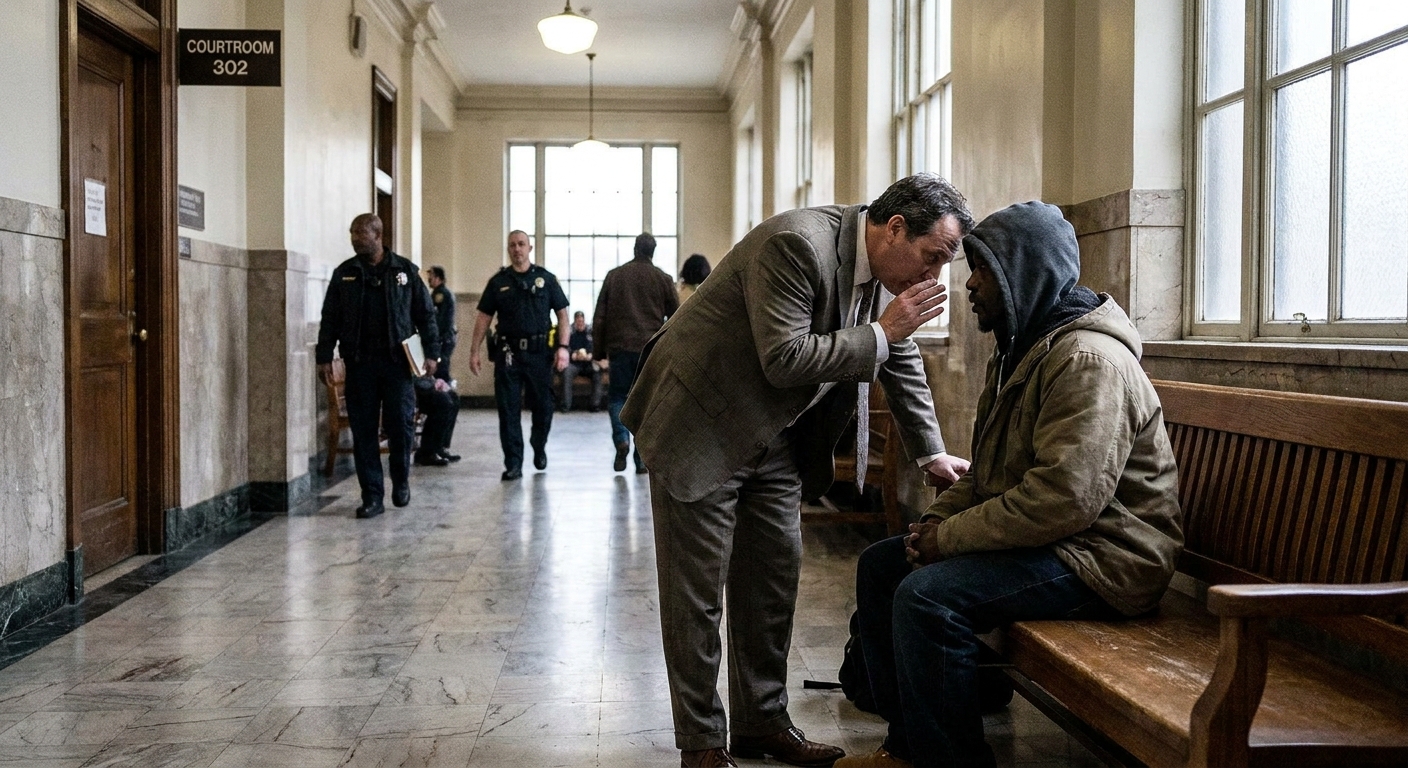
A practical note: arraignment is usually not the place to explain your side of the story on the record. If you have counsel, let them do the talking. If you do not, stick to what the court asks and avoid discussing the facts of the case.
Charging papers and federal court
People often hear these terms together and assume they mean the same thing. They do not.
Indictment is a charging document approved by a grand jury. It is a common path for felony charges.
Information is a charging document filed by a prosecutor without a grand jury. In many states it is used in a wide range of cases. In federal court, a felony information generally requires the defendant to waive indictment.
Complaint is often used at the earliest stage, including in federal court before an indictment, particularly to support an arrest warrant and an initial appearance.
Arraignment is the hearing where the defendant is formally notified of the charges and enters a plea.
In federal court, arraignment is governed by the Federal Rules of Criminal Procedure (especially Rule 10). Federal cases also commonly include a separate initial appearance (Rule 5), and detention and release are governed by the Bail Reform Act. Practically, the sequence often looks like initial appearance, then a detention or bail hearing if needed, and then arraignment once the indictment or information is in place.
Rights that show up
The Constitution does not contain a neat “arraignment clause.” Instead, arraignment sits inside a network of rights, many of which come from the Bill of Rights and the Fourteenth Amendment’s due process protections in state cases.
Right to be informed of the accusation
The Sixth Amendment guarantees that the accused shall “be informed of the nature and cause of the accusation.” Arraignment is one of the places where that promise becomes visible.
Right to counsel
The Sixth Amendment also guarantees “the Assistance of Counsel.” Courts generally take steps at or before arraignment to ensure counsel is present or appointed, especially when incarceration is on the line.
Protection against excessive bail
The Eighth Amendment prohibits “excessive bail.” That does not automatically mean bail must be offered in every case, but it does mean the amount and conditions should not be used as a backdoor punishment.
Due process
The Fifth Amendment (federal) and the Fourteenth Amendment (states) protect due process. At arraignment, due process is about notice, fairness, and meaningful opportunity to respond, not about deciding guilt.
Speedy trial clocks
The Sixth Amendment right to a speedy trial is broader than arraignment. Specific statutory speedy-trial deadlines vary widely. Depending on the jurisdiction, the clock may start at arrest, filing, indictment, first appearance, or arraignment. In federal court, Speedy Trial Act deadlines are keyed to events like indictment or information and the defendant’s first appearance.
Can you go to jail?
You can, even if you are presumed innocent.
Arraignment or a related early hearing can result in:
Release (with or without conditions).
Detention because bail is set and not posted.
Detention ordered by the court where the law allows preventive detention based on factors like flight risk and public safety.
This is why arraignment is not “just paperwork.” It is a liberty decision made early, often quickly, and sometimes with limited information available to the defense.
Common questions
Is arraignment the same as a trial?
No. There are no witnesses, no jury, and usually no evidence presented beyond the charging document. The court is not deciding guilt.
Do I have to plead guilty or not guilty?
You will be asked to enter a plea. If you have counsel, they can advise you. Many defendants plead not guilty at arraignment to allow time to review the evidence and consider options.
Will the judge dismiss the case at arraignment?
Sometimes charges can be dismissed early for legal reasons, but dismissal is not the normal purpose of arraignment. Most dismissal arguments are handled later through motions.
What if I do not show up?
Failing to appear can lead to a bench warrant and additional charges in some jurisdictions, along with harsher release conditions.
What happens after
After arraignment, the case typically moves into the pretrial phase:
Discovery (exchange of evidence and information, with rules varying by jurisdiction).
Motions (for example, motions to suppress evidence under the Fourth Amendment, or to dismiss defective charges).
Plea negotiations (often the most common path to case resolution).
Pretrial conferences and scheduling orders.
Trial if there is no plea agreement.
If you were given release conditions, the court will expect strict compliance. A new arrest or violation can lead to higher bail or detention.
Why it matters
Arraignment is where the criminal process looks the most routine, and quietly becomes the most powerful. A judge can set a number that decides whether someone sleeps at home or in a jail cell. A defendant can make a plea decision that shapes everything that follows. A court can impose conditions that restrict daily life long before any verdict.
If you want a practical way to read the Constitution as a living structure, watch an arraignment. It is the Bill of Rights in working clothes. Not lofty, not ceremonial, and not always fair in outcome. But designed, at least in theory, to force government power into a procedure with rules.
One important note: This article is general information, not legal advice. Arraignment rules vary by state and by federal court. If you or someone you know is facing charges, a qualified defense attorney can explain how arraignment works in that specific jurisdiction.