
People hear the phrase “RICO charge” and assume it means one thing: mobsters.
That is where the law got its cultural reputation, but it is not where it stayed. Today, RICO is less a “crime” than a legal connector. It is a way for prosecutors to take a series of related offenses and treat them as one coordinated project, then hold leaders, organizers, and beneficiaries responsible even if they did not personally carry out every underlying act.
That reach is exactly why RICO cases show up in headlines involving gangs, fraud rings, public corruption, and even complex political investigations. It is also why RICO raises recurring constitutional questions about due process, fair notice, and whether the government is stretching a statute beyond its original purpose.

Join the Discussion
What does RICO stand for?
RICO stands for the Racketeer Influenced and Corrupt Organizations Act, a federal law enacted in 1970 as part of the Organized Crime Control Act.
The basic idea was straightforward: organized crime often insulated leadership from liability by using layers of underlings. RICO was designed to pierce that structure by criminalizing participation in an enterprise through a pattern of specified crimes.
RICO exists at 18 U.S.C. §§ 1961 to 1968.
What is a RICO charge in plain English?
A RICO charge alleges that a person participated in an enterprise and did so by committing, helping commit, or benefiting from a pattern of racketeering activity.
Instead of prosecuting each offense as a separate, isolated incident, RICO lets the government tell a single story: that these acts were part of a continuing criminal operation with a shared purpose.
The key concept: the “enterprise”
An “enterprise” can be a formal organization, like a company or union, but it can also be an informal group of people associated in fact. In other words, it does not have to be incorporated or have a logo.
That flexibility is one reason RICO is so powerful. It also means RICO cases often turn on evidence of structure, continuity, and coordination.
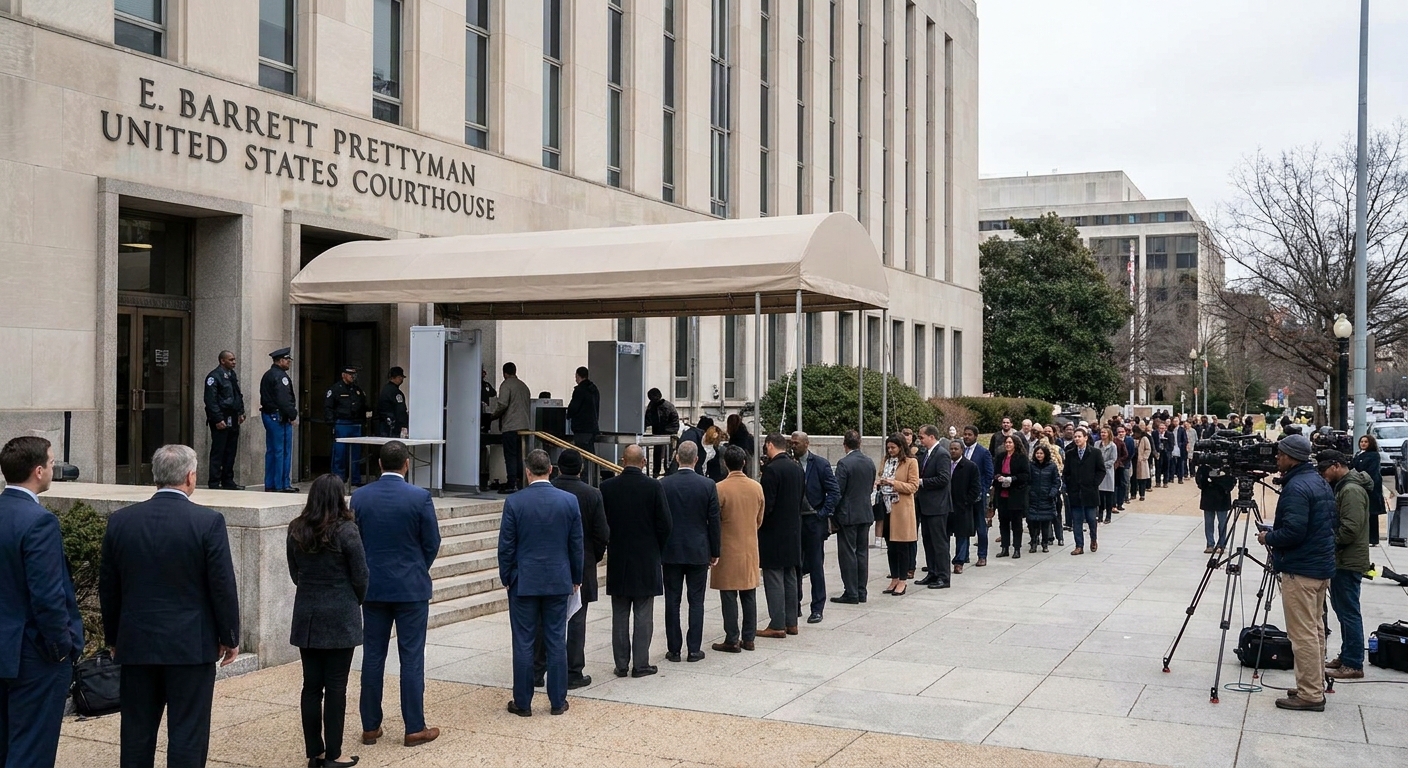
What prosecutors must prove for federal RICO
The exact elements depend on which RICO subsection is charged, but the core building blocks are consistent.
1) An enterprise existed
The government must show an enterprise affecting interstate or foreign commerce. That “commerce” hook is what grounds federal power, reflecting the Constitution’s Commerce Clause framework that underpins much federal criminal law.
2) The defendant had a relationship to the enterprise
RICO is not limited to “members.” Prosecutors may argue a defendant worked for, directed, financed, or otherwise operated the enterprise’s affairs.
3) A pattern of racketeering activity
Federal law generally requires at least two predicate acts of racketeering within a ten year period. But two acts alone is not always enough. Courts look for relatedness and continuity, meaning the acts must connect and reflect ongoing criminal conduct, not just a one-off episode.
4) Participation or conduct
For the most common charge, prosecutors must show the defendant conducted or participated in the enterprise’s affairs through that pattern. This “operation or management” concept has been shaped by Supreme Court interpretation, and it often becomes the battleground in cases involving professionals, executives, or peripheral actors.
What counts as “racketeering activity”?
RICO does not cover every crime. It covers a defined menu of offenses called predicate acts. These include many serious state and federal crimes that are often used to generate money, maintain control, or silence witnesses.
Common predicates include:
- Bribery and extortion
- Mail fraud and wire fraud
- Money laundering
- Drug trafficking offenses
- Gambling offenses
- Kidnapping
- Murder
- Witness tampering and obstruction of justice
- Trafficking in counterfeit goods
In many modern RICO cases, fraud predicates are the engine. Mail and wire fraud are broad, familiar to federal prosecutors, and adaptable to schemes that unfold across emails, texts, invoices, bank transfers, and contracts.
Civil RICO: lawsuits, not jail
RICO is not only a criminal tool. It also has a major civil side.
Under 18 U.S.C. § 1964(c), a private party can sue if they were injured in their business or property by a RICO violation. The remedy can include treble damages (triple the proven damages) plus attorney’s fees and costs. That fee shifting is a big reason civil RICO gets pleaded in high stakes business disputes.
How civil RICO shows up in real life
Civil RICO claims often target alleged patterns of fraud in commercial settings, including:
- Business fraud and investor schemes
- Kickbacks and corruption tied to contracts
- Healthcare billing and referral schemes
- Financial services misconduct involving repeated misrepresentations
Not every fraud case is a civil RICO case. Plaintiffs still have to plead and prove the RICO architecture, including an enterprise, a pattern, and qualifying predicate acts. In practice, the fight is often over whether the allegations show a true continuing pattern, or just a single dispute repackaged as racketeering.
What civil RICO does not do
Civil RICO does not send anyone to prison. It is about money damages and injunction style relief in civil court. But because the statute borrows criminal concepts and carries a stigma, civil RICO can raise similar fairness concerns about overbreadth and storytelling, just in a different forum and with different burdens and procedures.
Federal RICO vs state RICO
When people say “RICO,” they often mean the federal statute. But many states have their own versions, sometimes called “little RICO” laws.
How state RICO laws can differ
- Different predicate crimes: A state may define racketeering to include additional state offenses.
- Different pattern requirements: Some states define the pattern more broadly, some more narrowly.
- Different penalties: Sentencing ranges and forfeiture rules can vary significantly.
Constitutionally, state RICO prosecutions still trigger federal protections like due process and the right to counsel, but they are litigated in state court under state procedural rules.
Penalties: what happens if you are convicted?
A federal RICO conviction can carry:
- Up to 20 years in prison for each RICO count, or more if the predicate acts allow a higher maximum
- Significant fines
- Forfeiture of proceeds and property tied to the racketeering activity
- Restitution in many cases
Forfeiture is not a side issue in RICO. It is part of the statute’s design. The law aims not only to punish but to dismantle the economic base of an enterprise.
RICO conspiracy: the charge you see most often
One of the most commonly charged provisions is RICO conspiracy under 18 U.S.C. § 1962(d).
In practical terms, conspiracy charges matter because the government may not need to prove the defendant personally committed two predicate acts. Instead, prosecutors argue the defendant agreed that someone in the enterprise would commit a pattern of racketeering activity.
That is why conspiracy can feel expansive. Agreement is intangible. It is inferred from communications, payments, roles, or coordinated action. And as a constitutional matter, that can intensify disputes about fair notice and the danger of guilt by association.
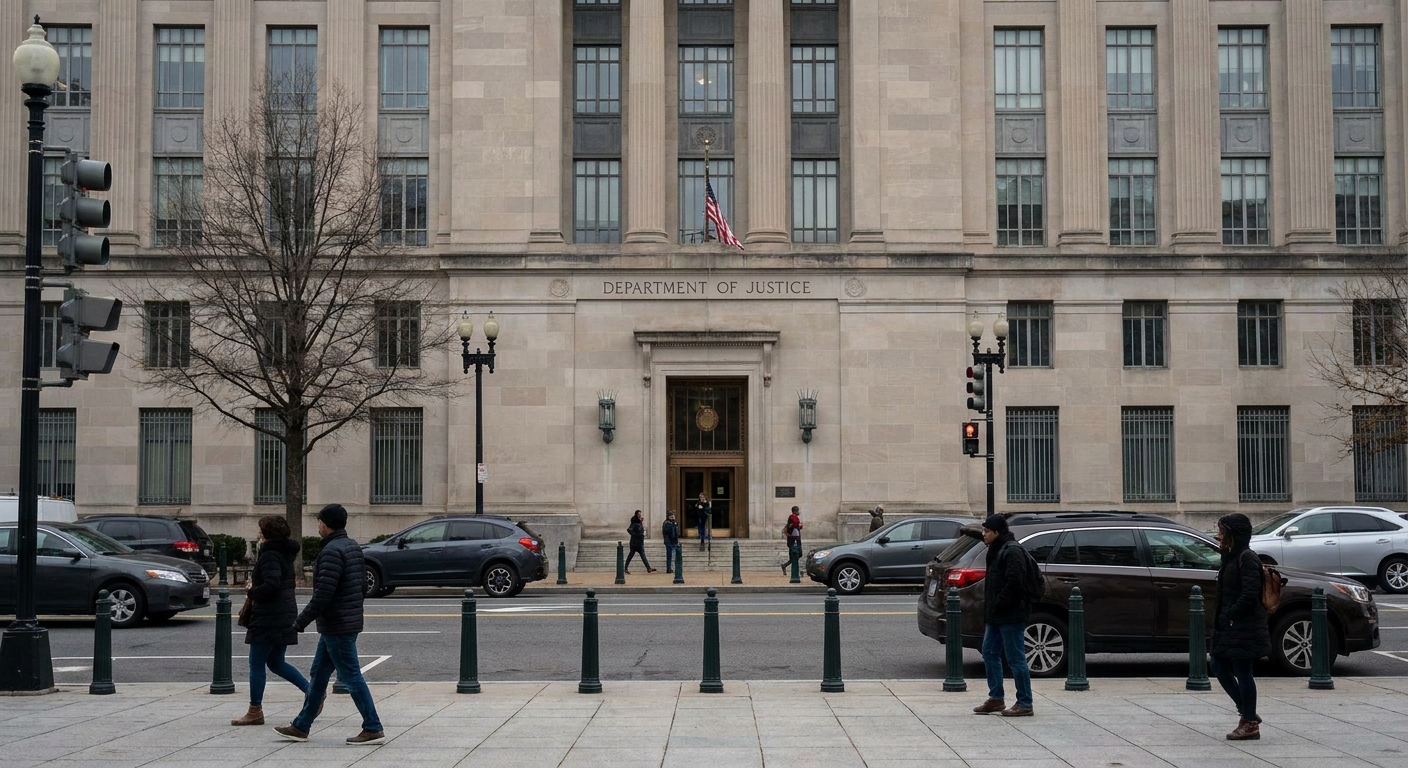
Why RICO raises constitutional issues
RICO is statutory law, not a constitutional amendment. But it lives in constitutional space because it is a tool the government uses to investigate, charge, and punish. That means it constantly intersects with the Bill of Rights and with basic rule of law principles.
Due process: notice and vagueness
Defendants often argue that RICO’s definitions, especially “enterprise” and “pattern,” are too elastic. The constitutional concern is due process: people must have fair notice of what conduct exposes them to criminal liability, and laws cannot be so vague that enforcement becomes arbitrary.
First Amendment: association and speech
RICO cannot punish protected speech or protected political association. But in real cases, evidence of association, membership, messaging, and public statements may be used to prove agreement, purpose, or coordination. Courts then have to separate protected expression from unprotected conduct.
Fourth Amendment: searches, surveillance, and warrants
RICO investigations are often document heavy and communication heavy, which can mean broad warrants, cell phone searches, email accounts, and long running surveillance. That raises recurring Fourth Amendment fights over scope, particularity, and digital privacy.
Sixth Amendment: complex trials and effective counsel
RICO cases can involve many defendants, massive discovery, and months long trials. The constitutional promise of effective assistance of counsel does not disappear just because the case is complicated, but complexity can strain the system and pressure plea decisions.
Eighth Amendment: forfeiture and proportionality
Forfeiture can be financially catastrophic. Defendants sometimes challenge forfeiture as an excessive fine under the Eighth Amendment, depending on the property taken and the gravity of the offense.
Common misconceptions about RICO
“A RICO charge means the defendant is in the mafia.”
No. RICO can involve organized crime, but it is not limited to that context. The law is about enterprise conduct and patterns, not about a specific type of group.
“RICO is only federal.”
No. Many states have RICO style statutes.
“Two crimes automatically equals RICO.”
Not necessarily. Prosecutors generally need to show related acts and continuity, not just two disconnected offenses.
“RICO is just a sentencing enhancement.”
No. It is its own charge, with its own elements and its own penalties, including forfeiture.
“Civil RICO is just a fancy fraud claim.”
Not exactly. Civil RICO is often based on fraud predicates, but it requires an enterprise and a pattern, and it carries unique remedies like treble damages and attorney’s fees. Courts scrutinize it for that reason, especially when it looks like a single business dispute dressed up as racketeering.
If you are facing a RICO charge
This is not legal advice, but it is a reality check: RICO cases are typically high stakes, evidence dense, and strategically complex. If you are charged, the issues are not limited to “did you do the underlying act.” They often include:
- Whether the alleged enterprise exists as the law defines it
- Whether the acts form a true pattern with continuity
- Whether the defendant actually directed or participated in the enterprise’s affairs
- Whether key evidence was lawfully obtained
- Whether speech or association is being used improperly as a proxy for criminal conduct
Because conspiracy and enterprise theories can be broad, early decisions about counsel, discovery, and motions practice can shape the entire trajectory of the case.
Why RICO matters in a constitutional republic
RICO was created to solve a real problem: sophisticated criminal organizations that function like institutions, outlasting individual prosecutions. The Constitution does not forbid the government from responding with sophisticated tools of its own.
But the same features that make RICO effective also make it sensitive. When the government can define an “enterprise” broadly, interpret “agreement” through inference, and aggregate multiple acts into one narrative, the law tests how carefully the system protects individual rights inside a group accusation.
That is the enduring tension. RICO can be a scalpel against coordinated criminal power. It can also become a hammer if courts and juries accept enterprise storytelling without demanding precise proof. In a system built on due process, the difference is not academic. It is the difference between accountability and overreach.