
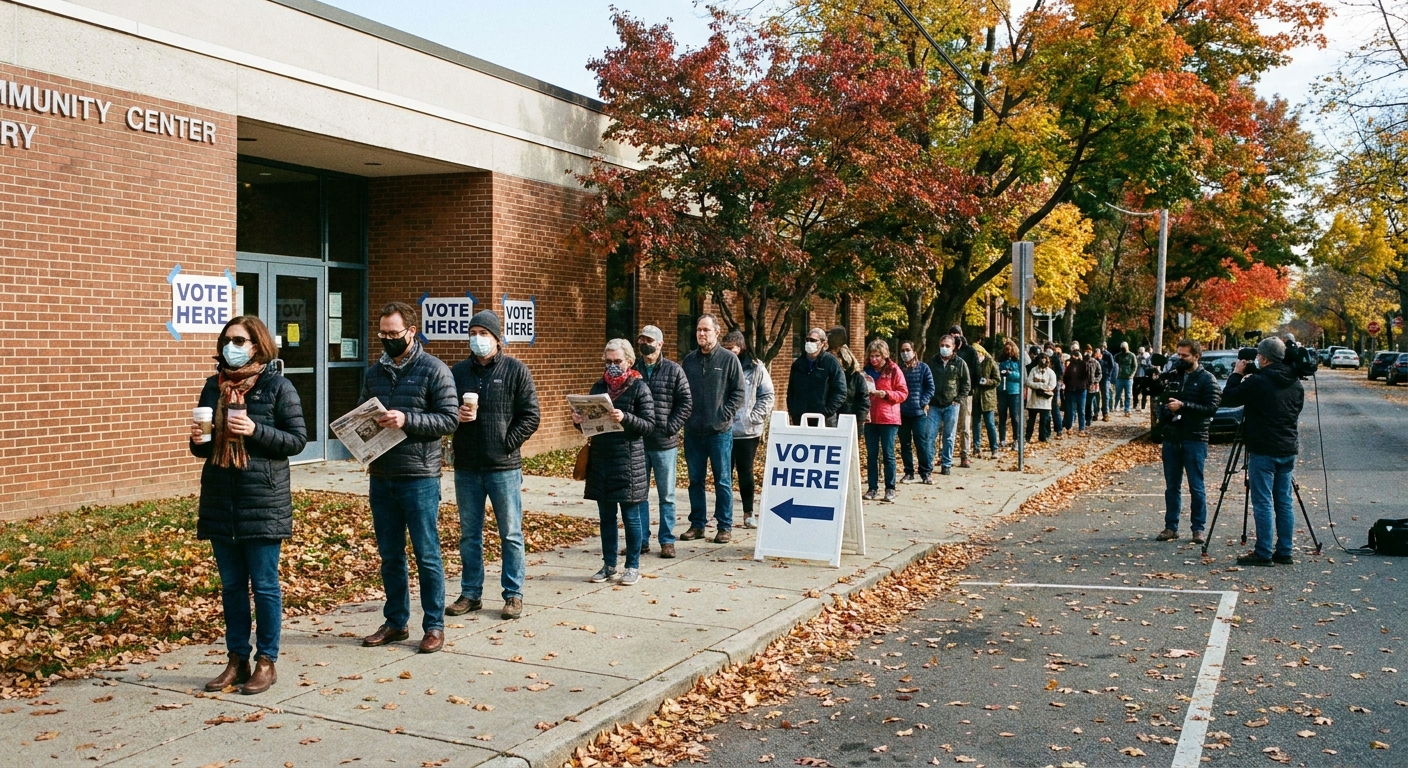
Midterm elections are the national elections held in the middle of a president’s four-year term. They are not “mid” because they are smaller or less important. They are “mid” because they land two years after a presidential election and two years before the next one.
And they routinely do something that feels dramatic in a system built for stability: they can change the direction of government without changing the president.
Join the Discussion
The basic definition
A midterm election is a regularly scheduled election that occurs in even-numbered years, halfway through a presidential term. In modern practice, the phrase usually refers to elections in which:
- All 435 seats in the U.S. House of Representatives are up for election.
- About one-third of the U.S. Senate is up for election.
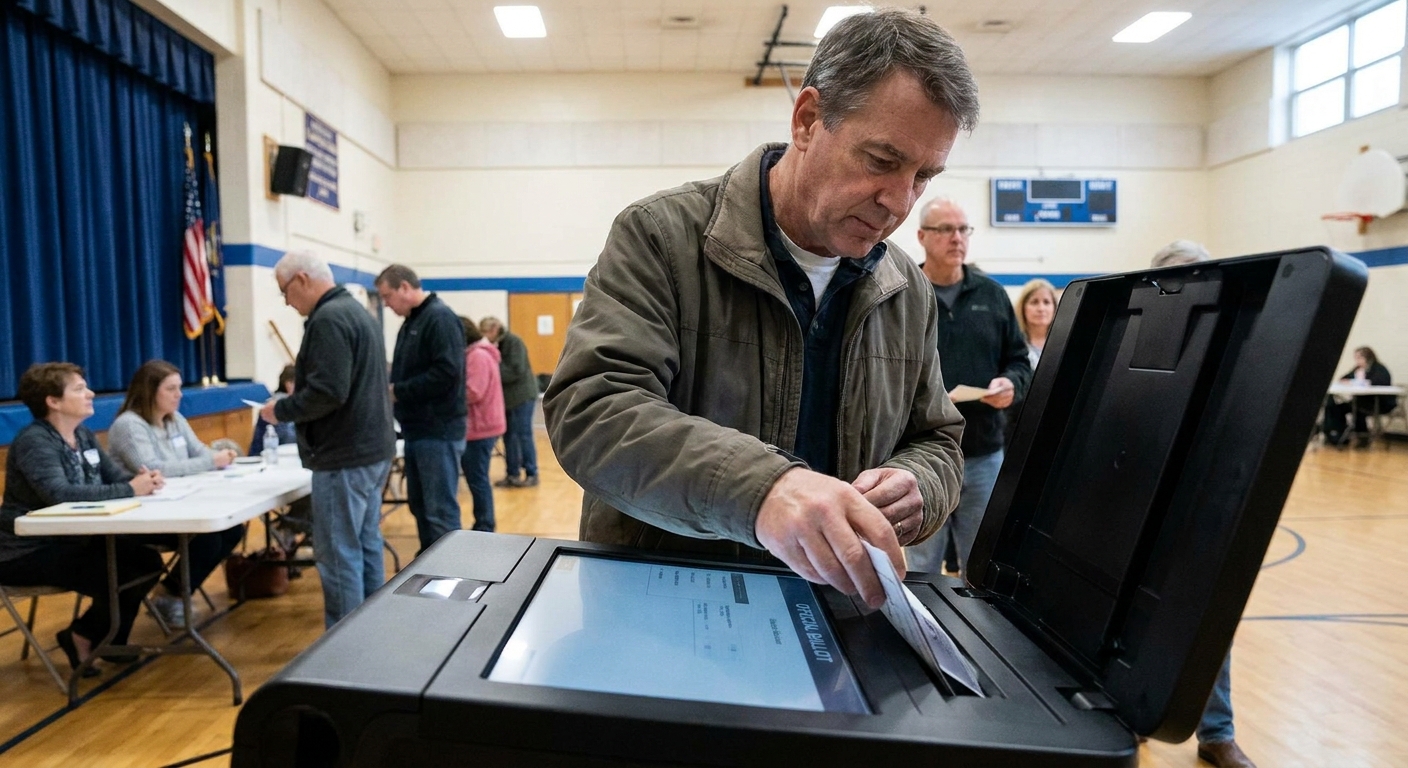
- Many states also elect governors, state legislators, attorneys general, secretaries of state, judges (in some states), and vote on ballot measures.
So while the presidency is not on the ballot, plenty of the machinery that shapes federal law and state policy absolutely is.
What is on the ballot in a midterm?
U.S. House (every seat)
The Constitution sets House terms at two years. That means the entire House stands for election every two years, whether it is a presidential year or a midterm year.
The House is where revenue bills originate, where impeachment charges begin, and where majority control can decide whether a president gets cooperation or gridlock.
U.S. Senate (about one-third)
Senators serve six-year terms, staggered so that roughly one-third of the Senate is elected every two years. In a midterm, you do not vote on the whole Senate, but you might vote on a Senate seat in your state depending on the class cycle.
Governors and state offices (varies by state)
Many states hold gubernatorial elections during midterms. Those races matter nationally because governors can influence redistricting, election administration, emergency powers, and how federal programs are implemented in their states.
Ballot measures and local offices
In many states, midterms also include ballot questions on taxes, abortion policy, marijuana laws, labor rules, school funding, and constitutional amendments at the state level. Local offices like mayor, county executive, school board, and sheriff can also appear depending on local election calendars.
Why midterms matter so much
They can flip control of Congress
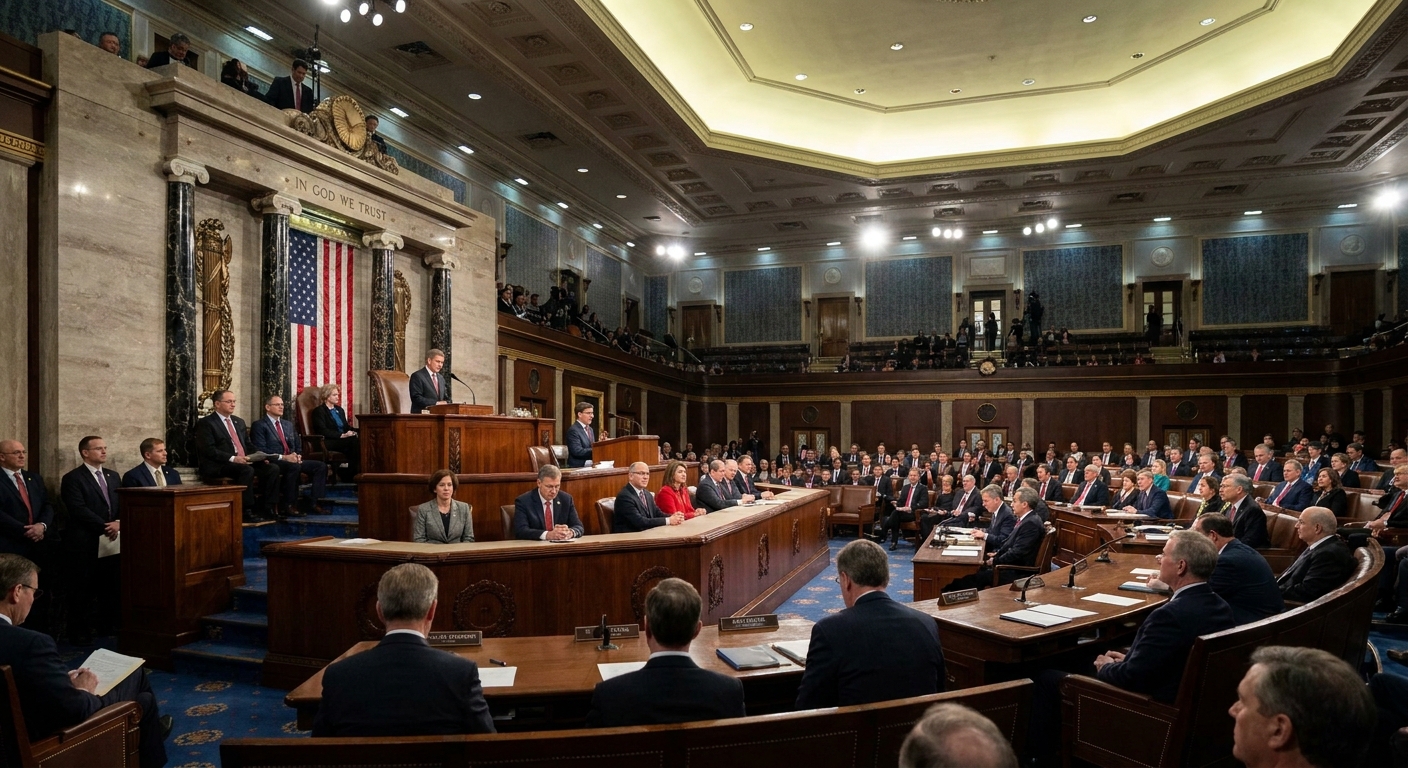
Because the entire House is up every two years, a midterm is often the fastest way for voters to signal approval or disapproval of the president’s party. If control of the House changes hands, the governing reality changes with it: committee chairs change, the legislative agenda changes, and oversight can intensify overnight.
They shape what laws can pass
When Congress and the president are from different parties, large legislative wins become harder. That is not a bug in the American system. It is often the system working as designed: forcing compromise or, failing that, slowing down national action.
They influence the federal courts indirectly
Federal judges are nominated by the president and confirmed by the Senate. Midterms can determine whether the Senate is friendly, hostile, or narrowly divided. That affects confirmation speed, judicial ideology, and how many vacancies get filled.
They are a referendum, but not an election do-over
Midterms are commonly described as a referendum on the sitting president. That is partly true culturally and politically. But constitutionally, they are not a mechanism to remove a president. The president’s term is fixed unless impeachment and conviction occur, or the president resigns.
Where the Constitution fits in
The Constitution does not use the phrase “midterm election.” It does something more structural: it sets term lengths and lets election cycles produce midterms naturally.
- Article I, Section 2 establishes two-year terms for House members.
- Article I, Section 3 sets six-year terms for Senators and creates staggered elections.
- Article II sets the president’s four-year term, which creates the “middle” year by default.
- The 17th Amendment provides for the direct election of Senators, which makes Senate midterm contests central to modern politics.
Another constitutional detail that matters: states run elections in the first instance. Congress can set certain rules for federal elections, but the day-to-day administration is overwhelmingly state and local. That is why midterms can look and feel different depending on where you vote.
Why the president’s party often loses seats
It is common for the president’s party to lose seats in midterms, especially in the House. There is no constitutional requirement that this happens. It is a political pattern driven by incentives and turnout.
- Turnout differences: Presidential elections bring in casual voters. Midterms rely more heavily on frequent voters, who tend to be older and more politically engaged.
- “Punishment” voting: Voters dissatisfied with the direction of the country often use midterms to impose a check.
- Intensity gap: The party out of the White House often has more energy, more anger, and more motivation to show up.
- Redistricting and geography: House outcomes are filtered through district lines and where voters live, not just national popular sentiment.
The result is that midterms are less about a single national vote and more about hundreds of localized contests that add up to a national shift.
Midterms, checks and balances, and the idea of “permission”
Midterms are one of the most tangible expressions of checks and balances in everyday life. The Constitution divides power among branches and levels of government. Elections are how the public updates who holds those levers.
Think of a midterm as a national moment of political feedback that does not require rewriting the Constitution, calling a convention, or waiting four years. If voters want to amplify a president’s agenda, they can elect a Congress that will pass it. If voters want to restrain that agenda, they can elect a Congress that will block it.
Frequently asked questions
When are midterm elections held?
Midterms occur in even-numbered years halfway through a president’s term. Federal Election Day is set by federal law as the Tuesday after the first Monday in November.
Does everyone vote in a midterm?
Eligibility rules are state-based, but generally U.S. citizens who are registered and meet their state’s requirements can vote. Whether you have a Senate race depends on your state’s election cycle. Everyone has a House race.
Is a midterm election federal or state?
Both. The House and Senate races are federal, but states administer them. At the same time, many state and local offices are on the ballot, sometimes with major policy consequences.
Can a midterm election remove a president?
No. Midterms can change Congress, which can change oversight and legislative outcomes, but the president remains in office unless removed through the impeachment process or leaves voluntarily.
The civic takeaway
If a presidential election answers “Who leads the executive branch?”, a midterm often answers “Who gets to set the terms?” The Constitution makes those two questions separate on purpose.
In a republic, power does not only turn over at the top. It turns over in batches, on a schedule, in contests that can feel local but land nationally. Midterms are where that design becomes visible.