
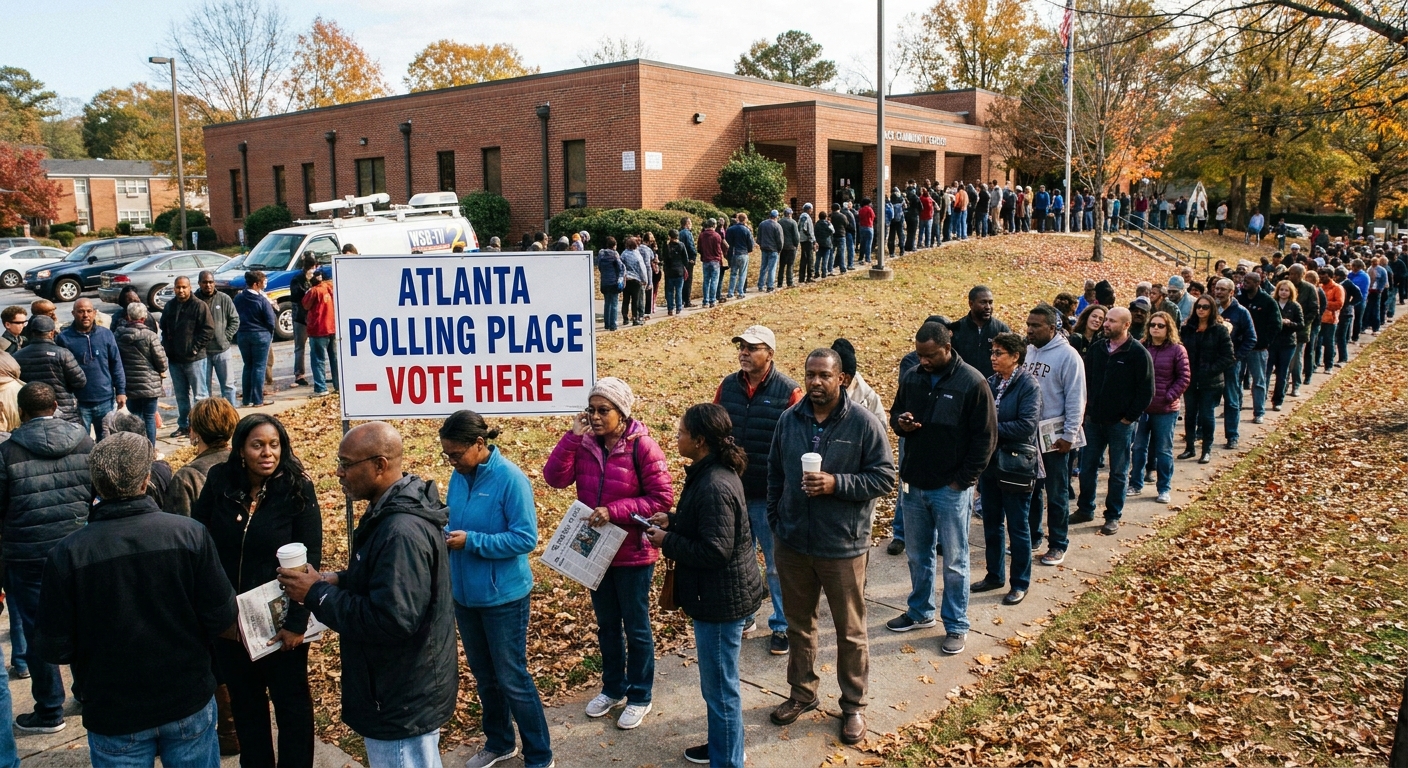
“Midterm election” sounds like a scheduling detail. It is not. It is the United States’ built-in checkup on power, held roughly halfway through a president’s four-year term, when voters can reward, rebuke, or reshuffle the people who write laws, fund agencies, confirm nominees in the Senate, and investigate presidents.
If presidential elections are the country picking a direction, midterms are the moment the country decides whether the driver still gets the keys.
Join the Discussion
Midterm elections, defined
A midterm election is the general election held in even-numbered years that fall between presidential elections. Because presidents serve four-year terms, midterms occur about two years into a presidency.
They are national in impact even though there is no presidential contest at the top of the ballot.
- Presidential election years: 2024, 2028, 2032
- Midterm years: 2026, 2030, 2034
By law, federal general elections are held on the first Tuesday after the first Monday in November. Primaries and candidate filing deadlines vary by state.
The key idea: midterms help decide who controls Congress during the second half of a president’s term, and that control shapes what the president can realistically accomplish.
What is on the ballot in a midterm?
Midterms are primarily about Congress, but the ballot is usually much bigger than that.
All U.S. House seats
Every member of the House of Representatives serves a two-year term. That means all 435 House seats are up for election in every midterm.
This is not a trivia fact. It is constitutional design. The House was built to be the chamber closest to public opinion, and frequent elections are how that responsiveness is wired into the system.
About one-third of the U.S. Senate
Senators serve six-year terms, staggered so that roughly one-third of the Senate is up for election every two years. In a midterm year, voters in those states choose whether to keep or replace their senator.
Occasionally, the number of Senate races can be higher because special elections may be held to fill vacancies.
Governors, state lawmakers, and local offices
Many states also elect governors in midterm years, along with state legislators, attorneys general, secretaries of state, judges, county officials, school boards, and mayors. Because states run elections, the list varies widely by state.
Also worth noting: while “midterm” usually refers to the federal general election year, some states and cities schedule major local races and ballot measures in odd-numbered years, too.
Ballot measures and constitutional amendments
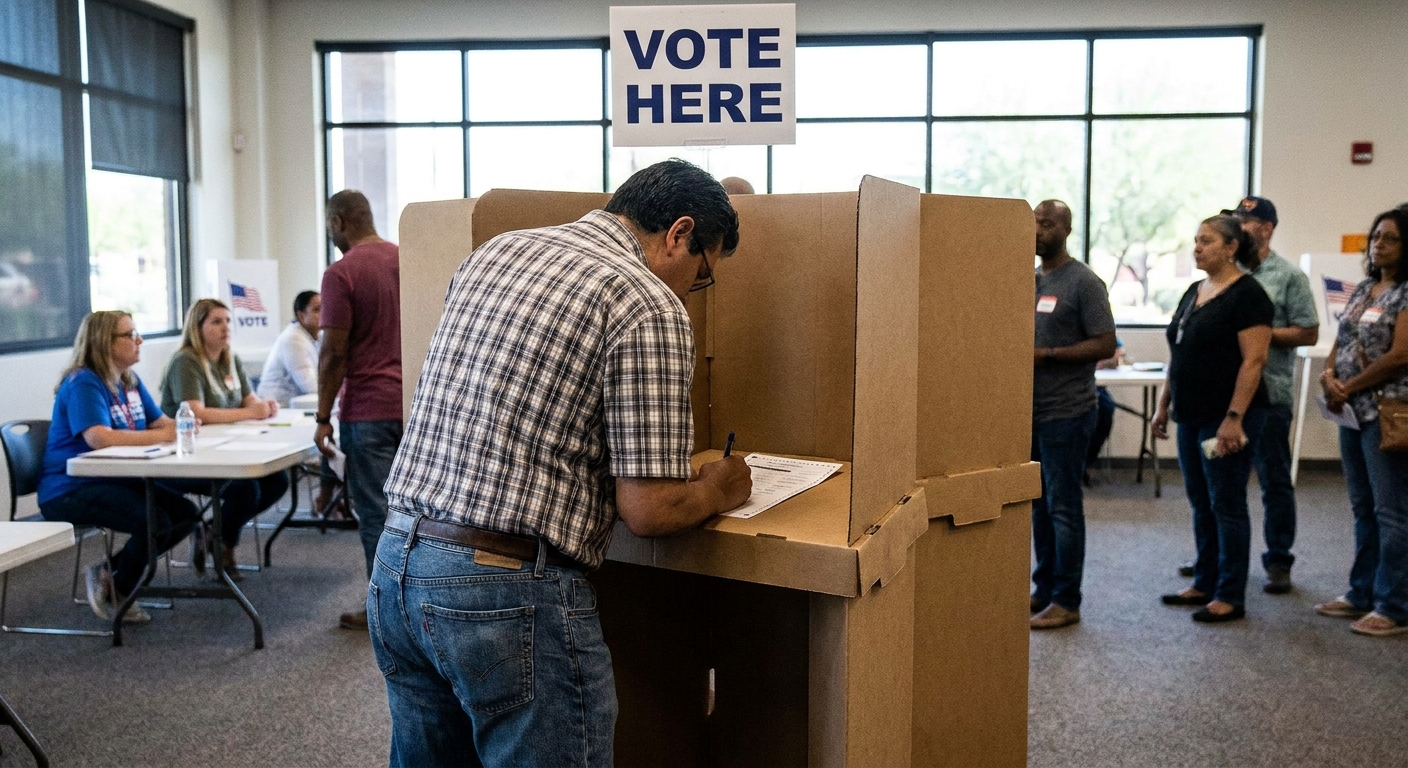
Some states put referenda, initiatives, or state constitutional amendments on the midterm ballot. These can reshape state tax policy, voting rules, abortion policy, redistricting methods, and more.
Why midterms matter so much
Midterms are not “smaller” elections. They can determine whether the Constitution’s separation of powers produces cooperation, stalemate, or confrontation.
Because Congress is where policy becomes law
The Constitution gives Congress the power to write federal laws, raise and spend money, regulate commerce, and declare war. A president can propose, pressure, and veto, but cannot pass legislation alone.
So when midterms shift control of one or both chambers, they can quickly change what is possible on healthcare, taxes, immigration, climate policy, gun regulation, and federal appointments.
Because Congress is a check on the executive branch
Even in a hyper-presidential political culture, Congress remains the branch with tools the presidency cannot replicate:
- Oversight and investigations through committees and subpoenas
- Budget control, including shutdown threats and spending conditions
- Impeachment power (House impeaches; Senate tries)
- Confirmation power in the Senate for executive officers and judges
A midterm can turn a friendly Congress into an adversarial one, transforming the second half of a term into a fight over documents, funding, and appointments.
Because states shape federal power too
Governors and state legislatures influence election administration, redistricting, and the state laws that become test cases in federal court. Many of the Supreme Court’s biggest constitutional disputes begin as state-level policy choices.
Why the president’s party often loses seats
There is a well-known pattern in American politics: the party that wins the White House often performs worse in the next midterm. It is not a constitutional rule, but it is a recurring political reality.
Several forces tend to push midterms against the president’s party:
- Turnout drop-off: voters who show up for a presidential race often skip midterms, and the people who do vote tend to be more politically motivated.
- Electorate differences: midterm voters often skew older and more habitual, which can change outcomes even when opinions have not dramatically shifted.
- “Referendum” dynamics: midterms become a proxy vote on the president’s performance, even when the president is not on the ballot.
- Mobilized opposition: the party out of power often has a clearer emotional incentive to vote.
- Local issues with national consequences: a single Senate race or governor’s race can become a national stand-in for broader conflicts.
This is one reason midterms often produce divided government, which is another way of saying: the Constitution’s friction is a feature of the system, not an accident.
Midterms and the Constitution
Midterms make more sense when you view them through the Constitution’s architecture.
The House: frequent elections as pressure
Article I sets two-year House terms. The House is designed to be the chamber closest to public sentiment. Midterms are where that shows up most dramatically, because the House is the only part of the federal government that is entirely re-elected during a president’s term.
The Senate: stability, not immunity
Six-year Senate terms create continuity, but staggered elections prevent any single election from instantly replacing the entire Senate. Midterms can still flip Senate control, but the structure makes it harder and often more state-specific.
Federalism: fifty systems, one impact
The Constitution delegates much of election administration to the states, within the constraints of federal law and constitutional amendments. That is why voting rules, district maps, and ballot access disputes often differ sharply across state lines, even in the same midterm year.
Common midterm questions
Do you vote for the president in a midterm?
No. The president is not on the ballot in midterm years.
Does a midterm change who the president is?
No. Midterms do not remove or replace a president. But they can change the president’s ability to pass legislation, confirm nominees, and avoid or withstand investigations.
Are midterms only about Congress?
No. Many states elect governors, state legislators, and local officials during midterm years, and some states vote on ballot measures that can change state constitutions.
When is the next midterm election?
Midterms occur in even-numbered years about halfway through a presidential term. The next one after the 2024 presidential election is 2026, held in early November.
The takeaway
A midterm election is the nation’s halfway referendum on governing power. It decides all House seats, a significant portion of the Senate, and often the leadership of states that control election rules, redistricting, and major policy experimentation.
If you want a practical way to understand midterms, try this: presidents set agendas, but midterms help decide whether those agendas become laws. And in a constitutional system built on separated powers, that question is never academic.