
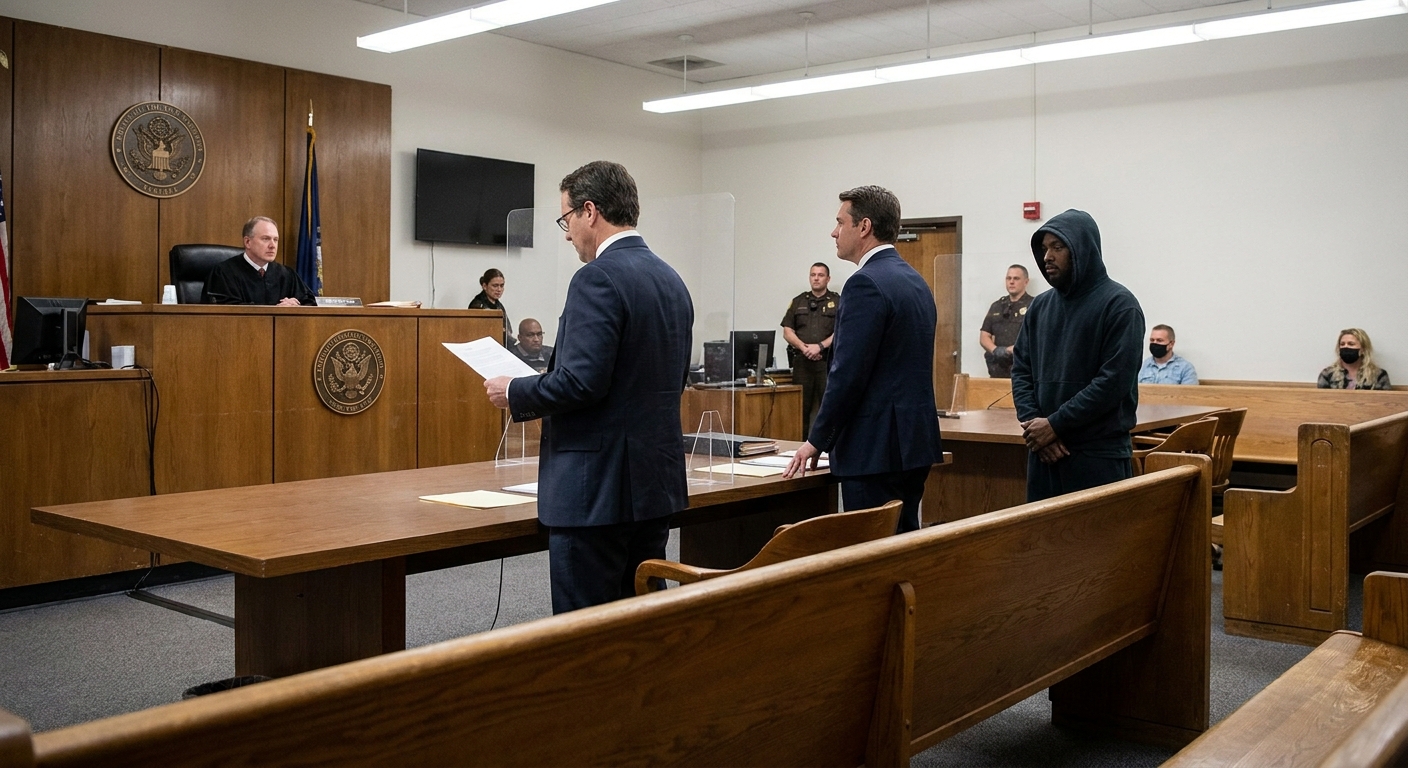
Arraignment is the moment the criminal justice system stops being abstract and becomes personal. It is often the first time a judge addresses the accused directly, the first time the charges are stated in open court, and the first procedural fork in the road where a single word, “guilty” or “not guilty,” can change everything that follows.
Most people imagine arraignment as a mini trial. It is not. There are usually no witnesses, no cross-examination, and no closing arguments. Arraignment is administrative, but it is not trivial. It is where constitutional rights meet court logistics, and where the system begins building the record that will control the case later.
Join the Discussion
What an arraignment is
An arraignment is a court hearing where a defendant is formally told what they are charged with and is asked to enter a plea. Depending on the jurisdiction and the seriousness of the case, arraignment may also include decisions about:
- Counsel (whether the defendant has a lawyer and whether the court will appoint one)
- Release conditions (bail, bond, or non-monetary conditions like travel limits)
- Next dates (pretrial conferences, motion deadlines, and trial scheduling)
Arraignment often happens soon after arrest or soon after a charging document is filed, but timing varies. Some people are arraigned after a citation or summons without any arrest at all, and in some systems arraignment happens later in the process after an earlier “first appearance” or “initial appearance.”
In many places, misdemeanors and low-level cases can have mass arraignment calendars where the court moves through dozens of defendants quickly. Felony arraignments may be more structured, especially when release or detention is contested.
Arraignment vs other hearings
People often use these terms interchangeably, but they are not the same thing.
- Initial appearance (or first appearance): Often the earliest judicial check-in after an arrest. In some jurisdictions this is where bail is first addressed and counsel is discussed, even if formal arraignment comes later.
- Arraignment: Formal notice of the charges in open court, tied to a specific charging document, and the entry of a plea (often “not guilty” at this stage).
- Preliminary hearing (in jurisdictions that use them): A later hearing focused on whether there is probable cause to move forward on a felony. This is closer to evidentiary testing than arraignment, though it is still not a full trial.
What happens at arraignment
1) The court calls your case
The judge confirms the defendant’s identity. The court may also confirm basic information like address and whether the defendant understands English well enough to proceed, or needs an interpreter.
2) The charges are stated
The judge (or prosecutor, depending on local practice) states the charges. This is one reason arraignment matters: it formalizes the charges on the record at that stage. Even if everyone in the room already “knows” why someone was arrested, arraignment is where the accusation is placed on the record in court.
In some courts, defendants can waive a formal reading of the charges, especially when counsel is present and everyone agrees on what is being read into the record.
3) Rights are explained
Courts often advise defendants of key rights, including the right to counsel and the right to remain silent, but the depth of these advisements varies by jurisdiction and by courtroom practice. The underlying constitutional idea is consistent: the government has the burden, not the accused.
4) The plea is entered
The defendant is asked to plead. In most cases, especially early in the process, the plea is not guilty. Sometimes a defendant pleads guilty or no contest at arraignment, but that usually happens only after discussions with counsel and a clear understanding of consequences.
Depending on local rules, counsel may be able to enter a plea on the defendant’s behalf for certain charges or at certain types of arraignments.
5) Release and bail issues are addressed
If the defendant is in custody, arraignment is often when the court decides whether they will be released and under what conditions. This can include bail, but it can also include supervised release, no-contact orders, curfews, or other conditions.
6) The court sets future dates
The judge schedules the next steps: preliminary hearing dates, motion deadlines, discovery timelines, or pretrial conferences. This is where the case becomes a calendar as much as a controversy.
Constitutional rights at arraignment
Arraignment is mostly procedural, but the procedure is shaped by constitutional guarantees. Here are the big ones, and how they actually show up in the arraignment room.
Sixth Amendment: the right to counsel
The Sixth Amendment guarantees the assistance of counsel in criminal prosecutions. In practice, that means a person who faces the possibility of incarceration generally has the right to a lawyer, including an appointed lawyer if they cannot afford one. The Supreme Court’s decision in Gideon v. Wainwright (1963) is the landmark case requiring states to provide counsel in felony cases. Later cases refined how that right works in misdemeanor cases, especially when jail is actually imposed.
At arraignment, the court often confirms whether the defendant has counsel, and if not, whether counsel will be appointed. This matters because the system moves quickly, and an unrepresented defendant can accidentally make decisions that are hard to unwind.
Fifth and Fourteenth Amendments: due process and silence
The Fifth Amendment is not just about “taking the Fifth.” It includes the privilege against self-incrimination and also protects due process in federal proceedings. In state court, due process protections generally apply through the Fourteenth Amendment.
Arraignment is also a point where the right to remain silent should be treated as a real, practical shield. Even casual statements in court can become part of the case record. Many courts warn defendants not to discuss facts of the case in open court, but the wording and timing of that warning can vary.
Sixth Amendment: notice of the accusation
The Sixth Amendment includes the right “to be informed of the nature and cause of the accusation.” Arraignment is the system’s formal answer to that requirement. It is not enough that an arresting officer says what happened. The Constitution requires that the government specify the charge it intends to prosecute.
Eighth Amendment: excessive bail
The Eighth Amendment prohibits “excessive bail.” That does not guarantee bail in all cases, and it does not forbid pretrial detention. But it does set a constitutional boundary: bail cannot be set as a punishment before conviction, and it cannot be set at a level that is unreasonably higher than necessary to serve lawful purposes like ensuring the defendant returns to court. In some systems, courts can also deny release or impose strict conditions under statutes that authorize detention based on defined risk factors.
This is where constitutional language meets local reality. Bail practices vary widely across jurisdictions, and many states have reformed their systems to reduce wealth-based detention.
Fourteenth Amendment: applying rights against the states
Most criminal prosecutions happen in state court. The reason the Bill of Rights still matters there is the Fourteenth Amendment, which the Supreme Court has used to apply most criminal procedure protections to state governments through the doctrine of incorporation.

Plea options at arraignment
The plea entered at arraignment shapes the path of the case. The common options are:
- Not guilty: The default in most cases. It preserves defenses, triggers the pretrial process, and keeps the burden on the government.
- Guilty: An admission of the offense. Courts will usually conduct a plea colloquy to ensure it is knowing, voluntary, and supported by a factual basis.
- No contest (nolo contendere): The defendant does not admit guilt but accepts conviction. This can have strategic value in some contexts, especially when civil liability is a concern, but availability and consequences vary by state.
One important caution: a defendant should not treat arraignment as a time to “explain what really happened.” The legal system is not designed to resolve facts at arraignment. That happens through motions, negotiations, and trial procedures with rules that protect both sides.
Bail and release decisions
When arraignment includes bail or release conditions, the judge is usually balancing a few core questions:
- Will the defendant return to court? Courts consider community ties, work, prior court appearances, and the seriousness of the charge.
- Is there a risk to public safety or a specific person? This can lead to protective orders, strict conditions, or detention in some circumstances, depending on the law.
- Is there a risk of interference with the case? For example, witness intimidation or evidence tampering.
Release conditions can be as light as a promise to appear or as strict as electronic monitoring. If bail is imposed, it can take different forms, such as cash bail, secured bond, or partially secured bond, depending on local law.

Misdemeanor vs felony arraignment
Misdemeanor
Misdemeanor arraignments are often fast. Some courts handle them in large batches. It is common for defendants to be released with a future court date, especially for nonviolent charges. Plea offers may be discussed early, sometimes even at the first appearance or at arraignment.
Felony
Felony arraignments can be more consequential because the stakes are higher. Bail litigation is more common. Courts may set timelines for a preliminary hearing (in states that use them) or for grand jury-related procedures (in systems that rely heavily on indictment).
One procedural point that confuses people: in some jurisdictions, there can be more than one “arraignment,” such as an initial arraignment on a complaint followed by a later arraignment on an indictment or information. The core idea is the same: formal notice and a plea, tied to a specific charging document.
What arraignment is not
- Not a trial: No jury, no witness testimony, and usually no fact-finding.
- Not a sentencing: Except in some minor cases where a plea deal is entered immediately and sentencing occurs right away.
- Not a place to argue the whole case: Legal disputes over evidence, police conduct, and constitutional violations are typically handled through motions later.
If you want a mental model, arraignment is closer to “opening a file correctly” than to “winning the case.” But opening the file correctly is a constitutional requirement, and it is where many cases begin to turn.
Practical tips for court
- Arrive early: Calendars are crowded, lines are real, and missing your case call can create immediate problems.
- Bring paperwork: Any citation, booking sheet, bond paperwork, or prior notice from the court.
- Dress and act like it matters: You do not need a suit, but you should look like you respect the room.
- Do not talk about the facts: Not in the hallway, not at the podium, not to anyone you do not trust. Save factual discussions for private conversations with counsel.
- Listen for conditions: If the court issues a no-contact order, travel limits, or reporting requirements, treat them as immediate and non-negotiable until a judge changes them.
The bigger constitutional story
The Constitution does not contain a neat checklist labeled “arraignment.” What it contains is something more American: a set of constraints on government power that courts and legislatures translate into procedures.
Arraignment exists because a free society cannot treat accusation as guilt. The government must say what it is charging, in a public court, before a neutral judge. The accused must have a meaningful chance to defend themselves with counsel. And if the state wants to keep someone jailed before trial, it must justify that decision through lawful standards, without turning bail into a backdoor punishment.
Those principles sound obvious. They are not automatic. They have to be practiced, hearing by hearing, case by case, with a record that shows the system did what the Constitution demands.
Quick questions
Can you be arraigned without a lawyer?
Yes, it happens, especially at very early appearances. But if jail time is on the line, courts typically address counsel quickly. Defendants can request appointed counsel if they qualify, and they can ask for time to obtain a lawyer before making major decisions.
Should you plead guilty at arraignment?
Sometimes there are narrow situations where it makes sense, usually with counsel and a clear negotiated outcome. But many defendants plead not guilty at arraignment to preserve options while evidence is reviewed and legal issues are assessed.
Can charges change after arraignment?
Yes. Prosecutors can amend charges in some circumstances, and grand juries can return indictments with different counts. Defense counsel may also negotiate reductions. Arraignment is formal, but it is not the last word on charging.
What if you miss your arraignment?
Courts often issue a bench warrant. Missing court may also lead to additional consequences like harsher release conditions, bond forfeiture, or a failure-to-appear charge, depending on state law and the underlying case. If a person cannot attend for a genuine reason, counsel should contact the court immediately.