
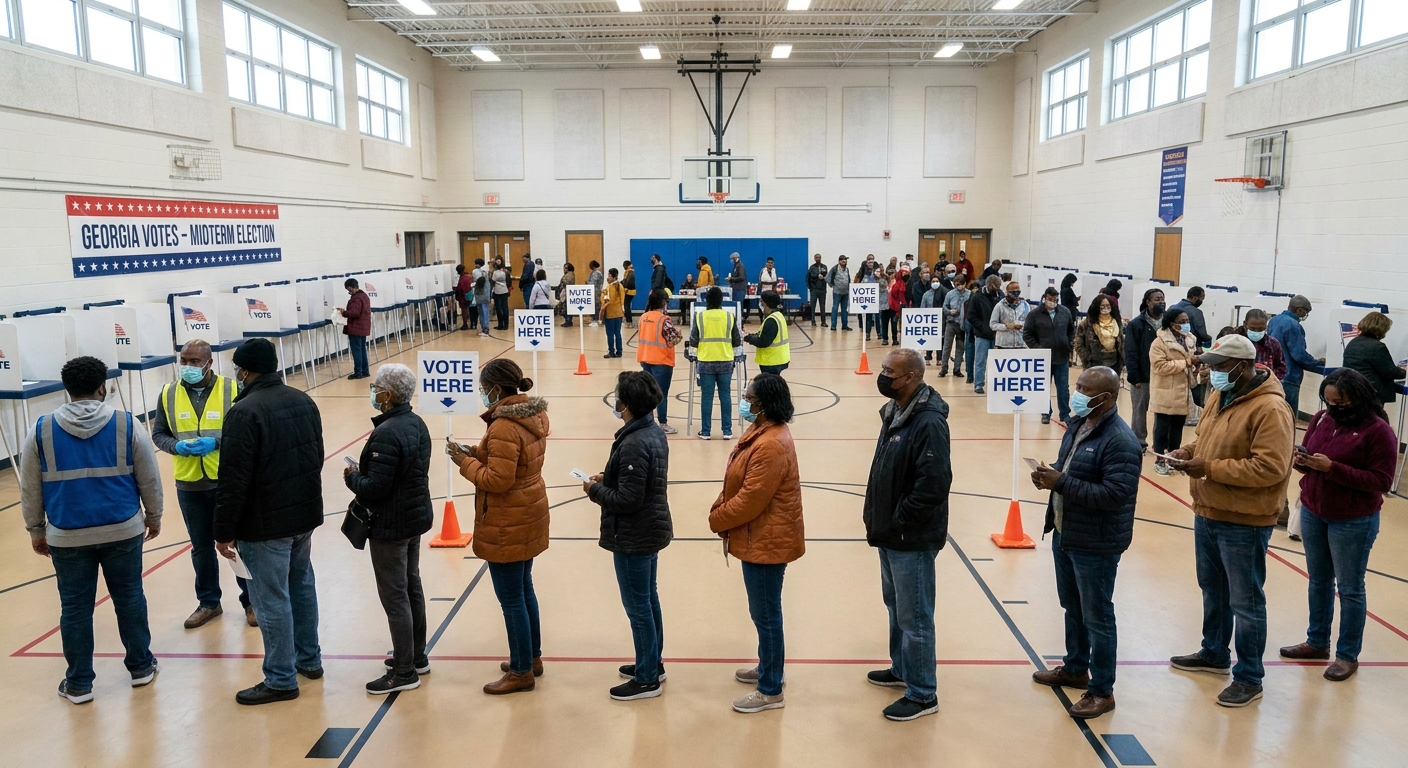
Midterm elections are the federal general elections held two years after a presidential election, halfway through a president’s four-year term. They occur in the even-numbered years between presidential elections (for example, 2018 and 2022, not 2020).
They always include all 435 voting seats in the U.S. House of Representatives. They also include about one-third of the U.S. Senate, plus a wide range of state and local offices depending on where you live.
That sounds procedural. It is. But it is also the moment voters most directly shape whether a president governs with a cooperative Congress, an oppositional Congress, or something in between. Midterms are where the Constitution’s checks and balances stop being classroom vocabulary and become the daily reality of governing.
Join the Discussion
The quick definition
A midterm election is the regular federal general election held every two years, and when it falls halfway through a presidential term, we call it a midterm. In the midterms, voters choose:
- Every member of the U.S. House of Representatives (two-year terms)
- Some U.S. Senators (six-year terms staggered into “classes”)
- Often governors, state legislators, judges, prosecutors, and local officials (varies by state and locality)
- Ballot measures in many states and localities (constitutional amendments, initiatives, bonds, and referenda)
Because House terms are only two years, the House is designed to be the chamber most frequently responsive to voters. Midterms are not a special election. They are a scheduled checkpoint built into the system.
What midterms decide federally
The entire House
The Constitution sets House terms at two years (Article I, Section 2). That means the House is always on the ballot in even-numbered years, including midterms.
Why that matters: the House initiates revenue bills, can impeach federal officials, and often sets the political agenda in Congress through committee work, oversight, and legislation. Control of the House can determine whether a president’s priorities become law or become talking points.
About one-third of the Senate
Senators serve six-year terms (Article I, Section 3), but elections are staggered so that roughly one-third of the Senate is up every two years. This is why a midterm can flip Senate control, but it is not guaranteed to. It depends on which seats happen to be up that cycle.
The Senate’s special role includes confirming federal judges and executive branch nominees, ratifying treaties, and conducting impeachment trials. A midterm that changes Senate control can reshape the federal judiciary for decades.
Why they are called midterms
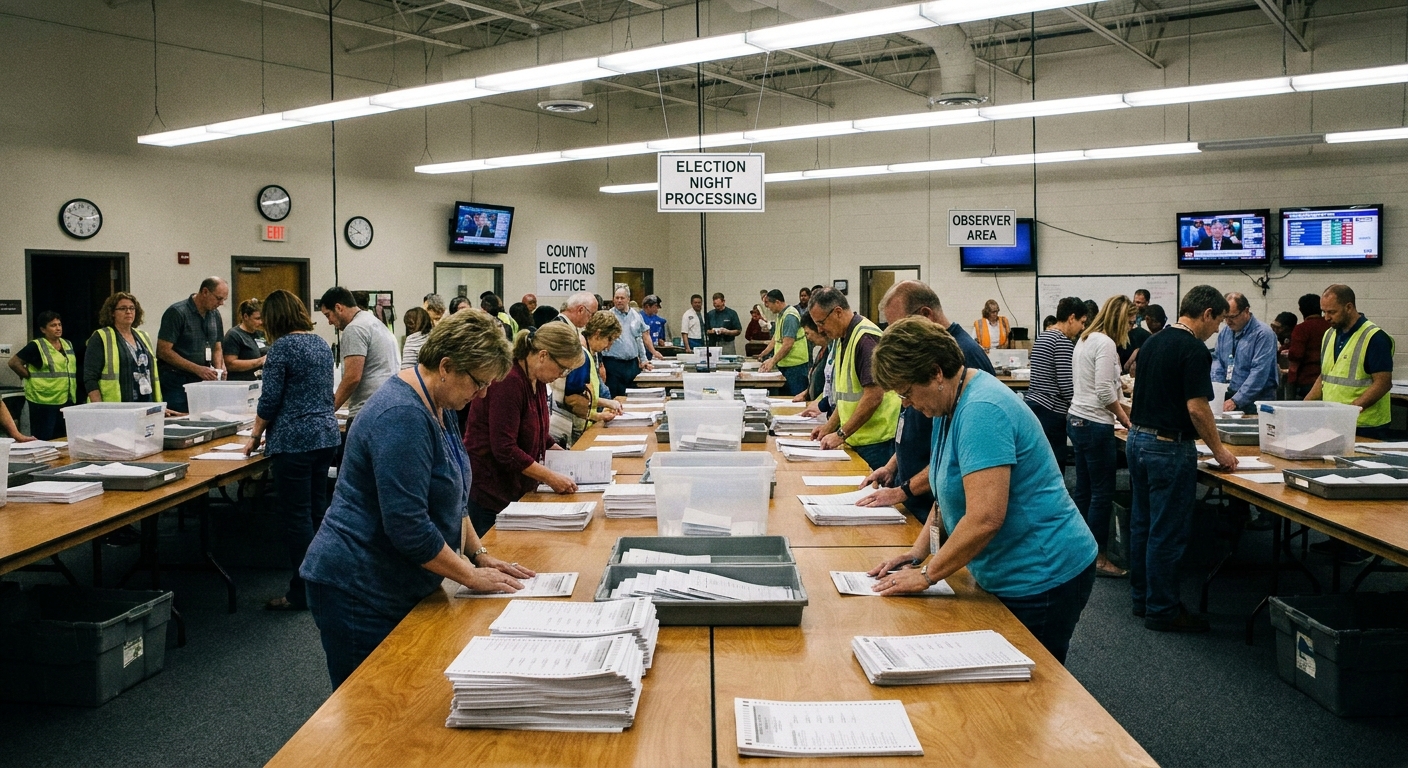
Presidential terms last four years. Midterms occur two years in. It is that simple.
But the name hides a deeper truth: midterms are a kind of national performance review for the governing coalition. Voters cannot re-elect or fire the president in a midterm, but they can change the president’s operating environment by changing Congress.
That is the constitutional design at work. The president executes the law. Congress writes it, funds it, investigates its administration, and can block major nominations. Midterms decide who holds those levers.
What else is on the ballot
Midterms are commonly described as “Congressional elections,” but most voters see a much longer ballot.
Governors and statewide offices
Many states elect governors during midterm years, as well as attorneys general, secretaries of state, treasurers, auditors, and others. These roles can affect:
- Election administration and voting access
- State lawsuits against federal policies
- Criminal justice priorities and enforcement
- Emergency powers and public health responses
State legislatures
Many state legislative seats are up in midterm cycles, though timing and term lengths vary by state. This matters because state legislatures draw congressional districts after each census, shape state constitutional amendments, and set key rules for voting and elections.
Local offices and ballot measures
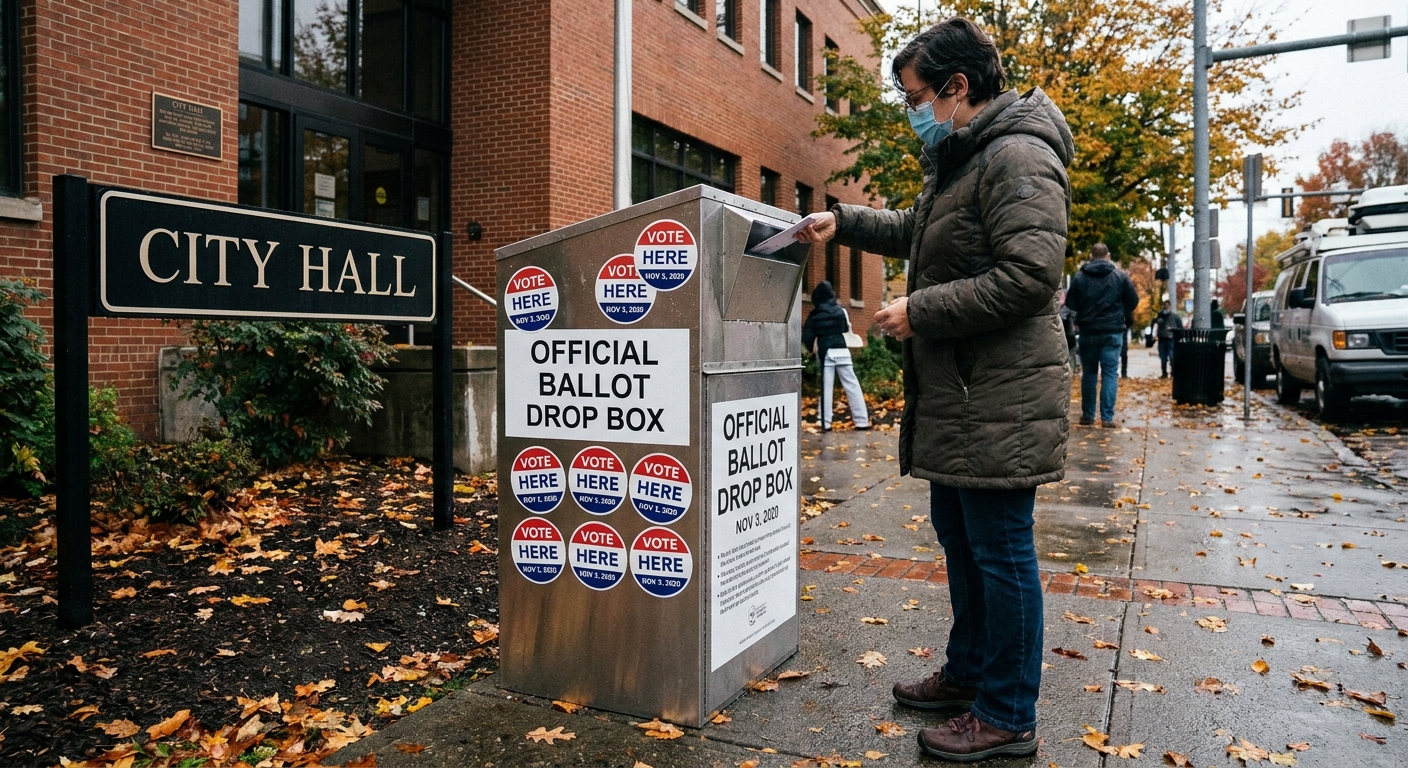
In many places, counties and cities elect school board members, mayors, sheriffs, judges, and district attorneys in midterm years. Many states also allow ballot initiatives or constitutional amendments. These can drive turnout and can set policy that outlasts the news cycle.
How midterms shift power
In American government, elections do not just decide who gets a title. They decide what can realistically happen.
If the president’s party loses the House
- Legislation often stalls or becomes narrower
- Oversight and investigations usually intensify
- Government shutdown threats can rise because the House controls many funding moves
If the president’s party loses the Senate
- Judicial confirmations can slow or stop
- Cabinet and agency nominations can be blocked
- Treaties and major national security appointments face tougher paths
If power is split
Split government can force compromise, or it can produce gridlock. Either way, it highlights a constitutional feature Americans often forget: the system was not built for smoothness. It was built to make power argue with itself before it acts.
Why turnout is lower
Midterms often have lower turnout than presidential elections. Reasons vary, but common patterns include:
- Less media attention than presidential races
- Fewer voters feel personally connected to congressional candidates
- Complex ballots with many down-ballot races
- Election rules differ by state, and confusion reduces participation
Turnout also varies sharply based on competitiveness and salience. A close governor’s race, a high-profile Senate contest, or a ballot measure that hits daily life can pull occasional voters back into the electorate.
This matters because lower turnout can shift outcomes. A midterm electorate is often older and more consistent, which can change which issues dominate and which candidates survive.
Constitution and state control
The Constitution sets the framework for federal elections, but it also gives states significant control over the details.
Terms and representation
- House: Two-year terms (Article I, Section 2)
- Senate: Six-year terms (Article I, Section 3)
When federal elections happen
Congress has set a uniform federal general election day: the Tuesday after the first Monday in November of even-numbered years. That is why federal midterm elections fall when they do. States can and do schedule primaries and many state or local elections on different dates.
State power over election mechanics
Under Article I, Section 4 (the Elections Clause), states set the “Times, Places and Manner” of holding elections for Senators and Representatives, but Congress can alter those rules.
That is why the basics are national, but the experience is local. Your ballot access, early voting, mail voting, registration rules, and district lines are heavily shaped by state law.
Midterms and mandates
After a presidential election, winners often claim a “mandate.” Midterms test that claim.
A strong midterm result for the president’s party can be interpreted as public approval. A backlash can signal the opposite. But it is rarely that clean. Midterms measure many things at once: economic mood, war and peace, scandal or stability, candidate quality, local issues, and how energized each side feels.
Still, midterms provide one clear constitutional function: they give voters a chance to adjust course without waiting four years.
Midterms vs special elections
A quick point of vocabulary: a midterm is a scheduled general election in the middle of a presidential term. A special election is an unscheduled election held to fill a vacancy, such as when a member of Congress resigns or dies. Special elections can happen in any year. Midterms happen on the regular federal calendar.
Common questions
Are midterms only for Congress?
No. Federal races are the headline, but many states and localities elect major offices in midterm years, including governors and attorneys general. What appears on your ballot depends on where you live.
Do midterms always hurt the president’s party?
Often, but not always. Historically, the president’s party frequently loses seats, but exceptions occur when national conditions or major events change the political landscape.
Can a midterm remove a president?
No. Presidents are removed only by impeachment and conviction, resignation, or the 25th Amendment process. Midterms can change the likelihood of impeachment proceedings by changing who controls the House, but they do not directly remove a president.
Why does the House have two-year terms?
The Framers wanted the House to be closest to the people, with frequent elections serving as a check on power. The Senate was designed to be more insulated and stable, with longer terms.
What about odd-year elections?
Some states and cities hold major elections in odd-numbered years, sometimes called “off-year” elections. Those are not midterms, but they can still be consequential locally and they help explain why some offices will not appear on a midterm ballot.
The point of midterms
If you want to understand midterms, do not start with the campaign ads. Start with the architecture.
The Constitution divides power between branches, then makes two of those branches answer to voters on different schedules. The result is intentional tension. Midterms are the recurring moment when that tension is recalibrated, sometimes dramatically, sometimes quietly, but always consequentially.
And if you take one idea with you, let it be this: a midterm is not a break in the story of American democracy. It is one of the chapters the Framers wrote on purpose.