
“Dark money” sounds like a conspiracy term. It is not. It is a label for a very specific feature of American campaign finance: political spending that influences elections while keeping the true donors out of public view.
That gap between influence and disclosure is the story. It is also where constitutional values collide. The First Amendment protects political speech and association. The public also expects transparency in who is trying to sway its vote. Dark money lives in the tension between those two ideas.
Join the Discussion
Dark money, defined
Dark money is political spending by organizations that are not required to publicly disclose their donors, even when their messaging is clearly designed to shape election outcomes.
The important legal nuance is that disclosure rules usually turn on the kind of ad and the reporting category, not on whether the message “affects” an election in some general sense. For example, federal rules treat independent expenditures and electioneering communications differently, and state rules vary widely.
Most dark money spending is associated with nonprofit organizations, especially:
- 501(c)(4) “social welfare” organizations
- 501(c)(6) trade associations
These groups can spend money on political advertising and other election-related activity, but for many of them that activity generally cannot be their primary purpose under IRS rules. That constraint exists on paper, but it still leaves room for substantial political spending.
They also generally do not have to reveal their donors publicly the way candidate committees and many PACs do, though there are exceptions. Some state laws require more disclosure, and some reporting regimes can be triggered by how a donation is solicited, earmarked, or used.
One more common point of confusion: 501(c)(3) charities cannot engage in candidate campaign intervention. They can do issue advocacy, but they cannot run “vote for” or “vote against” style candidate ads.
How it works
Dark money often moves through a common, legally permitted chain:
- A donor gives to a nonprofit, such as a 501(c)(4).
- The nonprofit runs ads, funds mailers, pays consultants, or sponsors issue advocacy.
- Voters see the message, but the donor name stays hidden.
Sometimes the chain gets longer. A nonprofit can give to another nonprofit, which can then spend on election-related messages. Each link adds distance between the original donor and the final ad buy.
One concrete example of how the opacity happens: Nonprofit A gives $5 million to Super PAC B. Super PAC B reports “Nonprofit A” as its donor in federal filings. If Nonprofit A does not disclose its own donors publicly, the ultimate funders may remain unknown to voters.

PACs and dark money
Campaign finance jargon is designed to make normal people give up. Here is the clearest way to separate the categories.
Candidate campaigns
Candidate committees must follow strict contribution limits and disclosure rules. Donations to candidates are typically disclosed with names, employers, and amounts.
PACs
Traditional PACs can contribute directly to candidates within limits. They must disclose donors and spending.
Super PACs
Super PACs can raise unlimited sums and spend unlimited sums, as long as they do not coordinate with a candidate’s campaign. Federally, they must disclose donors to the Super PAC.
But that disclosure has a catch: if the “donor” is another organization, including a nonprofit, the Super PAC may list that organization, and the ultimate individual donors can still remain hidden.
Dark money groups
Dark money groups are usually nonprofits, not PACs. They can spend on politics, sometimes heavily, while keeping donors private in most public-facing reporting. They can also give money to Super PACs, which is one of the main ways the public’s understanding of who is behind what gets blurred.
Is it legal?
Often, yes. “Dark money” is not a formal legal classification. It is a description of a result: political influence without donor transparency.
Whether a particular activity is lawful usually turns on:
- What kind of entity is spending the money?
- What is the money being spent on? Candidate advocacy, independent expenditures, electioneering communications, or issue messaging.
- Whether disclosure rules are triggered under federal or state law.
- Whether coordination rules are violated, which can turn “independent” spending into something closer to a contribution.
Some dark money activity becomes illegal when groups misreport, coordinate improperly, or violate limits that apply in certain contexts. But much of it exists because disclosure laws are narrower than the ways modern campaigns actually persuade.
To see why this matters, you need one key vocabulary distinction that shows up everywhere in this debate:
- Express advocacy explicitly tells voters to support or oppose a candidate.
- Issue advocacy talks about issues and often avoids “vote for” or “vote against” language, even when it is electorally strategic.
Why the Constitution matters
Dark money is not only a policy dispute. It is a constitutional one, because the fight is ultimately about the scope of the First Amendment.
Speech and spending
The Supreme Court has long treated spending as closely tied to speech in the political arena. That does not mean money equals speech in every moral sense. It means that limiting spending can limit the ability to distribute political messages.
Disclosure and association
Donor disclosure laws are often defended as anti-corruption tools. They are also challenged as burdens on free association.
The Court has recognized, in various contexts, that forced disclosure can chill participation, especially for unpopular speakers. But the Court has also upheld disclosure regimes where the government’s interest is strong, such as informing voters and preventing corruption or its appearance.
The tradeoff
There is no perfect constitutional landing spot that everyone agrees on. The basic tradeoff is straightforward:
- More disclosure can mean more transparency and accountability.
- Less disclosure can mean more privacy and less fear of retaliation for political participation.
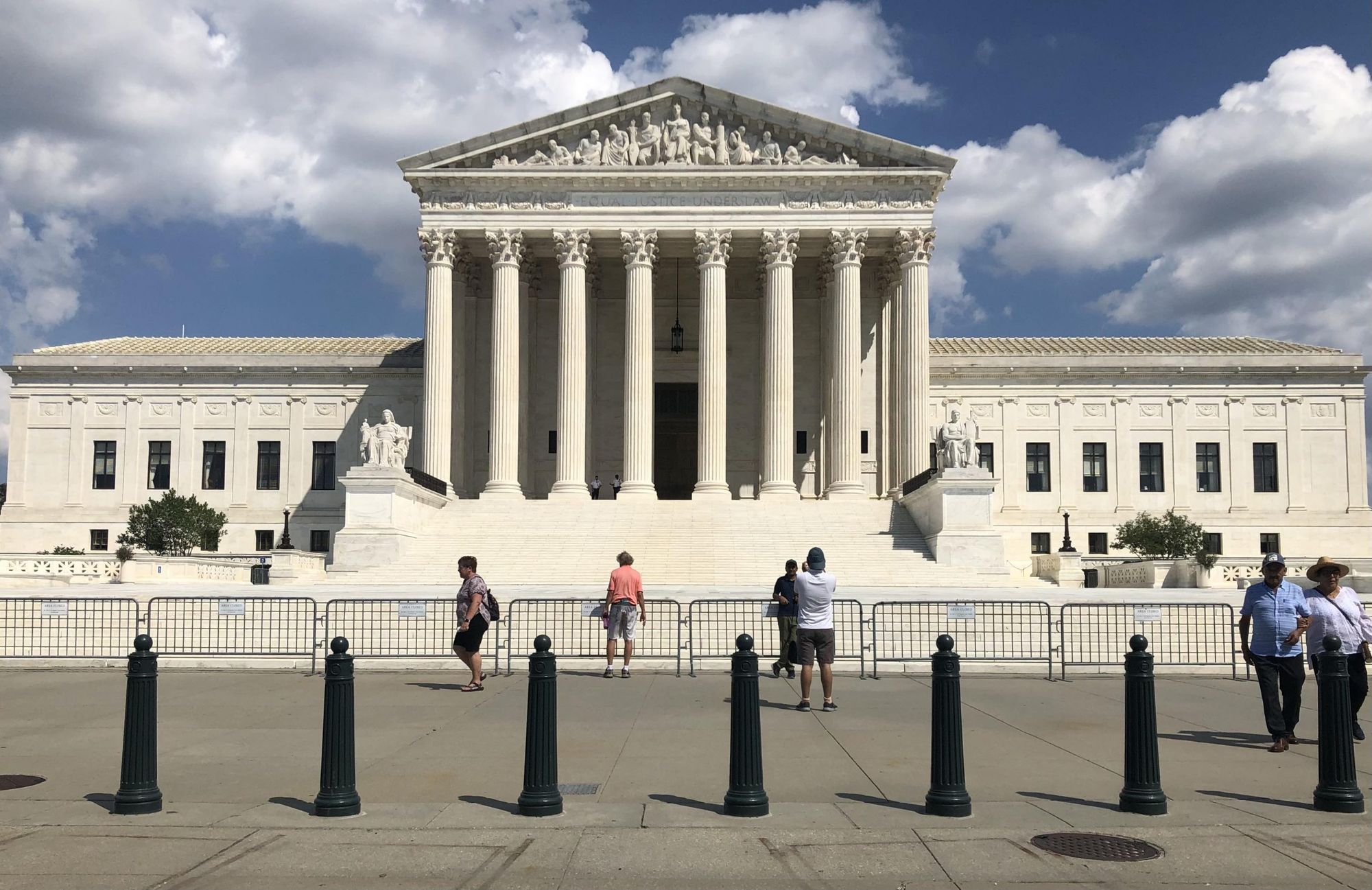
Key court cases
You do not need a law degree to see the through-line. Modern dark money is a product of expanded independent spending and the complicated line between election advocacy and issue advocacy.
Citizens United v. FEC (2010)
Citizens United is often described as the decision that “created” dark money. The reality is narrower and more technical, but the impact was huge.
The Court held that the government cannot ban independent political spending by corporations and unions, because independent expenditures are a form of political speech protected by the First Amendment.
At the same time, the Court upheld federal disclosure and disclaimer requirements for certain communications at issue in the case. The tension is that disclosure rules and organizational forms can still allow donor identities to remain hidden in practice.
SpeechNow.org v. FEC (D.C. Cir. 2010)
This federal appellate decision, building on Citizens United, helped pave the way for Super PACs by allowing unlimited contributions to groups making independent expenditures.
Americans for Prosperity Foundation v. Bonta (2021)
This case did not involve campaign ads directly. It involved California requiring nonprofits to submit donor information to the state. The Supreme Court struck down the state’s blanket donor-disclosure requirement as unconstitutional on its face, applying “exacting scrutiny” and emphasizing burdens on association.
The case is frequently cited in arguments against broad disclosure mandates, even though campaign finance disclosure has its own legal framework and history.
Why it matters
Dark money matters because it changes what “informed consent” looks like in a democracy. If you do not know who is funding a message, you cannot easily evaluate:
- Motives, such as whether an ad is backed by an industry that benefits financially.
- Conflicts of interest, such as a contractor funding ads about procurement oversight.
- Patterns of influence, such as whether the same funding network is targeting multiple races.
Even when a message is factually accurate, the identity of the sponsor can be relevant context. The First Amendment protects the right to persuade. It does not guarantee that persuasion comes with a name tag.
Common misconceptions
“All anonymous political spending is dark money.”
Not exactly. “Dark money” typically refers to large-scale spending through entities that are structured to avoid public donor disclosure. A citizen donating a small amount to a nonprofit is not automatically part of some shadow operation. The term is mostly about scale and election impact.
“Dark money is only a federal problem.”
States have their own disclosure laws and political ecosystems. Some states require more transparency than federal law does, and state races can attract major spending.
“If it is legal, it cannot be corrupt.”
Legality and legitimacy are different questions. A system can be lawful and still raise concerns about influence, access, and public trust.
How to spot it
You cannot always identify dark money by looking at an ad. But you can get closer by checking:
- The sponsor name: If it sounds generic, like “Citizens for a Better Tomorrow,” that is a clue to research further.
- Whether the sponsor is a nonprofit: Many 501(c)(4) and 501(c)(6) groups have names that obscure what they are.
- FEC filings: Independent expenditures and electioneering communications may be reported, even if donors are not clearly identified.
- State disclosure databases: Some states make it easier to see who is paying for what.

Where it is headed
Every serious dark money proposal runs into the same question: How much transparency can the government require before it chills protected speech and association?
Expect the next phase of the debate to focus on:
- Stronger real-time disclosure for major spenders close to Election Day
- Clearer rules on coordination between candidates and outside groups
- More aggressive enforcement of existing reporting obligations
- Privacy carve-outs for groups that can show a realistic risk of harassment or reprisals
Dark money is not just a loophole story. It is a design story. It reveals what our system values when values collide: transparency, privacy, speech, and trust. You can support more disclosure or less disclosure, but either way, you are making a constitutional choice about how democracy should work in the real world.