
President Trump used Truth Social the way some presidents used the Oval Office microphone: to define enemies, project command, and compress complicated disputes into sharable certainty. This week’s flare-ups moved on two tracks at once, a public dispute with Pope Leo XIV and a backlash over an AI-generated image that critics said depicted Trump as Jesus Christ. The whiplash is not an accident. It is the modern presidency in distilled form, equal parts message discipline and identity performance.
And in the middle of it sat a question older than the Republic: when a president uses the tools of persuasion, what limits exist besides taste, backlash, and conscience?
Join the Discussion
Foreign policy and moral authority
This episode did not unfold in a vacuum. It landed as Trump has also been engaged in a public dispute with Pope Leo XIV, a clash that mixes foreign policy, public safety, and moral authority in the same combustible space. Trump criticized the pope as “weak on crime” and “terrible for foreign policy,” while Pope Leo said he was “unafraid” of the Trump administration.
Constitutionally, presidents have always had an advantage in foreign affairs. Article II makes the president the nation’s diplomatic face and commander in chief. Congress writes the laws and holds the purse strings, but the president speaks first and often. What has changed is the delivery system. A post can turn an argument into an event before any institution has time to translate it into process.
That is not merely a style critique. It is a separation-of-powers tension and a legitimacy tension at once. When foreign-policy posture is broadcast as personal certainty, the public is invited to treat rhetoric as governance and personality as policy.
The AI image backlash
The most combustible moment in the week’s swirl was not a briefing or a bill. It was a picture.
Sunday night, Trump posted an AI-generated image on Truth Social showing himself appearing to heal a man while surrounded by patriotic imagery. Critics said it depicted him as Jesus Christ, and the blowback came from political opponents and also from within his own orbit.
Trump addressed the backlash the following day. “I did post it, and I thought it was me as a doctor… only the fake news could come up with that one,” he said. “It’s supposed to be me as a doctor, making people better.” The post was later deleted.
If you are looking for a constitutional hook here, do not start with the First Amendment as a censor’s tool. Start with it as a warning label. The Religion Clauses were written to keep government from becoming a church, and to keep churches from being swallowed by government. When presidents flirt with sacred imagery as personal branding, they do not violate the First Amendment in the courtroom sense. They stress-test it in the civic sense.
Graham’s defense
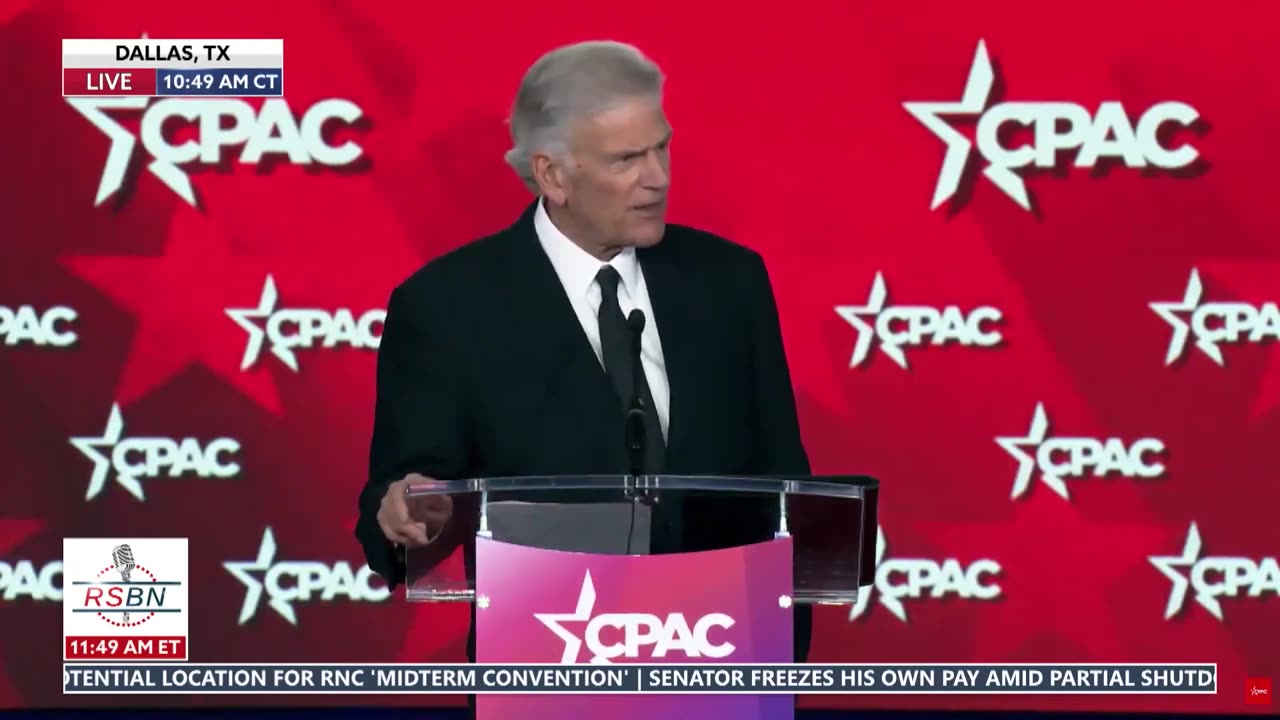
Rev. Franklin Graham, the president and CEO of the Billy Graham Evangelistic Association, offered a public defense that Trump later shared as a signed letter.
Graham’s central claim was straightforward: “I do not believe President Trump would knowingly depict himself as Jesus Christ — that would certainly be inappropriate.” Graham said Trump believed the image showed “a doctor helping someone,” and said the president “immediately removed the post” after concerns were raised.
Graham also argued the image lacked explicit religious cues. “There were no spiritual references — no halo, there were no crosses, no angels,” he wrote. “It was a flag, soldiers, a nurse, fighter planes, eagles… I think this is a lot to do about nothing.”
He then referenced a separate image Trump shared that appeared to show Jesus standing beside him with a hand on his shoulder, framing it as guidance rather than self-deification and saying critics were trying to “spin this into something that it isn’t.” “And the illustration from someone else he reposted on Truth Social today, I must say that I like the fact that this is a picture of Jesus whispering in his ear or at least His hand on his shoulder, guiding him,” Graham said. “We all need that — we all need to be listening to Jesus.”
Graham also praised Trump’s record on religious freedom and expressed hope the president could meet with Pope Leo in the future. “I would hope that the President and Pope Leo can meet at some point, and that the Pope would have the opportunity to thank President Trump for his efforts to protect religious liberty,” Graham said.
What counts as inappropriate
Graham’s defense hinges on intent and symbolism. If Trump thought it was a doctor scene, that changes the moral accusation. But the presidency is not judged by intent alone. It is judged by foreseeable effect.
Presidents occupy a peculiar space in our constitutional system. They are not monarchs, but they are also not ordinary speakers. When a president posts imagery that blurs the line between personal salvation and political leadership, it lands on the public differently than it would from a private citizen, or even a celebrity. It can suggest a kind of anointing, a claim that authority is not just electoral but spiritual.
That is why the backlash from within Trump’s own camp matters. OutKick contributor Riley Gaines questioned the post. RedState writer Bonchie called the image “blasphemy” and urged Trump to apologize. Influencer Brilyn Hollyhand added that “faith is not a prop.” Those critiques are not just partisan noise. They are boundary-setting from people who are otherwise disposed to defend him.
The persuasion gap
Teachers love tidy constitutional diagrams: Congress makes laws, the president executes, courts interpret. Real life is messier because persuasion is power, and the Founders never gave us a clean set of brakes for persuasion.
The First Amendment protects Trump’s speech. It also protects the public’s right to answer back. But neither clause solves the central problem of the platform presidency: the ability to generate civic reality by repetition, spectacle, and symbol before any institution can respond.
So here is the question worth sitting with. If a president can feud with the pope over crime and foreign policy in one breath, and then trigger a religious-imagery backlash with an AI post in the next, what does “consent of the governed” even look like now?
The Constitution assumes deliberation. The feed assumes velocity. Somewhere between those two is the republic we have, and the one we are choosing.