
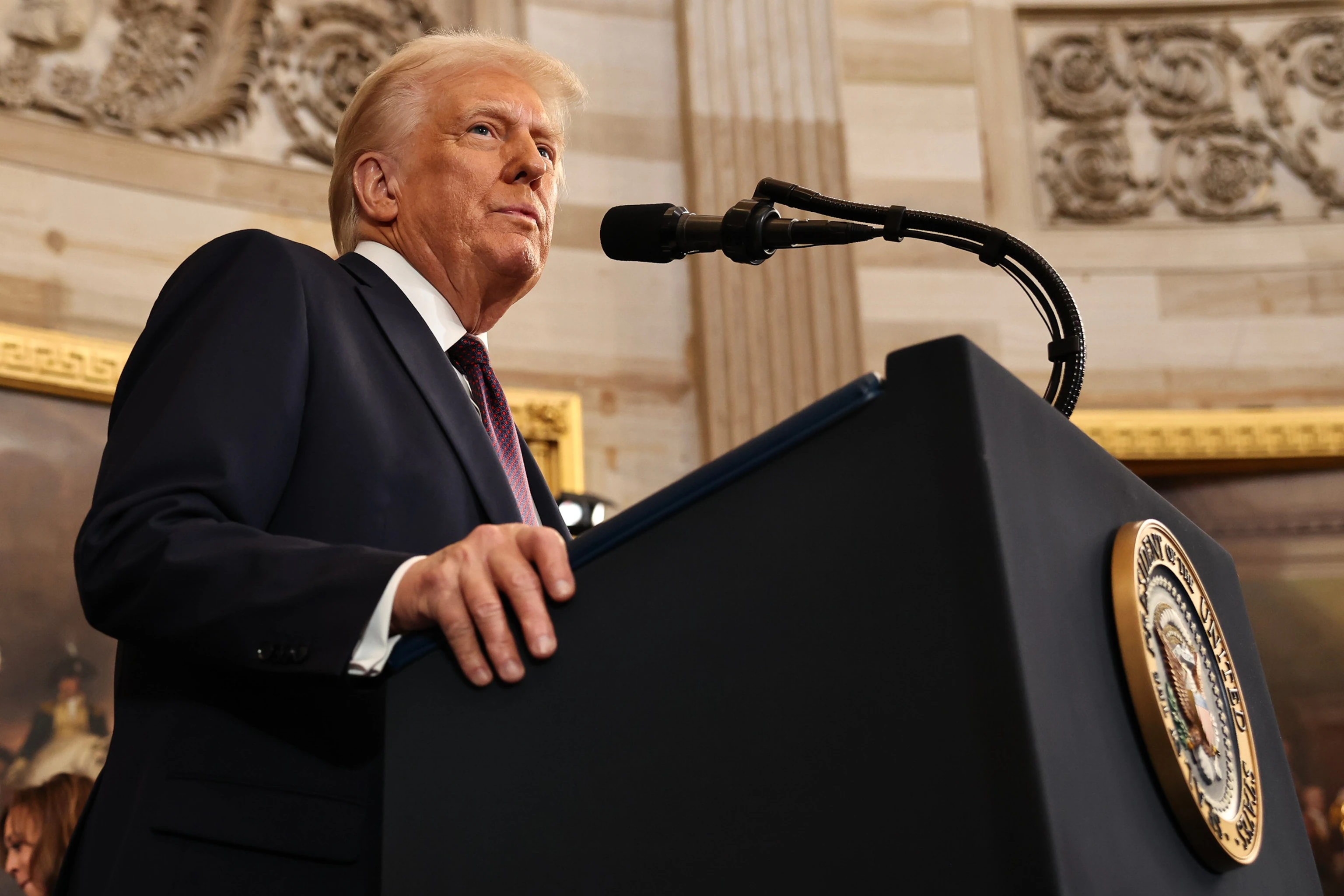
When President Donald Trump declared an “Economic D-Day” against Iran on August 19–20, 2026, the phrase sounded like a single, dramatic button the White House can push: one day, one order, one unprecedented economic siege.
That is not how sanctions work in American law. “Economic D-Day” is branding, not a statute. What it signals is something much more specific and, in practice, much more coercive: an escalation of secondary sanctions, meaning the United States threatens to punish other countries, banks, companies, ports, and intermediaries if they continue giving Iran economic oxygen.
Trump put it in maximal terms, calling it “the MOST CRUSHING ECONOMIC OPERATION EVER TAKEN AGAINST ANY COUNTRY!” and warning that “ANY country that allows its financial institutions, businesses, airports, or government entities to provide any type of lifeline to Iran will itself face TREMENDOUS economic consequences.”
Join the Discussion
What “Economic D-Day” actually means
The United States already has a long-running sanctions architecture aimed at Iran. When a president announces a new “operation” rather than a specific new law, it usually means the administration intends to use existing authorities in a harder way: more designations, more enforcement, more penalties, and more pressure on third parties that facilitate trade.
Trump’s description focused on the connective tissue of sanctions evasion. He singled out the kinds of channels that keep restricted commerce alive even when direct trade is blocked: oil smuggling routes, currency swap lines, exchange houses, ship registries, and front companies.
That list is a clue. It points away from a simple ban on Americans doing business with Iran, and toward a strategy built around financial isolation:
- Making it risky for foreign banks to clear Iran-linked transactions.
- Designating shipping, insurance, and registration services that “launder” the identity of tankers and cargoes.
- Targeting intermediaries that provide hard currency and cross-border settlement mechanisms.
In other words, “Economic D-Day” is less like a wall and more like a net. The point is to catch the helpers, not just the primary target.
The core constitutional question: where does a president get sanctions power?
The Constitution does not contain a “sanctions clause.” Presidents do not inherit a free-floating authority to reorder global commerce. The baseline rule is the opposite: Congress regulates foreign commerce, sets tariffs, and creates legal penalties. Article I gives Congress power “To regulate Commerce with foreign Nations.”
So why can presidents act so quickly and so broadly?
Because Congress has spent the last century passing statutes that delegate wide economic emergency powers to the executive branch, especially in foreign affairs. When a president announces a sweeping sanctions escalation, the legal engine is usually a combination of:
- Statutory delegation: Congress authorizes the president to impose restrictions when certain conditions are met.
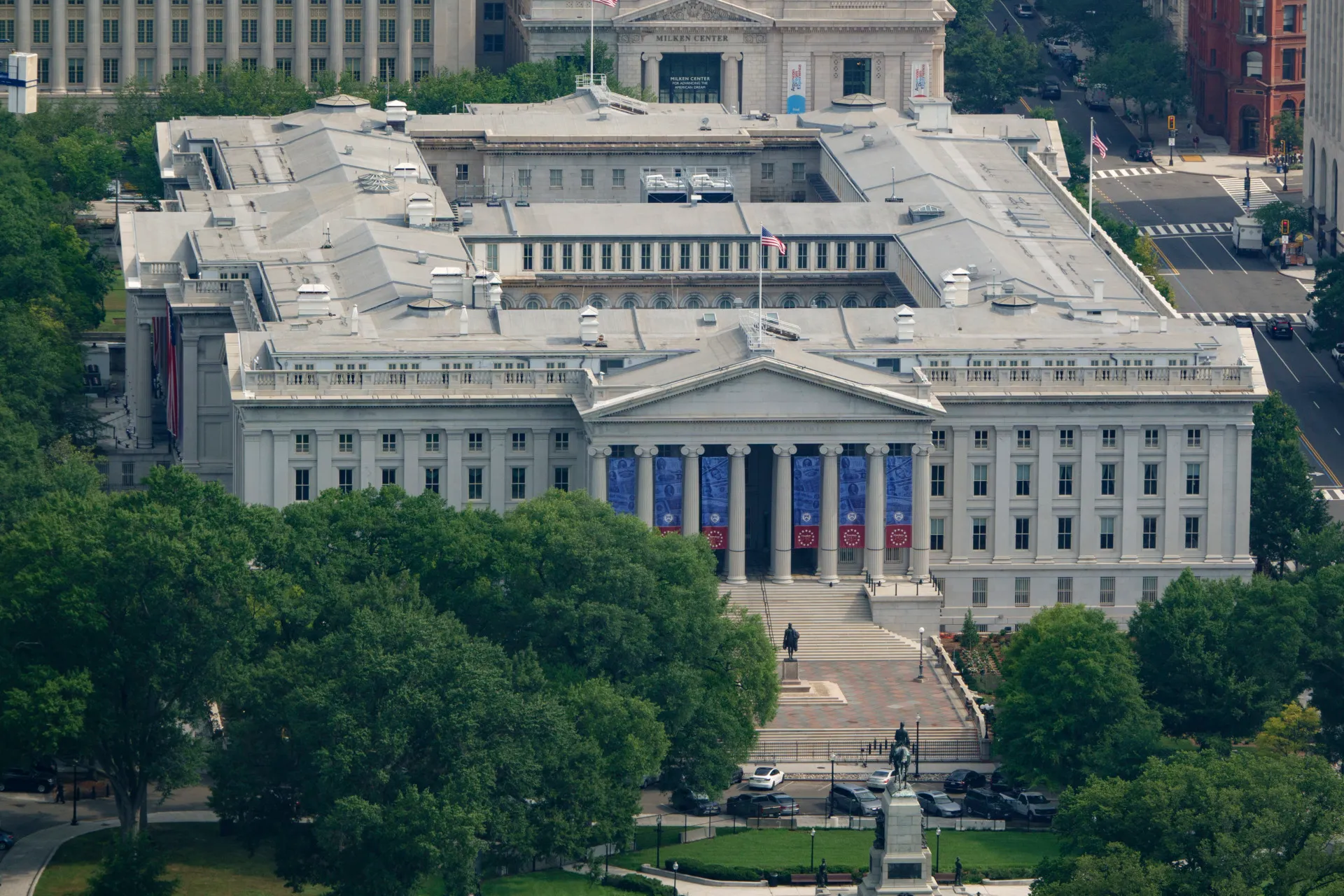
- Administrative machinery: Treasury and State translate the president’s policy into designations, licenses, and enforcement actions.
- International finance reality: the centrality of the U.S. dollar and U.S. banking makes U.S. threats hard to ignore, even for foreign actors.
In constitutional terms, this is not “pure executive power.” It is executive power operating inside a broad box Congress built and keeps reauthorizing.
The legal workhorse: emergency economic powers
Modern U.S. sanctions programs tend to run through the same legal pathway: the president declares a national emergency related to a foreign threat, then uses delegated authority to block property and restrict transactions. The most important statute in that ecosystem is the International Emergency Economic Powers Act (IEEPA).
IEEPA is not a blank check to do anything. But it is a very large check. It allows the executive branch, after declaring a national emergency tied to an unusual and extraordinary foreign threat, to regulate and prohibit certain economic dealings under U.S. jurisdiction.
That phrase “under U.S. jurisdiction” is where secondary sanctions strategy gets creative. Even if a transaction happens abroad, it often touches the U.S. financial system, U.S. persons, U.S. technology, or U.S. markets. When it does, the U.S. can reach it.
And even when it does not, the U.S. can still weaponize access. A foreign bank may be told, in effect: choose between Iran-linked business and the ability to interact with U.S. banks, clear dollars, or operate in U.S. markets.
Secondary sanctions: the part that hits allies and trading partners
Primary sanctions are the straightforward kind: rules that bind Americans and U.S.-based entities. Secondary sanctions are the geopolitical lever: rules that pressure non-U.S. actors by threatening consequences if they keep doing business with the target.
Trump’s warning that “ANY country” providing “any type of lifeline to Iran” will face “tremendous economic consequences” is, in practice, a threat to use secondary sanctions aggressively. The menu of “consequences” usually includes:
- Blocking sanctions: freezing property and prohibiting transactions with designated entities under U.S. jurisdiction.
- Correspondent banking restrictions: making it difficult or impossible for a foreign bank to maintain relationships that allow it to move money through the U.S. system.
- Export controls and licensing restrictions: tightening the flow of U.S.-origin goods, software, or components.
- Visa restrictions: limiting travel for individuals tied to sanctioned networks.
This is where the “D-Day” metaphor lands. The target is not only Iran. The target is the ecosystem that makes sanctions evasion possible, from ship registries to exchange houses to shell companies that exist to keep names off invoices.
How sanctions are actually imposed (and why the details matter)
Sanctions are often imagined as a presidential proclamation. In reality, they are built through bureaucratic instruments that can be updated daily.
1) Designations
The executive branch identifies specific people, companies, vessels, banks, or government agencies and places them on sanctions lists. That designation can lock them out of U.S. financial channels and can also make them radioactive for foreign partners who fear being next.
2) Licenses and carve-outs
Sanctions rarely mean “nothing moves.” Treasury can issue general licenses that allow categories of activity, and it can issue specific licenses that permit specific transactions. Humanitarian exceptions exist on paper, but the real-world question is whether banks and shippers believe the paperwork is worth the risk.
3) Enforcement
Penalties, settlements, and prosecutions are the credibility layer. A tough-sounding sanctions program without follow-through becomes a suggestion. A sanctions program paired with visible enforcement becomes a warning shot the market understands.
Can a president really punish “any country” that trades with Iran?
Not literally. The United States cannot directly legislate inside another sovereign state. But it can do something that often feels functionally similar: it can set conditions for access to U.S. markets and the U.S. financial system.
That power has limits, and those limits are where the constitutional story lives.
Congress can tighten or loosen the box
If Congress dislikes the scope of a sanctions campaign, it can amend statutes, cut off funding, impose reporting requirements, or pass new laws that constrain or redirect executive action. In practice, Congress often prefers to criticize or cheer from the sidelines because sanctions let lawmakers signal toughness without managing the consequences.
Courts can review, but usually defer
Sanctions designations can be challenged in court, especially when they affect property interests or due process rights. But courts generally give the political branches significant leeway in foreign affairs and national security, particularly when the government asserts classified evidence or sensitive diplomatic interests.
Allies can resist, but at a price
Foreign governments can attempt workarounds: alternative payment systems, non-dollar settlement, local currency trade, and state-backed insurers. The question is whether their private sector will follow them into the risk. Secondary sanctions are designed to make that risk personal, immediate, and expensive.
Why “economic warfare” raises a civic literacy problem
Americans are used to thinking about war powers as missiles, troops, and declarations. But economic coercion now sits in the same strategic role: it can cripple industries, collapse currency confidence, and reorder alliances without a single shot fired.
That reality creates a democratic accountability dilemma. A president can escalate sanctions quickly, and the pain is often experienced overseas first. But the blowback can boomerang: higher energy prices, retaliation against U.S. firms, pressure on allied governments, and tit-for-tat restrictions on trade and security cooperation.
So the constitutional question is not “Can the president do this?” The more adult question is: How much of this should be executive-driven, and how much should require Congress to take a recorded vote?
What to watch for next (the concrete signs “Economic D-Day” is real)
If “Economic D-Day” becomes more than rhetoric, you will see it in paper, not slogans. Look for:
- A wave of new Treasury designations focused on shipping networks, registries, insurers, and exchange houses.
- Restrictions aimed at third-country financial institutions, especially limits tied to correspondent banking access.
- Public enforcement actions that signal consequences for compliance failures.
- Diplomatic pressure campaigns that demand allies align their own export controls and financial rules with U.S. measures.
The most important point is also the least cinematic: sanctions are not a single day. They are an accumulating system. “D-Day” is a headline. The real operation is the slow tightening of options until doing business with Iran becomes too costly to justify.
FAQ
Is “Economic D-Day” a formal legal declaration?
No. It is a political label for an escalation of sanctions pressure, especially secondary sanctions aimed at third-party enablers.
Does the Constitution require Congress to approve sanctions?
Not in advance, in most cases. Congress has already delegated significant sanctions authority through statutes. Congress can still intervene through legislation and oversight.
Are secondary sanctions constitutional?
They rest primarily on congressional statutes and the government’s authority over access to U.S. markets and the U.S. financial system. Legal challenges typically turn on statutory scope and due process, not on a single, clean constitutional prohibition.