
You are allowed to buy stocks if you serve in Congress. That is not the scandal.
The scandal is what happens when the people writing laws that move markets also trade like ordinary investors, while having access to information that ordinary investors do not.
That tension is why the STOCK Act exists. Its full name is the Stop Trading on Congressional Knowledge Act, passed in 2012 after a wave of reporting made a basic civic problem impossible to ignore: Congress had rules for everyone else, and a lot of room for itself.

Join the Discussion
What the STOCK Act does
The STOCK Act does not ban members of Congress from owning stocks. It does not require them to use a blind trust. It does not prohibit spouses from trading.
Instead, the law tries to reduce conflicts of interest through two main ideas:
- Clarifying that insider-trading prohibitions apply to Congress. The Act states that members and employees owe a duty arising from their official positions and are not supposed to use material nonpublic information learned through their jobs for personal benefit.
- Forcing faster, more visible disclosures. If you trade, the public should find out quickly enough that oversight can happen closer to real time, not years later.
In other words, the STOCK Act is less like a lock on the door and more like a bright porch light. It is designed to make questionable trading easier to spot, easier to scrutinize, and harder to shrug off.
Disclosure rules
The most practical part of the STOCK Act is its disclosure rule for securities trades.
Who has to report
In plain terms, the reporting system covers members of Congress and many senior staff. Disclosures also typically include certain transactions by a spouse and dependent child, because those can create the same conflict-of-interest problem even when the member is not the one clicking “buy.”
What triggers a PTR
If a covered person buys, sells, or exchanges many types of securities above the reporting threshold, they must file a Periodic Transaction Report, often called a PTR.
- Threshold: generally more than $1,000 in a covered transaction.
- What gets reported: purchases, sales, or exchanges of covered securities (for example, many stocks, bonds, options, and similar investments). Not every asset is a covered security, and diversified products like mutual funds and many ETFs can be treated differently under financial disclosure rules.
- When it must be reported: generally within a 45-day window of the transaction (or of being notified of it).
- Where it is filed and published: House filers submit through the House process (with public access via the Office of the Clerk); Senate filers submit through the Senate process (with public access via the Senate Office of Public Records). The two systems look similar to readers, but they are run separately, and searchability has been a recurring criticism.
These reports do not require members to list the exact dollar amount. They usually disclose a range, which can still make it hard to gauge the true size of a bet.
The point is speed
Traditional annual financial disclosures can be months stale by the time anyone reads them. The STOCK Act’s 45-day window is meant to narrow the gap between a trade and public awareness, so journalists, watchdogs, and voters can connect the dots while the trail is still warm.
If you have ever looked at a PTR, you know the vibe. It reads like a receipt: date, asset name, type of transaction (buy or sell), and a value range.
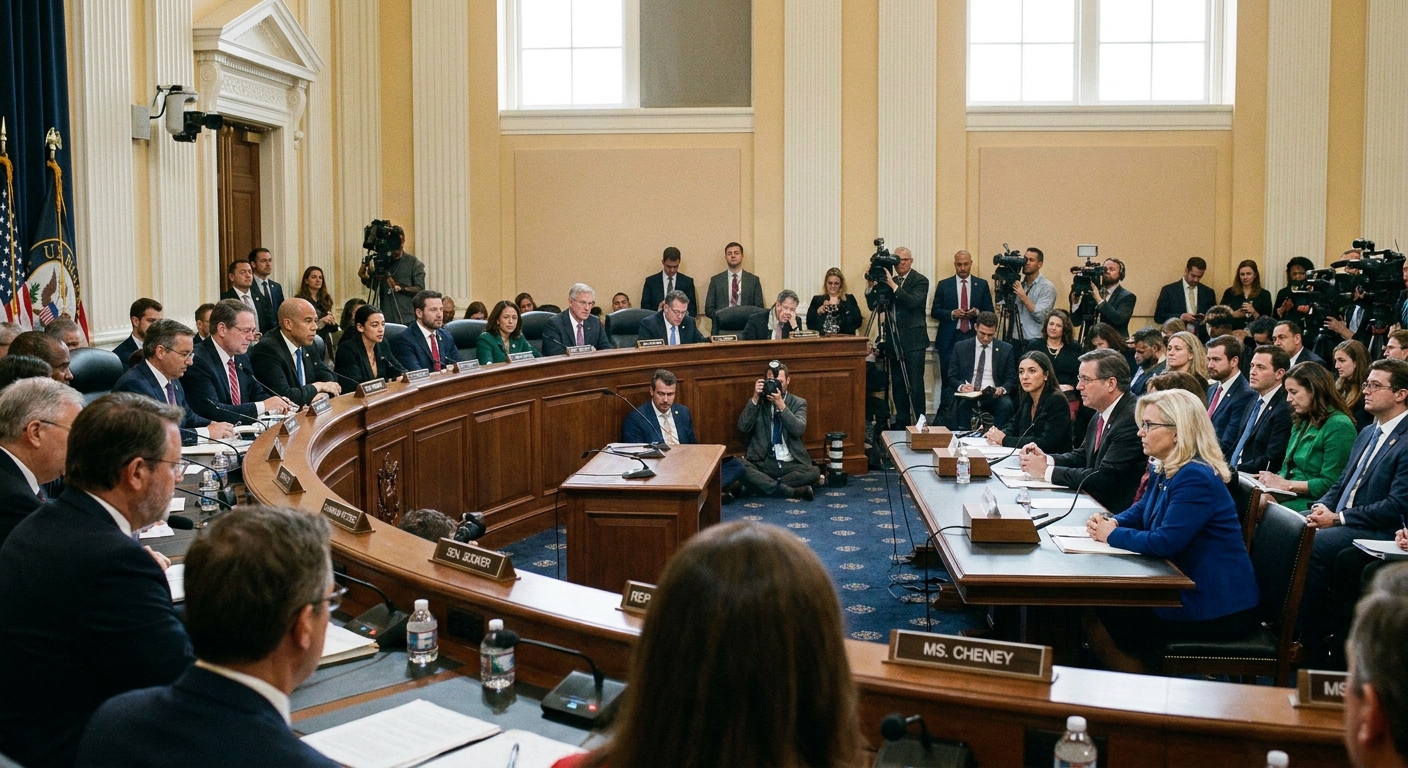
Insider trading for lawmakers
In everyday conversation, “insider trading” means trading based on a secret. In actual law, it is narrower and more technical.
Generally, illegal insider trading involves:
- Material nonpublic information (information a reasonable investor would consider important, that is not available to the public), and
- A duty of trust or confidence that is breached when someone trades on that information (or tips it to someone else).
The STOCK Act was Congress saying, out loud, that official information is not a perk. If you learn market-moving information through your public role, you do not get to treat it like a private research subscription.
How it comes up
Members and staff routinely encounter information that can matter to markets, including:
- Details about upcoming legislation that would help or hurt an industry
- Nonpublic briefing information related to national security or supply chains
- Regulatory strategy signals, including timing and priorities
- Closed-door negotiations that change the odds of a bill passing
Not all of that qualifies as material nonpublic information under securities law. Not all trading near a big vote is illegal. But the overlap between public power and private portfolios creates a permanent credibility problem. The STOCK Act is meant to keep that overlap from turning into abuse.
Enforcement reality
Here is the uncomfortable truth: enforcement is why this issue never stays solved.
Late reports, small penalties
Failure to file a PTR on time can trigger a late fee that is commonly cited as $200. In practice, waivers can happen and procedures vary by chamber. Either way, the dollar figure illustrates the basic problem: the penalty can be modest relative to the size of the accounts involved. A system built mostly on disclosure only works if violations hurt enough to deter behavior.
Proving insider trading is hard
Criminal insider trading cases can be difficult because prosecutors must prove what someone knew, when they knew it, and that they traded because of it. That is hard in any context. In Congress, it can be harder because information flows are messy. Staff briefings, constituent conversations, lobbyist meetings, committee work, and public news all blend together.
Who enforces what
It helps to separate two lanes:
- Ethics and disclosure enforcement is primarily handled by the House and Senate ethics processes, which can investigate late filings and other conduct and impose internal discipline.
- Criminal and civil securities-law enforcement is primarily the domain of the Department of Justice and the SEC, not congressional ethics committees.
Even so, public consequences can feel thin. There have been few publicly known, high-profile cases that turn on a STOCK-Act-specific theory. Most outcomes people see are administrative, ethics-related, or purely political. That gap is why the law can generate headlines without generating much deterrence.
Why it flares up in elections
This topic returns like clockwork because it sits at the intersection of three things voters react to immediately: money, fairness, and trust.
- Trading disclosures are easy to understand. A PTR looks like a receipt. People do not need a law degree to feel uneasy when a trade aligns neatly with a committee assignment or a looming vote.
- The “rules for thee” story is powerful. Most Americans cannot trade on workplace secrets. They can be fired, sued, or prosecuted. When lawmakers appear to do something adjacent to that, it becomes a legitimacy problem, not just a policy dispute.
- Opponents can frame it as character, not ideology. Election messaging loves accusations that do not require voters to agree on taxes, abortion, or foreign policy. “They got rich in office” is a cross-partisan attack line.
Even when the underlying conduct is legal, it can look corrosive. And politics runs on what voters believe is happening, not only on what a prosecutor can prove.
Constitutional angle
The Constitution does not contain a “no insider trading” clause. What it does contain is a structure that shapes how ethics rules work in practice.
Congress can discipline its own
Article I gives each chamber power to set its rules and punish members for disorderly behavior, including expulsion with a supermajority. That means Congress has both the authority and the burden of self-governance.
Outside enforcement has tensions
When executive agencies investigate legislators, Congress can argue it is being chilled in its lawmaking role. When Congress declines to police disclosure and conflicts aggressively, the public sees impunity. This is the separation-of-powers dilemma in miniature: independence protects democracy, but it can also shield misconduct.
Speech or Debate limits some evidence
The Speech or Debate Clause exists to protect legislative independence, especially against executive harassment. It can limit what evidence investigators can use when that evidence is tied to legitimate legislative acts. Trading itself is not a legislative act, but investigations can still run into protected material when they try to prove motive or trace what a member learned through committee work.
This is why the STOCK Act debate always turns into a broader ethics debate. The question is not only “did someone break the rule?” It is “who can enforce the rule, and how aggressively, without breaking the constitutional design?”
Common questions
Does the STOCK Act ban members from trading?
No. It primarily requires disclosure and clarifies that members and staff are covered by insider-trading prohibitions and owe a duty not to use material nonpublic information derived from their jobs.
Is trading before a big bill automatically illegal?
No. Suspicious timing is not the same as proof. The legal question is whether the trade was based on material nonpublic information and involved a breach of duty. The political question is different: whether the conduct undermines public trust.
What about spouses and family?
Financial disclosure rules generally capture certain spouse and dependent-child transactions, but the system still has gaps. Even when reporting occurs, it can be delayed, incomplete, or hard for the public to interpret.
Reform ideas
Because the STOCK Act leans heavily on disclosure, most reform proposals aim at changing incentives, not just increasing paperwork. Common ideas include:
- Stricter trading restrictions for members, spouses, and senior staff
- Mandatory qualified blind trusts or diversified funds only
- Faster disclosures or near-real-time reporting
- Higher penalties for late filings and clearer enforcement triggers
- More independent oversight rather than internal ethics handling
Every one of these proposals collides with a familiar American tradeoff: the more you restrict lawmakers to preserve legitimacy, the more you have to decide who enforces the restriction and how much power to give them over a coequal branch.
Why it matters
The Constitution depends on something that is hard to legislate: public confidence that power is being used for public purposes.
The STOCK Act is a transparency law, but it is also a legitimacy law. It is a promise that the people making rules for the economy are not quietly playing the market with inside access.
When that promise looks hollow, voters do not just lose faith in a member. They lose faith in the institution. And once cynicism becomes the default, every future debate about Congress, from budgets to war powers to impeachment, starts from a darker assumption: they are all in on it.
That is why the STOCK Act keeps coming back. Not because Americans love ethics paperwork, but because they understand the core principle at stake. A republic cannot survive long on the belief that laws are for the public, but information is for the powerful.