
When a violent incident erupts in a public place, we expect fear. What we do not always expect is the second blast, the one that hits your phone. No sooner had a gunman tried to storm the ballroom of the Washington Hilton, where the White House Correspondents’ Dinner was taking place Saturday night, than conspiracy theories began spreading in real time. They did not wait for investigators. They showed up immediately, dressed as certainty.
It is tempting to treat that as a modern nuisance, an unfortunate side effect of social media. But it is more serious than that. In a constitutional democracy, public trust is not a warm, fuzzy feeling. It is infrastructure. When misinformation spreads fastest at the exact moment citizens most need reliable information, we should ask a hard question: what happens to self-government when we cannot agree on what just happened?

Join the Discussion
How a crisis becomes a rumor factory
Every major breaking story now follows a predictable pattern. First comes the event. Then comes the scramble for facts. Then comes the online stampede to assign motive, villain, and meaning, often before the first official statement is complete.
Why is the conspiracy surge so immediate? Because crises create an information vacuum, and human beings hate a vacuum. In the first minutes, details are scarce and emotions are high. That is the ideal environment for a familiar kind of story that explains everything with one neat idea: it was staged, it was an inside job, they are covering something up.
This is not just “people being irrational.” It is a collision between biology and technology. The brain seeks pattern when it is scared. Social platforms reward the most emotionally charged explanations. The result is a national jury deliberating in public before any evidence is introduced.
The “staged” claim and a phrase out of context
In this case, one phrase poured gasoline on uncertainty. As White House press secretary Karoline Leavitt walked into the event, she previewed the president’s planned remarks in the traditional spirit of the dinner. She said: “It’ll be funny, it’ll be entertaining. There will be some shots fired tonight in the room. So everyone should tune in, it’s going to be really great. I am looking forward to hearing it.”
In normal context, that line is painfully ordinary. These dinners are built around jokes, jabs, and a little self-mockery. But context is exactly what goes missing in a crisis. Online, the phrase was treated as if it were a confession instead of a figure of speech. One version of that clip was posted less than 45 minutes after the shots were fired and was viewed more than 6 million times.
That number matters. Not because a viral clip is evidence, but because it is power. A fast, emotionally satisfying interpretation can outrun the slower work of verification by orders of magnitude. By the time investigators identify a suspect, social media has already “solved” the case three different ways.
When a building plan becomes “proof”
After the incident, President Donald Trump argued that the attack underscored the need for a more secure ballroom. That argument immediately collided with another reality: Trump is controversially building a ballroom on the White House complex. Online speculation then leapt from he wants a ballroom to therefore the incident was staged to justify it.
This is how conspiracy thinking often works. It does not start with facts and build toward conclusions. It starts with suspicion and searches backward for “connections.” Any coincidence becomes a clue. Any prior controversy becomes a motive. Any official response becomes part of the plot.
And once a person has committed to the storyline, disconfirming evidence is not treated as correction. It is treated as “the cover-up.”
The dropped call that became a theory
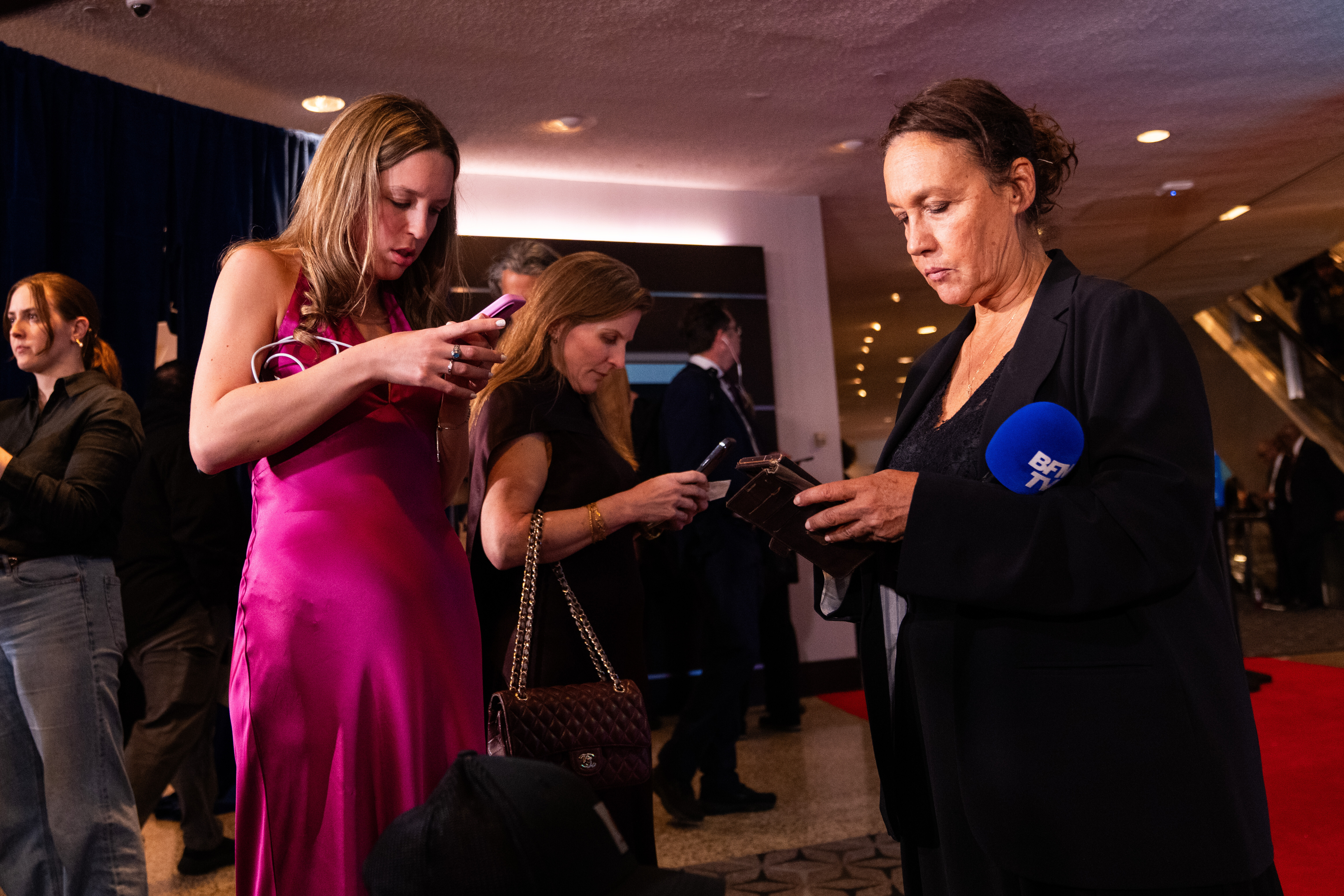
Another small moment was also transformed into a grand theory. During the dinner, a network correspondent relayed her account by phone from inside the ballroom. Her call dropped mid-sentence. Almost instantly, some online commentators suggested the cut was deliberate.
She later provided a mundane explanation: “Our calls were dropping, because there is barely any service in that ballroom.” She also clarified what she had been saying when the line died: “To finish the story, he was telling me to be careful with my own safety because the world is crazy.”
That should have ended it. Instead, it demonstrates another rule of crisis misinformation: the ordinary explanation is usually less shareable than the sinister one. A bad signal does not travel. A cover-up does.
What we learned quickly and what people did with it
By Sunday morning, writings of the suspect, Cole Allen, had been made public, including material in which he expressed anti-Trump sentiments. In another climate, that kind of detail might have helped narrow speculation. In this one, it became fuel.
One line of argument was not, “What does this tell us about the suspect?” It was, “What does the speed of this release prove about what else is being withheld?” That pattern matters because it turns transparency itself into a trigger: any disclosure becomes an invitation to claim the real story is still hidden.
Why people latch on, even smart people
The simplest answer is “partisanship,” and partisanship is certainly part of it. In the modern American mind, everything has a team jersey. Blaming the other side can feel as instinctive as breathing.
But there is a deeper, darker reason conspiracy theories feel persuasive right now: cynicism has become a survival skill. People have watched institutions fail, spin, and stonewall, sometimes for good reasons, often for self-protection. So when the next crisis hits, many citizens begin from a posture of suspicion. Not because they have evidence, but because they have history.
You can see that psychology in the way public figures talk about “staged” claims. Some amplify them. Some mock them. But both reactions reveal a common baseline: a shared assumption that the official story might not deserve the benefit of the doubt.
The Butler hangover
Saturday’s misinformation wave did not appear out of nowhere. It landed in a country still arguing about the July 2024 attempt on Trump’s life in Butler, Pennsylvania. The Justice Department, under both President Joe Biden and Trump, reached the same conclusion: the would-be assassin, Thomas Crooks, acted alone.
Even so, prominent voices have continued to suggest that the government is withholding key information, pressing for more release of details and hinting at a hidden hand.
Despite those assertions, there is no evidence the FBI has kept secret key information around Crooks. Afterward, a Secret Service sniper located and killed Crooks seconds after he started firing at Trump. The FBI has long fought conspiracy theories around the Crooks shooting, including false claims that there was a foreign nexus. Before the shooting, Crooks, according to the FBI, had searched online for the date of the Democratic National Convention and where Trump planned to speak, as well as other searches for Trump and President Joe Biden.
Here is the constitutional problem this creates. If a large share of the public believes the state is always lying, then any future official statement becomes suspect by default. That does not merely harm a president. It harms the idea that the government can ever credibly speak to the governed in an emergency.
What it does to trust and safety
We talk about “public trust” like it is a polling metric. In a crisis, it is closer to a public safety tool.
1) It blurs threat assessment
If citizens cannot separate verified information from viral speculation, they cannot accurately judge risk. Some will panic when they should not. Others will dismiss warnings when they should take precautions.
2) It turns institutions into enemies
Conspiracy theories often conclude not merely that someone failed, but that the failure was intentional. That mindset pushes people toward treating law enforcement, courts, and the press not as imperfect referees, but as hostile actors. Once that happens, cooperation collapses.
3) It invites copycat behavior
When attention is the currency, viral falsehoods can create incentives for the next person looking to “make history.” The more oxygen we give invented narratives, the more we make the public square attractive to those who want to hijack it.
4) It corrodes ordinary life
This is the part people do not say out loud. If you start believing that every major event is choreographed, then nothing is stable. Not elections. Not courts. Not public gatherings. Not even your own eyes. That is not skepticism. That is a kind of civic vertigo.
The first 24 hours
The First Amendment protects the right to speak, including the right to be wrong. The Constitution does not promise a public sphere free of rumors. It assumes something else: citizens capable of judgment.
In the first 24 hours after an attack, “judgment” does not mean having a hot take with confidence. It means resisting the urge to convert fear into certainty.
- Slow the story down. If a claim is based on a clip, a phrase, or a screenshot, assume you are missing context.
- Separate motive from facts. You can acknowledge what happened without pretending to know why it happened.
- Watch for the telltale language. “They don’t want you to know” is not evidence. It is a sales pitch.
- Demand specifics, not vibes. Who, what, when, where. If those are fuzzy, the conclusion should be too.
The uncomfortable question
Here is the question I would have put on my civics classroom whiteboard the morning after: When the next crisis hits, do we still have the capacity to agree on reality long enough to govern ourselves?
The attempted storming of the Hilton ballroom was a security failure and a human danger. The conspiracy surge afterward is a democratic danger. The first can be addressed with barriers, training, and tactics. The second requires something harder: restraint, patience, and the willingness to admit, for a time, “I do not know yet.”
That sentence, spoken by enough citizens at once, is not weakness. It is how a free people keeps fear from becoming fiction.