
There are two clocks running after a national crisis.
The first is the real-world clock: Who is hurt? Who is safe? What happened? What is still unknown? The second is the digital clock: Which narrative will win the first hour?
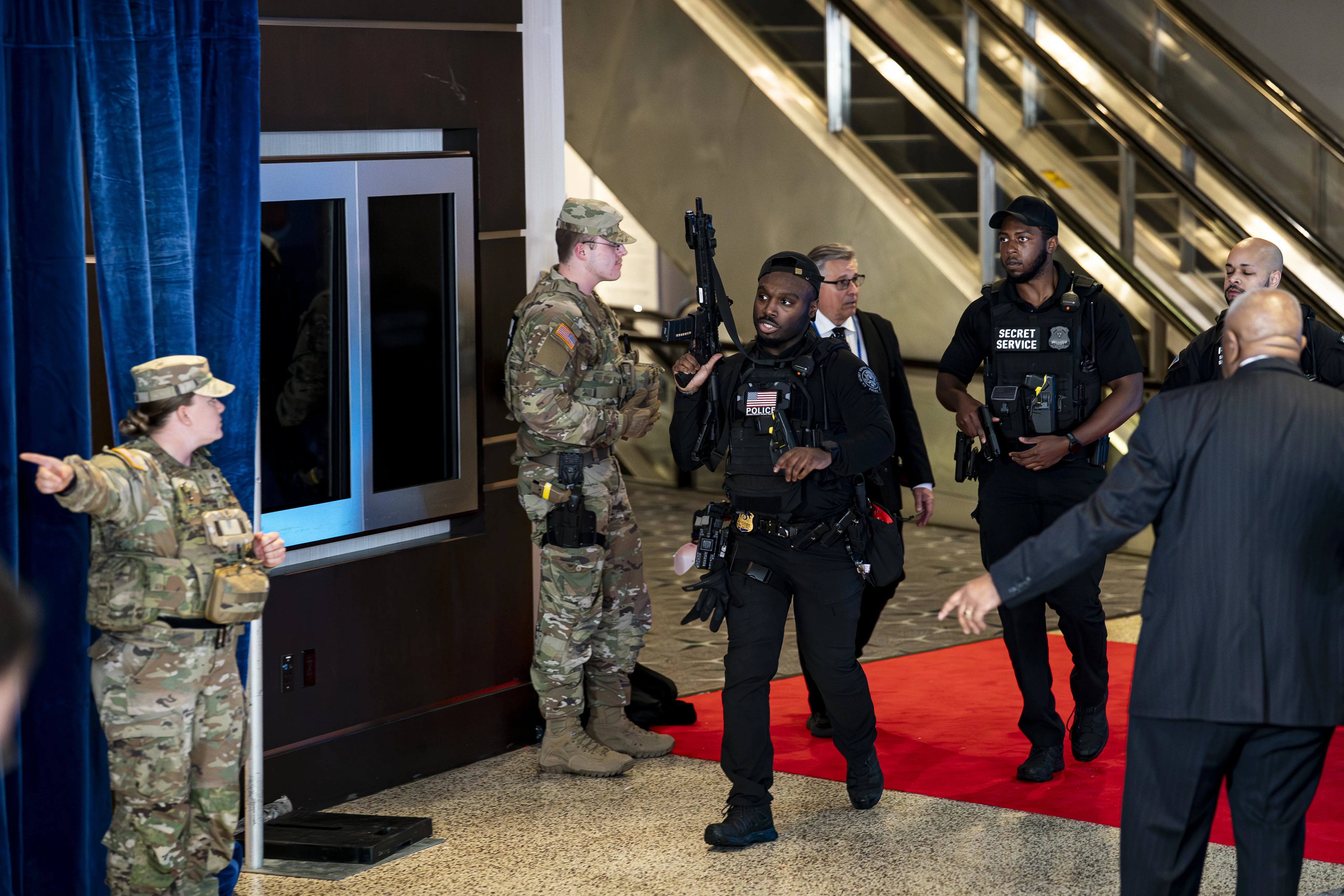
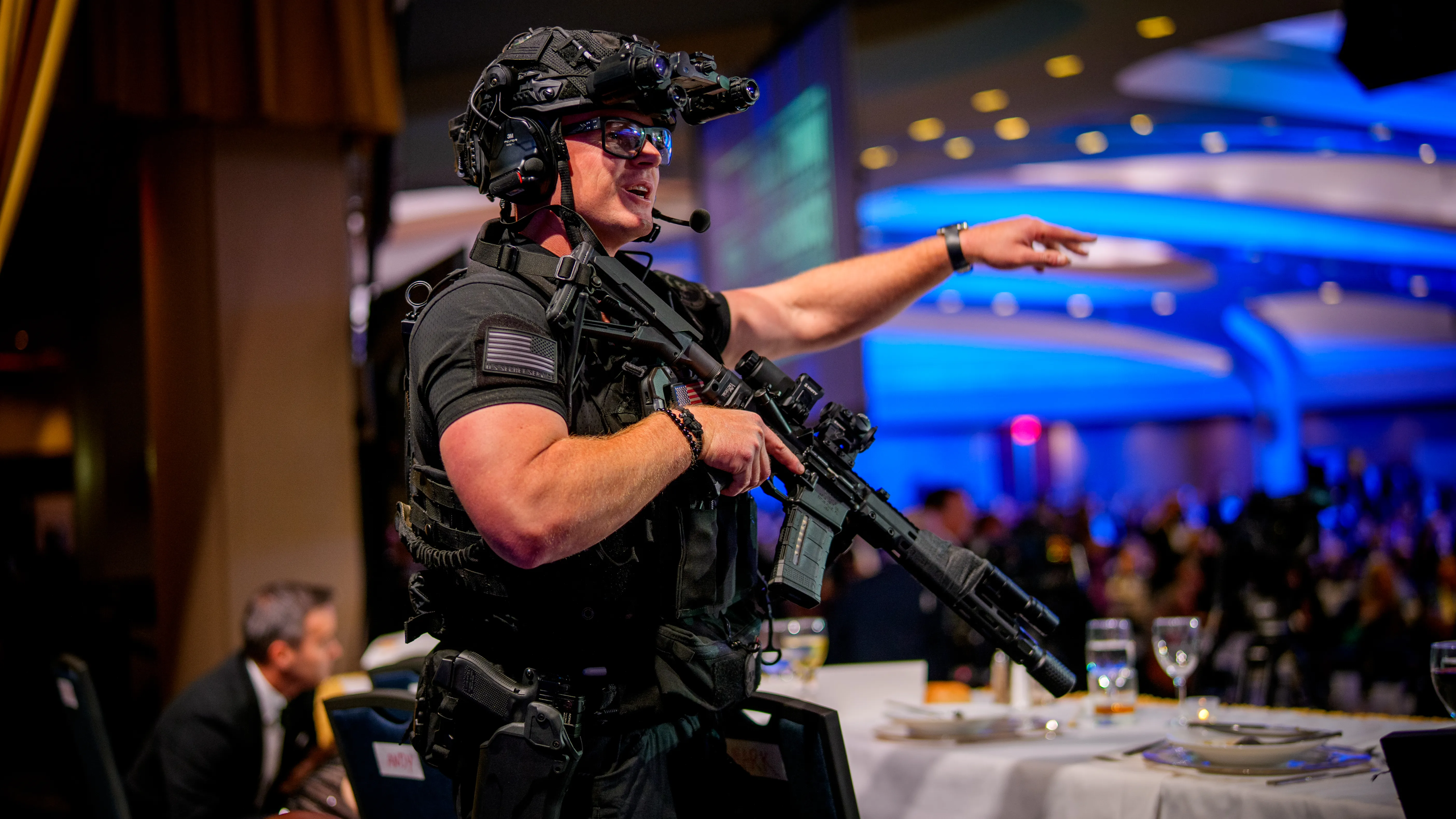
After a gunman tried to breach the ballroom at the Washington Hilton during the White House Correspondents’ Dinner on Saturday night, that second clock sprinted. Before authorities had announced any motive, a familiar claim started circulating online: staged. The conspiracy did not wait for evidence. It treated the absence of evidence as proof that “they” were hiding something.
Join the Discussion
The first hour
In the civics classroom, I used to tell students that self-government depends on a shared set of facts. Not shared values. Not shared politics. Shared facts. Because you can argue honestly about values. You cannot negotiate reality.
What has changed is the time it takes for an alternative reality to get its boots on. During this weekend’s attack, misinformation did not arrive as a late aftershock. It landed alongside the first credible updates, competing with them in real time.
One of the early accelerants was a short clip of White House press secretary Karoline Leavitt making a throwaway remark on the way into the event. Asked what viewers should expect, she said: “It’ll be funny, it’ll be entertaining. There will be some shots fired tonight in the room. So everyone should tune in, it’s going to be really great. I am looking forward to hearing it.”
In context, the meaning is obvious. The dinner is built around jokes and jabs. Out of context, the phrase became fuel. A version of the clip was posted less than 45 minutes after gunfire and drew more than 6 million views, circulated as if it were a breadcrumb in a plot.
How conspiracies work
Conspiracies thrive because they solve three problems at once.
- They explain fear by giving it an author.
- They reward suspicion by casting the believer as the only adult in the room.
- They flatten complexity into a story with villains, props, and a script.
And they are adaptable. In this case, some users latched onto President Donald Trump’s late-night comments that the incident underscored the need for a more secure ballroom. Since Trump is controversially building a ballroom on the White House complex, the rumor machine spun up a new claim: the attack must have been staged to justify construction.
This is how the modern misinformation cycle works. It does not require a coherent theory. It requires a hook. Then it builds the rest out of vibes and grievances.
"Super weird" is not proof
A second viral thread grew out of a moment that felt suspicious to viewers: a live phone report from the ballroom that abruptly cut out. That was enough for some to claim the call was intentionally dropped.
Angelo Carusone, CEO of Media Matters, shared the clip and wrote, “I don’t want to be fomenting conspiracies. But I mean … this was super weird. Super weird.”
The reporter at the center of that clip, Aishah Hasnie, later explained what actually happened in plain terms: “Our calls were dropping, because there is barely any service in that ballroom.” She added that she had been recounting a conversation about safety precautions and that she lost signal before she could finish.
Here is the constitutional problem hiding in the tech problem: in the first hours of a crisis, feeling like something is off can outrun the slower work of demonstrating what is true.
Trust makes it combustible
When Americans assume bad faith as the default setting, any attack becomes more than an attack. It becomes a referendum on legitimacy.
You can see that assumption bleeding across ideological lines. On the right, Tucker Carlson and former Republican Rep. Marjorie Taylor Greene have renewed demands for more information about the July 2024 assassination attempt against Trump in Butler, Pennsylvania, even after the Justice Department under two administrations reached the same conclusion: the shooter, Thomas Crooks, acted alone.
That same weekend pattern showed up in Greene’s reaction to Saturday’s suspect. Writings of Cole Allen, where he expressed anti-Trump sentiments, were public by Sunday morning. Greene responded online, “I want to know why the Trump admin released Cole Allen’s manifesto immediately but they still keep a tight lid on Thomas Crooks.”
Despite that assertion, there’s no evidence the FBI has kept secret key information around Crooks. The FBI has long fought conspiracy theories about the Butler shooting, including false claims that there was a foreign nexus. And the details that have been made public are not the stuff of a cover-up. Before the shooting, Crooks, according to the FBI, searched online for the date of the Democratic National Convention and where Trump planned to speak, as well as other searches for Trump and President Joe Biden.
On the left, you can find the same reflex in different packaging. Keith Olbermann wrote to his followers, “I’m not saying it was STAGED… YOU’RE saying it was staged! You have DOUBTS? Just because Trump has lied to you every day about every thing for a decade? Just because his people are filth? Shame, cynic!”
Cenk Uygur put the broader mood more bluntly: “It’s a sign of the times that as soon as you heard there was a shooting at WHCD, you heard speculation it might be staged. Why? Because we’ve lost all faith in our government. We know they lie to cover up the crimes of the powerful, we don’t trust anything anymore. Rightly so.”
Read those reactions carefully. They are not primarily arguments about ballistics or timelines. They are arguments about whether the country can still believe its own institutions.
Misinformation is security
For years, we treated conspiracy theories as a social media problem: annoying, polarizing, sometimes embarrassing.
After events like this, we need to call it what it is: a public safety problem.
- It complicates investigations by flooding the zone with false leads, amateur “analysis,” and accusations that push witnesses and officials into defensive postures.
- It warps public behavior by encouraging people to interpret safety guidance as manipulation, not protection.
- It increases the risk of copycat actions by turning perpetrators into characters in a grand narrative.
- It invites escalation because if a crisis is “staged,” then any response to it can be framed as tyranny.
That last point matters for constitutional order. The Constitution does not operate on vibes. It operates on consent. And consent becomes impossible when large numbers of citizens believe the government is inventing crises to seize power.
What the internet breaks
The Framers argued plenty, distrusted plenty, and built guardrails precisely because power tempts abuse. But they also assumed something that feels endangered right now: a public capable of distinguishing accusation from proof.
Free speech is not the problem here. The First Amendment protects the right to be wrong, even loudly wrong. The danger is that a modern attention economy can make the wrong story feel more “real” than the right one, especially when the right one is incomplete in the early hours.
That is the hard truth in any breaking event: honest officials often have less to say at first than dishonest influencers. Investigators verify. Conspiracy entrepreneurs improvise. Verification is slower, and our information systems punish slowness.
What to do
On Monday, Leavitt was asked about the conspiracy chatter and said: “It’s very important to us that we get the truth and the facts about this case and any case out there as quickly as possible to dispel some of that crazy nonsense that you do see running rampant online.”
Speed helps, but speed is not a substitute for credibility. If you want to rebuild trust, you need more than quick statements. You need a pattern of openness that outlasts the news cycle.
For government
- Release verified timelines early and clearly label what is unknown.
- Correct errors publicly without defensiveness. People notice whether institutions can admit mistakes.
- Explain the “why” of security decisions so measures do not look like power grabs.
For the public
- Refuse the first narrative as a rule. In the first hour, certainty is usually theater.
- Separate motive from mechanism. Even if you distrust a politician, that does not turn a poor cell signal into a cover-up.
- Demand receipts. Screenshots and clipped video are not receipts. They are prompts.
The toughest question
Every time a crisis hits, Americans ask the obvious questions: Who did it? Why? Could it have been prevented?
We need to add one more, and it might be the most constitutional question of all:
Can a republic survive when millions of its citizens treat “staged” as the default explanation for violence?
If the answer is no, then misinformation is not background noise. It is a direct threat to self-government, because it turns every emergency into an argument that the system itself is illegitimate.
And that is how a national crisis gets hijacked: not just by the attacker at the door, but by the story that rushes in behind him.