
Most Americans have a pretty simple mental model of free speech: you can criticize the government, you can swear at the government, and you can be obnoxious while doing it.
That model is mostly right. It just breaks down at one fraught edge case: when a political rant starts to sound like a threat.
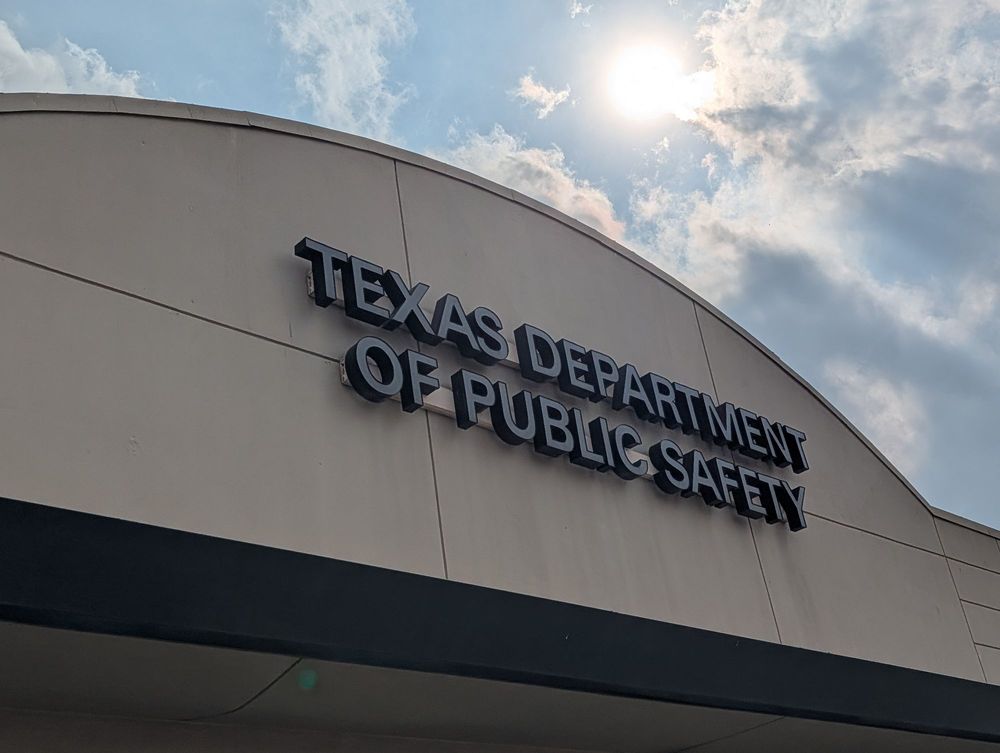
In Texas this summer, that edge case stopped being theoretical. A Houston man, identified in court records as Joseph Roy Ozment, was arrested after leaving an angry voicemail for Gov. Greg Abbott’s office on July 25. In the message, Ozment said he was being blocked from viewing anime and blamed some kind of age verification requirement. The voicemail, as transcribed by the Texas Department of Public Safety, included a profane demand to “unpass” the law. It also ended with a line that changed everything: “I’m a fucking stab every goddamn one of you bitches. Unlock my fucking anime.”

Join the Discussion
What happened and the charge
Ozment was arrested on suspicion of making a terroristic threat against a public servant, a third-degree felony under Texas law. Travis County court records indicate he had not yet been formally indicted at the time the case details became public. A third-degree felony in Texas can carry up to 10 years in prison and a $10,000 fine.
There is still plenty that is not publicly clear from the transcript alone, including what else investigators may have relied on and what Ozment intended his words to do. The key question is what the Constitution does with them. The First Amendment protects a lot of harsh, ugly, even cruel speech directed at public officials. It does not protect a “true threat.”
The policy fight under the profanity
If you strip away the language, the complaint itself is familiar: online age verification laws are spreading, and adults are running into more digital checkpoints to access lawful content. Texas law now requires age verification by app stores and age verification by adult websites. Either could plausibly be implicated in someone being unable to access anime of certain varieties, but the voicemail does not specify which law or which platform was involved.
There are a few mundane explanations that still fit the story. Some porn platforms have blocked Texas viewers entirely. Or he may not have been literally blocked so much as unable or unwilling to show identification to get past an age gate. It is also possible the problem had nothing to do with law at all, such as a connection issue or confusion. For purposes of the free speech question, though, the point is that he believed the state had put an ID gate in his way.
That is where the constitutional tension begins. Age verification regimes are often defended as child-protection policy. But they also turn ordinary browsing into a question of identity documentation, data retention, and surveillance risk. Even if a state’s goal is narrow, the mechanism can be broad.
And breadth matters for the First Amendment, because laws that make people prove who they are before they can view protected speech can chill lawful expression. People self-censor. They avoid content that is legal to consume. They decide it is not worth handing over an ID to a private company just to read, watch, or search.
When angry speech becomes a true threat
The Supreme Court has long treated “true threats” as a category of speech that the First Amendment does not shield. The hard part is that the Court has also recognized that Americans use violent language metaphorically, rhetorically, and performatively, especially when talking about politics.
One of the classic examples is Watts v. United States (1969), where an 18-year-old anti-war protester told a crowd, “If they ever make me carry a rifle, the first man I want to get in my sights is L.B.J.” The Court deemed it “political hyperbole,” not a prosecutable threat against the president.
But Watts also shows why context is everything. The remark was conditional. It was made at a rally. It had the feel of a provocative performance in a public setting.
A voicemail to a government office is different. It is targeted. It is private. It is delivered directly to staff who cannot quickly assess whether the caller means it, or whether the words are just expressive venting.
Intent and recklessness
Here is the crucial constitutional wrinkle: the government does not have to prove that the speaker actually planned to carry out violence. But it generally does have to prove more than mere offensiveness or poor taste. The state must show a sufficiently culpable mental state behind the threatening communication, including that the speaker intended to communicate a threat.
In a recent Supreme Court ruling on true threats, the Court held that the First Amendment requires proof that the speaker had at least a reckless disregard for whether their words would be taken as threatening. In plain English, it is not enough that someone somewhere felt scared. The question is whether the speaker understood, or consciously ignored, the obvious risk that the words would be perceived as a real threat.
That is the legal terrain Ozment’s case will likely turn on. Was this the kind of exaggerated “I’m so mad I could scream” language that people use when they are frustrated? Or did he communicate violence in a way that a reasonable person would expect to intimidate the recipients?
Even the transcript itself points in two directions at once. On one hand, the closing line about stabbing is direct and non-conditional. On the other, the rant reportedly included confusion about who even “passed” the law, and it sprayed its anger broadly at an unnamed “you,” rather than naming an individual target.
Why offices take these calls seriously
There is also a practical, non-doctrinal reality: government staff are not reading a law-school exam. They are managing security risk. In this case, the governor’s office employee who first listened to the voicemail said he feared for his and his coworkers’ lives. That does not settle the constitutional question, but it helps explain why these cases move quickly from “obnoxious constituent call” to “police involvement.”
And it raises a civil liberties concern of its own: if the state reacts to overheated rhetoric with felony arrests too readily, the public learns a different lesson about petitioning government. Not “watch your language,” but “do not complain at all unless you can afford a lawyer.”
The bigger issue: ID gates on speech
It is easy to laugh at a profane demand to “unlock my anime.” But the underlying constitutional issue is not a punchline.
Age verification laws push the internet toward a model where lawful speech is accessible only after identity verification. That model does not just regulate obscenity. It can spill into platforms, app stores, and mixed-content spaces where protected speech and adult content coexist.
The First Amendment has always been entangled with anonymity. From pamphleteering in the Founding era to modern online discourse, the ability to read and speak without first showing papers has been part of what makes speech feel free in practice, not just in theory.
Texas’s current policy debate, and Ozment’s arrest, meet at the same pressure point: what happens when the state builds systems that frustrate lawful access, and citizens respond with raw, uncontrolled language? The Constitution does not require politeness. It does require that the government draw the line carefully when it criminalizes words.
What to watch next
- Charging decisions: Whether prosecutors seek an indictment, and how they describe the alleged threat and its target.
- Context evidence: Any additional facts beyond the transcript, including prior contacts, follow-up messages, or actions that make the voicemail more or less credible as a real threat.
- First Amendment posture: Whether defense counsel frames the voicemail as hyperbole and argues the state cannot prove the required mental state for a true threat.
- The broader trend: Whether age verification expands further into general-access parts of the internet, increasing the number of adults who experience the same friction that set this incident in motion.
The Constitution is not a customer service desk. It cannot unlock anyone’s feed. But it does set the rules for how government responds when frustration turns into speech that sounds like violence. The First Amendment’s promise is not that our public discourse will be tasteful. It is that the state cannot punish words unless it can show they crossed a very specific line.