
When the Fourth Amendment was ratified in 1791, the idea that a private company could quietly keep a minute-by-minute record of where millions of people go would have sounded like fantasy. Today, that kind of location history is routine. And the Supreme Court is now being asked a very practical question: Can police use a “geofence warrant” to demand a list of phones near a crime scene, even when they do not yet have a named suspect?
The case before the Court grew out of a 2019 bank robbery in Virginia. Investigators used a geofence warrant to compel Google to provide location-history data for devices that were near the bank during a specific time window. One of those devices was tied to Okello Chatrie, who later pleaded guilty and received a sentence of nearly 12 years.
Chatrie’s appeal is one of two cases being argued the same day. The other involves Bayer’s effort to have the Court block thousands of state lawsuits alleging the company failed to warn people that its Roundup weedkiller could cause cancer.
Join the Discussion
What is a geofence warrant?
A geofence warrant flips the usual order of a criminal investigation.
- Traditional approach: Police develop a suspect first, then seek a warrant to search that person’s phone, home, car, or accounts.
- Geofence approach: Police start with a place and time, then ask a company for data that could reveal who was there.
In practice, these warrants often begin by requesting device-level location data for phones within a defined area during a limited time window, then investigators can seek to narrow the results as the investigation focuses.
Prosecutors credit geofence warrants with helping crack cold cases and other crimes where surveillance cameras did not reveal suspects’ faces or license plates. Civil libertarians respond that the very point of the Fourth Amendment is to prevent the government from searching broadly first and figuring out probable cause later.
Why the Fourth Amendment question is hard
The Fourth Amendment bans “unreasonable searches and seizures” and requires warrants to be supported by probable cause and to describe with particularity what is being searched and what will be seized.
Geofence warrants force the Court to decide how those familiar requirements apply when:
- Police do not know the suspect’s identity when they apply for the warrant.
- The “thing” being seized is not a physical object, but a dataset that can reveal patterns of life.
- Many people in the dataset are likely innocent, yet their location histories are still swept in at least initially.
This is not an abstract concern. Modern phones are carried nearly everywhere. Location data can expose visits to a medical clinic, a religious service, a protest, a divorce lawyer, or a friend’s home. Even if investigators only mean to find one culprit, the search begins by peering into a crowd.
The facts behind the case
In May 2019, a robber took $195,000 from the Call Federal Credit Union in Midlothian, Virginia, outside Richmond. Investigators later used a geofence warrant seeking Google location-history information for devices near the credit union around the time of the crime.
That data pointed investigators toward Okello Chatrie. After police determined he was near the credit union at the relevant time, they obtained a search warrant for his home. There, officers found nearly $100,000 in cash, including bills wrapped in bands signed by the bank teller.
Chatrie pleaded guilty and was sentenced to nearly 12 years in prison. But his appeal argues that the geofence warrant was unconstitutional, and that none of the evidence should have been used against him.

How lower courts have split
One reason the Supreme Court is taking up the issue is that lower courts have not agreed on a single answer.
In Chatrie’s case, a federal judge concluded the geofence search violated his rights under the Fourth Amendment. Still, the judge allowed the evidence, reasoning that the officer who sought the warrant acted in good faith, believing the warrant was lawful at the time.
A federal appeals court in Richmond ultimately upheld the conviction in a fractured decision.
Meanwhile, another federal appeals court, based in New Orleans, has treated geofence warrants far more skeptically, ruling that they “are general warrants categorically prohibited by the Fourth Amendment”. That is language with real historical weight. The Founding generation was deeply suspicious of broad warrants that let officials rummage first and justify later.
Privacy and third parties
A central issue is whether a person has a reasonable expectation of privacy in location history stored by a company.
Prosecutors have argued that there is no protected privacy interest when someone voluntarily chooses to share location data with a service provider. That argument draws on what is often called the “third-party doctrine,” a line of cases suggesting that information given to a third party is not private in a constitutional sense.
But the Court has also shown discomfort with simply applying that older logic to modern digital life. In a major 2018 decision involving months of location tracking via cell-site records, Chief Justice John Roberts described “seismic shifts in digital technology” and warned about “the exhaustive chronicle of location information casually collected by wireless carriers today”.
That earlier case did not involve geofence warrants exactly, but it tees up the same anxiety: modern location data can be so revealing that it may deserve stronger constitutional protection, even if it sits on someone else’s server.
What critics warn could follow
The debate is not only about one bank robbery. Civil libertarians argue that geofences amount to fishing expeditions that subject many innocent people to searches of private records merely because their phones happened to be in the vicinity of a crime.
In filings urging the Court to reject the technique, law professors who study digital surveillance warned that a ruling blessing geofence warrants could “unleash a much broader wave of similar reverse searches”.
Use beyond everyday crimes
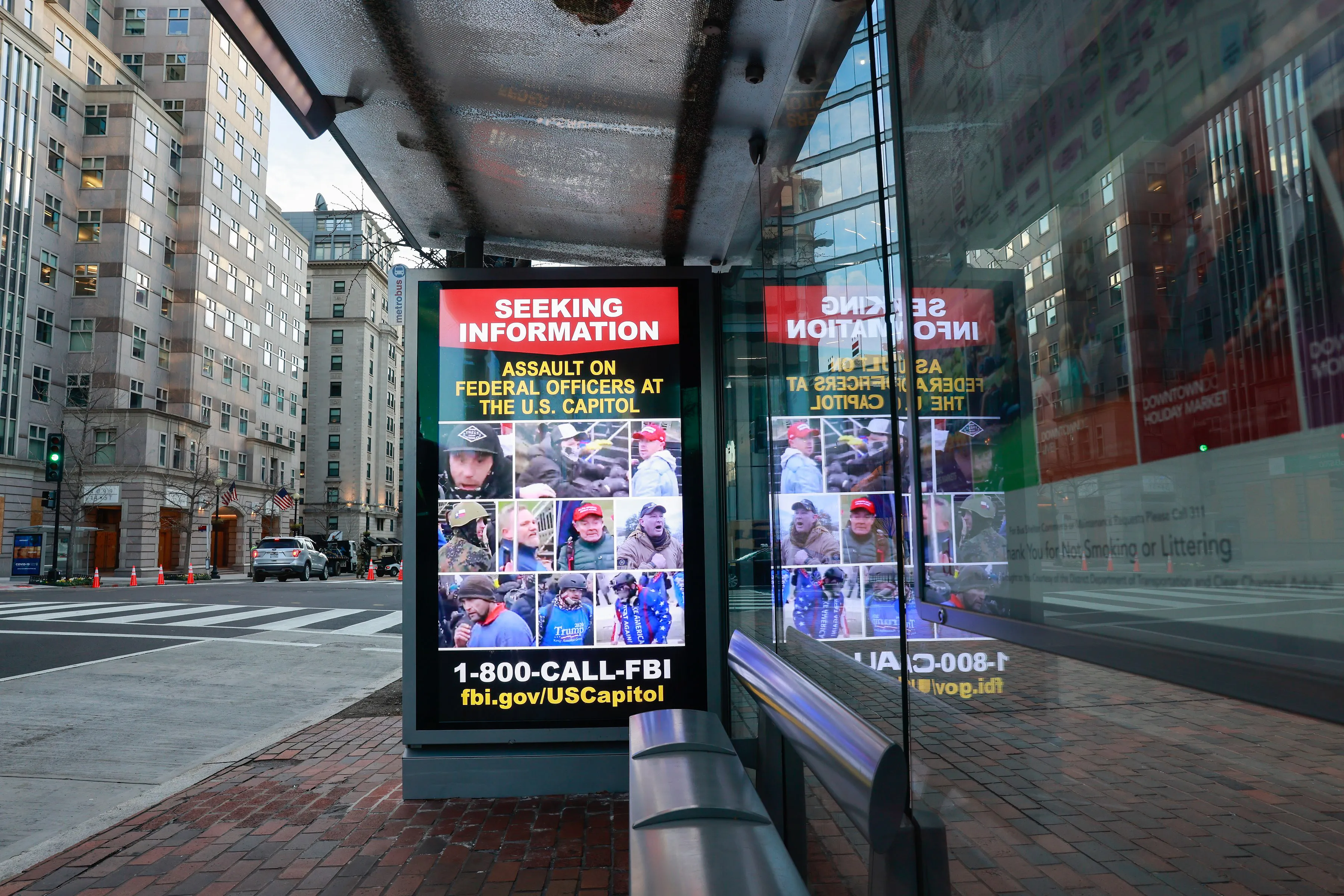
Geofence warrants are not limited to bank robberies. Investigators have used them to help identify supporters of President Donald Trump who attacked the Capitol in the riot on Jan. 6, 2021. They have also been used in the search for the person who planted pipe bombs outside the Democratic and Republican party headquarters the night before.
Police also credit these warrants with helping identify suspects in killings in several states, including California, Georgia, and North Carolina.
Those examples underline why this case matters to everyday Americans. A rule the Court announces here will not stay neatly confined to one category of crimes. Once a tool is deemed constitutional, it tends to spread.
What the justices could do
The Court is not limited to an all-or-nothing outcome, even though that is how the public debate can sound. An academic group focused on bridging gaps between police and communities urged the Court to avoid an all-or-nothing approach in Chatrie’s case.
The Policing Project at the New York University School of Law warned that one position would allow police to use geofence warrants and similar tools “with no judicial supervision or constitutional safeguards”. At the other end, Chatrie’s lawyers have urged the Court to rule out any use of geofence warrants at all, which the group said could impede “legitimate law enforcement activities”.
1) Ban geofence warrants outright
If the Court concludes that geofence warrants are inherently like general warrants, it could treat them as categorically unreasonable. That would be the clearest privacy-protective rule, but it could also remove a tool police say has solved cases that would otherwise remain open.
2) Allow them, but require strict limits
The Court could permit geofence warrants only with tight constitutional guardrails, such as requiring narrow geographic boundaries, short time windows, minimization procedures, and strong judicial supervision before identifying information is disclosed.
3) Treat them as ordinary warrants
The Court could avoid sweeping pronouncements and instead evaluate whether this particular warrant was sufficiently specific and supported by probable cause. That path may leave the law uneven across jurisdictions, with privacy protections depending heavily on how a warrant is drafted and how a judge reads it.
Why this matters even if you have nothing to hide
A common refrain in privacy debates is that people with nothing to hide have nothing to fear. The Constitution is not built on the assumption that only guilty people deserve protections. It is built on the idea that government power needs boundaries, even when officials have good intentions.
A geofence warrant can place innocent people into a police dataset based on nothing more than proximity. That includes people walking a dog, grabbing coffee, visiting a doctor, or waiting for a bus. The constitutional question is whether being nearby is enough to justify pulling back the curtain on digital records that can be intensely personal.
The Supreme Court’s decision will help determine whether the Fourth Amendment’s core promise, protection against unreasonable searches, can keep its footing in a world where our movements are automatically logged.