
You have a Fourth Amendment right to be secure against “unreasonable searches and seizures.” Everyone knows that.
But the part most people miss is the mechanism that makes that promise operational: the warrant requirement. Not because warrants are magic, and not because police always need one, but because the Constitution draws a simple line that still structures modern criminal procedure.
The Fourth Amendment does two things at once. It announces a principle, reasonableness. Then it describes a process for certain searches, a warrant issued by a neutral judge based on probable cause, describing the place to be searched and the things to be seized.
This primer explains how those ideas work in practice at a high level. It is educational, not legal advice.
Join the Discussion
What the Fourth Amendment says
The text is short, and it matters:
“The right of the people to be secure in their persons, houses, papers, and effects, against unreasonable searches and seizures, shall not be violated, and no Warrants shall issue, but upon probable cause, supported by Oath or affirmation, and particularly describing the place to be searched, and the persons or things to be seized.”
Notice what is not there: a universal “police must always have a warrant” rule. The Amendment bans unreasonable searches, and then sets strict conditions for when a warrant may issue. Courts built the familiar “warrant preferred” framework on top of that text over time.
When police need a warrant
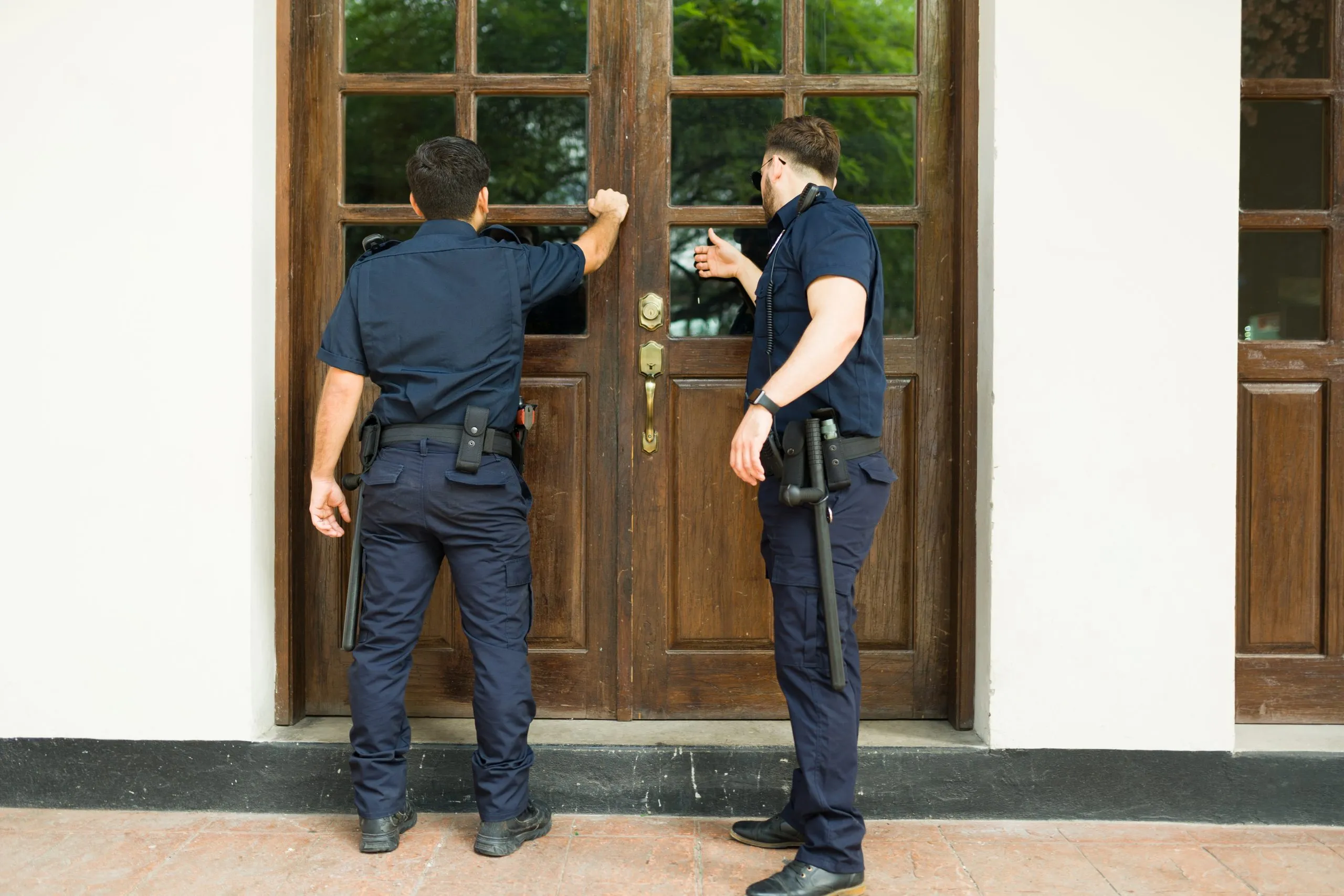
As a practical baseline, warrants are most clearly required when police want to conduct a planned search of a constitutionally protected area, especially a home. Courts treat the home as the core Fourth Amendment space, and they are skeptical of after-the-fact justifications for entering it.
Common situations where warrants are typical
- Searching a home (including many “curtilage” areas closely tied to the home, like a fenced backyard).
- Searching the contents of a phone in many contexts, especially after an arrest. That said, phone searches still show up under other doctrines (like consent or certain exigencies), and police can often seize a device and seek a warrant rather than search it on the spot.
- Searching closed containers when no recognized exception applies. Container rules are context-heavy, and they can look different in a house than in a car, during an arrest, or in an inventory or probation setting.
- Searching beyond what a person consented to, or after consent was withdrawn.
There are exceptions, and they can be broad in practice. But if you are trying to understand how the system is supposed to work, start here: when police have time to ask a judge, the warrant-preferred framework generally pushes them to ask a judge, even though reasonableness remains the touchstone.
What counts as a search
The Fourth Amendment is not triggered by every police action. It regulates searches and seizures. That sounds obvious until you ask what qualifies as a “search.”
At a high level, courts look at questions like these:
- Did the government intrude on a protected area? Person, house, paper, effect. The physical side of the Amendment still matters.
- Did the government invade a reasonable expectation of privacy? This is the idea many people associate with modern Fourth Amendment law.
Some things feel invasive but may not be Fourth Amendment “searches” in the legal sense, depending on context, location, and what was exposed to public view. Other actions that look minor, like manipulating an object to learn what is inside, can become searches because the officer is trying to discover concealed information.

Probable cause in practice
Probable cause is the Fourth Amendment’s gatekeeping standard for warrants, and often for arrests.
It is not “beyond a reasonable doubt.” That is the trial standard. It is not even “more likely than not” in a strict mathematical sense. Probable cause is closer to a practical, common sense judgment: given the facts, is there a fair probability that evidence of a crime will be found in the place to be searched, or that a person committed a crime?
Where probable cause comes from
- Direct observation (an officer sees suspected contraband or a crime in progress).
- Reliable witness statements (including victims and identified witnesses).
- Confidential informants, evaluated for reliability and basis of knowledge.
- Corroboration (police verify details that suggest the tip is trustworthy).
- Patterns and context (behavior that may be innocent alone but suspicious in combination).
What probable cause is not
- A hunch, even an experienced one.
- A generic profile untethered from specific facts.
- Vibes. Courts will use more formal language, but the idea is the same.
Probable cause is intentionally flexible. That flexibility is a feature and a risk. It lets police act quickly on real facts, but it also gives courts room to disagree later about whether the facts added up.
How warrants work
In the idealized version, an officer takes facts to a judge, the judge evaluates probable cause, and the warrant limits the scope of the search. That sequence is meant to put a neutral decision maker between the government and your private space.
Key parts of an application
- Affidavit or declaration describing the facts, sworn under oath.
- Probable cause narrative connecting the facts to the specific crime and to the place or item to be searched.
- Particularity describing what locations can be searched and what can be seized.
- Judge review and signature from a neutral magistrate.
Particularity and scope
The Fourth Amendment’s particularity requirement is a direct response to the colonial experience with “general warrants” and writs of assistance. Those were broad permissions to rummage. The Founders did not just dislike them. They built a constitutional alarm system to prevent them.
That is why a valid warrant must identify the place to be searched and the items to be seized with enough specificity to constrain officer discretion. A warrant is supposed to be a targeted authorization, not a blank check.
Executing a warrant
Even with a warrant, limits matter. A warrant to search for a stolen television does not justify reading every notebook in the house. A warrant to search a specific apartment does not automatically authorize searching the neighbor’s unit because the doors look similar.
In real searches, disputes often arise over scope:
- Where officers looked (did they search areas too small to contain the item described?).
- What they seized (did they take items not covered by the warrant?).
- How they executed the search (was the manner of entry and search reasonable?).
You may also hear about “knock and announce” rules and no-knock warrants. The basic idea is that officers generally announce themselves before entering, but courts recognize exceptions and the practical consequences of violations have shifted over time. The details are intensely jurisdiction and fact specific.
Exceptions to warrants
If warrants were the only way to search, policing would often grind to a halt. Courts recognize several exceptions, each with its own logic and limits. The most important thing to understand is that exceptions are not loopholes. They are separate constitutional theories for why a search can still be reasonable without prior judicial approval.
Consent
If a person voluntarily consents to a search, police often do not need a warrant. The fight is usually about whether consent was truly voluntary and how far it extended. Consent can be limited, and it can be withdrawn, but those details become fact-intensive.
Plain view
The “plain view” doctrine is not a license to go looking for things without a warrant. It generally applies when officers are lawfully present in a location, have a lawful right of access to the item, and immediately see evidence or contraband whose incriminating character is “immediately apparent” (in practice, usually meaning probable cause). In that situation, the seizure can be reasonable because the officer did not need a further intrusion to discover what was already exposed.
Plain view often appears in ordinary scenarios: an officer responding to a 911 call sees drugs on a coffee table, or an officer at a lawful traffic stop sees a weapon on the floorboard.
Exigent circumstances
Exigent circumstances cover emergencies where waiting for a warrant would defeat the purpose of the search or endanger people. Classic examples include:
- Imminent danger to someone inside.
- Hot pursuit of a fleeing suspect.
- Imminent destruction of evidence.
This exception is heavily litigated because it is easy to assert and hard to disprove. Courts look closely at whether the claimed emergency was real, and whether police created the exigency themselves.
Search incident to arrest
After a lawful arrest, officers can typically search the arrestee and the area within immediate reach for weapons and destructible evidence. The justification is officer safety and evidence preservation, not general evidence gathering.
This doctrine is narrower than people think in two common places: it does not authorize searching the digital contents of a phone just because it was on someone’s person, and vehicle searches incident to arrest have major limits and are not automatic.
Automobile searches
Cars occupy their own Fourth Amendment category. Because vehicles are mobile and heavily regulated, courts allow certain warrantless searches of vehicles when officers have probable cause to believe evidence or contraband is inside. When the doctrine applies, it can extend to containers in the car where the object of the search could reasonably be found. The rules vary by context, and they are not identical to home search rules.
Protective sweeps and safety checks
In some situations, officers may perform limited checks to ensure no dangerous person is hiding nearby. These are supposed to be quick and narrowly focused on safety, not exploratory searches.
Other categories
Some searches are treated as reasonable without a warrant under doctrines that have their own rules, including certain inventory and administrative or “special needs” searches, and some border-related searches. This is one reason Fourth Amendment law can feel less like a single rule and more like a map of categories.
Seizures: people and property
The Fourth Amendment is not only about searching spaces. It is also about seizures, which include detaining a person and taking property.
Stops versus arrests
Courts often distinguish between a brief investigatory stop and a full arrest. In simplified terms:
- Stops require a lower level of justification than probable cause, commonly described as reasonable suspicion. Think specific, articulable facts suggesting criminal activity, not a hunch.
- Arrests generally require probable cause.
Where a stop ends and an arrest begins is a common battleground. Duration, use of restraints, movement to another location, and the overall tone of the encounter can matter.
Property seizures
Police can seize property under a warrant, or without a warrant in certain situations, including when contraband or evidence is in plain view and the requirements for plain view are met. Police may also impound vehicles in some circumstances and conduct an inventory search under standardized procedures. As with everything else in this area, the labels matter less than the justification and the limits.
Unlawful searches and remedies
The Constitution does not come with a built-in refund policy. The main remedy people have heard of is the exclusionary rule, which can keep unlawfully obtained evidence out of the prosecution’s case.
Exclusionary rule and fruit
If evidence is obtained in violation of the Fourth Amendment, a court may suppress it. If later evidence was found because of that unlawful search, that later evidence may also be excluded as “fruit of the poisonous tree.”
The basic idea is deterrence: if unconstitutional searches reliably produce usable evidence, the Constitution becomes a suggestion. Suppression is meant to remove the incentive.
Limits and exceptions
Suppression is not automatic. Courts recognize several doctrines that can allow evidence to come in even after a constitutional violation, depending on the circumstances, including concepts often described as good faith, independent source, inevitable discovery, or attenuation. These doctrines are controversial precisely because they can weaken deterrence.
Also, suppression is mainly a criminal-case remedy, and it is not available to every defendant in every scenario. Fourth Amendment “standing” issues, meaning whether the person had a sufficient privacy interest in the place searched or item seized, can be outcome determinative.
Other consequences
In addition to suppression, there may be administrative discipline or civil lawsuits in some situations, but those paths can be difficult and depend on the facts and the jurisdiction.
Why this matters
The Fourth Amendment is a daily life amendment. It governs traffic stops, apartment hallway encounters, phone searches, and the knock on the door at 6 a.m. It is where the Constitution meets the most ordinary kind of government power: the power to look.
Warrants and probable cause are not technicalities. They are the constitutional answer to a simple question: who decides when the government gets to cross the threshold into your private life?
The Fourth Amendment’s ideal answer is “a judge, before the search, based on concrete facts.” The list of exceptions is where the argument begins, and where civic literacy becomes more than trivia.
If you want to keep learning: look up the Supreme Court’s modern Fourth Amendment framework in cases involving homes, traffic stops, and digital devices, then ask how the underlying logic changes when the searched “place” is a phone instead of a filing cabinet. If you want a second thread to pull, look at how the third-party doctrine intersects with modern digital records, and why some categories of data have gotten more protection than older analogies would predict.