
We talk about criminal trials like they are a machine. Arrest, arraignment, motions, trial, verdict. Feed in a defendant, turn the crank, justice comes out the other side.
But the Constitution requires something more basic before the machine is allowed to run: the person facing prosecution has to be mentally present enough to participate. Not morally worthy. Not sympathetic. Not even “sane” in the everyday way people use the word.
Just competent.
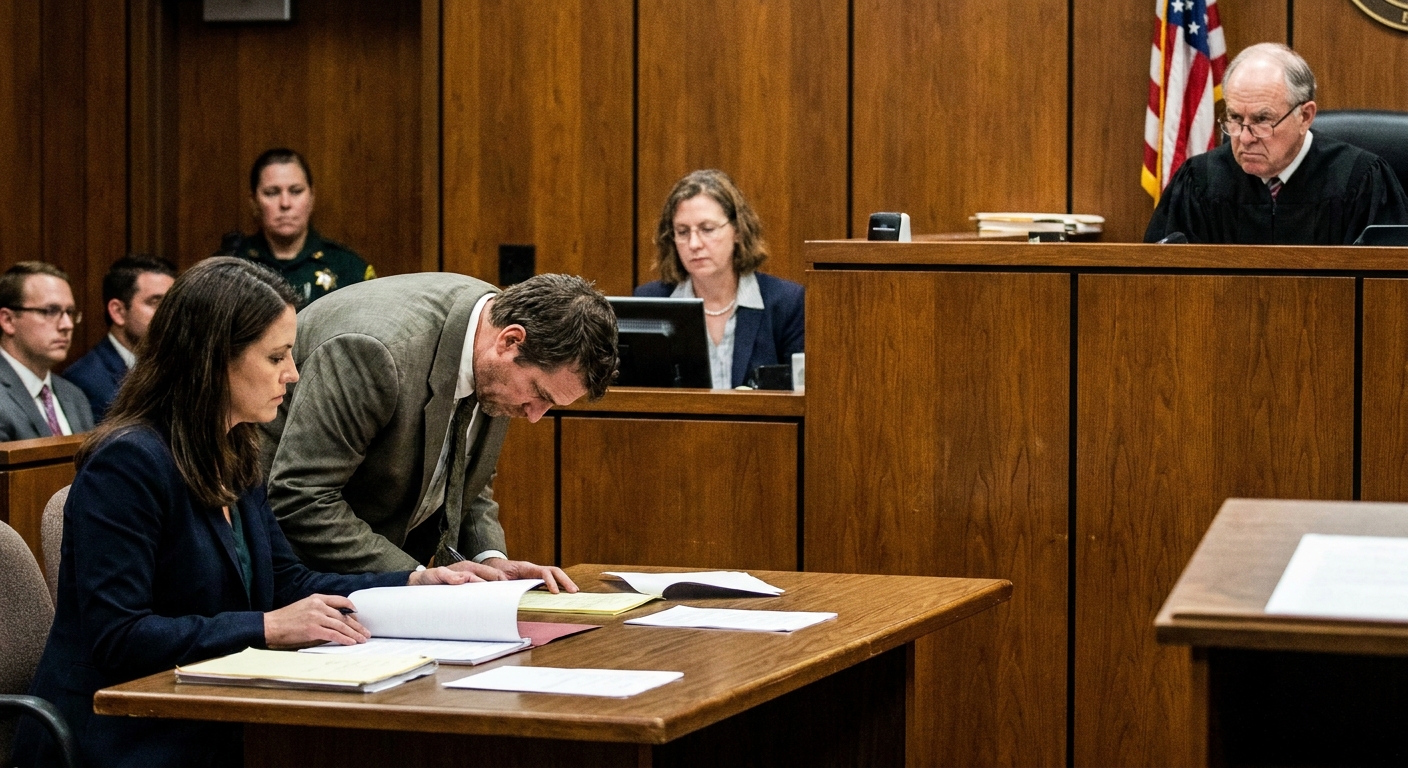
Competency to stand trial is one of the quietest constitutional guardrails in criminal procedure. When it works, it is almost invisible. When it fails, a trial or plea taken while the defendant is incompetent becomes constitutionally unsound, even if the evidence is overwhelming. The usual remedy is not to erase the case forever, but to stop, fix the process, and only proceed if competency is established.
Join the Discussion
The constitutional idea
As a matter of due process, a defendant generally cannot be tried or accept a valid guilty plea if they lack the present ability to understand the proceedings and help their lawyer defend the case. Many jurisdictions also require competency at sentencing, sometimes described as competence to be sentenced.
This rule is rooted in due process. The Supreme Court has treated competency as a fundamental requirement of a fair criminal process, tied to the basic legitimacy of adjudication itself. A trial is not just the government speaking. It is supposed to be an adversarial contest where the accused can participate through counsel.
The Dusky standard
The modern baseline comes from Dusky v. United States (1960). The Court framed competency as two connected abilities:
- Understanding: Does the defendant have a rational and factual understanding of what is happening in court?
- Assisting counsel: Can the defendant consult with their lawyer with a reasonable degree of rational understanding?
That sounds simple until you realize what it does not require.
- It does not require high intelligence.
- It does not require perfect memory.
- It does not require mental health.
- It does not require good judgment, impulse control, or likeability.
Competency is narrower than sanity and broader than mere consciousness. A person can have a serious diagnosis and still be competent. A person can look calm and coherent and still be incompetent if their understanding is distorted by delusions, mania, dementia, or severe developmental limitations.
What triggers an evaluation
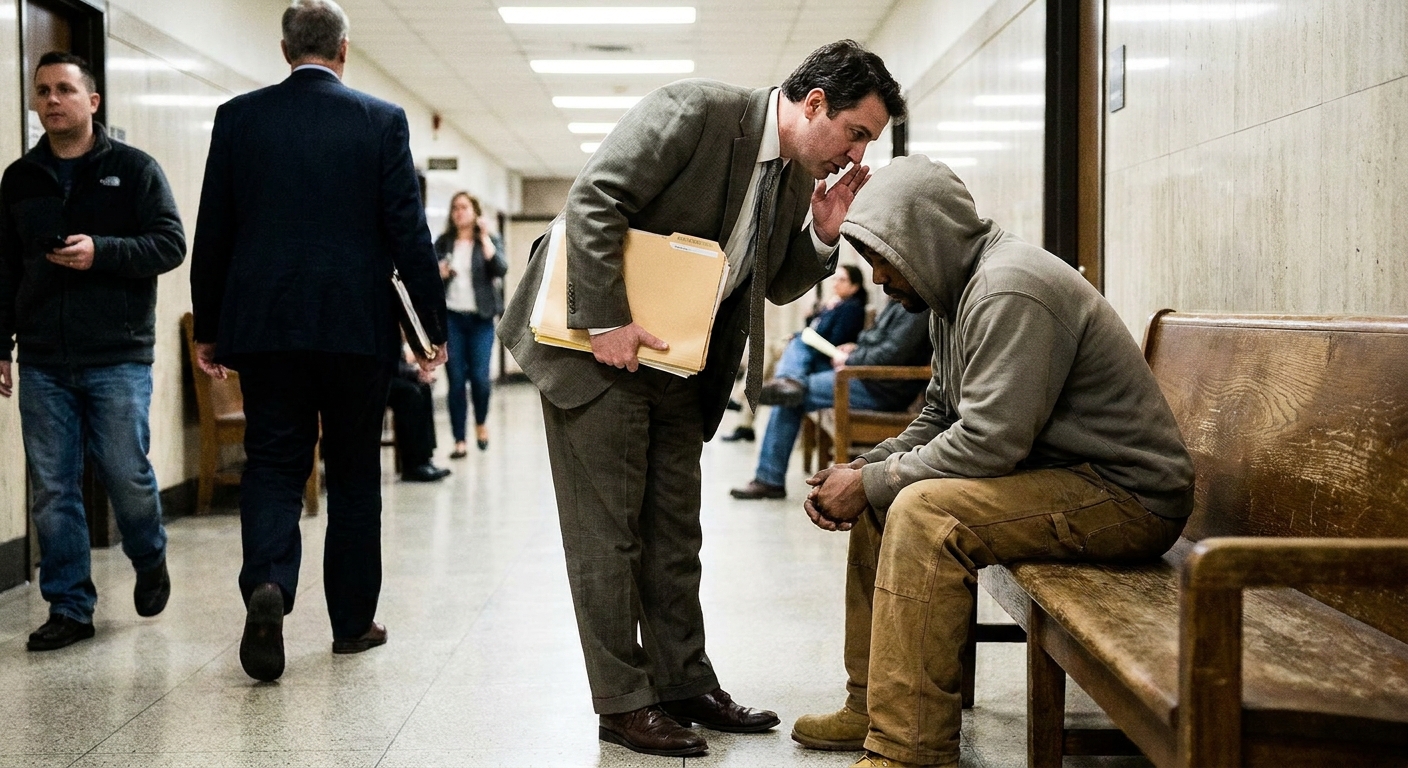
Competency is usually raised when someone in the room notices that something is off in a legally relevant way. That can mean confusion about the roles of judge and jury, an inability to track the basics of the case, or paranoia so intense that attorney communication becomes impossible.
Who can raise it
- Defense counsel often raises competency concerns because they are trying to communicate with the client and cannot.
- The prosecutor can raise it too, especially if proceeding would create an obvious appellate problem.
- The judge can raise it on the court’s own initiative when behavior in court suggests incompetence.
Judges are not allowed to treat competency like a strategic choice. If there is genuine reason to doubt competency, due process requires the court to address it.
Where it fits in the case
Competency is about the defendant’s present ability, which means it can arise at multiple points. It is most common early, but it can surface later if the defendant’s condition changes.
Here is how it typically fits into a criminal case.
A simple timeline
- Arrest and booking
Behavior in custody might flag mental health concerns, but competency is not usually decided here. - First appearance or arraignment
The judge advises the defendant of the charge and rights. If the defendant cannot track what is happening, the court may order a competency evaluation before the case moves forward. - Pretrial motions and plea negotiations
Competency matters for working with counsel and for making decisions like accepting a plea. A defendant who is incompetent cannot validly enter a guilty plea. - Trial
If competency concerns arise mid-trial, the court may pause the case for evaluation. A trial cannot continue if the defendant is incompetent. - Sentencing
Competency can matter here too, though the exact framing and procedures vary. In general, the defendant must be able to understand what the court is doing and communicate meaningfully with counsel.
Courts often use phrases like “bona fide doubt,” “reasonable cause,” or “substantial evidence” to describe the threshold for ordering an evaluation. That threshold is separate from the burden of proof at a competency hearing, which is commonly a preponderance standard and can vary by jurisdiction, including who carries the burden.
What an evaluation looks like
A competency evaluation is not a therapist visit. It is a forensic process designed to answer a legal question: whether the defendant meets the Dusky standard right now.
Common steps
- A court order appoints an evaluator or sets a process under state law or, in federal cases, federal statutes.
- An interview focuses on understanding of charges, courtroom roles, possible pleas, and the ability to work with counsel.
- Record review may include medical history, jail records, prior diagnoses, and observations from attorneys and staff.
- Testing can occur, but tests are not the definition of competency. They are tools.
- A report goes to the court, often with an opinion on competency and sometimes recommendations for restoration if the person is incompetent.
Some evaluations happen in the community. Others occur in a hospital or secure facility, especially if the defendant is unstable or the court wants extended observation.
The hearing
Typically, the court holds a competency hearing where the judge reviews reports and may hear testimony. The judge makes the ultimate legal decision. Evaluators advise. Courts decide.
Competency vs. insanity
These two ideas get confused because they both involve mental condition. Constitutionally and practically, they answer different questions at different times.
Competency to stand trial
- Timing: About the defendant’s mental state now.
- Question: Can the defendant understand the proceedings and assist counsel?
- Effect: If incompetent, the case pauses. The state generally cannot proceed to trial or take a valid plea until competency is restored or otherwise established.
Insanity defense
- Timing: About the defendant’s mental state at the time of the alleged offense.
- Question: Did mental illness prevent the defendant from being legally responsible under the jurisdiction’s insanity standard (such as knowing right from wrong or appreciating the nature and quality of the act)?
- Effect: It is a defense to criminal liability. If successful, the verdict is typically not guilty by reason of insanity, followed by civil commitment procedures in many cases.
A defendant can be competent and still pursue an insanity defense. A defendant can also be incompetent even if an insanity defense would never apply.
If the defendant is incompetent
An incompetence finding does not necessarily mean the case is over. It means the Constitution will not permit the state to continue at that moment.
Restoration
Most systems attempt competency restoration, often through mental health treatment and education about court processes. The aim is not to cure a condition. It is to restore the functional abilities required by Dusky. How restoration looks in practice varies by jurisdiction, including where the person is treated, how long treatment may last, and how progress is reviewed.
In some cases, treatment includes medication. That raises its own constitutional questions about bodily autonomy and due process, especially if medication is involuntary. Courts have addressed forced medication in several contexts, including jail or hospital safety and trial fairness. When the government seeks medication primarily to restore competency for trial, Sell v. United States (2003) is the key Supreme Court framework, and related cases like Washington v. Harper and Riggins v. Nevada often appear in the background.
Limits and dismissal
Due process also limits how long someone can be held for restoration if they are unlikely to become competent. In Jackson v. Indiana (1972), the Supreme Court held that a person cannot be committed indefinitely solely because they are incompetent to stand trial. If restoration is not reasonably foreseeable, the state must shift to ordinary civil commitment procedures or release the person, depending on circumstances. In some cases, charges may be dismissed, sometimes without prejudice, meaning the government could refile if competency later returns and other legal limits allow.
That creates a hard truth: sometimes the government cannot prosecute, not because the evidence is weak, but because the defendant cannot meaningfully participate in the constitutional process designed to judge them.
Why it matters
Competency rules can frustrate the public because they feel like a detour from the “real” question of guilt. But this detour is the constitutional point.
The American criminal system claims legitimacy because it is adversarial, because it is bounded by rights, and because it treats the defendant as a participant, not just a subject. A trial where the accused cannot understand what is happening is not a trial in the constitutional sense. It is closer to a performance.
Competency doctrine is the system admitting, in its own procedural language, that justice is not only about reaching a result. It is also about the kind of process we are willing to call lawful.
Quick answers
Is competency the same as mental illness?
No. Many defendants with mental illness are competent. Competency turns on functional abilities tied to the case.
Can a defendant pretend to be incompetent?
Courts and evaluators are aware of malingering. That said, competency decisions are not mind-reading contests. They are legal judgments based on observed behavior, history, testing where appropriate, and the defendant’s ability to engage with counsel.
Does competency apply to pleas?
Yes. A defendant must be competent to plead guilty, waive rights, and make other critical decisions.
Who decides competency?
The judge makes the legal determination, usually after receiving one or more forensic evaluations.
Can someone be competent for trial but not to represent themselves?
Sometimes. Even when a defendant meets the basic Dusky standard, courts may limit self-representation if severe mental illness would make a fair trial impossible. The Supreme Court addressed this in Indiana v. Edwards (2008).