
In American civics, we teach a clean sequence: you get arrested, you post bail, you go home, you come back for court.
Then real life interrupts the lesson plan.
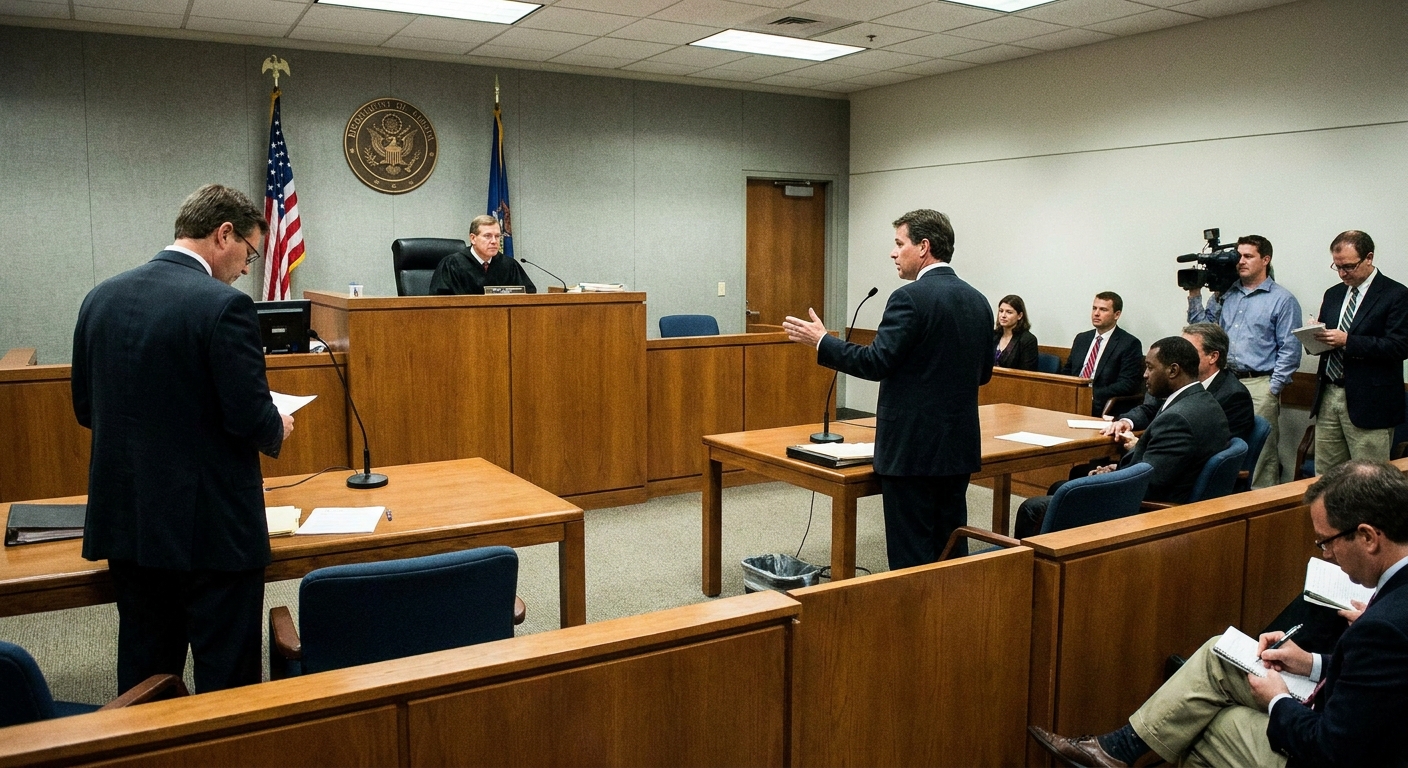
Sometimes a judge does not set bail at any price, or orders someone held without bail. Whether a court has that authority depends on the jurisdiction’s statutes and, in some states, the state constitution. Not because the defendant is being punished, at least not in the official story, but because the court concludes that releasing them would be too dangerous. That decision has a name that sounds clinical for something so human: preventive pretrial detention.
It is one of the sharpest pressure points in constitutional law: the government is restraining a person who is legally presumed innocent, based on what might happen next.
Join the Discussion
What preventive detention is
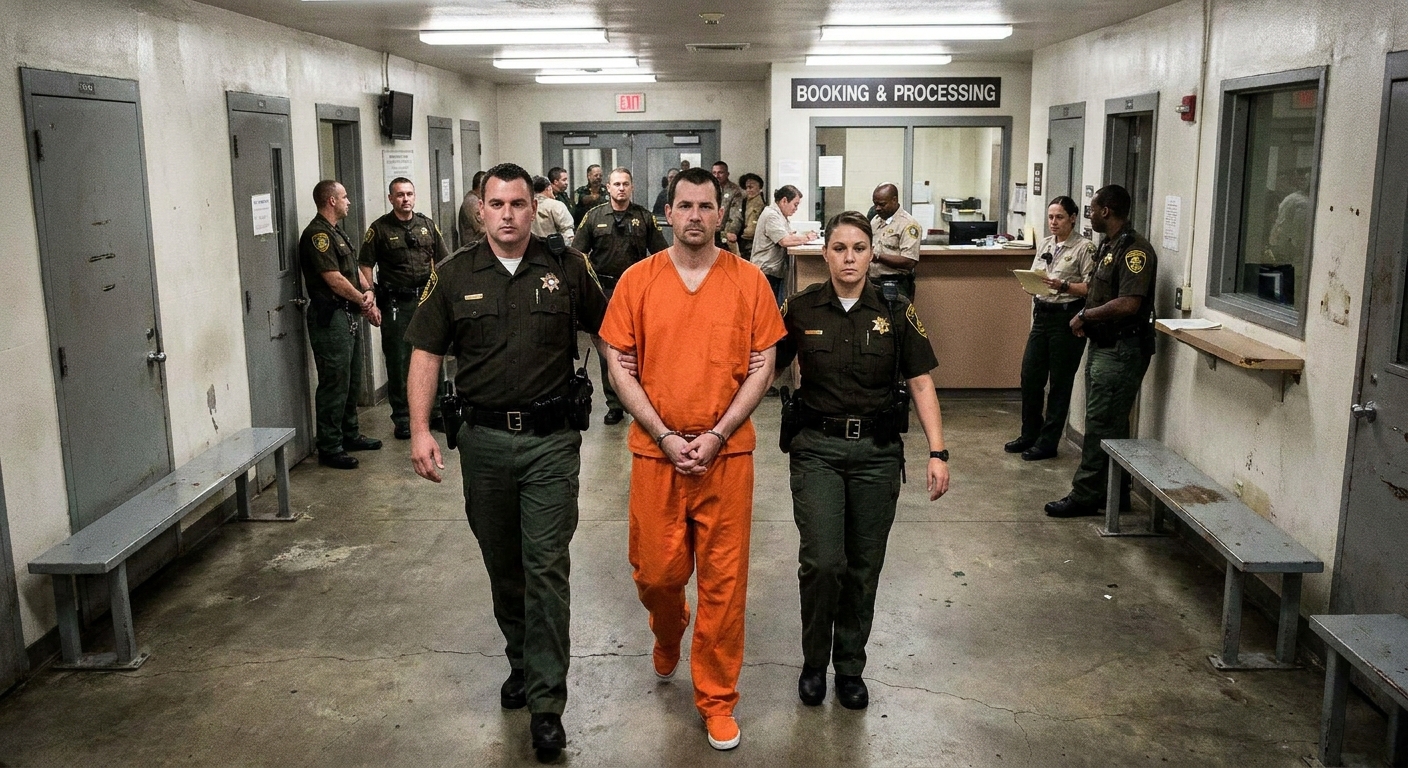
Preventive pretrial detention means a court orders someone held in jail while the case is pending because the court finds that release would create an unacceptable risk, even with conditions.
That risk usually comes in two forms:
- Dangerousness: the person is likely to cause serious harm (including violence) if released.
- Flight or nonappearance: the person is likely to disappear and not return to court.
This article focuses on the first category because it triggers the biggest constitutional unease. The state is not just trying to secure a court date. It is trying to prevent a future crime.
How it differs from cash bail
Cash bail is often described as a deposit that helps ensure a defendant returns to court. In practice, it has also functioned as a sorting mechanism: people with money go home, people without money stay in.
Preventive detention is different in its logic and in its claim to legitimacy, even though the lived experience can blur. Some courts use unaffordable bail as a de facto detention tool, which is part of why critics argue the line between “conditions” and “confinement” is not always bright.
Cash bail (in theory)
- Release is available if the defendant can meet conditions, often money.
- The stated goal is to ensure appearance in court.
- It can still keep people jailed, indirectly through inability to pay.
Preventive detention
- Release is not available because the court concludes no conditions will reasonably protect the community (or prevent witness intimidation in some systems).
- The stated goal is public safety and the integrity of the process, not punishment.
- It is openly about risk and prediction, which makes it more candid and more controversial.
This is why two defendants can face the same charge and have different outcomes. One might be offered release on conditions. Another might be held without bail because the judge believes conditions will not work.
The constitutional tension
Pretrial detention sits at the intersection of several constitutional principles that do not always harmonize.
Eighth Amendment
The Eighth Amendment says: "Excessive bail shall not be required". It does not say there is an absolute right to bail in every case.
That distinction matters. If the federal Constitution guaranteed bail in all cases, preventive detention would be much harder to justify. Instead, the central fight becomes whether denying bail, or setting bail so high it functions as denial, is justified by a legitimate regulatory purpose rather than punishment. Separately, some state constitutions do guarantee bail subject to specified exceptions, and those exceptions vary.
Due process
If the government is going to jail a person who has not been convicted, due process asks: what procedures are required, and what is the government allowed to justify?
At a minimum, the detention decision cannot be arbitrary. It must be based on information presented to a neutral judge, and the defendant must have a meaningful opportunity to contest the government’s claims. But detention hearings are not full trials. In many jurisdictions, including federal court, judges may rely on proffers and hearsay, and cross-examination can be limited.
Speedy trial
The longer a case takes, the more pretrial detention starts to feel like a sentence served before guilt is established. Speedy trial rights do not just protect the integrity of verdicts. They also put pressure on the system to move, even though exclusions, continuances, and case complexity can extend timelines in ways that still leave defendants waiting in jail.
Equal protection in practice
Danger-based detention is not about wealth the way cash bail is, but it can still raise equity concerns. Risk assessments and discretionary judgments can fall unevenly across communities, especially when they rely on prior contacts with law enforcement, neighborhood conditions, or subjective predictions about behavior.
Salerno
The modern constitutional foundation for federal preventive detention is United States v. Salerno (1987). The case upheld the federal Bail Reform Act of 1984, which permits pretrial detention in certain circumstances when the government proves that no release conditions will reasonably assure community safety.
In the federal system, the government generally must prove dangerousness by clear and convincing evidence. (For flight risk, the federal standard is typically lower, and state standards vary.)
The Court’s basic move was to draw a line between punishment and regulation:
- If pretrial detention is a disguised punishment, it collides with due process and the presumption of innocence.
- If it is a carefully limited regulatory measure aimed at preventing serious harm, and surrounded by procedural protections, it can be constitutional.
That framework still shapes the debate today. Supporters of preventive detention emphasize the limiting principle: a narrow category of cases, specific findings, judicial review, and prompt hearings. Critics emphasize the lived reality: prediction is imperfect, hearings can be fast and lopsided, and detention reshapes outcomes by pressuring guilty pleas and weakening defense preparation.
How detention decisions happen
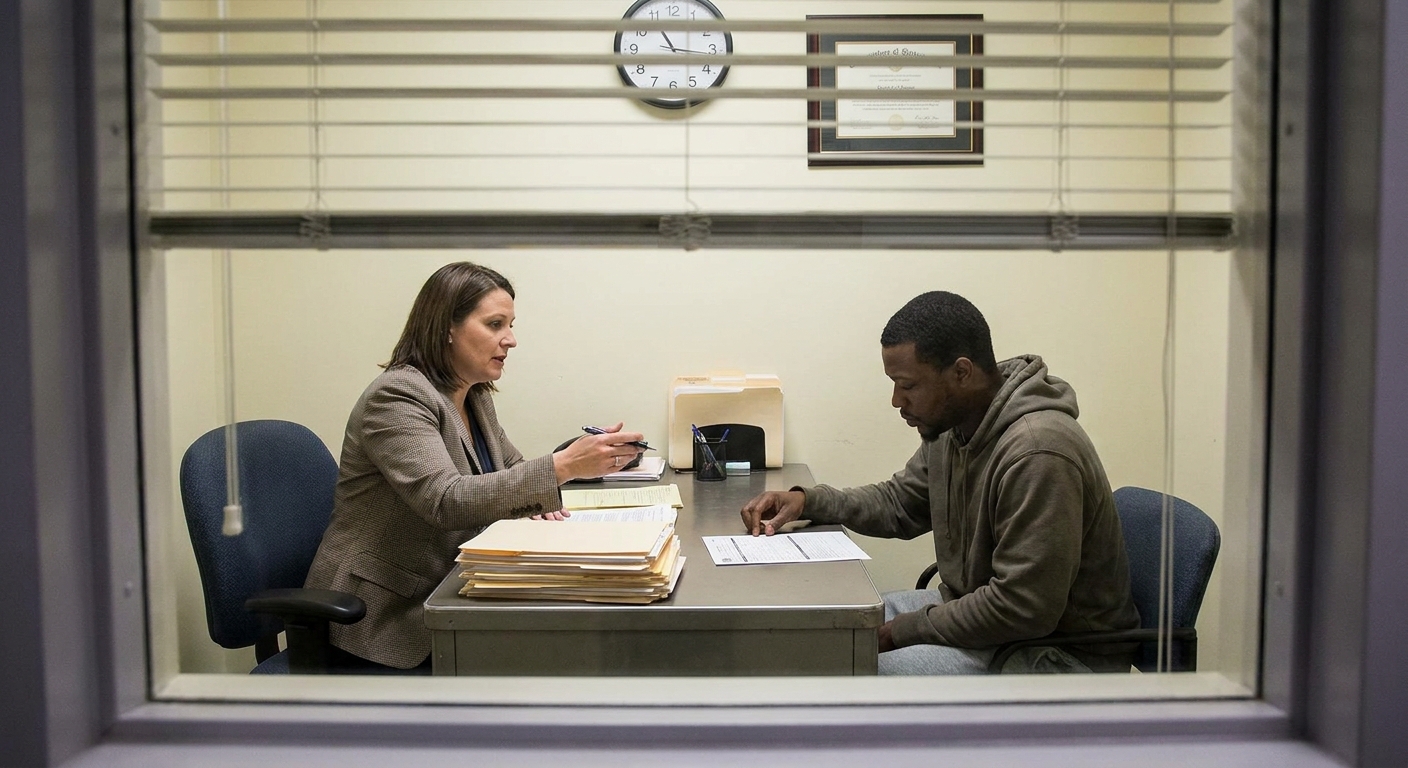
Procedure varies, but the basic posture is familiar. Soon after arrest, the court holds an initial appearance where release conditions are discussed. If prosecutors seek detention, many systems schedule a detention hearing quickly. In federal court, for example, the Bail Reform Act provides for a prompt hearing, and the government carries the burden to justify detention under the applicable standard.
This is also where confusion often lives: “detained without bail” is a court’s decision that no conditions are sufficient, while “jailed because of inability to pay” is a money condition that functions like a locked door for people without cash.
What judges weigh
The details vary by jurisdiction, but the conceptual checklist is surprisingly consistent. Courts tend to look at four buckets of information.
1) The charge and alleged conduct
Not all charges are treated equally. Allegations involving violence, firearms, serious drug trafficking, domestic violence, or threats to witnesses often trigger heightened scrutiny.
2) The strength of the evidence
Pretrial is not a trial, but judges often consider whether the case appears solid. The theory is straightforward: the stronger the evidence, the more likely the person is to face severe consequences, and the more the court worries about harm or flight.
3) Personal history
Courts commonly consider prior convictions, prior failures to appear, and patterns of violence. This is where the system’s memory comes in. It is also where concerns about feedback loops arise, because prior system contact can be influenced by policing patterns as much as by danger.
4) Whether conditions can reduce risk
Preventive detention is usually framed as the last resort. Judges ask whether any combination of conditions could reasonably manage the risk, such as:
- No-contact orders
- Stay-away zones
- Electronic monitoring
- Third-party custodians
- Curfews and supervision
- Surrendering firearms
If the judge concludes conditions are not enough, detention becomes the court’s answer to a question it cannot fully prove: what will this person do if released?
A quick example
Imagine two defendants accused of assault. One has a stable address, no prior violence, and the allegation involves a bar fight with no ongoing contact with the complainant. A judge might conclude that supervision and a no-contact order reasonably reduce risk.
The other is accused of assaulting an intimate partner and is alleged to have threatened the complainant afterward, with a recent history of violating court orders. A judge might conclude that conditions are unlikely to protect the complainant in real time, and order detention.
Federal and state patterns
It is easy to talk about "the" bail system as if the country has a single model. In reality, we have fifty states, thousands of counties, and one federal system, each with its own statutory language and local habits.
Federal
Federal law is the cleanest example of preventive detention as an explicit statutory tool. It provides a structured process for detention hearings and sets out categories of cases where detention can be sought, including certain violent crimes and serious drug offenses.
Federal courts also tend to operate with more standardized pretrial services and procedures, plus a record that can be easier to review on appeal. That does not necessarily mean outcomes are uniform, and federal detention often proceeds by proffer rather than live witnesses.
State
States vary widely, but most fall into recognizable clusters:
- Cash-bail dominant jurisdictions where money remains the default lever, even if preventive detention exists on paper for specific cases.
- Risk-based reform jurisdictions that reduce reliance on cash and use detention only after a dangerousness finding and a hearing.
- Constitution-limited jurisdictions where state constitutions historically guaranteed bail except for narrow categories, often capital cases, with modern amendments in some states expanding exceptions to include certain dangerousness findings.
The result is a national paradox. Two people accused of similar conduct can encounter radically different pretrial rules depending on where they are arrested. That is not always a constitutional problem, but it is always a civic one.
Regulation, not punishment
Courts repeatedly insist that pretrial detention for dangerousness is not supposed to punish. It is supposed to protect the community and preserve the integrity of the judicial process.
That distinction does a lot of legal work. It also creates a constant stress test.
When it starts looking punitive
- Long delays before trial, especially when the defendant is detained the entire time.
- Jail conditions that are harsher than necessary for a regulatory hold.
- Thin hearings where the defendant cannot meaningfully contest the government’s narrative.
- Overbroad categories that treat charges as proxies for danger without individualized findings.
Even when a detention statute is constitutional on its face, an individual case can raise due process problems if the process becomes a rubber stamp or the detention becomes effectively indefinite.
Why it is a news hook
Every high-profile pretrial release followed by a new violent crime generates the same political question: why was that person out?
Every high-profile case of a low-risk defendant jailed for weeks or months generates the opposite question: why was that person in?
Preventive detention is where those two narratives collide. It is the system admitting that its choices are not just administrative. They are moral wagers made under uncertainty.
That is also why reform debates can talk past each other. One side sees detention as the failure of a presumption. The other sees release as the failure to heed a warning sign.
Key themes
- The Eighth Amendment limits excess, but it does not guarantee bail in every case, and state constitutions can set different baselines.
- Due process is the battleground: if the state is going to detain, it must justify the decision with fair procedures and individualized findings, even if the hearing is not a full trial.
- Prediction is unavoidable: dangerousness-based detention turns judges into forecasters, and constitutional law is largely about how constrained that forecasting must be.
- Pretrial outcomes shape final outcomes: detention can change plea bargaining leverage, defense preparation, employment, housing, and family stability long before any verdict.
- Localism matters: the Constitution sets floors, but state constitutions and statutes often decide whether detention is rare, routine, or reform-driven.
The civic question
Preventive pretrial detention forces an uncomfortable honesty. The justice system does not only adjudicate past conduct. It manages risk.
The constitutional challenge is not to pretend we can avoid that. It is to insist that when the government takes a person’s liberty before conviction, it does so with transparency, evidence, and restraint. Not because the Constitution is soft on crime, but because it is stubborn about power.
That is the conversation preventive detention should open: not simply whether a defendant should be held, but what a free society must prove to itself before it locks someone up to prevent the future.