
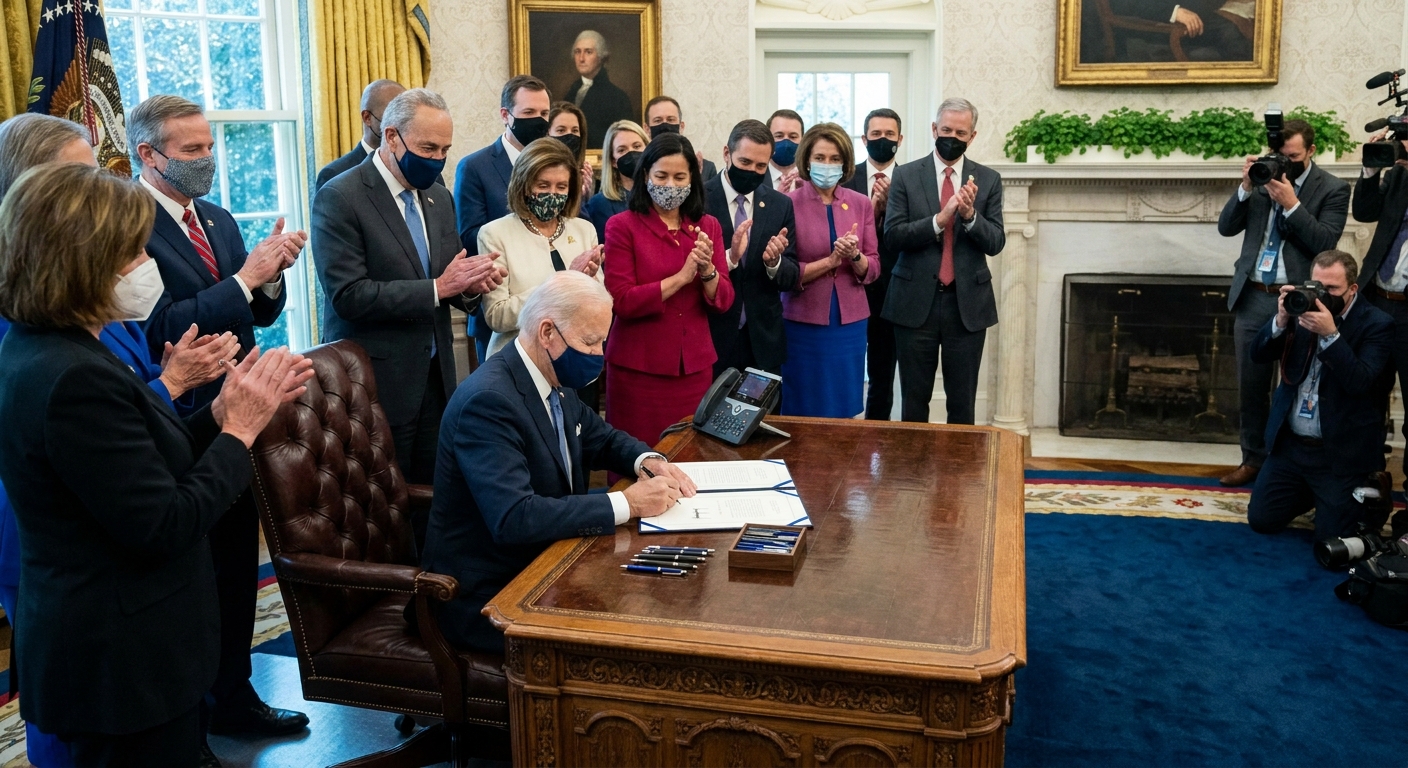
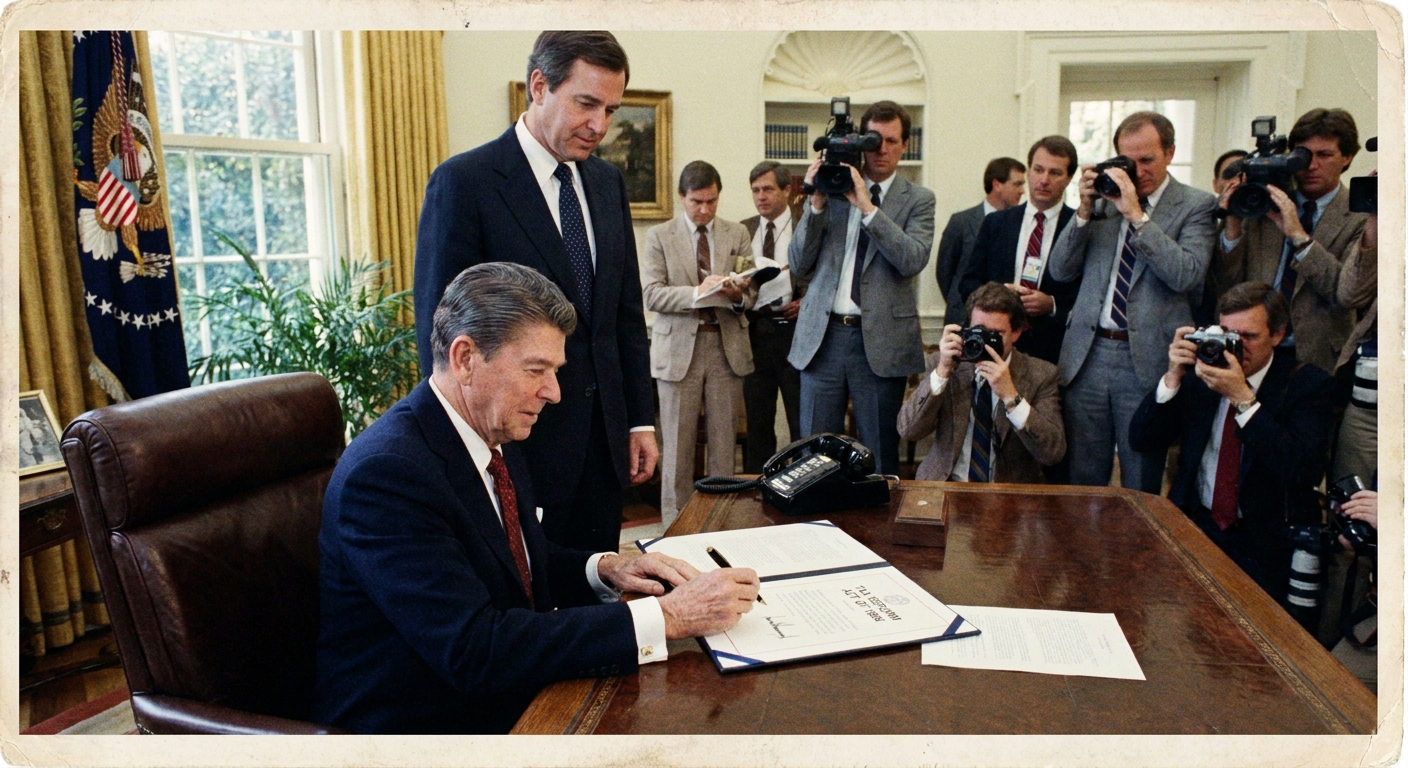
The president signs a bill. Cameras click. Pens multiply. And then, sometimes, the president adds a few paragraphs that sound like a footnote to the law itself.
That footnote is a presidential signing statement, and it is one of the most misunderstood tools in the executive branch. Some people hear “statement” and assume it is symbolic. Others hear presidents talk about parts of a law being “unconstitutional” and assume the statement quietly cancels those parts out.
Neither is quite right. Signing statements can matter a lot in how an administration implements a statute. But they do not change the statute’s words. They do not repeal anything. They do not create a line-item veto. And when disputes reach court, the text of the law still does the heavy lifting unless judges accept the president’s interpretation.
Join the Discussion
What a signing statement is
A signing statement is a written document a president issues at the time of signing a bill into law. It is published in official channels and usually does one of three things:
- Explains the president’s understanding of what the law means or how it fits with existing statutes.
- Signals enforcement priorities or administrative guidance, especially for complex laws that require agencies to write rules.
- Raises constitutional objections, often by saying that the executive branch will interpret or apply certain provisions in a way that avoids constitutional conflict.
That last category is where controversy lives. When a president says, in writing, that a statutory requirement will be executed “consistent with” the president’s constitutional authority, critics often hear: “I will treat this as optional.”
Sometimes that criticism is fair. But the key point is structural: the statement is not the law. Article I requires that a bill pass both houses of Congress and be presented to the president. A signing statement is not part of that process. It is commentary accompanying the final step.
Signing statements versus vetoes
To understand what signing statements do not do, it helps to compare them to the tools the Constitution explicitly gives the president.
Veto: the constitutional “no”
Under Article I, Section 7, the president can return a bill to Congress with objections. If Congress musters two-thirds of both houses, it can override the veto and enact the bill anyway.
A veto is blunt and public. It stops a bill unless Congress overrides it.
Pocket veto: the deadline “no”
Article I, Section 7 also creates the pocket veto. If Congress sends a bill to the president and then adjourns in a way that prevents its return, the bill fails if the president does not sign it within ten days (excluding Sundays).
The pocket veto works like a veto without the chance of an override, because Congress is not available to receive the bill back with objections. It is constitutionally real and procedurally decisive.
Signing statement: the interpretive “here is how I read it”
A signing statement comes after the “yes.” The bill becomes law. The statute is enrolled. The United States Code will reflect what Congress passed, not what the president wrote afterward.
The president cannot veto parts of the bill by signing it and complaining about the parts he dislikes. The Supreme Court rejected the line-item veto in Clinton v. City of New York (1998), holding that the president cannot unilaterally cancel portions of duly enacted statutes.
So if you want the cleanest rule of thumb, it is this: a veto changes whether the bill becomes law; a signing statement does not.
Why administrations use signing statements anyway
If signing statements cannot rewrite statutes, why do presidents bother?
Because the president runs the executive branch. Most laws are not self-executing. They require agencies to interpret terms, allocate funds, issue regulations, prioritize enforcement, and decide what compliance looks like in the real world.
Signing statements can function as a message to that bureaucracy: this is what the White House wants, and this is how we will defend it.
Two common motives
- Interpretation: When a statute is ambiguous, the executive branch has to choose an interpretation to implement. A signing statement can plant a flag early.
- Constitutional avoidance: Presidents sometimes argue that a provision would be unconstitutional if read broadly, and they will instead enforce it narrowly.
Presidents of both parties have issued signing statements. They are not new. What has changed over time is how aggressive they can be and how frequently they are used, particularly to object to provisions affecting executive power, national security, oversight, and appointments.
There is also a quieter, less dramatic use: presidents sometimes use signing statements to praise a bill, thank sponsors, or explain policy goals. Those are politically useful, but legally uninteresting.
Do signing statements have legal force?
Not in the way statutes do. A signing statement is not enacted by Congress, so it is not binding law. But it can still matter in three practical ways.
1) Inside the executive branch
Agencies take cues from the president. If a signing statement directs an agency to interpret a provision narrowly or to treat a reporting requirement as conflicting with executive privilege, that guidance can shape day-to-day implementation.
2) In interbranch conflict
Signing statements can be used as a bargaining chip in disputes with Congress, especially around oversight demands, conditions on spending, or rules for how an agency must consult with legislators.
3) In court, sometimes, as interpretive material
Courts interpret statutes primarily through the text, structure, and ordinary tools of statutory interpretation. Legislative history may play a role in some cases. Executive materials, including signing statements, generally sit far down the list.
But “far down the list” is not the same as “never.” A court might notice a signing statement as part of the broader context, especially if it aligns with a plausible reading of the statutory language and the implementing agency has acted consistently with it.
Still, the core constraint remains: judges do not treat a signing statement as if it were a statutory amendment.
How courts have treated signing statements over time
Judicial treatment has been cautious, uneven, and highly fact-dependent. Courts are generally reluctant to give significant weight to a president’s post-enactment commentary for a simple reason: the president is not the legislature.
When courts interpret a statute, they typically ask questions like:
- What do the words Congress enacted mean in their ordinary context?
- How does this provision fit within the statute as a whole?
- What did Congress clearly authorize or forbid?
- If there is ambiguity, what interpretation is reasonable and consistent with the statutory scheme?
A signing statement might appear as a supporting data point, but it rarely drives the outcome. And if the signing statement pushes an interpretation that conflicts with the text, courts usually treat the text as controlling.
There is another key feature of litigation: many disputes about signing statements never reach a merits decision. They get filtered out by standing rules, political question concerns, or the reality that interbranch conflict is often resolved through negotiation rather than final judgments.
What signing statements do not change
This is the part most Americans deserve to hear plainly, because misunderstanding here creates unnecessary panic.
- They do not change the statutory text. The U.S. Code reflects what Congress passed and the president signed, not what the president later explained.
- They do not repeal or suspend provisions. Only Congress can amend or repeal a statute, or a court can invalidate it.
- They do not create a line-item veto. The Constitution requires the president to sign or veto the bill as a whole, subject to narrow procedural realities like the pocket veto.
- They do not bind courts. Judges may consider them, but they are not authoritative statements of what Congress meant.
That does not mean they are meaningless. It means they are not magic. If a president wants a different law, the constitutional route is to persuade Congress to pass a different law, or to veto the bill and force Congress to negotiate or override.
The real-world takeaway: text still controls
Here is the practical civics lesson you can use the next time a signing statement makes headlines.
Signing statements can influence how the executive branch implements a law. That can affect enforcement, regulation, and the posture the Justice Department takes when defending a statute in court.
But the statute remains the statute. If someone sues, the question is not “What did the president say while signing it?” The question is “What did Congress enact?” and then, “Is the executive branch acting within that authority?”
In other words, a signing statement can be a signal flare, sometimes a threat, sometimes a promise. It is not a rewrite.
Questions to ask when you see one
If you want to read signing statements like a constitutional grown-up, focus on a short checklist.
- Is the president clarifying ambiguity or contradicting clear text? Clarification is common. Contradiction is where lawsuits, oversight battles, and constitutional conflict begin.
- Is the objection about executive power? Many aggressive signing statements center on supervision of the executive branch, foreign affairs, national security, or information control.
- What will agencies do next? Look for implementing regulations, guidance memos, enforcement choices, and budget decisions. That is where statements become reality.
- Will a court ever review it? Some issues will be litigated by regulated parties. Others will remain political disputes between branches with no clean judicial path.
Signing statements sit in a constitutional gray zone because they are a form of presidential speech attached to a constitutional act. They can reveal how power is being asserted in real time. But they do not move the legal text an inch unless courts, or Congress, or both, follow the president there.