
People talk about the insanity defense like it is a magic phrase: say it, and the courtroom door swings open. In reality, it is among the narrowest, most technical defenses in American criminal law, and it answers a very specific question.
Not whether the defendant did the act. Not whether the defendant had a diagnosis. The insanity defense asks whether, at the moment of the crime, a severe mental condition prevented the defendant from meeting the law’s minimum requirements for criminal responsibility.
And in sheer frequency, it is rare. Studies commonly cited in the legal literature put insanity pleas at roughly around 1 percent of felony cases, with successful outcomes a fraction of that. Exact rates vary by jurisdiction and study design, but the basic point holds: the defense exists, yet it is not a routine escape hatch.
Join the Discussion
Insanity vs competency: a common mix-up
Insanity and competency get blended together in public conversation, but they operate at different times and do different constitutional roles.
Competency to stand trial
- When it matters: during the prosecution, before and during trial.
- What it asks: can the defendant understand the proceedings and assist counsel in a rational way?
- What happens if the defendant is incompetent: the case pauses. The state may provide treatment aimed at restoring competency.
There is also a constitutional backstop: the state cannot keep someone in competency limbo indefinitely. Under Jackson v. Indiana (1972), confinement for restoration is limited to a reasonable period to determine whether competency is likely to be restored. If restoration is not likely, the state generally must shift to ordinary civil commitment (with the usual mental illness and dangerousness standards) or release the person, and the details vary by jurisdiction.
Insanity at the time of the offense
- When it matters: as a defense to guilt, focused on the moment of the criminal act.
- What it asks: was the defendant legally responsible given their mental state then?
- What happens if the defendant is found legally insane: the verdict is typically “not guilty by reason of insanity,” followed by a separate commitment process.
Someone can be competent to stand trial but still argue insanity. Someone can be incompetent to stand trial without having any plausible insanity defense. They are different legal tools aimed at different problems.
What the defense must show
American criminal law usually requires two ingredients: a wrongful act and a culpable mental state. The insanity defense is an argument that, because of a severe mental disorder, the defendant was missing the kind of moral and cognitive capacity the law treats as the baseline for blame.
That baseline is not medical. It is legal. Courts are not asking whether the defendant had schizophrenia, bipolar disorder, or PTSD in the abstract. They are asking whether the disorder fits a specific legal test in a specific jurisdiction.
One more important boundary: many jurisdictions limit what counts as a qualifying “mental disease or defect,” and many exclude certain categories. Depending on the state, exclusions can include conditions like antisocial personality disorder, and insanity claims based solely on voluntary intoxication are often barred or sharply limited. The labels differ, but the pattern is consistent: the legal gate is narrower than the clinical one.
The major legal tests
States do not use a single uniform insanity rule. Instead, they choose among a handful of frameworks, each of which draws the boundary between sickness and legal responsibility in a slightly different place.
M’Naghten: right and wrong
The oldest and still widely used approach is the M’Naghten rule, originating from an 1843 English case. In modern American form, it typically asks whether, due to a mental disease or defect, the defendant either:
- did not understand the nature and quality of the act, or
- did not understand that the act was wrong.
“Wrong” is where jurisdictions quietly diverge. Some emphasize legal wrongfulness, some emphasize moral wrongfulness, and some blend the two. M’Naghten is primarily cognitive. It is about understanding and awareness.
Irresistible impulse: control
Some jurisdictions historically added an “irresistible impulse” component. The idea: a person might understand an act is wrong but be unable, because of mental illness, to control their behavior.
This approach tries to capture volition, not just knowledge. It also raises an obvious litigation problem: proving what was truly “irresistible” as opposed to merely “unresisted.” That difficulty is one reason many states moved away from a stand-alone irresistible impulse test, although some jurisdictions still incorporate volitional ideas through other formulations.
Model Penal Code (MPC): substantial capacity
The American Law Institute’s Model Penal Code offered a broader test that many states adopted in some form. Under the MPC approach, a defendant is not responsible if, because of mental disease or defect, they lacked substantial capacity either to:
- appreciate the criminality or wrongfulness of their conduct, or
- conform their conduct to the requirements of law.
Two words do a lot of work here: substantial and appreciate. The MPC does not demand total incapacity. And “appreciate” can include a deeper, emotional grasp of wrongfulness, not just the ability to recite rules.
A quick example
Imagine a defendant in the grip of a fixed delusion who believes they are stabbing a demon in self-defense, not a human being. That is the kind of fact pattern that can fit M’Naghten’s “nature and quality” language.
Now imagine a defendant who knows they are attacking a person and can say, out loud, “This is illegal,” yet because of a severe psychotic break cannot meaningfully process that reality or cannot conform their behavior in the moment. Some jurisdictions would still reject insanity under a strict cognitive test, while an MPC-style “substantial capacity” framework is designed to at least ask the broader question.
Federal rule after Hinckley
After the attempted assassination of President Ronald Reagan and the acquittal of John Hinckley Jr. by reason of insanity, Congress narrowed the federal standard through the Insanity Defense Reform Act of 1984. Federal law focuses on whether, due to severe mental disease or defect, the defendant was unable to appreciate the nature and quality or wrongfulness of the act. The volitional “control” prong was removed.
States without the classic verdict
A small number of states have eliminated the traditional insanity verdict while still allowing mental illness evidence in other ways, such as disputing intent. Kansas is the best-known modern example after Kahler v. Kansas (2020), and states like Idaho, Montana, and Utah have also restricted or abolished the classic framework in various ways. The labels and substitutes differ, which is the point: the landscape is not uniform.
Verdicts and alternatives
When people imagine an insanity case, they picture one dramatic verdict. In practice, there are multiple paths a jury can take depending on the state, and procedures differ. Some jurisdictions decide insanity in a separate phase, and in some settings a judge, not a jury, is the decision-maker.
Not guilty by reason of insanity (NGRI)
NGRI means the jury finds the prosecution proved the elements of the offense, but the defendant met the jurisdiction’s legal insanity test. It is an acquittal, but it usually does not mean the defendant walks out of the courthouse.
Guilty but mentally ill (GBMI)
Some states offer GBMI (sometimes phrased as “guilty but insane” or similar terminology). The jury can conclude the defendant is guilty and also mentally ill. The defendant is sentenced like any other offender, often with the promise of mental health treatment while incarcerated.
GBMI is controversial because it can operate as a compromise verdict. A juror who thinks “this person is sick” but is unsure about the legal insanity standard may land on GBMI. In some systems, that can mean prison first and treatment second, depending on resources and policy.
Guilty, with mental illness used in narrower ways
Even without an insanity verdict, mental condition evidence can show up elsewhere:
- Mens rea defenses: arguing the defendant did not form the specific intent required by the statute.
- Sentencing mitigation: asking for a lower sentence or treatment-oriented conditions.
- Diminished capacity (where recognized): a partial doctrine in some jurisdictions, often limited and sometimes tied to specific-intent crimes.
These are not the insanity defense, but they are often what remains when a jurisdiction narrows insanity or when the evidence does not satisfy the formal test.

After an insanity acquittal
The most persistent myth is that NGRI equals freedom. Typically, it triggers a separate civil commitment process, and confinement can be long.
Commitment: danger and treatment
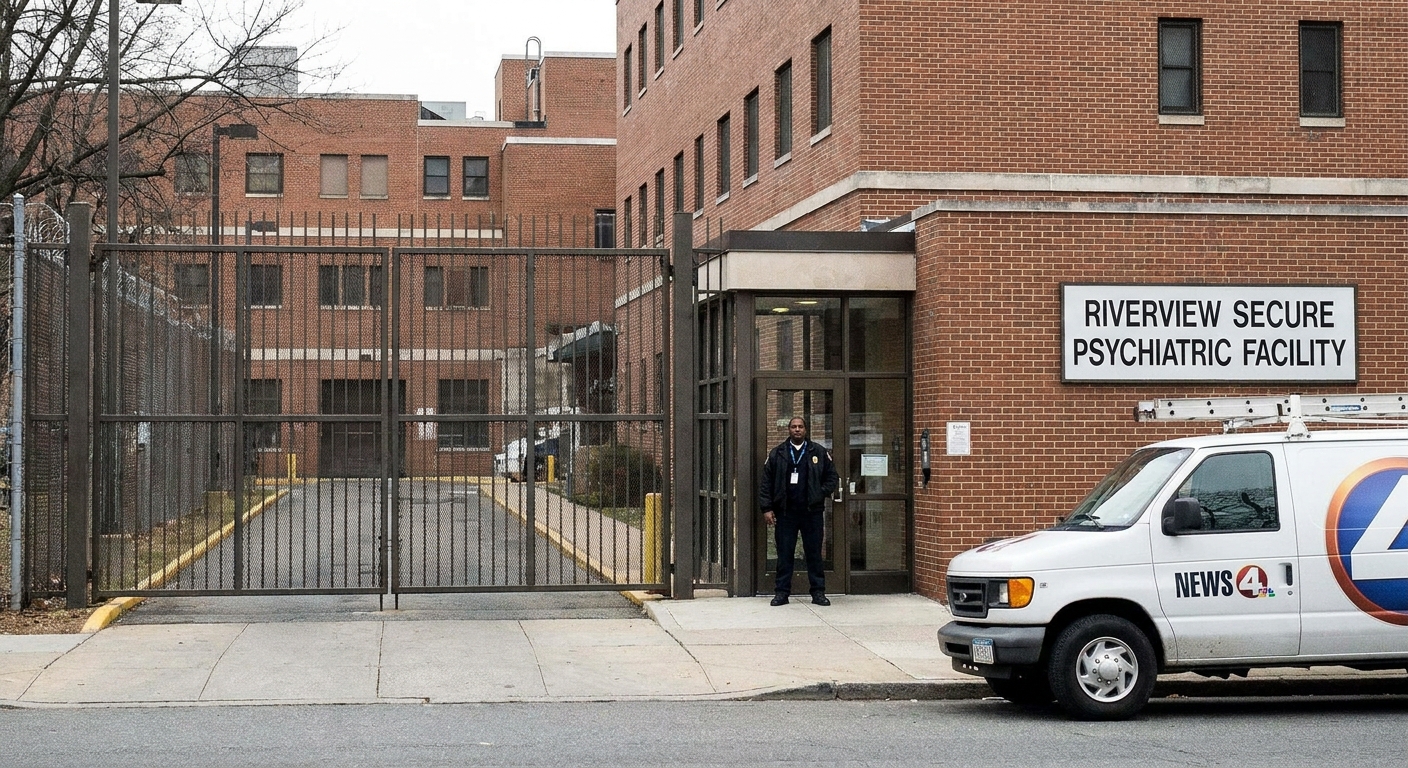
After an NGRI verdict, states commonly commit the person to a secure psychiatric facility. The constitutional theory is civil, not criminal: the state is not punishing, it is restraining someone who is mentally ill and dangerous while providing treatment.
How long can confinement last?
The Supreme Court has drawn boundaries here. The state cannot hold an insanity acquittee indefinitely without the predicates that justify civil commitment, typically mental illness plus dangerousness under the governing scheme.
- Jones v. United States (1983): upheld automatic commitment after an insanity acquittal and permitted confinement that can exceed the maximum prison term, so long as the person remains within the statutory commitment criteria, commonly continuing mental illness and dangerousness.
- Foucha v. Louisiana (1992): held that a state cannot continue to confine an insanity acquittee who is no longer mentally ill, even if the state believes the person is still dangerous. Danger alone is not enough for this form of confinement.
Release is usually staged
Many acquittees move through stages: secure hospitalization, less restrictive treatment, conditional release with monitoring, and only later full discharge. The paperwork varies by state, but the underlying idea is consistent: the verdict changes the pathway, not the public safety concerns.
Burden of proof
In most criminal cases, the prosecution bears the burden to prove guilt beyond a reasonable doubt. Insanity is often treated differently.
Depending on the jurisdiction, the defendant may have to prove insanity by:
- preponderance of the evidence (more likely than not), or
- clear and convincing evidence (a higher civil standard).
Federal law places the burden on the defendant by clear and convincing evidence. Many states do something similar. But not all do. A minority of jurisdictions place more of the burden on the prosecution once insanity is properly raised, or they structure presumptions and standards differently. The result is the same practical warning: you cannot talk about “the insanity defense” without checking the jurisdiction.
Constitutional limits
The Constitution does not contain a clause that says, “There shall be an insanity defense.” What it contains is due process, and that is where the modern fights live: how much room states have to define criminal responsibility.
States have wide latitude
The Court has repeatedly signaled that states get significant flexibility in shaping the defense.
- Clark v. Arizona (2006): upheld Arizona’s narrow insanity test and permitted limits on how mental illness evidence could be used to rebut mens rea.
- Kahler v. Kansas (2020): upheld Kansas’s approach that eliminated a traditional moral incapacity insanity defense, allowing mental illness evidence primarily to contest intent. The Court emphasized history and state variation, concluding due process does not force a single, nationwide insanity formula.
Due process still polices the edges
Even with that flexibility, constitutional protections still matter around the defense:
- Competency to stand trial remains mandatory. A state cannot skip the basic requirement that a defendant be able to understand proceedings and assist counsel.
- Civil commitment standards constrain what happens after NGRI. The state cannot transform treatment-based confinement into a permanent detention program untethered from mental illness.
- Procedural fairness matters. If a state offers an insanity defense, it must provide a fair process for presenting it and a lawful standard for deciding it.
Why it is rare
Serious mental illness is present in the criminal legal system far more often than the insanity defense appears. That mismatch is not an accident. The defense is narrow by design.
- Most mental illness does not erase legal responsibility. Many people with significant diagnoses still understand what they are doing and that it is wrong.
- Insanity is about the moment of the offense. A breakdown months later, or a long psychiatric history, may be relevant but is not automatically decisive.
- Juries are skeptical. The defense carries cultural baggage and is often perceived as a loophole, even when the law treats it as a boundary on punishment.
- The post-verdict reality is confinement. Defendants and attorneys sometimes avoid NGRI because the commitment pathway can be uncertain in length.
A simple way to remember it
If you want a clean mental model, use this three-part separation:
- Competency asks: can we have a trial at all?
- Insanity asks: should we hold this person criminally responsible for what happened then?
- Commitment asks: if they are not criminally responsible, can the state still restrain them for treatment and safety, and under what limits?
Those are different questions with different answers. And in American law, the most important part is often the least discussed: the Constitution does not promise any particular insanity test, but it does insist that whatever a state builds must still respect due process, especially when confinement continues after the verdict.