
The U.S. Constitution
Archival records, profiles, and educational resources since 1995.

Extradition: How It Works in the U.S. and Abroad
Extradition is one of those legal concepts that sounds dramatic, like it belongs in a courtroom thriller. In real life, it is mostly paperwork, deadlines, and a question that matters more than people realize: Which government gets to bring you back ? Extradition is the process of transferring a...
Read more →
Sanctuary Cities Explained
"Sanctuary city" sounds like a legal status. It is not. There is no checkbox in federal law that turns a city into a sanctuary, no formal certification from Washington, no constitutional clause that blesses or bans the label. What the term usually means is much narrower and much more technical: a...
Read more →
The National Emergencies Act Explained
You can feel the word emergency doing work in American politics. It signals urgency, danger, and the idea that normal rules might need to bend. But under federal law, a “national emergency” is also something much more technical. It is a legal switch. Flip it, and scores of dormant statutory...
Read more →
Jury Duty: What to Expect
Few envelopes trigger as much immediate bargaining as a jury summons. You scan it as if it were a parking ticket. You check the date. You do the math. You start asking everyone you know: “Can I get out of this?” But jury duty is not a random civic chore invented to ruin your week. It is one of...
Read more →
How Primaries and Caucuses Choose a Nominee
Every four years during presidential cycles, Americans watch “the primary” unfold as if it were an official constitutional rite, like the Electoral College or the State of the Union. It is not. The Constitution never created primary elections. It never mentions political parties. It does not...
Read more →
What Is Asylum? The U.S. Asylum Process
In everyday conversation, people use the word asylum like it means “a safe place to go.” Under U.S. law, it means something narrower and much more structured. Asylum is a legal protection the United States can grant to a person who is seeking protection inside the U.S. or in removal proceedings...
Read more →
How to Register to Vote
Registering to vote feels like it should be automatic in a constitutional democracy. In some countries, it is. In the United States, it usually is not. That is not an accident of paperwork. It is built into how American elections are administered: states run the day-to-day machinery, and the rules...
Read more →
How Supreme Court Justices Are Nominated and Confirmed
Supreme Court justices are not “hired” the way most powerful decision-makers are. They are appointed through a constitutional handshake between two elected branches, with the President choosing a nominee and the Senate deciding whether that choice becomes a justice with life tenure (absent...
Read more →
The Debt Ceiling Explained
You have probably heard the debt ceiling described as a national credit limit. That metaphor is close enough to be useful, and wrong enough to cause real confusion. The United States does not suddenly “run out of money” simply because Congress hit a preset number. The bind is legal, not...
Read more →
Medicare Drug Price Suits Move Through Lower Courts
The Biden administration is defending the Medicare drug price negotiation program created by the Inflation Reduction Act, but the fight is playing out where many major federal programs are tested first: in the lower courts. Drugmakers and industry groups have filed multiple lawsuits in federal...
Read more →
House GOP Rejects Senate Deal, Shutdown Drags On
House Republicans turned down a Senate continuing resolution, prolonging a partial shutdown. A plain-English guide to CRs, the Antideficiency Act, and what stops first.
Read more →
Debugging the Constitution
You can learn a lot about the Constitution by watching where people expect it to do something, and then noticing what it actually does instead. That is why this “test article for debugging” is not as silly as it sounds: it is a controlled run at a familiar problem. Debugging is what we do when...
Read more →
DHS Funding Standoff
Washington loves to talk about “national security” in the abstract. But the Department of Homeland Security shutdown has a way of stripping the abstraction off. When the White House has to reach for existing funds to keep about 50,000 TSA agents from missing yet another paycheck, you are not...
Read more →
Iran Hits Prince Sultan Air Base: The Constitutional Question Behind the Smoke
Twelve American service members were injured on Friday when Iran hit Prince Sultan Air Base in Saudi Arabia with a combined missile and drone strike. Two of those troops were reported seriously hurt. U.S. officials said at least two KC-135 aerial refueling aircraft also suffered significant damage....
Read more →
Cruz’s Warning to the GOP
Ted Cruz is making a familiar midterm argument, but with a distinctly constitutional edge: control of Congress is not just about policy. It is about the machinery of oversight, confirmations, and impeachment. In his telling, if Democrats retake the House, President Donald Trump will be “impeached...
Read more →
How is Trump trying to lower gas costs - and will it work?
Gas prices do not rise because the president wakes up and chooses chaos. They rise because oil is a globally priced commodity, refined into gasoline, then pushed through a supply chain that is allergic to uncertainty. Right now, uncertainty has a name: a shooting war with Iran and a chokepoint that...
Read more →
Pima County Deputy Accused of Kidnapping Woman in Custody
A former Pima County Sheriff’s deputy in Arizona is facing a felony kidnapping charge after authorities say he abused his position while transporting a woman who was already in custody. The deputy, identified by police as 22-year-old Travis Reynolds, has been arrested, booked, and fired from the...
Read more →
‘No Kings’ Protests: What to Know
“No Kings” is not subtle branding. It reads as a constitutional argument in three syllables: America rejected monarchy in 1776, and it did not swap it for an elected version of royal power in 2026. Today, that argument is spilling into streets and town squares at a scale that is hard to miss....
Read more →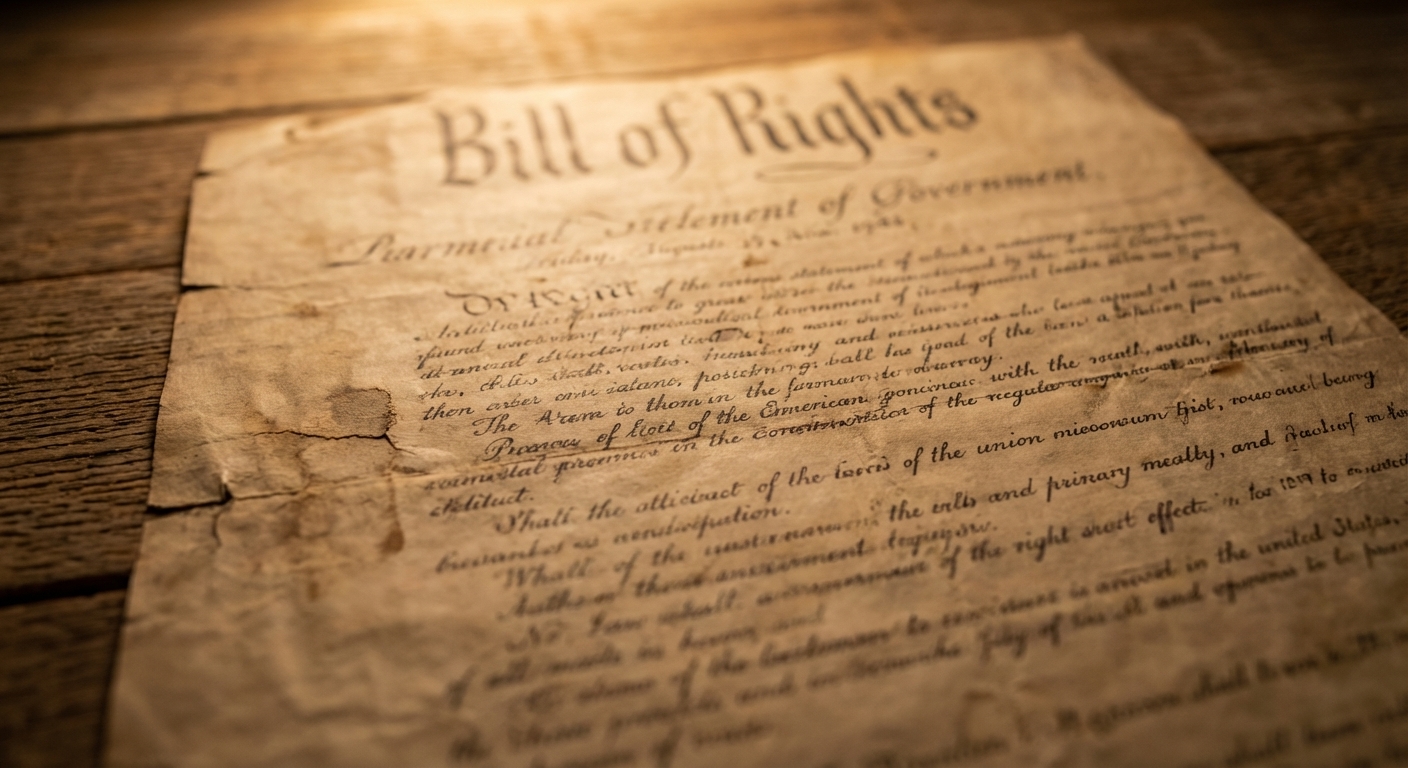
The Bill of Rights: The First 10 Amendments, Explained
The Bill of Rights is only ten amendments long, but it quietly defines what “freedom” means in American law. These amendments were added in 1791 to answer a fear that the new federal government would grow teeth faster than the people could grow protections. One catch that surprises students...
Read more →
Impeachment vs. the 25th Amendment
There are two constitutional off-ramps for a president who should not keep wielding presidential power. One is punishment. The other is triage. Impeachment is Congress accusing and trying a president for serious misconduct. It is designed for abuses of power, corruption, and betrayal of public...
Read more →