
In a recent drawdown, Oracle’s stock slipped to a fresh 52-week low. The move looked, at first glance, like the usual market morality play. A red number appears, and the crowd assumes something snapped overnight.
But the more revealing story is slower. Oracle was being repriced not because the company forgot how to sell databases, but because the market started treating the AI infrastructure boom like what it is: a capital-intensive buildout with a payoff schedule that is easy to promise and hard to prove.
Read this as a case study of how a “new 52-week low” moment forms, not as a claim that one specific headline explains every tick in the chart. The point is consistent across cycles. When the price action turns, it tends to expose the same underlying question.
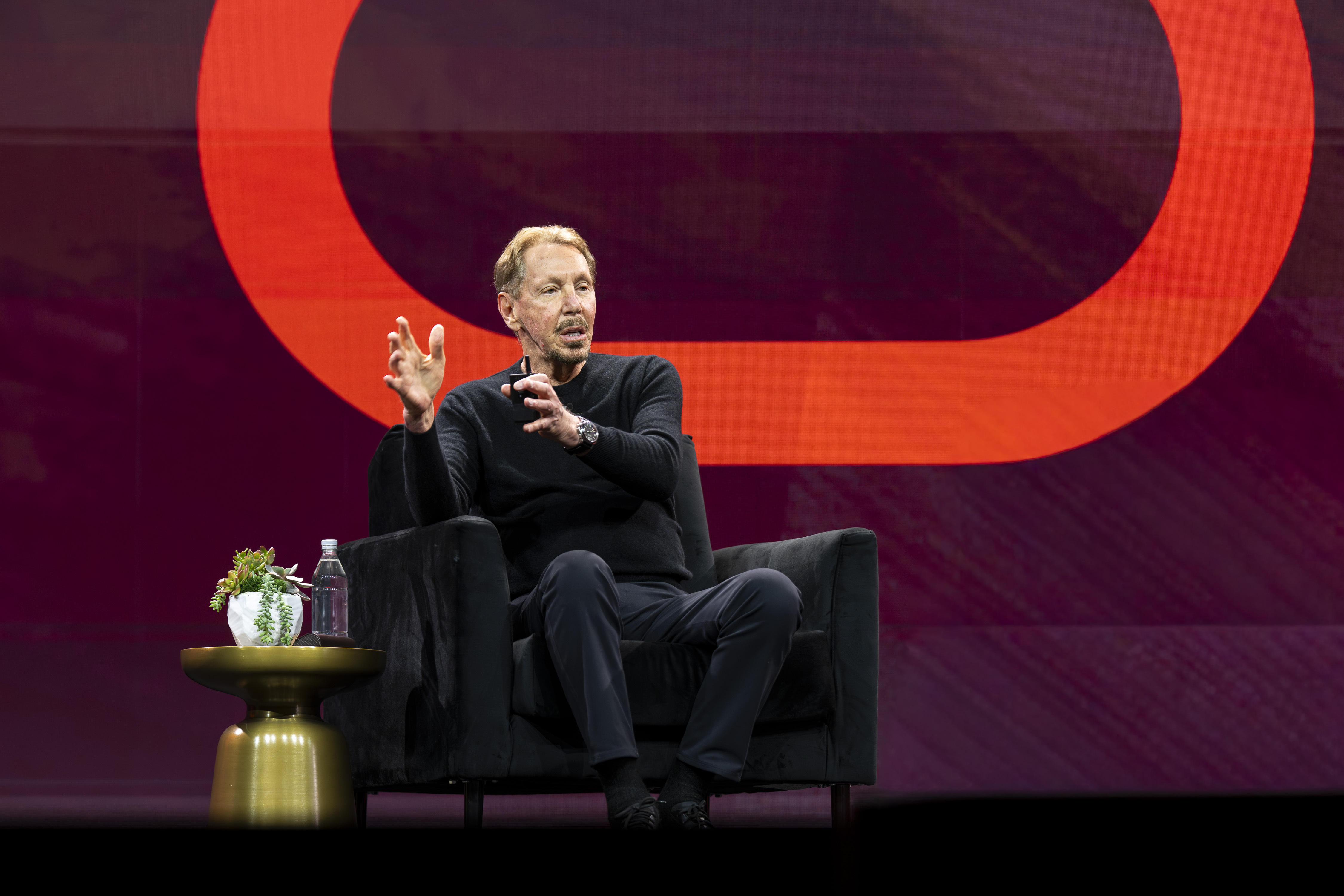
When Larry Ellison sells the future, he sells it loudly. That is part of why a reversal feels personal, even theatrical. Oracle’s AI pitch has been a celebrity narrative as much as a cloud narrative. And when the stock hits that kind of low, the question investors revert to is brutally unglamorous: how long can Oracle keep spending heavily on AI capacity before that capacity reliably turns into revenue and cash flow?
Join the Discussion
The hot take vs. the real one
The viral explanation is neat and satisfying: Oracle rode the AI wave, then crashed when investors lost faith.
The real version is messier and more instructive. Oracle is trying to expand from a company famous for enterprise software margins into a company that can win a share of the most expensive business in tech: building and operating AI-ready cloud infrastructure at scale through Oracle Cloud Infrastructure (OCI).
That shift changes what investors care about. In the software world, the questions are about recurring revenue, renewal rates, and operating margin. In the infrastructure world, the questions turn into:
- How much capital do you have to spend before you can recognize revenue?
- How long are customers actually locked in?
- How much financial flexibility do you have while you wait?
- What happens if the AI demand curve flattens even temporarily?
A 52-week low is the market taking those questions seriously, all at once. It is not a single-cause diagnosis. It is a sudden repricing of how hard the transition might be.
Why AI cloud costs so much
AI cloud is not a feature. It is an industrial buildout. Oracle’s pitch is that OCI can compete on performance and price for specialized workloads like training and running large AI models, and Oracle has publicly emphasized tight integration with Nvidia GPUs for those workloads.
But “building capacity” is the part Wall Street can measure immediately, even when revenue arrives later.
Front-loaded data center costs
To serve AI workloads, a cloud provider needs scarce and pricey inputs: GPUs, high-bandwidth networking, power, cooling, real estate, and long-term operating contracts. Even when customers sign large commitments, there is often a timing gap between:
- money spent to build and equip a data center, and
- money earned once utilization ramps and contracts turn into recognized revenue.
If the ramp is slower than expected, “backlog” can be real and still not solve the near-term math.
Capex, cash flow, and the financing mix
The phrase “AI is running on borrowed money” is rhetorically sharp, but the reality is usually a mix: operating cash flow, existing liquidity, and sometimes incremental debt. Oracle has historically generated meaningful cash from its mature software base, but AI infrastructure can still pull cash forward into capex, and higher rates make that pull feel expensive.
When Oracle sells off, the market is effectively saying: show us conversion, not just commitment.
Ellison as the story amplifier
Larry Ellison is not just the founder. He is the human shorthand for Oracle’s confidence. When the company is treated as an AI winner, Ellison looks like a prophet. When the stock drops sharply, the story flips into a public net-worth countdown.
That is not merely gossip. It changes how the story spreads. A complex debate about capital intensity becomes legible to a general audience through a single, searchable question: “How much did Ellison lose?”
There is also a deeper point here. In American public life, we often talk about “skin in the game” as a proxy for credibility. A founder’s concentrated exposure can signal commitment. But it can also magnify reputational risk when a strategy is questioned. A 52-week low is a reminder that markets can turn a long-term infrastructure plan into a weekly scorecard.
What pressure builds a selloff
Investors are not reacting to one metric. They are reacting to a stack of risks that all point in the same direction: Oracle’s AI ambition may be real, but the timeline and the economics are not fully proven at the scale the stock previously priced in.
1) Capex and the proof gap
The first pressure is simply the size of the buildout. If Oracle is spending aggressively to add AI capacity, the market will ask whether returns are visible in the right places: sustainable OCI growth, durable margins, and free cash flow after capital spending.
Concretely, “proof” starts to look like a few boring but decisive signals: capex growth slowing relative to revenue growth, improving free cash flow after capex, and evidence that new capacity is filling quickly enough to earn its keep.
2) Execution risk vs. hyperscalers
Oracle is competing in an arena dominated by hyperscalers with massive scale advantages. That does not mean Oracle cannot win share. But it does mean the bar is higher. Investors want evidence that Oracle can:
- deliver capacity on schedule,
- keep performance competitive,
- avoid costly outages and delays, and
- retain customers once initial deals mature.
3) Customer and narrative concentration
AI infrastructure stories often hinge on a few very large customers or a few marquee partnerships. That can be powerful on the way up. It can also make the story fragile. If growth depends heavily on a narrow set of whales, investors start to price in renegotiation risk, pricing pressure, and the possibility that demand can move to a different provider faster than expected.
4) Valuation that priced the win
Valuations can bake in a future that has not arrived. When the market believed Oracle was an underdog hyperscaler finally breaking out, it priced the company like the transformation was inevitable. A 52-week low is what it looks like when that inevitability gets revoked.
What this says about AI as an economy
This is the part that makes Oracle’s selloff bigger than Oracle. AI is not only a software revolution. It is a grid-and-concrete revolution. It requires enormous physical investment, and much of that investment is happening ahead of fully proven monetization at scale.
When one prominent “AI infrastructure winner” gets punished, it sends two messages at once:
- To companies: the market will fund your buildout, but only if you demonstrate credible conversion from spending to durable revenue and cash flow.
- To investors: AI exposure is not a single trade. There is a difference between owning the pickaxes and owning the company paying, and sometimes borrowing, to buy the pickaxes.
That distinction is why this story ripples outward to conversations about the data-center trade generally, and why people start asking how it affects adjacent giants in cloud and chips.
Dip-buying vs. warning signs
That depends on which question you think matters more, and on what you think Oracle brings to the fight.
The bullish case
If you believe AI demand will remain structurally high for years, then near-term pain can look like the cost of building a long-lived utility. Oracle also has real advantages that are easy to underrate in a cloud debate: a massive installed base, deep enterprise relationships, and the cash generation of mature software lines that can help fund a transition.
The bearish case
If you think AI demand is real but uneven, or that pricing power will erode as capacity floods the market, then heavy capex can become a trap. You end up with the downside of a utility, high capital costs, leverage risk, intense competition, without the upside of a protected monopoly.
Either way, the key is not whether Oracle can “do AI.” It is whether Oracle can do AI profitably, predictably, and at scale before financing costs and competitive pressure narrow the lane.
Why this belongs on a civics site
At first glance, a stock chart feels far from constitutional citizenship. But public understanding of markets has become part of self-government, because the infrastructure being built for AI is not purely private. It intersects with questions citizens routinely fight about through law and policy: energy, land use, permitting, taxation, national security, labor markets, and the regulatory rules that shape competition.
There is also a civic lesson in the debt framing. In both government and markets, debt is a time machine. It moves future value into the present. That is not inherently bad. It is often how nations build railroads and how companies build data centers. But it always creates the same accountability question: who pays if the promised future does not arrive on schedule?
An Oracle-style 52-week low is a market version of that question. It is investors asking for receipts, not rhetoric.
What to watch next
If you want to follow this story without getting trapped in daily price noise, watch for a few durable signals:
- Capex vs. cash flow: is spending stabilizing relative to cash generation, or still accelerating?
- OCI revenue quality: are increases coming from diversified demand, or a small number of mega-deals?
- Utilization and ramp: do new data centers fill up quickly enough to justify their cost?
- Balance sheet comfort: does financing remain manageable if rates stay higher for longer?
- Competitive differentiation: is Oracle winning on performance and price in a way that persists once rivals respond?
Those indicators will matter long after the trend wave passes. Because the real question behind the spike of attention is not whether Oracle’s stock fell. It is whether the AI buildout era is entering its accountability phase.