
For many Americans, cannabis policy is no longer an abstract debate. It shows up in workplace handbooks, union negotiations, disciplinary hearings, and a simple but important question: what can an employer control once an employee clocks out?
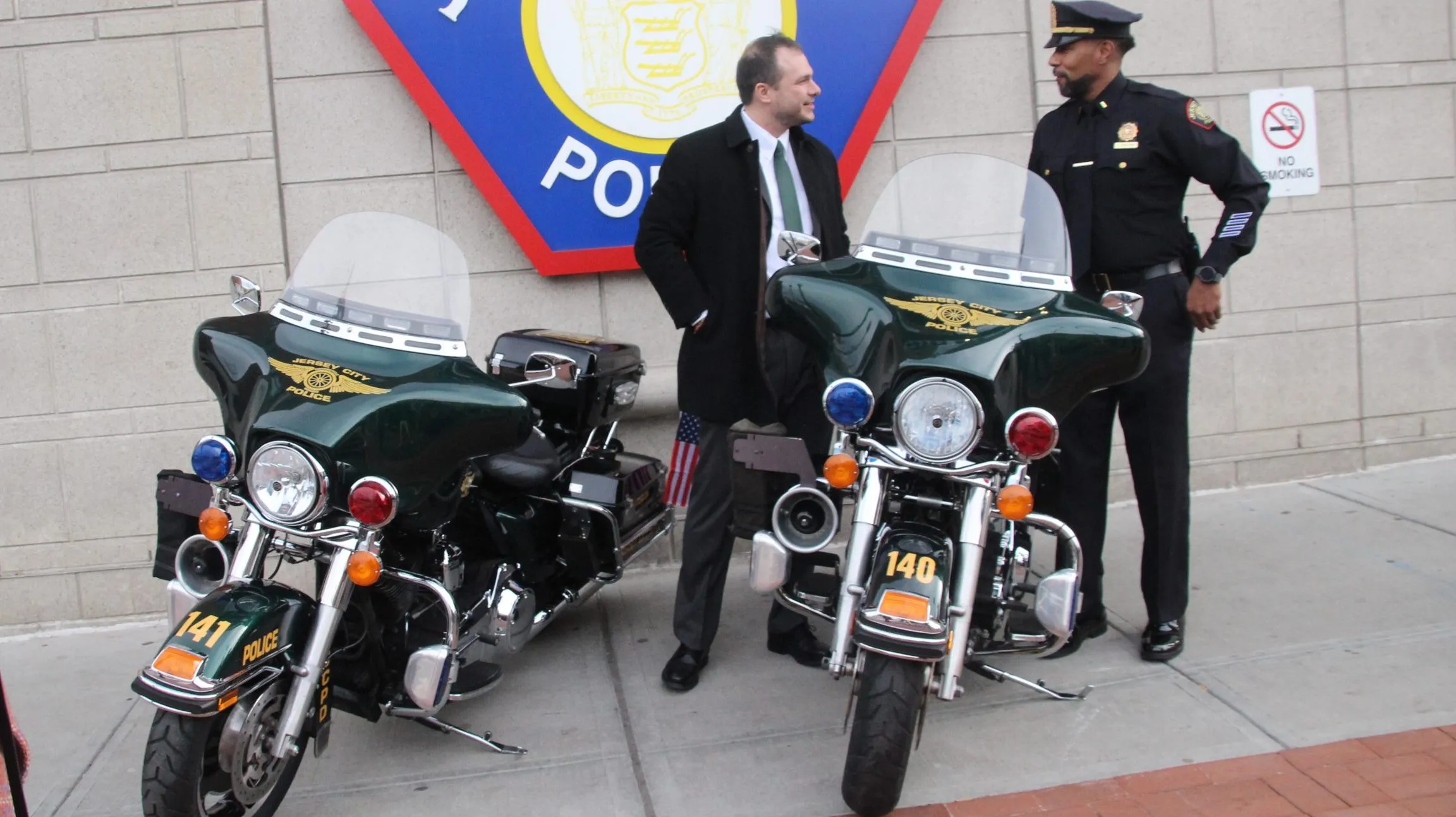
A recent decision from the Superior Court of New Jersey, Appellate Division, puts that question front and center for one of the most regulated professions in public life: policing. In Patten v. Jersey City Police Department, the court concluded that a department could not fire an officer solely for off-duty cannabis use that was permitted under New Jersey law, where there was no evidence of on-duty intoxication or impairment.
Join the Discussion
What the New Jersey court actually decided
The case arose after the Jersey City Police Department terminated an officer who used cannabis off duty while on disability leave recovering from a work-related injury. The officer used cannabis for pain management. The record contained no evidence that he reported to work under the influence.
The department defended the firing on a familiar theory: even if state law allows cannabis, federal law still treats marijuana as illegal, and federal firearms rules make it unlawful for cannabis users to possess or use guns. Because police officers carry firearms, the department argued, the conflict with federal law justified termination.
The Appellate Division rejected that logic. In plain terms, the court drew a distinction between (1) federal limits that apply to private citizens buying or owning guns and (2) firearms and ammunition that are issued to officers for use by a police department.
As the panel put it: “Accordingly, when firearms or ammunition are ‘issued for the use of’ a police department, such as the JCPD, the restrictions imposed under 18 U.S.C. § 922 are eliminated.”
That conclusion mattered because it undercut the department’s main justification for treating off-duty cannabis use as automatically disqualifying.
The state-law backbone: New Jersey’s workplace protections
New Jersey’s adult-use cannabis law is written with employment in mind. It does not give everyone a free pass to be impaired at work, but it does limit when a positive test can be used as a hammer.
Specifically, the law bars adverse employment action taken “simply for testing positive for cannabinoid metabolites, or for using cannabis, so long as it is not used during the workday and the employee is not intoxicated or impaired at work.”
Those words do a lot of work. They reflect a basic policy choice: the state treats off-duty cannabis use more like other lawful off-duty conduct, while keeping a firm boundary around fitness for duty.
Where “conduct rules” start to run into constitutional values
Police departments have legitimate interests that most workplaces do not. Officers carry weapons. They may be called to respond in seconds. Public trust is part of the job description. So departments often adopt broad “conduct unbecoming” rules meant to protect credibility and safety.
But broad is not the same as unlimited.
When a government employer disciplines a public employee, constitutional principles hover in the background even if the case is ultimately decided on statutes and regulations. The state is not just an employer, after all. It is also the government.
That does not mean public employees are immune from discipline. It means there must be a defensible connection between the rule and the job. The more a policy reaches into off-duty life, the more it needs a clear rationale tied to workplace performance, safety, or public mission.
In Patten, the court treated “off-duty use with no evidence of impairment at work” as a line the department could not cross, given the protections New Jersey wrote into its legalization framework.
The federal firearms argument, simplified
If you have ever filled out paperwork to purchase a firearm, you have seen how federal law asks about unlawful drug use. For decades, federal authorities have taken the position that cannabis use triggers a categorical bar for private citizens.
The Jersey City case raised a different question: does that private-citizen framework automatically transfer to government employees who are issued firearms by their departments for official use?
The Appellate Division said no, pointing to the statutory structure of 18 U.S.C. § 922 and concluding the restrictions do not operate the same way when the firearm is “issued for the use of” a police department.
That distinction will not answer every future conflict between federal law and state legalization. But it does show something important about our system of laws: sometimes a dispute that sounds like a sweeping cultural fight turns on careful statutory wording and the specific legal status of the person involved.
Why this matters beyond New Jersey
Several states have moved toward similar employment protections for lawful, off-duty cannabis use. The details vary, but the trend reflects a practical reality: cannabis tests often detect metabolites long after any psychoactive effects have ended, which can make “positive test” a poor stand-in for “impaired at work.”
Research is also evolving. A study published last month in Drug and Alcohol Dependence Reports found “no measurable next-day cognitive effects” following cannabis use the night before, even though participants could still test positive for THC or metabolites. One study does not settle every workplace question, especially in safety-sensitive fields, but it illustrates why lawmakers and courts are increasingly reluctant to treat a lingering test result as automatic proof of impaired performance.
For public employers, the broader takeaway is straightforward: if a state has adopted explicit protections for off-duty cannabis use, departments should expect to justify discipline with evidence of on-duty impairment, rule violations during work time, or another job-related basis that fits within the statute’s limits.
So where is the line, practically speaking?
This decision does not say police officers can never be disciplined for cannabis-related conduct. It narrows what a department can do without evidence of workplace impact.
What departments still can regulate
- On-duty impairment: If an officer is intoxicated or impaired at work, discipline can follow, and in many cases should.
- Use during the workday: State protections are commonly written to exclude use on the job or during working hours.
- Safety and operational readiness: Policies may address reporting for duty fit to perform, especially for armed roles and emergency response.
- Misconduct tied to the job: Dishonesty in reporting, failure to follow testing protocols, or violations that undermine operations can still be actionable.
What becomes harder after Patten
- “Conduct unbecoming” as a blanket label: When the underlying conduct is lawful under state law and happens off duty, departments may need more than a general rule to justify termination.
- Termination based only on a positive test: New Jersey’s statute specifically warns employers away from that approach when there is no workday use and no impairment at work.
- Federal-law conflict arguments that do not fit the employee’s legal status: The court’s analysis shows that “federal law says X” is not always the end of the inquiry, especially when the federal provision is being applied in a context it may not cover.
A civics note: how legalization reshapes workplace law
From a constitutional perspective, one of the most helpful ways to read cases like this is as a lesson in federalism and the day-to-day power of state legislatures.
States cannot rewrite federal criminal law. But states can decide how their own agencies and employers respond to cannabis use within the state’s regulatory framework. When a legislature writes specific employee protections into a legalization statute, it is not just changing criminal penalties. It is setting boundaries for workplace discipline, especially for public employers.
That is what the Appellate Division enforced here: the boundary between a department’s internal conduct rules and the rights New Jersey has chosen to extend to workers, including officers, for lawful off-duty behavior.
What to watch next
The legal landscape is still shifting, particularly around the federal firearms ban as applied to cannabis users. The U.S. Supreme Court heard oral arguments in March in United States v. Hemani, a case that challenges the categorical federal gun ban for cannabis consumers. A decision has not yet been issued.
In the meantime, Patten signals that state employee protections will be taken seriously, even in high-stakes public safety jobs, when the employer cannot point to workplace impairment or another concrete, job-related problem.
For readers outside New Jersey, the easiest way to translate the lesson is this: as cannabis legalization spreads, the most important legal fights are increasingly about workplace rules, evidence, and boundaries, not just criminal law.