
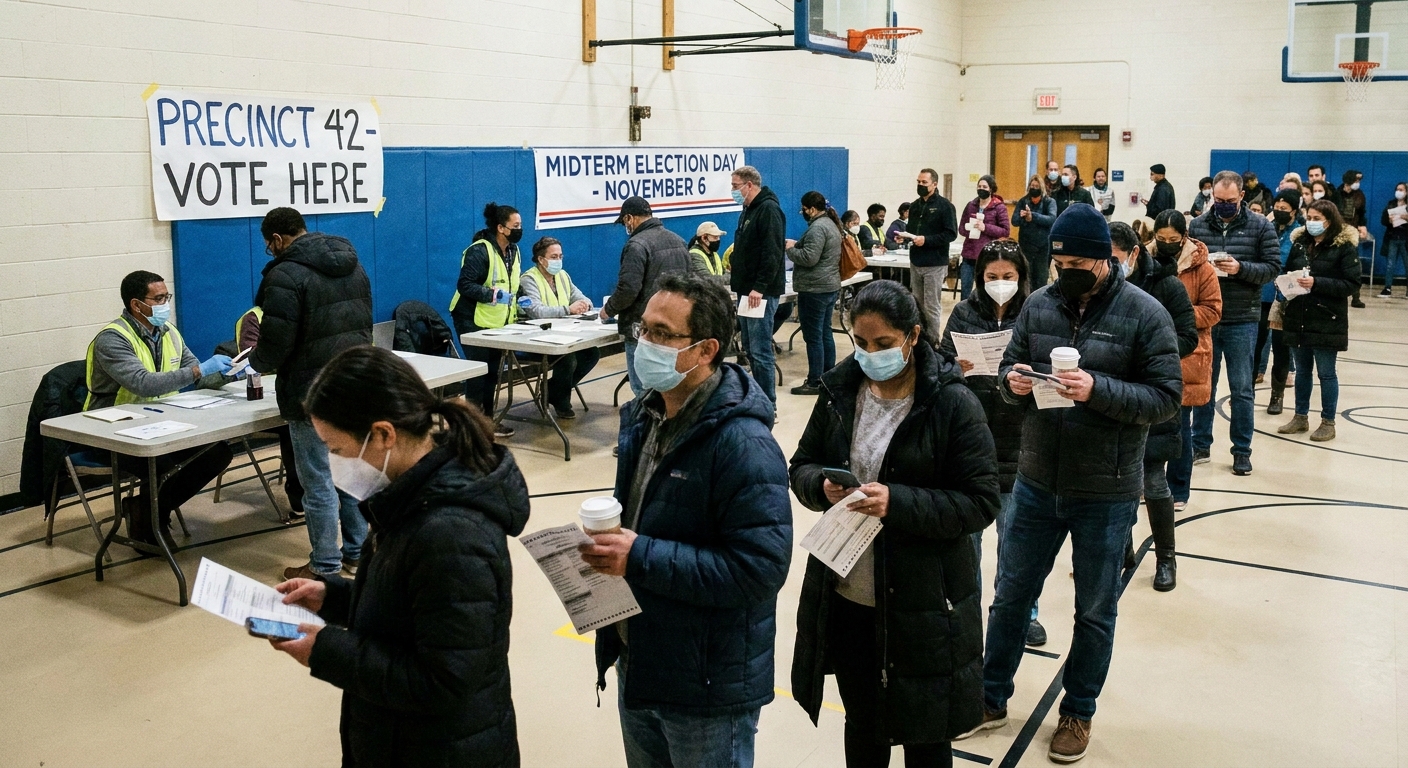
Midterm elections are the regularly scheduled elections held in the even-numbered year between presidential elections. They fall two years into a president’s four-year term, but they are not designed as a special national election just to judge a president. They are the country’s standard cycle for choosing Congress and, in most places, a long list of state and local offices too.
If that sounds like a technicality, it is not. The Constitution split federal power on purpose. Midterms are one of the main moments when voters rebalance that split.
Join the Discussion
What are midterm elections?
In the United States, federal elections happen on a fixed cycle. Every two years, the country holds a general election for Congress. When that election lands in the even-numbered year between presidential elections, we call it a midterm election.
Midterms are not a separate system with separate rules. They are simply the “even-numbered-year” elections for federal offices that occur when the presidency is not on the ballot.
- Frequency: Every two years
- Timing: The Tuesday after the first Monday in November
- Why “midterm”: It falls midway through a president’s four-year term
What offices are on the ballot in midterms?
The U.S. House of Representatives
All 435 House seats are up every two years. The number 435 is set by federal law. The part that is constitutional is the two-year term itself. Article I sets two-year terms for Representatives, making the House the chamber most directly tethered to public opinion.
Because every seat can flip, midterms can produce a fast and dramatic change in which party controls the House, which then affects:
- what bills reach the president’s desk
- what the government funds, and what it refuses to fund
- whether investigations expand or fade
- whether impeachment becomes a realistic threat
The U.S. Senate
About one third of the Senate is up in any midterm, usually 33 or 34 seats. Senators serve six-year terms under Article I, staggered so that the Senate cannot be remade all at once. Depending on vacancies, there can also be special elections that add a seat or two beyond the regular class schedule.
That staggered design is often described as a “cooling saucer” effect. It slows political whiplash. But midterms still matter enormously because a small shift can change Senate control and with it:
- confirmation of judges and executive-branch nominees
- treaty ratification math
- committee leadership and the agenda
State and local offices
Midterm years often include high-stakes races that are not federal at all: governors, state legislators, attorneys general, secretaries of state, mayors, judges, school boards. These offices shape election rules, redistricting, criminal justice priorities, education policy, and more.
Many states also put ballot measures before voters in midterm years, including constitutional amendments, referenda, and local funding questions.
Why midterms matter so much
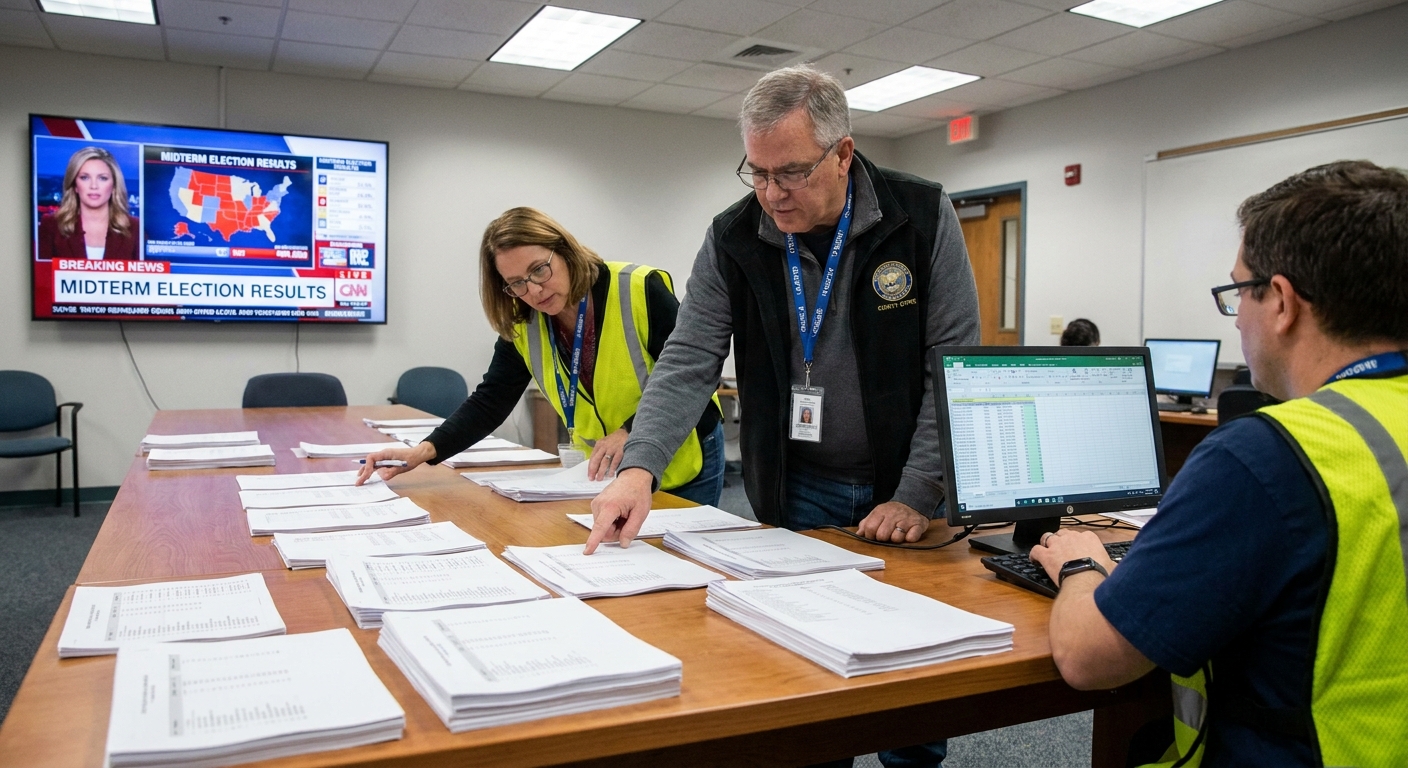
They can change control of Congress
The president can propose, persuade, and veto. Congress can write laws, control funding, oversee the executive branch, and confirm appointments. When the party controlling Congress differs from the president’s party, the system shifts from unified government to divided government. That can mean compromise, gridlock, or both, depending on the issue and the political moment.
They shape the federal courts for decades
Federal judges are nominated by the president but confirmed by the Senate. If midterms change the Senate’s control, the entire confirmation pipeline can change with it. Since judges have life tenure during good behavior, that effect can outlast any single election cycle.
They affect policy even without new laws
Congress influences policy through budgeting and oversight. A new committee chair can turn up the heat on an agency, demand documents, hold public hearings, and shift what gets attention.
They are a national report card, even though that is not in the Constitution
Politically, midterms become a referendum on the sitting president. Constitutionally, they are not designed as a referendum. They are simply scheduled elections for Congress. But in practice, voters treat them as a moment to reward, correct, or constrain the administration in power.
The constitutional foundation
The Constitution does not use the phrase “midterm elections.” What it does is set terms of office and empower Congress and states to administer elections within constitutional limits.
Article I sets the cadence
- House: two-year terms
- Senate: six-year terms, staggered into three “classes”
Those term lengths create midterm elections automatically. If House terms are always two years and presidential terms are four, then every other House election will land in the middle of a presidency.
The Elections Clause and who runs elections
Article I, Section 4, often called the Elections Clause, says states set the “Times, Places and Manner” of congressional elections, but Congress may make or alter those regulations.
In plain English: elections are administered locally under state law, but federal law can set national baselines for federal races. That is why the election system is both national and local at the same time.
Why Tuesday in November?
Congress set a uniform federal election day in the 1800s to standardize voting across states. That is why general elections for federal offices are held on the Tuesday after the first Monday in November.
What voters can and cannot do
Voters choose, within constitutional and state-designed rules
Midterms feel like pure democracy, but they operate inside a framework built from constitutional text, federal statutes, state constitutions, and administrative choices. Some of the most important factors are not about persuasion at all. They are about structure:
- District lines: House seats depend on district boundaries, which can be redrawn after the census
- Voter rules: shaped by state law and administration, bounded by constitutional amendments and federal statutes that forbid certain forms of discrimination and set national protections
- Registration and access: deadlines, early voting, and mail voting rules vary by state and interact with federal requirements
Midterms do not directly remove a president
Midterms can politically weaken a president. They can hand Congress to the opposition. But they do not end a presidential term. Removal requires resignation, incapacity under the Twenty-Fifth Amendment, or impeachment and conviction.
Turnout
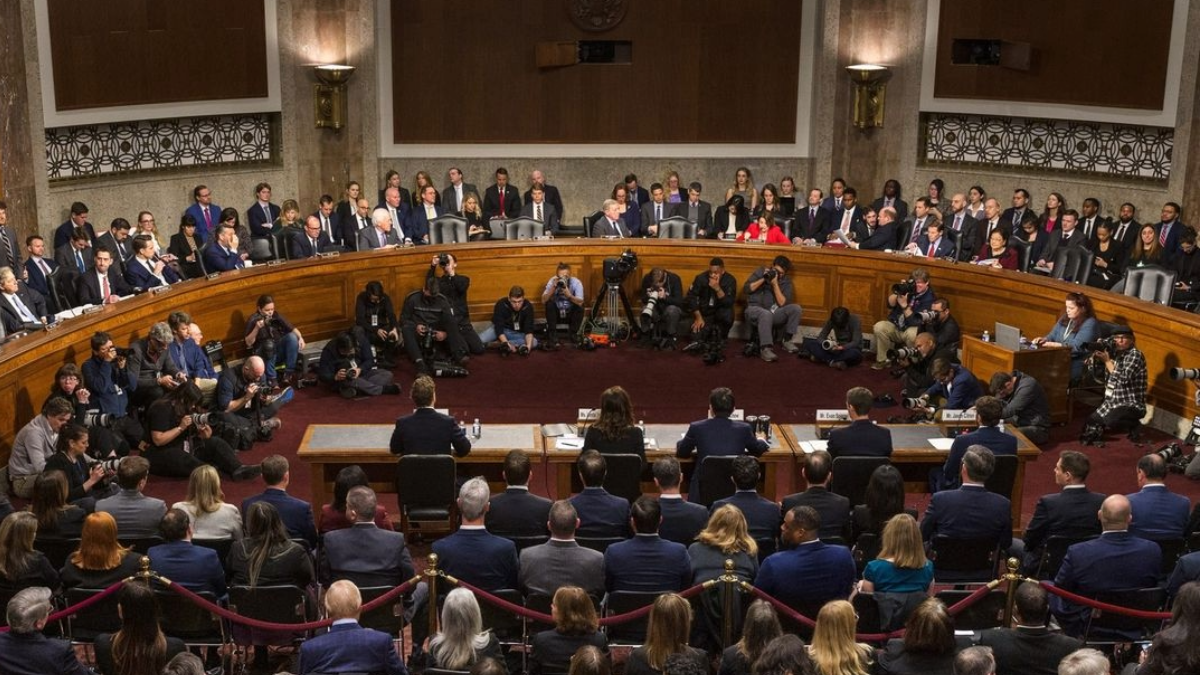
Midterm turnout is usually lower than presidential election turnout. There are many reasons, but a few appear again and again:
- Less media saturation: the presidency draws more constant attention
- Fewer habitual voters: some citizens vote only when the president is on the ballot
- More local complexity: ballots can be long and full of unfamiliar down-ballot races
From a civic education standpoint, this is the quiet irony of American politics: midterms can reshape national power dramatically, yet they often happen with a smaller electorate.
Common questions
Are midterms only for Congress?
Federally, yes, midterms are defined by congressional elections. Practically, no, because state and local races, and often ballot measures, are a major part of what voters see on the ballot.
Do midterms always flip Congress?
No. It is common for the president’s party to lose seats, but it is not guaranteed. Outcomes depend on the economy, major events, candidate quality, district maps, and turnout.
Can independents vote in midterms?
Yes. For the general election, party registration does not prevent you from voting. For primaries, rules differ by state. Some states have open primaries; others require party registration to participate.
Do midterms affect the Electoral College?
Not directly, since the president is not being elected. But midterms can affect state offices that administer elections and can influence state legislative power, which in turn shapes future election laws.
Is there more than one midterm in a presidency?
Yes. If a president serves two terms, there is a midterm election two years into the first term and another two years into the second term.
Why midterms fit the design
The Constitution assumes power will be contested, not comfortably held. The House is built for responsiveness. The Senate is built for continuity. The presidency is built for energy and decisiveness, but checked by the other two.
Midterm elections are where those design choices become real life. They are the moment when the public can tighten the leash on a presidency, endorse it, or complicate it, without rewriting a single word of the Constitution.
If you want a simple way to think about it, try this: presidential elections pick a direction. Midterms decide how hard it is to travel that road.