
You can be taken into federal custody without being charged with a crime.
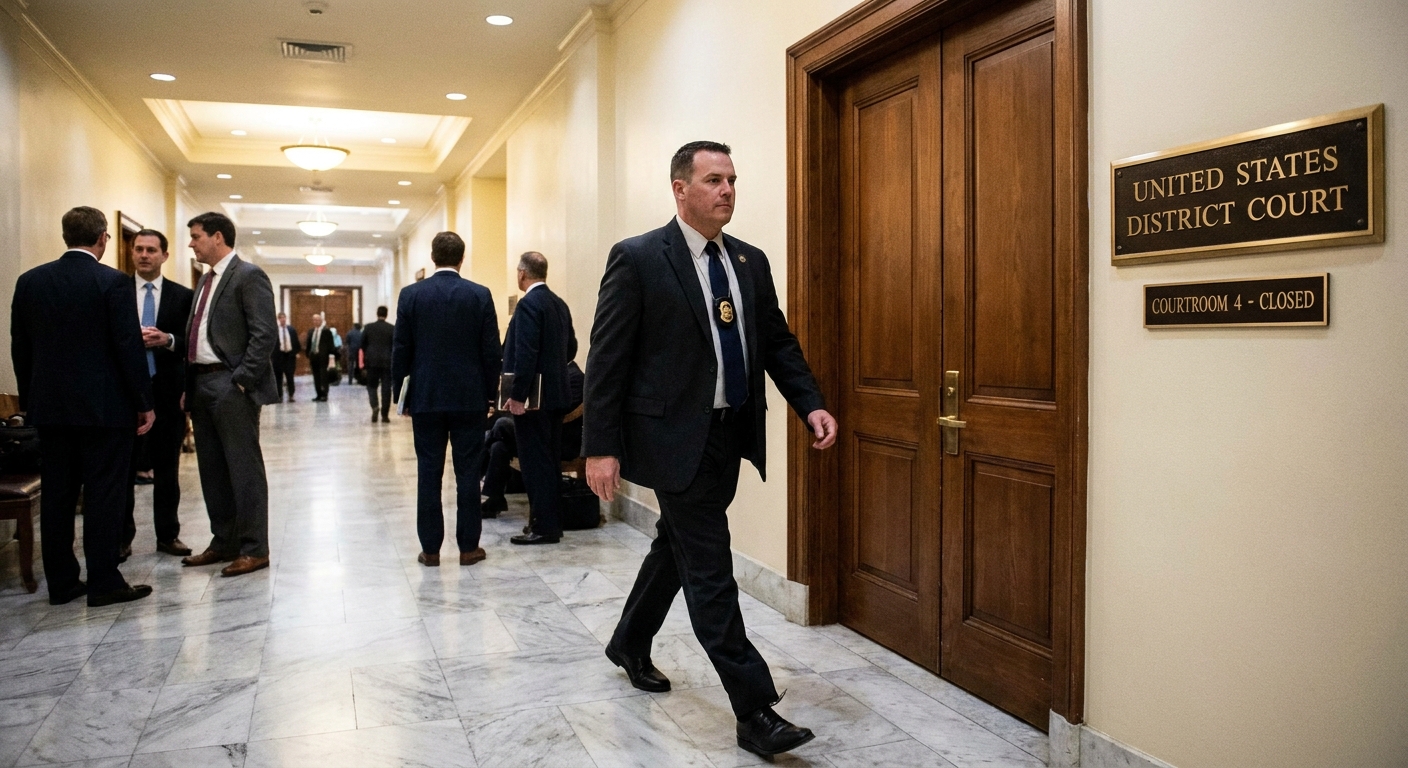
That sentence sounds like a constitutional glitch. In reality, it is a narrow tool Congress wrote into federal law: the material witness warrant. The idea is simple. Sometimes the government cannot prove a case without a particular person’s testimony, and it fears that person will disappear before the testimony is required, whether at a grand jury, a deposition, or trial. When a subpoena is not enough, a judge can authorize arrest and detention to secure the testimony.
Because the witness is not a defendant, this tool sits right on the fault line between practical prosecution and constitutional liberty. The law allows it. The Constitution limits it. The hard part is making those limits real in day-to-day practice.
Join the Discussion
What a material witness warrant is
A material witness warrant is a court order that allows federal law enforcement to arrest a person whose testimony is considered important to a criminal proceeding and whose presence cannot reliably be secured by subpoena alone.
This is not an arrest for a crime. It is a custody mechanism to ensure a witness appears and testifies.
Two ideas built into the name
- Material: the person’s testimony matters in a meaningful way, not merely as background.
- Witness: the person is sought for evidence, not charged as a perpetrator.
The statutory basis: 18 U.S.C. § 3144
Material witness warrants in federal court are authorized by 18 U.S.C. § 3144. The statute provides that a judicial officer (typically a U.S. magistrate judge or a district judge) may order the arrest of a person if:
- the person’s testimony is material in a criminal proceeding, and
- it may become impracticable to secure the person’s presence by subpoena.
Section 3144 is part of the Bail Reform Act framework, which is why material witness custody can resemble pretrial detention even though it is not tied to a criminal charge against the witness.
Detention is meant to be limited
The statute also includes a key constraint that is easy to miss if you only read the first sentence. In substance, § 3144 provides that no material witness may be detained because of inability to comply with any condition of release if the witness’s testimony can be adequately secured by deposition and if further detention is not necessary to prevent a failure of justice.
That is not a free-floating presumption of release. It is a specific command that forces courts to ask, in concrete terms, whether there is a less restrictive way to lock in the testimony.
Why it feels like pretrial detention
Because § 3144 points into Bail Reform Act procedures, courts often look to familiar release tools and factors, including conditions designed to secure appearance. The posture is different from a defendant’s bail decision, but the mechanics can look similar.
The constitutional frame
The Constitution does not contain a “material witness clause.” What it contains are guardrails.
The Fourth Amendment
Arresting a witness is a seizure. Under the Fourth Amendment, a seizure must be reasonable, typically grounded in a warrant supported by facts presented to a judge. A material witness warrant is meant to satisfy that structure: a judicial officer finds materiality and impracticability, then authorizes custody.
Courts have not always described the required showing in identical terms, including how concepts like probable cause map onto “materiality” and “impracticability.” The practical takeaway, though, is the same: the government needs specific sworn facts that justify taking someone’s liberty as a witness, not a hunch or a convenience-driven theory.
Reasonableness is also about purpose. If witness warrants are used as a back door to investigate or pressure someone, Fourth Amendment scrutiny sharpens quickly.
The Fifth Amendment
Detaining someone who has not been accused triggers due process at the core of the Fifth Amendment: the government cannot take liberty without fair procedures and adequate justification.
In practice, due process concerns tend to cluster around three questions:
- Notice and hearing: does the witness promptly get to challenge the detention before a judge?
- Access to counsel: can the witness meaningfully contest the government’s claims?
- Duration and conditions: is custody narrowly tied to securing testimony, or does it become punishment without a conviction?
Prolonged confinement can also raise deeper, substantive due process concerns, especially when the detention stops looking like a targeted measure to secure testimony and starts looking like incapacitation for its own sake.
How it fits with subpoenas and trials
If you picture criminal procedure as a ladder, subpoenas are a lower rung and material witness warrants are a higher one.
Subpoenas and the impracticable test
A subpoena commands appearance. A material witness warrant authorizes arrest. Section 3144 does not require the government to try a subpoena first in every case. Instead, it requires a showing that it may become impracticable to secure the person’s presence by subpoena. In theory, that language is supposed to keep arrest from becoming a convenience.
Grand jury, pretrial, and trial
Material witness warrants can arise in different phases of a federal case:
- Grand jury: to compel a witness to appear and testify during an investigation.
- Pretrial and trial: where a party argues a witness may not appear when needed.
The witness’s legal posture is unusual. The court is not adjudicating guilt, but it is still using coercive power. That is why judges are expected to ask not just “Is the testimony useful?” but “Is custody truly necessary?”
Not always just prosecutors
In practice, material witness warrants are most commonly associated with prosecutors. But the underlying idea is about securing testimony for a criminal proceeding, and defense requests can arise in some circumstances. The mechanics and likelihood vary by case and court, but the constitutional concern remains the same: custody should track necessity, not advantage.
What happens after arrest?
A material witness arrest is supposed to funnel quickly into court supervision. Typical steps include:
- Initial appearance: the witness is brought before a judicial officer, where the basis for custody and the next steps are addressed.
- Counsel: the witness can seek the assistance of counsel, and in many courts an indigent witness can request appointed counsel for the detention proceeding.
- Release options: the court can consider conditions short of detention, such as bond, travel limits, GPS monitoring, or a third-party custodian.
- Securing testimony: the testimony may be taken in a grand jury appearance, a deposition (to preserve testimony), or at trial.
Courts often apply familiar Bail Reform Act style conditions to make sure the witness appears when required. In practical terms, that can include a U.S. Marshals hold and temporary placement in a local jail or federal detention facility while the court sets conditions.
The practical endpoint is supposed to be straightforward: once testimony is securely preserved or delivered, continued detention becomes much harder to justify.
How long can a witness be held?
This is where the law feels both simple and unsettling.
Section 3144 does not set a hard numeric time limit like “72 hours” or “10 days.” Instead, it requires that detention be tied to necessity and that courts consider alternatives such as deposition. Without a strict clock, the practical limit often comes from constitutional reasonableness and from how quickly the underlying criminal proceeding moves.
What is supposed to constrain length
- Purpose limitation: custody must be to secure testimony, not to punish or investigate the witness.
- Depositions as an off ramp: if testimony can be preserved by deposition, the statute says detention should not continue based solely on inability to satisfy release conditions.
- Judicial oversight: because the witness is held under court authority, the judge can revisit conditions and necessity.
How it often ends in practice
In many cases, detention ends after the witness testifies before the grand jury or after a deposition preserves the testimony. In other cases, a court may find a deposition is inadequate and keep the witness on conditions of release, or in rarer situations in custody, through the trial date to ensure live testimony.
Why criticism persists
In real cases, the witness’s timeline can be pulled by forces the witness does not control: continuances, sealed proceedings, delays in charging decisions, and strategic timing of hearings. A tool that is constitutionally tolerable for a short, tightly supervised period can become constitutionally questionable when it stretches.
Conditions of custody
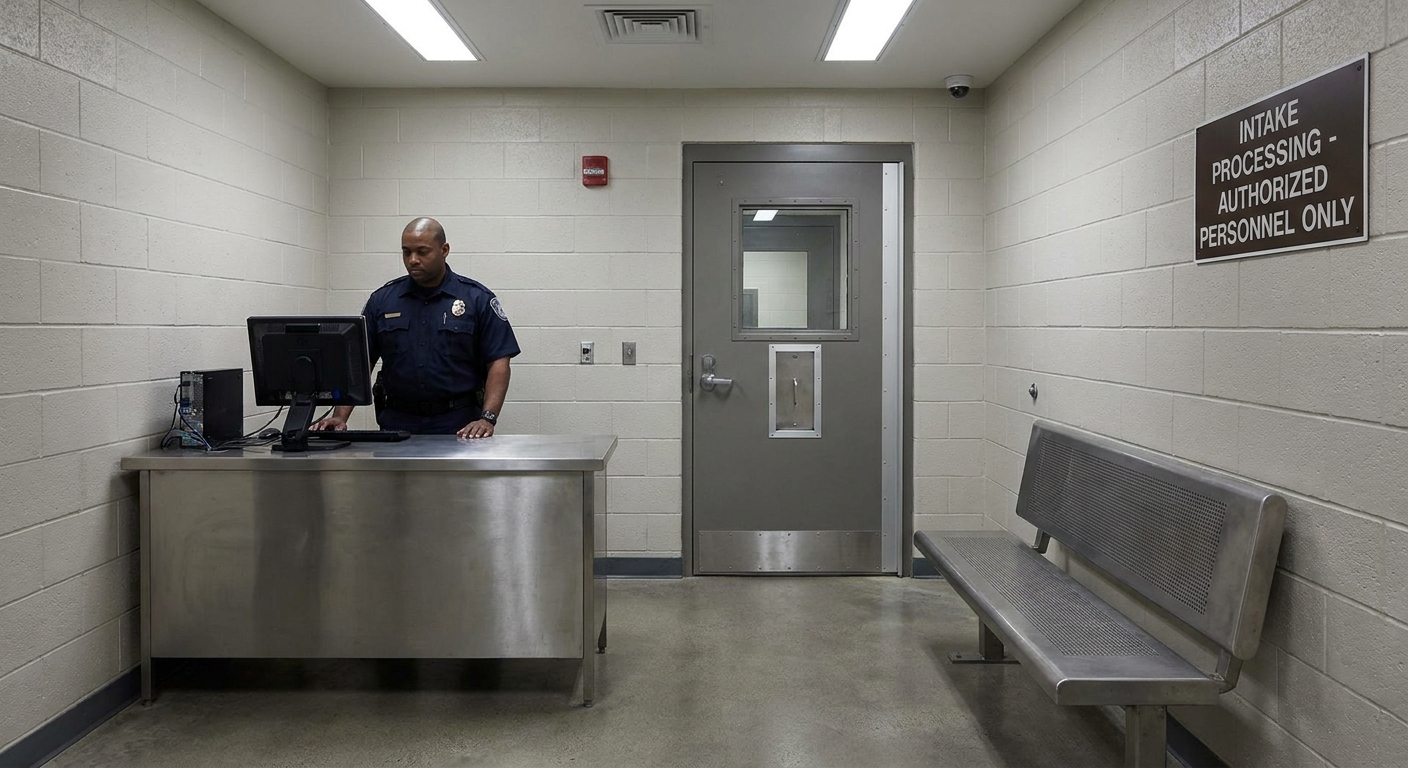
Material witnesses may be held in the same facilities as pretrial detainees and, depending on local arrangements and classification decisions, can experience many of the same restrictions as people serving sentences. That creates a mismatch between purpose and experience.
Legally, the witness is not being punished. Practically, custody can still mean jail rules, jail risks, and separation from normal life. That gap is a central due process concern because detention that functions like punishment can start to look like punishment.
Rights of a detained witness
A material witness is not a criminal defendant, so the witness is not automatically covered by every defendant-specific protection in the same way. But constitutional and statutory safeguards still exist.
Core protections in practice
- A judge’s determination: detention should follow a judicial finding of materiality and impracticability, not merely an agent’s preference.
- Ability to challenge custody: witnesses can seek review in court, including through motions and, in some circumstances, habeas-type challenges.
- Consideration of release conditions: courts can impose conditions short of detention when they reasonably secure appearance.
- Depositions: the statute explicitly points to deposition as a way to preserve testimony without prolonged detention.
The constitutional theme is proportionality: the government may secure testimony, but it must do so with procedures and restraints that fit a witness, not a convicted person.
Where the abuse risk lives
Material witness warrants are not inherently unconstitutional. The risk is how easily they can be repurposed.
The temptation
If officials suspect someone of wrongdoing but lack probable cause to charge, a material witness theory can look like a workaround: detain first, ask questions later, hold the person in a setting that creates pressure to cooperate. That is precisely the scenario due process is designed to resist.
The vulnerability
Grand jury proceedings are secret. Warrant applications can be sealed. Hearings can move quickly. Those features can be legitimate, but they also reduce outside visibility. When a person is detained as a witness, visibility matters because the witness does not have the structural protections that accompany a normal prosecution timeline.
A real-world pressure test
The modern debate over this power sharpened after 9/11, when federal investigators used material witness warrants in aggressive investigative sweeps that critics argued functioned as preventive detention. The Supreme Court later addressed a high-profile challenge in Ashcroft v. al-Kidd (2011), a case that, whatever one thinks of its outcome, put a bright spotlight on the fear that “witness” custody can be used as an investigative lever rather than a narrow tool to secure testimony.
One important limiter on what that case resolved: the Court held that then Attorney General John Ashcroft was entitled to qualified immunity on the claims at issue, and it did not hold that every use of the material witness statute is constitutional in every circumstance. It did, however, signal that courts would look closely at how Fourth Amendment standards apply in this unusual context.
Reforms critics highlight
Critics do not typically argue that material witness warrants should never exist. They argue the tool needs sharper boundaries so it cannot swallow the rule that liberty is the default.
Common proposals
- Clear time limits: a statutory cap on detention absent extraordinary findings, with periodic review on the record.
- Stronger showings: more specific facts demonstrating why securing appearance by subpoena is likely to be impracticable.
- Prompt adversarial hearings: an early hearing where the witness, with counsel, can contest materiality and necessity.
- Preference for alternatives: stronger presumptions for conditional release, remote testimony where permitted, or deposition when feasible.
- Improved custody conditions: separating material witnesses from punitive environments when detention is unavoidable.
- Transparency after the fact: unsealing warrant materials when secrecy is no longer needed, allowing public oversight.
Each of these reforms is a different way of expressing the same constitutional instinct: the government should not get the functional power of imprisonment without the moral and procedural burden of a criminal charge.
The bottom line
Material witness warrants are legal. They are also inherently uncomfortable in a system built on the presumption that the state must accuse you of something before it can take your freedom.
Congress authorizes the practice in 18 U.S.C. § 3144. The Constitution limits it through the Fourth Amendment’s demand for reasonableness and the Fifth Amendment’s demand for due process. The legitimacy of any particular detention turns on whether courts treat custody as truly necessary and truly temporary, and whether they remember what the label “witness” is supposed to mean.
The question worth keeping open is not just whether the government can secure testimony. It can. The harder question is how to do it without turning a procedural tool into a quiet substitute for criminal accusation.